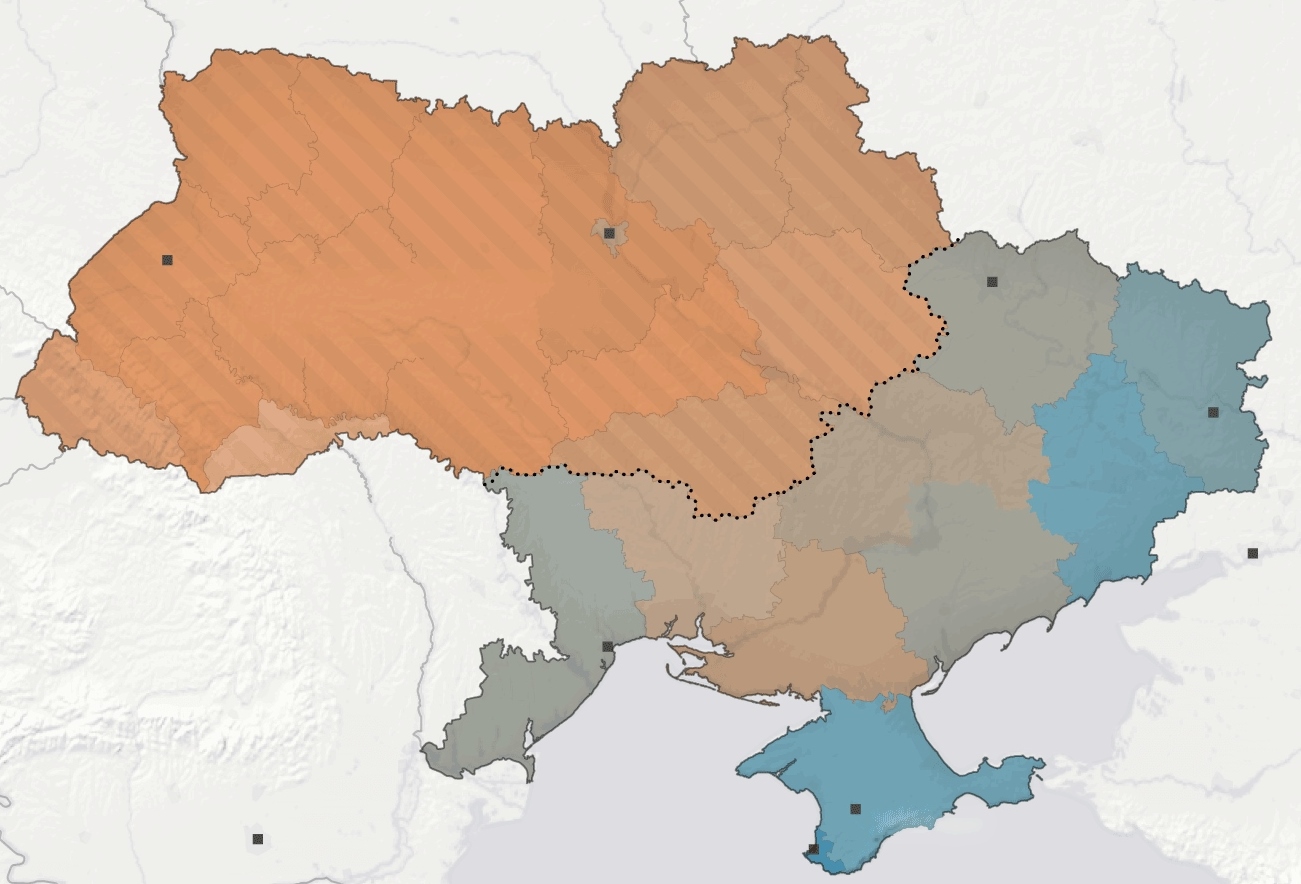
By pointing out recently that there are a lot of Russian speakers living in Crimea and eastern Ukraine, I didn’t mean to imply that Ukrainians in those areas are pleased with the Russian occupation. The New York Times printed two op-ed pieces today by Ukrainians who dispute the idea that the Russians are welcome anywhere in Ukraine.
In “The Myth of a Divided Ukraine”, Natalka Sniadanko writes that:
In recent days, in cities across the region, people have gathered to protest Russian aggression. Thanks to Mr. Putin, Ukraine has seen a rise not only in Russian-speaking Ukrainian patriots, but also “Russian-speaking Russophobes,” who identify as Russian but want nothing to do with him.
In “Crimea: Russia’s Next Afghanistan?“, Olga Dukhnich says that she lives and works among ethnic Russians who are deeply worried by the Russian occupation:
The leaders of Russia may be ruthless and determined, but they are not blind. They can try as hard as they can to shut the eyes and ears of the Russian public back home and in the Crimea through shameless propaganda on every TV channel. But — staged rallies and corrupt local quislings aside — the Russians, now that they have landed, surely see that they are not welcome, but feared, even by the ethnic Russians who they thought would embrace them.
Despite Ukraine’s recent political and economic problems, it is hard to imagine that many Ukrainians, ethnically Russian or not, want to go back to being ruled by Moscow instead of staying independent and moving closer to the West. Nevertheless, the most recent indications are that the Europeans, especially the Germans, don’t want to jeopardize their economic relationship with Russia, their principal supplier of energy. For that reason, there may be a very limited Western response to the Russian invasion.
Update: If you want an excellent summary of Ukraine’s recent dictatorship and revolution, read this article written a few days ago by Timothy Snyder, Professor of History at Yale and the author of a great book called Bloodlands: Europe Between Hitler and Stalin. It’s especially helpful if you’ve heard that the revolution was led by fascists, the story Putin has been pushing.
 Whereof One Can Speak 🇺🇦
You must be logged in to post a comment.