Some Spiders Like Group Homes Too

Scientists have identified about 43,000 species of spiders in the world. Only about 25 of these species are social animals, living in communities like ants and people.

One such species lives in Africa. A group containing from 20 to 300 spiders called Stegodyphus mimosarum weave large communal webs like this:

web1a

What is especially interesting about these little spiders is that the longer they live together, the more specialized they become.

Spiders seem to have personalities of a kind. Some are more shy than others; some are more aggressive. Researchers have discovered that if they put together a small group of these spiders, their individual traits gradually become stronger. The aggressive spiders, for example, become more aggressive.

As their colonies grow, the spiders also take on specialized social roles that seem to depend on their personalities, the shy ones staying inside the web and tending to the young, while the more adventurous ones defend the web and subdue prey (usually insects, but not always). Which roles individual spiders take on also appears to depend on the needs of the colony.

According to the New York Times:

The researchers view the development of strong personalities as the behavioral version of so-called niche partitioning, carving out a specialty in a crowded, competitive world….[One researcher] says the spider work neatly illustrates the mix of plasticity and predilection that underlies personality.

“I think it’s such an appealing idea that social interactions could cause social niches, and it resonates with our own experience as humans,” she said. “When you go into a group, your behavior changes depending on the nature of that group, but it can only change so far.”

It’s remarkable that these tiny spiders, with their even tinier brains, not only react differently to various stimuli but form communities that increase in size as individuals gravitate toward specific social roles, depending on their own proclivities and the needs of the community. Since that sounds a lot like what it takes to grow up and make a living in New Jersey, it’s one more piece of evidence that we too are part of nature and not as uniquely talented as we think we are. 

A Guide to Reality, Part 12

Chapter 7 of Alex Rosenberg’s The Atheist’s Guide to Reality is called “Never Let Your Conscious Be Your Guide”. A more grammatical title would have been “Never Let Consciousness Be Your Guide”. A longer but more accurate title would have been “Never Let Introspection Be Your Guide to What’s Happening in Your Mind”, because that’s the actual theme of the chapter: “Scientism requires that we give up everything introspection tells us about the mind” [147].

As he often does, Rosenberg overstates his case, apparently for rhetorical effect. After all, is it really true that introspection is a completely unreliable guide to what’s going on in our minds?

He offers as evidence three kinds of phenomena. The first is “blindsight”. Researchers have discovered that people with certain kinds of brain damage can perceive features of the world without being conscious of what they’re perceiving. For example, a person with a particular kind of damage to the visual cortex, who denies seeing anything at all, can “see” colors and shapes and even the expressions on other people’s faces. If asked whether they see something, they answer “no”, but forced to guess, they give the correct answer. Here, then, is a case in which conscious introspection, which indicates that I don’t see anything, is unreliable, because I really do.

Rosenberg’s second piece of evidence concerns our common belief that we have free will. Most of us are quite convinced that we make conscious decisions that result in freely-chosen actions all the time. However, experiments suggest that when we decide to perform a random action like moving a finger a certain way, the physiological process that will inevitably lead to the action taking place is underway before we’re aware of our decision to perform the action. 

The most interesting case he cites is one in which a neuroscientist stimulates a subject’s brain, causing the subject’s finger or wrist to move but also causing the subject, milliseconds later, to claim that the motion resulted from the subject’s conscious decision.The interpretation of these findings and their relevance to the free will problem are controversial, but they do suggest that conscious decision-making may not be as important in making decisions as we think it is.

Finally, Rosenberg argues that the existence of optical illusions shows that consciousness is unreliable. We interpret visual stimuli according to unconscious rules of thumb (mixed metaphor). These rules of thumb, which are probably the combined product of human evolution and our own experience, often mislead us. The circles in the diagram below look different but really aren’t, so here’s another case, according to Rosenberg, in which we shouldn’t let consciousness be our guide. (The book includes some interesting illustrations from the Purves Lab, which are available here.)
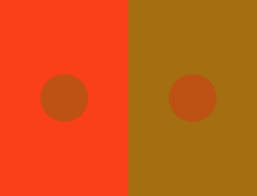
download (1)

Chapter 7 is relatively brief, because in this chapter Rosenberg is laying the groundwork for an especially counterintuitive idea he’s going to discuss in the next chapter (that we don’t actually think “about” anything at all). For now, here’s his conclusion:

We have seen that consciousness can’t be trusted to be right about the most basic things: the alleged need for visual experiences to see colors and shapes, the supposed role of conscious decisions in bringing about our actions, even the idea that we [see the world as it is]. If it can be wrong about these things, it can be wrong about almost everything it tells us about ourselves and our minds [162].

An important thing to note regarding Rosenberg’s argument is that he isn’t really claiming that conscious sense perception is completely unreliable (at least that’s not what I think he’s claiming). Although he denies that colors, for example, are mind-independent properties, he clearly believes that we do learn about the world using our eyes and ears. Otherwise, it would be odd to offer evidence that a blind person can perceive the “correct” color of an orange and that optical illusions are illusory (compared to what?). It would also be difficult to explain why most of us navigate the world better when our eyes are open and we’re not wearing headphones.

His principal thesis in this chapter is that certain conclusions we naturally draw from introspection (“the examination or observation of one’s own mental and emotional processes”) are mistaken. Specifically, it’s natural for us to assume that we need to be conscious in order to perceive certain features of the world, that our choices clearly determine our actions, and that (prior to being let in on the secret) we can always tell whether two lines are the same length or two circles are the same color just by looking.

I think Rosenberg is wrong, however, when he concludes that introspection can’t be trusted about “the most basic things”. What are the most basic conclusions we can draw from introspection? I’m not sure about that, but some natural conclusions seem more basic than the ones Rosenberg criticizes.

For example, we are better at perceiving features of the world when we’re relatively conscious (like when we’re awake) than when we’re relatively unconscious (like when we’re asleep). Some people see and hear better than others. Sight is usually reliable, even though there are occasional optical illusions. And when we feel angry or sad, we are generally angry or sad. It’s just wrong to think that introspection is always wrong about the most basic things.

I won’t offer a more basic conclusion about free will, except to say that conscious deliberation seems to help in making some decisions (whether to enroll at a college, get married or buy a house, for example) – whatever the underlying physiological processes are. Rosenberg may be right that conscious decisions are always the aftermath of unconscious decisions. We never really know what decision we’re going to make until it starts to “feel” like the right decision or we actually do something. Maybe our brains always do the necessary work unconsciously right before we discover what we’ve decided.

Coming up (sooner or later), part 13 of “A Guide to Reality”: Is it true that the brain does everything without thinking about anything at all?

Us and Them

Psychologists and others have been trying to figure out why people have opposing political views. Why are some of us stalwart liberals or progressives, and why are some of us “conservatives” or right-wing nincompoops?

Personally, I leaned right when I was a teenager, moved left in college and have maintained that position through thick and thin. The people who study this question aren’t interested in individual stories, however. They’re trying to explain why these different political perspectives exist at all and why they have such staying power.

The Washington Monthly has a long review by Chris Mooney of two books on the subject. These are the two key differences Mooney cites:

— Liberals tend to score higher on openness (the willingness to explore, try new things and meet new people), while conservatives score higher on conscientiousness (the desire for order and stability — and as I’ve read elsewhere, although the article doesn’t mention these characteristics — loyalty or a sense of duty).

— Conservatives pay more attention to negative stimuli than liberals. For example, when conservatives are shown images of alarming, threatening or disgusting things, they tend to look at the images more closely and have stronger physical reactions.

There is evidence of a partial genetic basis for these differences. Researchers suspect that:

What is ultimately being inherited is a set of core dispositions about how societies should resolve recurring problems: how to distribute resources (should we be individualistic or collectivist?); how to deal with outsiders and out-groups (are they threatening or enticing?); how to structure power relationships (should we be hierarchical or egalitarian?); and so on. These are, of course, problems that all human societies have had to grapple with…. Inheriting a core disposition on how to resolve them would naturally predispose one to a variety of specific issue stances in a given political context.

It’s possible, therefore, that the two-dimensional diagram posted here earlier this week that labels voters as populists, conservatives, libertarians or liberals based on their social and economic preferences may measure the underlying dispositions described above.

If it’s true that conservatives experience the world as more threatening than liberals do, there may be little point in trying to convince them otherwise, as Mooney points out. Their perception of the world is built-in to a great extent. Likewise, of course, if liberals perceive the world as less threatening, there is little point in trying to convince them it’s more dangerous than they think. Despite this apparent difficulty, Mooney ends his review with a call to action:

We run around shutting down governments and occupying city centers—behaviors that can only be driven by a combination of intense belief and equally intense emotion—with almost zero perspective on why we can be so passionate one way, even as our opponents are passionate in the other….Ideological diversity is clearly real, deeply rooted, and probably a core facet of human nature. Given this, we simply have no choice but to come up with a much better way to live with it.

I tend to be more skeptical. If these tendencies are actually so deeply-rooted, there’s probably little we can do to surmount them. In fact, the only option may be to keep pounding away at the facts, hoping to persuade people whose dispositions aren’t so deeply-rooted to move in our direction. And by our direction, I mean toward the perspective that is more open to new possibilities, less fearful of people who don’t belong to our tribe, and more egalitarian. 

Our other option is to wait for evolution to do more work, for despite the fact that there are benefits to having people in your group who are more fearful and others who are more adventurous, it seems likely to me that human progress has partly consisted in liberal tendencies edging out conservative ones. These two specimens, for example, appear to be remnants of an earlier stage in human development:

putin-bush

Update:

As I was saying:  

Republican Senator Marco Rubio of Florida addressed the Conservative Political Action Conference today:

The presidential contender urged that “young people” in the crowd “extrapolate what the world would look like in ten years if [the current international situation] continues forward.” … “If you inherit a world where the Chinese get to decide who gets to ship products to the South China Sea and all the countries in that region are tributaries,” and “North Korea can blow up California” with nukes, and “Iran can reach the East Coast of the United States, and can wipe Israel off the face of the earth,” and “Russia continues to hold its neighbors hostage” through both its military and its oil.

The only thing we have to fear is everything.

Happiness, Especially For the Demented

Not being a Dutch citizen, I’m not sure how much it will cost to live in this great-sounding village, but I’m moving in as soon as possible. I bet they encourage blogging for all the residents.

ku-xlarge

If you want to join me at this “dementia-focused living center called De Hogeweyk, aka Dementia-Village”, you can read about it here.

It’s a very serious subject, of course. How to keep millions suffering from dementia safe and even reasonably happy, if possible. Although that raises the question: should we invest any resources in making the demented happier? 

Mari Ruti, a professor at the University of Toronto, argues that happiness is overrated. Or rather, the kind of well-balanced, anxiety-free happiness demanded by one’s corporate co-workers (“Smile!”) is overrated. The pursuit of that kind of happiness:

(1) Stifles the “idiosyncratic and potentially rebellious energies that, every so often,” break through our bland social personas;
(2) Encourages emotional numbness;
(3) Serves the cultural, economic and political status quo;
(4) May be contrary to human nature (evolution didn’t design us to be happy); and
(5) May lead to lives that are ultimately less satisfying or productive than more anxious lives would be.

Professor Ruti’s conclusion:

There is something quite hollow about the ideal of a happy, balanced life—a life unruffled by anxiety. It’s why I think that underneath our quest for vibrant health lurks a tragic kind of discreet death: the demise of everything that is eccentric and messy about human life. Our society sells us the quick fix: If you get a cold, take some decongestants; if you get depressed, take some antidepressants; and if you get anxious, take those tranquilizers. But what are we supposed to take when we lose our character?

Clearly, if we define “happiness” as “a well-balanced state marked by a lack of anxiety and the presentation of a pleasant persona”, it sounds like a questionable goal, especially for the budding Beethovens and Van Goghs among us (although it sounds pretty good for those of us with dementia). I wouldn’t dismiss Professor Ruti’s critique, however, even if she seems to exaggerate the benefits of living on the edge. There are, after all, more important things in life than happiness. For example, the elimination of real suffering, both physical and psychological:

I do not doubt that it would be easier for fate to take away your suffering than it would for me. But you will see for yourself that much has been gained if we succeed in turning your hysterical misery into common unhappiness (Sigmund Freud and Josef Breuer, Studies on Hysteria, 1895).

The Reason Men Have Nipples

Ok, explaining that mysterious phenomenon isn’t the main thrust of this article at Scientific American‘s site, which claims that men are biologically at risk because of the way male bodies develop in the womb. But the article suggests there’s a reason men have those things on their chests that aren’t very useful:

The male’s problems start in the womb: from his more complicated fetal development, to his genetic makeup, to how his hormones work.

The nine-month transformation from a few cells to an infant is a time of great vulnerability. Many chronic illnesses are seeded in the womb. In our species, the female is the default gender, the basic simpler model: Humans start out in the womb with female features (that’s why males have nipples). The complicated transformation in utero from female to male exposes the male to a journey packed with special perils.

When the first blast of testosterone from the Y gene comes along at about the eighth week, the unisex brain has to morph into a male brain, killing off some cells in the communication centers and growing more cells in the sex and aggression centers. The simpler female reproductive system has to turn into the more complex male reproductive tract, developing tissues such as the testis and prostate.

Further, it takes a greater number of cell divisions to make a male; with each comes the greater risk of an error as well as the greater vulnerability to a hit from pollutants.

On top of that challenge, the human male’s XY chromosome combination is simply more vulnerable. The two XXs in the female version of our species offer some protection: In disorders where one X chromosome has a genetic defect, the female’s healthy backup chromosome can take over. But with his single X chromosome, the male lacks a healthy copy of the gene to fall back on. The X chromosome, which never shrank, is also a larger chromosome “with far more genetic information than the Y chromosome,” finds … a University of California, Davis, autism researcher, “so there may be some inherent loss of key proteins for brain development or repair mechanisms in boys”…

Females also have a stronger immune system because they are packed with estrogen, a hormone that counteracts the antioxidant process… Low estrogen even leaves boys more sensitive to head injuries. The male brain “is simply a more fragile apparatus, more sensitive to almost all brain insults.”

The article says that males have more premature births, worse reactions to environmental toxins, more asthma, higher infant mortality and more neurological disorders. The good news, assuming that men are necessary at all, is that the male Y chromosome seems to have stopped shrinking, after millions of years of decline.

I can’t vouch for the science in this article. But there must be some explanation for the statistical differences between males and females that the author describes.

Reading this reminded me of something I read years ago about boys facing a special psychological challenge as they grow up. Children generally start out feeling closer to their mothers than their fathers. At some point, however, boys have to deal with the fact that they are different from their mothers — they can no longer identify with their primary caregiver the same way girls can. I don’t remember what conclusions were drawn from this or who drew those conclusions. This difference between the sexes might not mean anything at all. Anyway, it looks like us guys have other things to worry about, starting in the womb.