There May Be No Bottom

Now that the voters have almost certainly chosen Joe Biden as our next president, I looked at some of the stories I’ve been avoiding. These are all headlines from The Atlantic:

“A Large Portion of the Electorate Chose the Sociopath: America will have to contend with that fact.”

“The American System Is Broken: It should not take the largest voter turnout in U.S. history to guarantee that a president rejected by the majority . . .  stops being president.”

“Trump Is Powerless to Stop the Count: The president has run up against something he cannot control.”

“The Polling Crisis Is a Catastrophe for American Democracy: If public-opinion data are unreliable, we’re all flying blind.”

But there are two articles that are especially disturbing. The first is “Trump Won’t Accept Defeat. Ever: His forever campaign is just getting started” by Anne Applebaum:

While you watch Dxxxx Txxxx’s presidency stagger to what appears to be its ugly end, always keep in mind how it began: Txxxx entered the political world on the back of the “birther” conspiracy theory, a movement whose importance was massively underestimated at the time. Aside from its racist undertones, think about what a belief in birtherism really implied. If you doubted that Barack Obama was born in the United States—and about a third of Americans did, including 72 percent of registered Republicans—then that meant you also believed that Obama was an illegitimate president. That meant, in other words, you believed that everyone—the entire American political, judicial, and media establishment, including the White House and Congress, the federal courts and the FBI, all of them—was complicit in a gigantic plot to swindle the public into accepting this false commander-in-chief. A third of Americans had so little faith in American democracy, broadly defined, they were willing to think that Obama’s entire presidency was a fraud.

That third of Americans went on to become Txxxx’s base. Over four years, they continued to applaud him, no matter what he did, not because they necessarily believed everything he said, but often because they didn’t believe anything at all. If everything is a scam, who cares if the president is a serial liar? If all American politicians are corrupt, then so what if the president is too? If everyone has always broken the rules, then why can’t he do that too? No wonder they didn’t object when Txxxx’s White House defied congressional subpoenas with impunity, or when he used the Department of Justice to pursue personal vendettas, or when he ignored ethics guidelines and rules about security clearances, or when he fired watchdogs and inspectors general. . . . 

Not all of this was Txxxx’s doing. Many Americans had lost trust in democratic institutions long before he arrived on the scene. One recent survey showed that half of the country is dissatisfied with our political system; one-fifth told pollsters that they would be happy to live under military rule. Txxxx not only exploited this democratic deficit to win the White House, but he expanded it while in office. And now his political, financial, and maybe even emotional strategy requires him to damage America’s faith in its democracy further.

He is launching that strategy right now. . . .Txxxx is no good at governing, but he has long understood, with the intuition of a seasoned con man, how to create distrust, and how to use that distrust to his advantage. . . . 

Now, having spent months talking darkly about the rules being rigged against him, he has laid a set of traps designed to discredit and demean the electoral system so that some Americans, at least, lose their faith in it. This has been said by others, but it bears restating: That Pennsylvania, Wisconsin, and Michigan did not finish counting their votes on Tuesday night is no accident. In all of these states, Republican legislators prevented their election boards from counting postal votes before Election Day. In the midst of a pandemic that Democrats take more seriously than Republicans do, after Txxxx himself told his followers that voting by mail was suspect, the partisan gap between in-person and postal voters was always likely to be stark.

Txxxx anticipated that vote totals might begin to shift in Joe Biden’s favor. That was why, when he spoke at 2:20 a.m. on Election Night, before results were even remotely clear, he declared the vote “a fraud on the American public” and announced that “we don’t want them to find any ballots at 4 o’clock in the morning and add them to the list.” That’s why Republicans had already launched a rash of frivolous lawsuits, designed to create the appearance that something was wrong. . . .

This is a carefully planned strategy, not a temper tantrum, and it may have several stages. The first could take the form of a Hail Mary pass, a brazen and illegal attempt to stay in office. . . . Both the rhetoric and the flurry of ridiculous lawsuits are intended to create a misleading impression of electoral fraud so deep that some Republican state legislators could even be tempted to ignore the ballots and simply appoint an Electoral College delegation to vote for Txxxx. The head of the Pennsylvania Republican Party mentioned this as one of his “options,” although the Republican majority leader of the state Senate explicitly shot that idea down.

But even if Txxxx’s Hail Mary pass quickly fizzles, even if his attempt to stay in the White House is drowned out by the reality of the vote count and a tsunami of “Biden won” headlines, that doesn’t mean Txxxx will admit that the election was fair—ever. . . . It is in Txxxx’s interest, and a part of the Republican Party’s interest, to maintain the fiction that the election was stolen. That’s because the same base, the base that distrusts American democracy, could still be extremely useful to Txxxx, as well as to the Republican Party, in years to come.

. . . Just as Txxxx once helped convince millions of Americans that Obama was illegitimate, so he will now seek to convince Americans that Biden is illegitimate. “Biden Is Fake” Facebook groups will be used to gin up Republican votes and support for Republican causes; emails with “Phony Biden” in the subject line will be used to raise money. Txxxx’s campaign has already blasted out a fundraising text with the following message: “Pres Txxxx & VP Pence: It’s so urgent we BOTH texted you. Dems & the Fake News want to STEAL this Election! 1000%-MATCH to FIGHT BACK! Act NOW” . . . Laura Ingraham of Fox News is already engaging and enraging her millions of followers by tweeting about the “continued abuse of our electoral system by corrupt Democrat officials.”

Other Republicans will join this cause, because they too can raise money and attract breathless fans by indulging that latent distrust. The newly elected senator from Alabama . . . Tommy Tuberville is already tweeting . . . that the Biden campaign is cheating: “It’s like the whistle has blown, the game is over, and the players have gone home, but the referees are suddenly adding touchdowns to the other team’s side of the scoreboard.” Never mind that the game is not over . . . Tuberville can now use the myth of Biden’s “illegitimacy” as an excuse not to cooperate with the new president, not to help pass any further pandemic-relief legislation, not to make the coming four years a success for Biden—or for America.

The Txxxx family being what it is, expect the illegitimacy myth to be exploited for commercial purposes too. Paradoxically, Txxxx’s loss may well increase the loyalty of his most ardent fans, who will be angry that he has been unfairly deprived of his rightful role. They will now become loyal purchasers of flags, ties, MAGA hats, maybe even degrees at a revived Txxxx University. They could become the customer base for Txxxx TV, a media company that will set itself up as the rival to [Fox News].

As the financial and legal pressures now bear down on Txxxx—the hundreds of millions of dollars he owes, the tax and fraud investigations that are on their way—he will need a political base more than ever. Expect Txxxx and his children to portray any and every legitimate legal action against them as political persecution: “They are trying to get me because I oppose the fake president.” Expect them to continue to seek headlines, day after day, with out-of-control press conferences, carried live on Txxxx TV, streamed on Facebook, featured on the front page of the New York Post. . . . 

Above all, though, the Biden illegitimacy myth will function as a prop for Txxxx’s own fragile ego. Unable to cope with the loss of the presidency, unable to accept that he was beaten, Txxxx will now shield himself from the reality of defeat by pretending it didn’t happen. His personal need to live in a perpetual fantasyland, a world where he is always winning, is so overpowering that he will do anything to maintain it. In his narcissistic drive to create this alternative reality, he will deepen divisions, spread paranoia, and render his supporters even more fearful of their fellow citizens and distrustful of their institutions. This is a president who never had America’s interests at heart. Do not expect loss to change him [or make him go away].

The second article is related: “Fox News Hits a Dangerous New Low: The most-watched news network in America is choosing to mislead its viewers about the state of the election” by Megan Garber:

Here are some of the things that happened yesterday evening on the most-watched news network in America: The minority leader of the House of Representatives announced, absolutely falsely and with no pushback, that “President Txxxx won this election.” A former speaker of the House argued that, in the name of democracy, the U.S. federal government should “lock up” state election workers. One of the most-watched TV hosts in the country implied to the chair of the Senate Judiciary Committee that the GOP-controlled Pennsylvania legislature should override the will of the state’s voters to appoint its own electors. Lindsey Graham responded, gravely, “Everything should be on the table.”

Fox News, which spent years flattering Dxxxx Txxxx and his fictions, is finishing what it started. The network that first helped bring Txxxx to political power is now working—despite a fair election that seems poised, as of this writing, to be won by his opponent—to keep him there. Fox’s popular prime-time opinion programs, throughout this week, have functioned as a Txxxx-campaign ad by another means. But last night’s shows reached a dangerous new low. The Fox News Channel, this week, had the opportunity to reckon with reality; instead, the network chose to mislead its viewers about the state of the election, and to foment mistrust in the workings of the American electoral system more broadly. It chose the fate of Dxxxx Txxxx—and the ratings that come from the viewers who love him—over the fate of American democracy.

“As poll workers continue to slowly tabulate results,” Sean Hannity said last night, “we have serious reports of irregularities and fraud and not allowing vote counters to observe counting. Which is a matter of law. And they continue to come in, these reports, from all over the country.”

The reports have been coming from the Txxxx campaign itself. They have not been validated. They have been, in some cases, thoroughly debunked. “Txxxx,” The Washington Post noted yesterday, in an extensive summary of his campaign’s long-running attempts to claim voter fraud where there is none, “has offered no evidence that the election’s integrity has been compromised, and none has been found. In fact, cybersecurity experts in the Txxxx administration and local officials say the process has been smooth despite the unusual historic circumstance of a deadly pandemic.”

That did not stop the misinformation on the news network. On Wednesday evening, Laura Ingraham—who had spent part of the day in the White House with the Txxxx campaign—claimed that Democrats were trying to “destroy the integrity of our election process with this mail-in, day-of registration efforts, counting after the election is over, dumping batches of votes a day, two days, maybe even three days after an election.”

The election results trickled in as they did because the pandemic has changed the logistics of how Americans vote: New circumstances led to new systems, as they should. And the lag in vote counting is partially attributable to Txxxx himself: His campaign, operating on the conventional wisdom that in-person and same-day voting favors Republicans, spent months telling its base not to vote by mail. [And as noted above, Republican legislators in some states made sure the counting would be delayed.]

None of that was explained to Fox’s viewers. In fact, if you watched only Fox to get election results, as so many Americans do, you could reasonably forget that America is currently living through a steadily worsening pandemic. Instead, on Fox this week, “fraud” has been a refrain. Political actors who have various vested interests in a second term of Txxxx have filled the network’s air with baseless claims of Democrats’ malfeasance and, consequently, the wide-scale failures of a free and fair election.  . .  Fox’s viewers were . . . told, again and again, that an election whose outcome they might not like is the same thing as an election that has been stolen.

Senator Ted Cruz: “What we’re seeing tonight, what we’ve been seeing the last three days, is outrageous. It is partisan, it is political and it is lawless. We’re seeing this pattern in Democratic city after Democratic city, with the worst in the country right now is Philadelphia, Pennsylvania.”

Former Speaker of the House Newt Gingrich: “You have a group of corrupt people who have absolute contempt for the American people, who believe that we are so spineless, so cowardly, so unwilling to stand up for ourselves, that they can steal the presidency … No one should have any doubt: You are watching an effort to steal the presidency of the United States.”

Senator Lindsey Graham: “The allegations of wrongdoing are earth-shattering … So Senate Republicans are going to be briefed by the Txxxx campaign Saturday, and every Senate Republican and House Republican needs to get on television and tell this story.”

[Their statements] worked to create a fog of uncertainty and indignation around the election. During an exceptionally fragile week in America, [they are] taking a line from Steve Bannon’s old playbook—flood the zone with shit—and modifying it for the present circumstances. They are flooding the zone with “fraud.”

They are also, in the process, undermining the “news” element of Fox News. [The] news-side anchors who have been leading much of the network’s election coverage this week, have spent much of their own airtime pushing back against daytime guests who have echoed the Txxxx campaign’s baseless claims of fraud. They have repeated the need for evidence when it comes to validating those claims; they have emphasized, as well, how absent that evidence has been. . . .

But those most basic efforts at checking the president’s lies mean little when, on the same network, powerful members of the United States government, encouraged by Fox’s opinion hosts, are talking openly about arresting poll workers and staging coups. . . .

The Presidential Election of 2020

Almost half of American voters are creeps or idiots. It’s not polite to say so, but that’s how it looks from here.

I Wish Everyone Would Read This

Everyone in the US anyway. Everyone who can read.

Jay Rosen teaches journalism at New York University. From NYR Daily:

“Journalism” is a name for the job of reporting on politics, questioning candidates and office-holders, and alerting Americans to what is actually happening in their public sphere. “The press” is the institution in which most journalism is done. The institution is what endures over time as people come into journalism and drift out of it. The coming confrontation can be summarized thus:

The Republican Party is increasingly a minority party, or counter-majoritarian, as some political scientists put it. The beliefs and priorities that hold it together are opposed by most Americans, who on a deeper level do not want to be what the GOP increasingly stands for. A counter-majoritarian party cannot present itself as such and win elections outside its dwindling strongholds. So it has to be counterfactual, too. It has to fight with fictions. Making it harder to vote, and harder to understand what the party is really about—these are two parts of the same project. The conflict with honest journalism is structural. To be its dwindling self, the GOP has to also be at war with the press, unless of course the press folds under pressure.

Let me explain what I mean by that. The Atlantic’s Ron Brownstein sees the same thing I see. In his recent article on “why the 2020s could be as dangerous as the 1850s,” Brownstein quotes several Republicans who admit what is happening:

The Democrats’ coalition of transformation is now larger—even much larger—than the Republicans’ coalition of restoration. With Txxxx solidifying the GOP’s transformation into a “white-identity party…a nationalist party, not unlike parties you see in Europe…you see the Democratic Party becoming the party of literally everyone else,” as the longtime Republican political consultant Michael Madrid, a co-founder of the anti-Txxxx Lincoln Project, told me.


“Republican behavior in recent years suggests that they share the antebellum South’s determination to control the nation’s direction as a minority,” Brownstein writes. That’s why they went to such lengths to deny Obama a Supreme Court pick and sacrificed everything to get Amy Coney Barrett on the Court. “It’s evident in the flood of laws that Republican states have passed over the past decade making it more difficult to vote. And it’s evident in the fervent efforts from the party to restrict access to mail-in voting this year.” (Add to that list: interfering with the census; crippling the Post Office.)

These events suggest to Brownstein—a journalist who has reported on politics for thirty-seven years—that “Republicans believe they have a better chance of maintaining power by suppressing the diverse new generations entering the electorate than by courting them.” That’s what a counter-majoritarian party has to do: suppress voters, but also project fictions, like the proposition that voter fraud is rampant.

It’s an empirical question: is there a lot of voter fraud in the United States? Does it affect elections? And the question has been answered, not once but many times. So here is what I mean by “the conflict with honest journalism is structural.” The GOP has to rely on fictions like voter fraud to make its case, and if the press wants to be reality-based it has to reject that case.

But how badly does the press want to be reality-based? How far is it willing to go? Forced into it by Txxxx’s flood of falsehoods, journalists routinely fact-check statements like “there is substantial evidence of voter fraud,” and declare them false. And that’s good! But will they stop amplifying strategic falsehoods when powerful people continue to make them? Will they penalize politicians who come on TV to float fictions like that one? Will the Sunday shows quit having them on? And will the press revise the mental image on which its habitual practices rest?

Two roughly similar parties with different philosophies that compete for power by trying to capture through public argument “the American center”—meaning, the majority of voters—and thus win a mandate for the priorities they want to push through the system. On that buried picture of normal politics, the routines of political journalism are built.

There are no routines purpose-built for a situation in which, as Ron Brownstein put it, a minority party, the GOP, is “deepening its reliance on the most racially resentful white voters, as Democrats more thoroughly represent the nation’s accelerating diversity.” There is nothing in the playbook of the American press about how to cover a party that operates by trying to suppress votes, rather than compete for them.

Faced with these kinds of asymmetries, journalists will have to decide where they stand. But the choice for a program like Meet the Press, a network like NPR, a newsroom like The New York Times’s, or a news service like the AP is not which team to join, the Democrats or the Republicans. (Anyone who puts it that way is trying to snow you.) The choice, rather, is whether to continue with a system of bipartisan representation, in which the two parties get roughly equal voice in the news because they are roughly equal contenders for a majority of votes, or whether to redraw their practices amid the shifting reality of American politics, in which the GOP tries to control the system from a minority position—white nationalism for the base, plutocracy for the donor class—while the Democrats try to bring order to their unruly and slowly expanding majority.

Bipartisan fairy tale vs. adjustment to a shifted reality sounds like no choice at all. What self-respecting journalist would not side with depicting the world the way it is?

That seems an easy call, but it isn’t. An observation I have frequently made in my press criticism is that certain things that mainstream journalists do are not to serve the public, but to protect themselves against criticism. That’s what “he said, she said” reporting, the “both sides do it” reflex, and the “balanced treatment of an unbalanced phenomenon” are all about.

Reporting the news, holding power to account, and fighting for the public’s right to know are first principles in journalism, bedrock for sound practice. But protecting against criticism is not like that at all. It has far less legitimacy, especially when the criticism itself comes from bad-faith actors. Which is how the phrase “working the refs” got started. Political actors try to influence judgment calls by screeching about bias, whether the charge is warranted or not.

My favorite description of “protecting against criticism” comes from a former reporter for The Washington Post, Paul Taylor, in his 1990 book about election coverage: See How They Run. A favorite quote of mine from that: 

Sometimes I worry that my squeamishness about making sharp judgments, pro or con, makes me unfit for the slam-bang world of daily journalism. Other times I conclude that it makes me ideally suited for newspapering– certainly for the rigors and conventions of modern “objective” journalism. For I can dispose of my dilemmas by writing stories straight down the middle. I can search for the halfway point between the best and the worst that might be said about someone (or some policy or idea) and write my story in that fair-minded place. By aiming for the golden mean, I probably land near the best approximation of truth more often than if I were guided by any other set of compasses– partisan, ideological, psychological, whatever…Yes, I am seeking truth. But I’m also seeking refuge. I’m taking a pass on the toughest calls I face.


I am seeking truth. But I’m also seeking refuge. To me, these are some of most important lines ever written about political reporting in the United States. Truth-seeking behavior is mixed with refuge-seeking behavior in the normal conduct of journalists who report on politics for the mainstream press. That’s how we get reports like this on October 28 from [National Public Radio’s] Morning Edition:

On the right, they’re concerned about the integrity of mail-in ballots. They’re hearing from President Txxxx, who is stoking those fears by claiming, without evidence, that the system is rife with fraud. And on the left, people are worried about another scenario. In their worst fears, Txxxx is ahead on election night and either his campaign or his Justice Department tries to end vote-counting prematurely. And disputes over vote-counting could go on for days or weeks. So activists on both sides are making plans to mobilize.


In this kind of journalism, the house style at NPR, the image of left and right with matching worries is the refuge-seeking part. That Txxxx is stoking fears by claiming without evidence that mail-in ballots are rife with fraud is certainly truth-telling. The point is not that refuge-seeking necessarily injects falsehoods; rather, it is designed to be protective. NPR, the fair-minded observer, stands between the two sides, endorsing the claims of neither. That’s how the report is framed: symmetrically.

But the underlying reality is asymmetric. Mail-in ballots are a safe and proven way to conduct an election. Fears on the right are manipulated emotion and whataboutism. Meanwhile, threatening statements from Txxxx like, “Must have final total on November 3rd” lend a frightening plausibility to the concerns of Democrats. The difference is elided in NPR’s report, which states: “Political activists and extremists on both the right and left are worried the other side will somehow steal the election.” It’s true: they are both worried. But one fear is reality-based and the other is not. Shouldn’t that count for something?

This is how the political scientist Norm Ornstein arrived at his maxim: “a balanced treatment of an unbalanced phenomenon distorts reality.” Again, what self-respecting journalist would not side with depicting the world the way it is? Well, take that NPR journalist conforming to house style, in which truth-seeking is mixed with refuge-seeking, and refuge-seeking often provides the frame due to institutional caution, misplaced priorities, and internalized criticism from an aggressive right. 

If we trace refuge-seeking behavior in the press back to its origins in the previous century, we find two main tributaries: a commercial motive to include as many people as possible and avoid pissing off portions of the audience, which rose up as newspapers consolidated, and the professionalization of what had once been a working-class trade, which put a premium on sounding detached and telling the story from a position “above” the struggling partisans. Closer to our own time came a third pressure: the right’s incredibly successful campaign to intimidate journalists by complaining endlessly about liberal bias.

But as Brian Beutler of Crooked Media wrote last week, some things have changed:

Decades of right-wing smears have driven the vast majority of conservative Americans away from mainstream news outlets into a cocoon of right-wing propaganda. Those mainstream outlets have responded [by] loading panels and contributor mastheads with Republican operatives or committed movement conservatives; chasing baseless stories to avoid accusations of bias; adhering stubbornly to indefensible assumptions of false balance; subverting the truth to lazy he-said/she-said dichotomies. None of it can or will appease their right-wing critics, who don’t mean to influence the media, but to delegitimize it. None of it has drawn Fox News viewers and Breitbart readers back into the market for real news.

The right has its own media ecosystem now. As the GOP becomes more devoted to white nationalism and voter suppression, it makes less sense for the public service press to chase that core audience or heed its complaints about bias. Beutler and I are making the same point to mainstream journalists: these are people on the right who want to destroy your institution; it’s time you started acting accordingly.

Making it harder to vote and harder to understand what the party is for are parts of the same project. “Inviting a Republican on to a reputable news show to claim Republicans support pre-existing conditions protections doesn’t offer viewers the Republican position,” says Beutler, “it offers them a lie.” The choice is between truth-seeking and refuge-seeking behavior. That confrontation is coming, whether journalists realize it or not. Even if Txxxx is gone, a minority party with unpopular positions has to attack the reality-based press and try to misrepresent itself through that press to voters. This has been true for a long time. But after Txxxx’s takeover, it is newly unignorable.

. . . There isn’t any refuge anyway, so you might as well shoot for truth.

Another Damn Book To Read

Just what I needed.

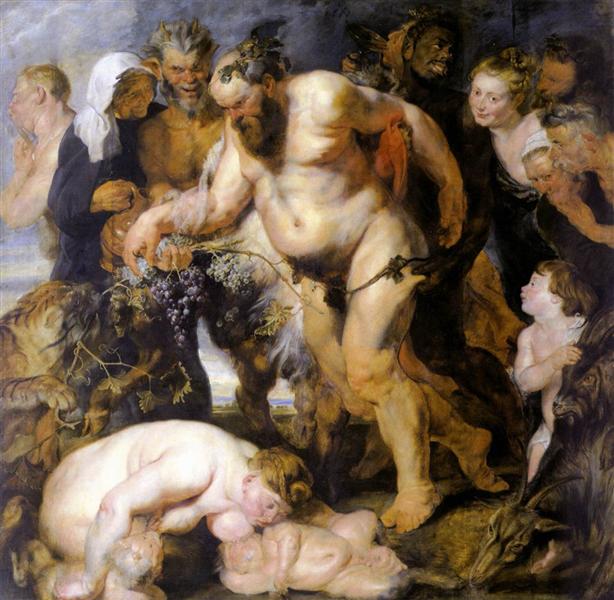
drunken-silenus.jpg!Large

I’d seen advertisements for The Drunken Silenus: On Gods, Goats, and the Cracks in Reality, a new book by Morgan Meis. Then I saw a review by Leanne Ogasawara for Dublin Review of Books. Here’s half of it:

A man finds himself in Antwerp with nothing to do. Then he remembers, among other things, that this is the town where the painter Peter Paul Rubens made his home. At first, this annoys him, because he has no interest whatsoever in the painter. But then he thinks, why not write a book about Rubens.

Why not, indeed?

Essayist and critic Morgan Meis sets out to develop a new style of writing about art, one that is informed by a passionate looking. . . .

So, what is the painting in question? Well, it should be said that Rubens’s Drunken Silenus is not even in Antwerp anymore, since the city is now much too small for its golden boy. The painting is now in Munich. Meis travels there and stands in front of it. . . .

Meis is a philosopher. And so, standing in front of the drunken, out-of-control figure of Silenus, he immediately thinks of Nietzsche. . . .

According to Meis, Rubens was bowled over by Titian’s Bacchus and Ariadne   and who wouldn’t be?   in which the character Silenus can be found, playing a minor role in the back of the picture. You can see him slumped over asleep, presumably in a drunken stupor, being carried along on a mule. Rubens gravitates to this plump figure and brings him centre stage in his own painting, where naked Silenus seems ready to spring right off the canvas.

In case you don’t remember   and why would you?   Silenus was the tutor of Dionysius, and member of his wild and crazy entourage. He was also the goat-god who got tangled up with King Midas. Famously, the king asked Silenus to tell him what was the best thing in the world for men? “The best thing in the world for men is to never have been born,” declares Silenus. “And the second best thing is to die early.”

You get the idea: this is what my son would call a buzz kill. But this profoundly pessimistic message deeply affected Nietzsche. Nietzsche, who was so fascinated by opposing ancient Greek impulses – one toward order (the Apollonian) and one toward frenzy and the irrational (the Dionysian), could not help but be impressed. As Meis tells it:

All this talk (Nietzsche realised) of the measured and balanced Greek mind was sloppy. No, there is turmoil. Nietzsche saw it because he was willing to look. He didn’t listen to anyone else, the experts, the other scholars. He just took a look.

When I studied Nietzsche in university, we read Dodds’s 1925 work The Greeks and the Irrational. The book was revelatory, illuminating all that was irrational about ancient Greek society. We tend to idealise the Greeks for their devotion to reason   in law, in mathematics, rhetoric and philosophy, for example. But the Greeks, said Dodds, were also deeply driven by irrational forces expressed in religious and other social practices. . . .

According to Nietzsche, Silenus was the greatest hero because he embraced the violent irrational forces that are at our core. And indeed, this is the way he has long been viewed, even in Rubens’s sympathetic depiction.

But what is a goat-god anyway? Nietzsche responds to this question, in Meis’s words that:

God is a goat because God is truth and the real truth of the matter is that life is a matter of running and jumping in the forest and rushing after something to screw and something to eat and, according to Nietzsche in what he thought he learned from the Greeks, even the life of the mind, the intellectual life of the sad-thinking-creature known as man, this creature who must think and make art and make culture, insofar as man does those things, ought to be done with the pure life-expressing power of the goat.

Have you heard of the old joke that, Life is so terrible, it would have been better not to have been born. Who is so lucky? Not one in a hundred thousand!

More than anything, The Drunken Silenus is about the “tears of things” (lacrimae rerum). Underneath the beauty of Antwerp   underneath the beauty of all cities, he says, is the irrationality of violence, chaos, and war. A world of tears.

This is the deeper truth that Nietzsche uncovered in the figure of Silenus. And in Meis’s telling, as the Franco-Prussian War came to a head during The Birth of Tragedy’s original composition, this same impulse toward war and violence is what connects civilisations through history. This Dionysian horde that Nietzsche surely imagined battering the walls of the besieged city of Wörth in 1870 was the same Dionysian horde that devastated Europe in the Thirty Years War in Rubens’s time. . . .

In this telling, history is not a love story. But I do think there is something healthy about Nietzsche’s pessimism. To dwell on transience, in the tears of things, in decay and ruins, is ultimately an empowering practice. In Japan, it is referred to as “scattering flowers and fallen leaves” 飛花落葉 or . . . “dewdrop loves and our dewdrop selves”. The Lotus Sutra teaches that all that appears before us is as a dream, an illusion, a bubble, a shadow. All is like the dew or lightning. It should thus be contemplated that nothing has reality. That everything is in flux and that all must eventually perish is a sad but inevitable fact . . .

Unquote.

And then a purchase was made.

Peter Paul Rubens painted Silenus another time. Drunken Silenus Supported by Satyrs shows Dionysus’s companion and tutor getting a little help from his friends. We all need assistance sometimes, especially in what Ms. Ogasawara calls “our current time of worry and sickness”. Am I right or am I right?

Two days.

71x5QVmhEiL._AC_SX522_

We Shouldn’t Be Freaking Out

“Are we all as anxious as hell?” (She included a visual aid.)

c6166d40-f39e-46f0-80ab-a81d65af12ca

“No, I’m anxious but also optimistic and glad Tuesday (and Wednesday) are so close. I think it’s the beginning of the end for the big, bad toddler.”
 
“Sigh. I am afraid to have hope.”
 
I’m convinced the pendulum has to swing. That there has to be a reaction to the last four years.
 
One reason is that Hillary came so close. 100,000 votes in three states would have given her the Electoral College. And more people are comfortable with good old Joe. And fewer are ready to give the maniac the benefit of the doubt.
 
We are all still in shock from 2016 and fear something similar will happen again. But I don’t think we’re in for a similar surprise at all. We’re motivated to stop it from happening again. 
So many people are volunteering to get out the vote. Many more people are motivated to vote than last time.
 
In 2000, one ridiculously close state ended up in the Supreme Court. There is no reason to think this election will be that close in enough states to let the Supreme Court intervene.
 
It’s human nature to fear that a traumatic event will happen again. Nobody wants to get it wrong, to be taken by surprise again, but traumatic events are infrequent. Palm Beach isn’t using butterfly ballots. The news isn’t emails, emails, emails. James Comey isn’t in charge of the FBI. 
 
Four years ago, he asked us what we had to lose. Now we know.
 
This time we’re going to win.”