Perception: A Representative Theory by Frank Jackson

Frank Jackson is a well-known philosopher from Australia. Perception, first published in 1977, is an argument for a Representative theory of visual perception similar to John Locke’s. Jackson sums up the book in the last paragraph:

The first four chapters present my case for a Sense-datum theory of perception. Chapter 5 gives the reason for holding that all sense-data are mental. This forces a choice between Idealism and Representationalism. In chapter 6, I argue that there is no good reason for not choosing Representationalism. And, finally, in [the last] chapter, I have, first, attempted to justify my taking the perception of things as basic throughout; and, secondly, I have tried to make more precise … the particular kind of Representationalism that should be chosen.

The Sense-Data theory of perception has had a long history in philosophy. Its principal tenet is that we never perceive physical objects directly. Instead, what we immediately perceive are mental objects called “sense-data”. Thus, when I see the wall in front of me, I immediately perceive a mind-dependent blue expanse, a sense-datum (or set of sense-data), not the wall itself. In Jackson’s words, a visual sense-datum is “something seen, but not in virtue of [seeing] anything else”. Physical objects, on the other hand, are seen, but always by virtue of seeing something else, namely, sense-data. Furthermore, there is a kind of causal relationship between physical objects and the sense-data that “belong to” those objects. That’s why sense-data are said to “represent” the external world.

I’ve read that Jackson no longer endorses the theory he presents here, but Perception still provides a good account of one version of the Sense-Data theory. Professor Jackson makes many interesting distinctions and responds to a number of criticisms. One criticism he anticipates is that he is spending too much time analyzing the language of perception (Chapter 2, for example, is called “Three Uses of ‘Looks'”). He responds that his analysis of language isn’t meant to show whether sense-data actually exist. Instead, it’s meant to help us decide whether believing in the existence of sense-data (accepting the theory) is a reasonable thing to do and how the theory should be stated.

I read Perception because I’ve been thinking about the topic a lot lately and think the Sense-Data theory is probably the best one (even though it’s probably considered a bit old-fashioned now; for one thing, philosophers talk about “qualia” these days instead of sense-data). It’s common for philosophers to think of the mind as software running on the hardware of the brain. But if we’re going to think of our minds/brains as computers running programs, it makes sense to think of the input to these computers as data. Just as a computer program processes data and not the real stuff in the world, we process data as well. In our case, colors, sounds, smells, and so on, are different kinds of data. It just so happens that the data we process isn’t made up of numbers or ASCII characters (or electronic on/off settings); our perceptual data is made up of red or blue expanses, soft or loud noises and pleasant or unpleasant aromas. We don’t perceive the world “directly”, because that can’t be done. We perceive sense-data that represent the world; in similar fashion, computers process electronic values that represent the world too.
Pain, Rigor and Clarity (or How a Pain in the Foot Can Be a Pain in the Neck)

Frank Jackson is a distinguished philosopher who teaches in Australia. He does “analytic” philosophy, the kind most academic philosophers in the U.S. and U.K. do. Analytic philosophers tend to take science seriously, try to offer logical arguments for their positions and often analyze the meanings of common linguistic expressions. They also generally aim for both clarity and rigor in their written work.

Being interested in the philosophy of perception, I’ve been reading Perception: A Representative Theory, one of Professor Jackson’s books. It deals with traditional philosophical questions like this: “Since science tells us that physical objects like apples and oranges aren’t really colored – they only look colored when we perceive them – and there aren’t any colors inside our brain cells – neurons don’t have tiny red and orange pictures inside them – where exactly are the colors we see?”

In a chapter called “The Existence of Mental Objects”, Jackson spends several pages discussing bodily pain, in particular, whether pains have locations in the same way that things like fruit and furniture do. For various reasons, some philosophers have denied that pains have spatial locations. So a pain in my foot, for example, isn’t literally “in my foot”.

All of which I’ve mentioned so far, simply as a preliminary to sharing the following sentence from Jackson’s book (page 84):

It is certainly not the case that “I had a pain in my foot” entails that if I had not known that the cause of my pain was not in my foot, then I would have believed that the cause was in my foot; for one way of not knowing that the cause is not in my foot is having no opinion on whether the cause is or is not in my foot, so it might well have been the case that if I had not known the cause was not in my foot, I would neither have believed that it was or that it was not in my foot.

Having read this sentence quite a few times, it is my contention that, in this case, Professor Jackson chose rigor over clarity.

Getting a Handle on Nietzsche

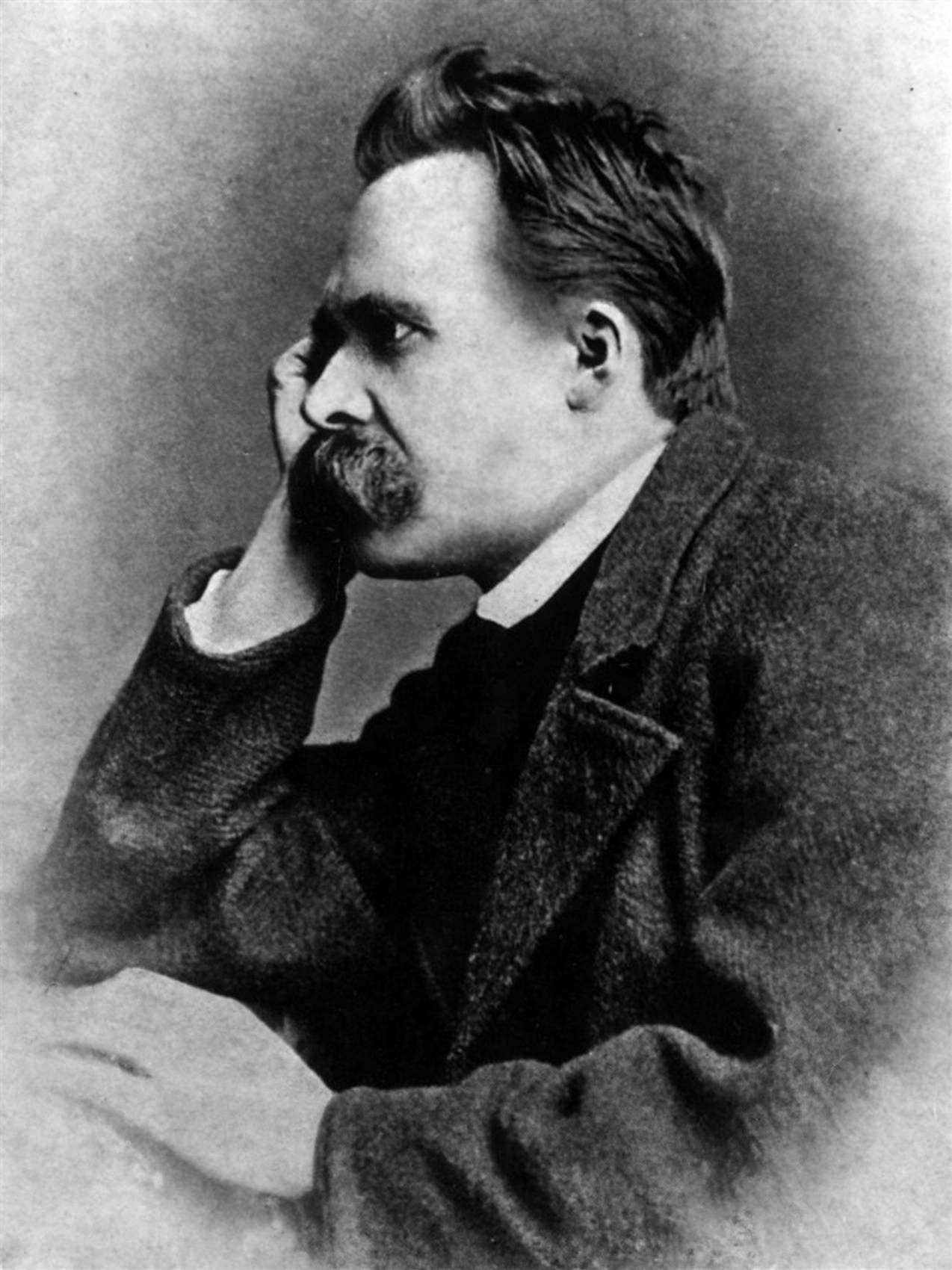
Nietzsche1882Walter Kaufmann’s Nietzsche: Philosopher, Psychologist, Antichrist is the book that got Anglo-American philosophers to start taking Friedrich Nietzsche seriously. It was originally published in 1950 and has been selling ever since. Some observers think Kaufmann, who was a professor at Princeton and died in 1980, was too easy on Nietzsche, but there’s no doubt that Nietzsche is a classic and Nietzsche is worth taking seriously.

Nietzsche viewed the “will to power” as humanity’s basic motivating force, but didn’t worship violence or the state. Despite what’s commonly believed, he wasn’t a proto-Nazi or an anti-Semite. (That was his sister Elisabeth, who was able to present her version of Nietzsche to the world after she took control of his estate.)

Neither was he a political liberal. Kaufmann suggests it’s best to view Nietzsche as a kind of aristocrat, in the way that Aristotle was an aristocrat when he extolled the virtues of the “great-souled man” (“a person is thought to be great-souled if he claims much and deserves much”).

According to Nietzsche, there is a natural aristocracy of individuals who can control their passions and channel their will to power into the accomplishment of great things. Caesar and Napoleon were natural aristocrats, but so were Socrates, Jesus, Shakespeare, Spinoza, Beethoven and Goethe: 

Quite generally, Nietzsche distinguishes between (a) men whom he admires, (b) the ideas for which they stand, and (c) their followers. Only in terms of some such categories can one understand Nietzsche’s complex attitude toward Jesus, Christianity and Christendom [i.e. he admired the first, criticized the second and hated the third.]

Similarly, Nietzsche admired Schopenhauer; respected but criticized Schopenhauer’s philosophy; and despised his followers. Nietzsche admired Wagner and felt drawn to much of his music, but he abominated the ostentatiously Christian nationalists and anti-Semites who congregated in Bayreuth…

Nietzsche’s fight against Socrates thus takes two forms: denunciations of his epigoni [his disciples] and respectful criticisms of his doctrines… [Socrates] is the very embodiment of Nietzsche’s highest ideal: the passionate man who can control his passions [398-399].

By all accounts, Nietzsche was a kind, considerate person despite his critical nature and his celebration of power (and his apparent misogyny). He even argued that the strong should be considerate of the weak (that’s most of us, the bulk of humanity). I haven’t read much of his work, and have found him paradoxical and hard to understand, so it was a relief to read the passage from Kaufmann above.

It explains how Nietzsche can speak well of accomplished individuals, while evaluating, often negatively, the details of their accomplishments and vigorously attacking their disciples. That makes sense if you cherish leadership and creativity as things in themselves. You can still find fault with the particulars (nobody’s perfect) and see no virtue in being a follower (even a follower of Nietzsche): 

When he had said that, his disciple shouted … : “But I believe in your cause and consider it so strong that I shall say everything, everything that I can find in my heart to say against it.” The innovator laughed … : “This kind of discipleship”, he said then, is the best … ” [The Gay Science, 106].

Nietzsche: Philosopher, Psychologist, Antichrist by Walter Kaufmann

Walter Kaufmann’s Nietzsche is the book that got Anglo-American philosophers to take Nietzsche seriously after World War II. It was originally published in 1950 and has been selling ever since. Some observers think Kaufmann may have been a bit too easy on Nietzsche, but there is no doubt that Kaufmann’s book is a classic and Nietzsche was a great philosopher whose works justify serious consideration.

Nietzsche viewed the “will to power” as humanity’s basic motivating force, but didn’t worship violence. Despite what’s commonly believed, Nietzsche wasn’t a proto-Nazi or an anti-Semite. Neither was he a political liberal. It’s best to view him as a kind of aristocrat, in the way that Aristotle was an aristocrat when he wrote n favor of the “great-souled man” (“a person is thought to be great-souled if he claims much and deserves much”).

According to Nietzsche, there is a natural aristocracy of individuals who can control their passions and channel their will to power into the accomplishment of great things. In Nietzsche’s view, Caesar and Napoleon were natural aristocrats, but so were Socrates, Jesus, Michaelangelo, Spinoza, Goethe and Wagner:

Quite generally, Nietzsche distinguishes between (a) men whom he admires, (b) the ideas for which they stand, and (c) their followers. Only in terms of some such categories can one understand Nietzsche’s complex attitude toward Jesus, Christianity and Christendom [i.e. he admired the first, criticized the second and hated the third.]

Similarly, Nietzsche admired Schopenhauer; respected but criticized Schopenhauer’s philosophy; and despised his followers. Nietzsche admired Wagner and felt drawn to much of his music, but he abominated the ostentatiously Christian nationalists and anti-Semites who congregated in Bayreuth…

Nietzsche’s fight against Socrates thus takes two forms: denunciations of his epigoni [his disciples] and respectful criticisms of his doctrines… [Socrates] is the very embodiment of Nietzsche’s highest ideal: the passionate man who can control his passions [398-399].

By all accounts, Nietzsche was a kind and considerate person despite his critical nature. He even argued that the strong should be considerate of the weak (the bulk of humanity). I’d recommend Kaufmann’s book as a helpful and enjoyable account of Nietzsche’s philosophy, but Kaufmann spends a lot of time responding to old, misleading descriptions of Nietzsche’s positions. That made sense 60 years ago, but it makes Nietzsche (the book, not the philosopher), feel somewhat dated now.

A Guide to Reality, Part 12

Chapter 7 of Alex Rosenberg’s The Atheist’s Guide to Reality is called “Never Let Your Conscious Be Your Guide”. A more grammatical title would have been “Never Let Consciousness Be Your Guide”. A longer but more accurate title would have been “Never Let Introspection Be Your Guide to What’s Happening in Your Mind”, because that’s the actual theme of the chapter: “Scientism requires that we give up everything introspection tells us about the mind” [147].

As he often does, Rosenberg overstates his case, apparently for rhetorical effect. After all, is it really true that introspection is a completely unreliable guide to what’s going on in our minds?

He offers as evidence three kinds of phenomena. The first is “blindsight”. Researchers have discovered that people with certain kinds of brain damage can perceive features of the world without being conscious of what they’re perceiving. For example, a person with a particular kind of damage to the visual cortex, who denies seeing anything at all, can “see” colors and shapes and even the expressions on other people’s faces. If asked whether they see something, they answer “no”, but forced to guess, they give the correct answer. Here, then, is a case in which conscious introspection, which indicates that I don’t see anything, is unreliable, because I really do.

Rosenberg’s second piece of evidence concerns our common belief that we have free will. Most of us are quite convinced that we make conscious decisions that result in freely-chosen actions all the time. However, experiments suggest that when we decide to perform a random action like moving a finger a certain way, the physiological process that will inevitably lead to the action taking place is underway before we’re aware of our decision to perform the action. 

The most interesting case he cites is one in which a neuroscientist stimulates a subject’s brain, causing the subject’s finger or wrist to move but also causing the subject, milliseconds later, to claim that the motion resulted from the subject’s conscious decision.The interpretation of these findings and their relevance to the free will problem are controversial, but they do suggest that conscious decision-making may not be as important in making decisions as we think it is.

Finally, Rosenberg argues that the existence of optical illusions shows that consciousness is unreliable. We interpret visual stimuli according to unconscious rules of thumb (mixed metaphor). These rules of thumb, which are probably the combined product of human evolution and our own experience, often mislead us. The circles in the diagram below look different but really aren’t, so here’s another case, according to Rosenberg, in which we shouldn’t let consciousness be our guide. (The book includes some interesting illustrations from the Purves Lab, which are available here.)

download (1)

Chapter 7 is relatively brief, because in this chapter Rosenberg is laying the groundwork for an especially counterintuitive idea he’s going to discuss in the next chapter (that we don’t actually think “about” anything at all). For now, here’s his conclusion:

We have seen that consciousness can’t be trusted to be right about the most basic things: the alleged need for visual experiences to see colors and shapes, the supposed role of conscious decisions in bringing about our actions, even the idea that we [see the world as it is]. If it can be wrong about these things, it can be wrong about almost everything it tells us about ourselves and our minds [162].

An important thing to note regarding Rosenberg’s argument is that he isn’t really claiming that conscious sense perception is completely unreliable (at least that’s not what I think he’s claiming). Although he denies that colors, for example, are mind-independent properties, he clearly believes that we do learn about the world using our eyes and ears. Otherwise, it would be odd to offer evidence that a blind person can perceive the “correct” color of an orange and that optical illusions are illusory (compared to what?). It would also be difficult to explain why most of us navigate the world better when our eyes are open and we’re not wearing headphones.

His principal thesis in this chapter is that certain conclusions we naturally draw from introspection (“the examination or observation of one’s own mental and emotional processes”) are mistaken. Specifically, it’s natural for us to assume that we need to be conscious in order to perceive certain features of the world, that our choices clearly determine our actions, and that (prior to being let in on the secret) we can always tell whether two lines are the same length or two circles are the same color just by looking.

I think Rosenberg is wrong, however, when he concludes that introspection can’t be trusted about “the most basic things”. What are the most basic conclusions we can draw from introspection? I’m not sure about that, but some natural conclusions seem more basic than the ones Rosenberg criticizes.

For example, we are better at perceiving features of the world when we’re relatively conscious (like when we’re awake) than when we’re relatively unconscious (like when we’re asleep). Some people see and hear better than others. Sight is usually reliable, even though there are occasional optical illusions. And when we feel angry or sad, we are generally angry or sad. It’s just wrong to think that introspection is always wrong about the most basic things.

I won’t offer a more basic conclusion about free will, except to say that conscious deliberation seems to help in making some decisions (whether to enroll at a college, get married or buy a house, for example) – whatever the underlying physiological processes are. Rosenberg may be right that conscious decisions are always the aftermath of unconscious decisions. We never really know what decision we’re going to make until it starts to “feel” like the right decision or we actually do something. Maybe our brains always do the necessary work unconsciously right before we discover what we’ve decided.

Coming up (sooner or later), part 13 of “A Guide to Reality”: Is it true that the brain does everything without thinking about anything at all?