Whereof One Can Speak 🇺🇦

Nothing special, one post at a time since 2012

A Tax Break That Will Never Die: Part 2 (Humorous Edition)

A few minutes ago, Senate Majority Leader Charles Schumer began the process of passing the Democrats’ Inflation Reduction Act. Among other things, it will make the tax system fairer and give more Americans access to healthcare. It also includes provisions dealing with the climate crisis that are big enough to please Al Gore:

The Inflation Reduction Act has the potential to be a historic turning point. It represents the single largest investment in climate solutions & environmental justice in US history. Decades of tireless work by climate advocates across the country led to this moment.

No deal is perfect and we need many more actions to solve the climate crisis. Yet, this bill is a long overdue and necessary step to ensure the US takes decisive action on the climate crisis that helps our economy and provides leadership for the world by example.

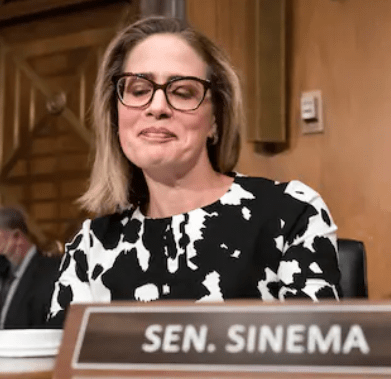
But Al Gore isn’t very funny. Alexandra Petri, who writes for The Washington Post, is. Yesterday, she channeled Krysten Sinema, the “Democratic” senator from Arizona with a unique approach to legislation:

Just to be clear: I do want to reform the carried interest tax loophole! I am so excited to work on it. Sounds bad! Seems bad! It is a no-good, rotten thing, and I don’t want it to keep existing. I look forward to legislating it away. That being said, if you remove it right now, in this Inflation Reduction Act, I will vote against it, and I will torpedo the whole bill.

Why? Whimsy! I just wanted to leave my own special Kyrsten Sinema touch on the bill!

I am a manic pixie dream senator who wants to make this bill slow down and embrace life! Everyone else is sitting there in their penguin outfits in neutral tones! Their idea of a fun, whimsical thing to do is a vote-a-rama! At most, they will go sit on a yacht for a brief time. Not me; I’m different! And I’m here to make sure this bill is different, too.

Inflation Reduction Act, why are you so staid and straightforward? Look at you, sitting there just closing tax loopholes for hedge funds! And you’ve got that across-the-board 15 percent tax on corporations. Don’t you know that corporations can sometimes be friends? Maybe not all corporations deserve an across-the-board tax. Some corporations are really chill, actually, and other corporations are donors and sometimes a private equity firm has a whole other side you might not have expected, if you just give it a chance!

Maybe, you’re so busy closing loopholes that you forgot how to be open. Maybe you need to open up, actually, those loopholes, please. That’s why I’m here: Someone’s got to be just that little bit random, conveniently in a way that consistently involves decreasing the amount of money corporations and the absurdly wealthy pay in taxes.

Sometimes you see a bill and you see how hard that bill is working to do good. That poor bill looks exhausted, doing so much! Reducing carbon emissions and decreasing the deficit and lowering ACA premiums and — and — and! And you’re like, “Bill! Relax! You don’t need to do it all! What you need to do is to stop and smell the roses. Or the rosés, like at the private equity-adjacent winery where I interned in 2020 — while serving as senator! Unrelatedly, do we really need to close the carried-interest tax loophole now? Maybe, actually, we need to live a little.”

I can be the friend this bill needs to urge it to run through a sprinkler at dusk and spin around on a beach listening to the Shins. It’ll be like Amelie, but if instead of freeing garden gnomes from people’s yards, we liberated them from pesky taxes, and if instead of gnomes, those were the account books of private equity firms! You know what they say: Is it really quirky and spontaneous if it doesn’t coincidentally also happen to benefit corporations and hedge funds? Maybe, but we can’t take that chance!

Think about who stands to gain from this bill: Lots of people! People who want to have a nice habitable planet in the future! People who want to pay lower health-care premiums! People who want lower inflation! But now think about the people whom this bill will make sad: hedge funders!

Doesn’t that make you sad? Can’t we do something nice for the hedge funders, too, just — ’cause? We’d better, though, or I won’t support it.

Come, bill! Come put your toes in the grass and run through the rain with me, and also, just for fun, let’s make certain that the new 15 percent minimum tax on corporations doesn’t affect that particular corporation! Or that one! Or that one! I’m pointing randomly, I swear! Just from whimsy, again, my driving feature! But I am finding exemptions — a lot of them!

I don’t know what life is all about, but it’s too short not to do what you can to prevent wealthy corporations and private equity firms from paying taxes. And then we’ll go dance in the moonlight and make a sound nobody has heard before.

Ready? I’ll start, by saying a sentence that has never been said: “I think this loophole that allows private equity firms to pay less than their fair share in taxes should be left open!” Hahaha, wow, I can’t believe I just said that! Maybe no one will ever say it again! Except me. Who knows? I might say it lots of times!

Untitled

You Know They Shoot Fast. Here’s the Other Thing They Do.

The other thing is the damage they do to a human body. This video features a ballistics test starting around 1:25 that shows what’s it like to get shot with one of these AR-15 type weapons compared to a pistol. What else do we need to know in order to make these things illegal?

The Right To Peacefully Assemble Is Under Attack

The Supreme Court Five may deny that Americans have a right to privacy, but until they rule otherwise, the First Amendment guarantees the right to peacefully assemble. Except that peacefully assembling isn’t what it used to be. Right-wing violence and threats of violence are becoming common in our civic life. Andy Campbell is the author of a forthcoming book about one of the groups that led the January 6th insurrection He writes about the ways protesters are now being attacked and threatened by right-wing extremists:

On June 24, mere hours after the Supreme Court reversed Roe v. Wade and upended abortion rights in America, a truck driver sized up a group of protesters crossing the street in Cedar Rapids, Iowa, and put his foot on the gas.

The victims — all of them women — were among the last few people in a group of about 100 trying to cross a busy downtown intersection safely via the crosswalk. They described the attack as a slow-motion horror show: A visibly irritated driver maneuvered his truck around the car in front of him and then beelined it through the intersection, directly toward the protesters.

He slowed down as his bumper met with the outstretched arms of the women still in the crosswalk. But he didn’t stop.

“We made eye contact at that point. And I saw hate. Just hate,” said one of the women, who asked to remain anonymous for her safety. She spoke through tears as she continued, “He screamed at me to move, and I remember shouting ‘No,’ and he started driving. And that’s when I knew I was going to get run over.”

The driver — whose identity police haven’t made public — pushed forward, bowling the women over before he left the scene, witnesses said. Several were hospitalized, including one woman who suffered a concussion and another whose ankle had been rolled over.

Multiple high-profile members of the community attended the march and witnessed the attack…. Initially, witnesses thought they might have an open-and-shut case in front of them: They had witness statements from community leaders, footage of the incident from multiple angles, and they all saw the same thing.

But … in 2021, Iowa Republicans passed a bill that effectively eliminated civil liability for drivers who hit protesters in the street, and increased various penalties for protesters. The bill was championed by Gov. Kim Reynolds, whose own SUV driver struck a Black Lives Matter protester in the heat of the 2020 demonstrations (state police blamed the protester). While it remains to be seen how those laws might affect the case in Cedar Rapids, two women who’d been hit by the truck wondered aloud in interviews with HuffPost whether they might face charges instead of the driver….

The sobering reality now coming into focus is that the attack on this community isn’t particularly unique or surprising. Taken alongside recent incidents of political violence across America, the Cedar Rapids attack is an almost insignificant data point on a densely packed timeline.

In fact, vehicular assaults against protesters amount to a crisis in their own right. Incidents have skyrocketed since the summer of 2020, when millions of protesters took the streets to demonstrate against police violence and bigotry following the murder of George Floyd….

Data collected by The Washington Post proved that those protests were overwhelmingly peaceful — no injuries or property damage were reported in more than 96% of events — and yet protesters across the country were met with vitriol, authoritarian crackdowns and physical violence from the [president] and his administration. He called them “vicious dogs” and “thugs,” and deployed federal troops to events, where they attacked protesters and disappeared them in unmarked vans. Fox News, meanwhile, was churning out disinformation and lies surrounding those rallies, using isolated footage and even doctored images to manufacture a false sense that entire American cities had fallen to BLM and antifa.

And the vilification worked. Everyday people really seemed to want to kill protesters: The Boston Globe analyzed 139 cases of vehicles ramming protesters in just 16 months following Floyd’s death, leading to more than 100 injuries and three deaths….

Today, political violence is a regular feature at civic events, and not just at far-right and MAGA rallies. Gun violence is an ever-present threat across the country, and even on the rare day where a mass shooting doesn’t happen, droves of armed demonstrators and militia groups show up to political events to ensure that the specter remains. Meanwhile, far-right street gangs like the Proud Boys are now mobilizing to all manner of community gatherings in service to the right wing’s various grievances.

When the GOP was up in arms about LGBTQ issues, armed Proud Boys rushed drag events, and their fascist cousins in a group called Patriot Front threatened community Pride celebrations. When the right-wing conspiracy theory of the day was that The Walt Disney Co. was grooming children, Proud Boys showed up to Disney events and threatened attendees, calling them “pedophiles.” And when Roe was overturned and liberal demonstrators filled the streets, the Proud Boys and heavily armed members of various militia groups showed up to intimidate the crowds. These incidents are accelerating as election season draws nearer.

This appears to be the new normal in America. Politically charged violence, having gone unchecked for years, is no longer a fear but an expectation for many politically active Americans….

Unquote.

Escalating violence toward protesters is consistent with predictions that America will eventually experience a violent right-wing insurgency. All the signs are pointing that way.                  

They Have a Point

Every 20 minutes or so, unless I’m asleep, I wonder why millions of otherwise sane people would give Republicans more power in Congress or make T____ or somebody like him president again. I won’t go down the list of reasons why Republicans don’t deserve to be in charge of our government. At the moment, I’m thinking about why so many people prefer them to be.

I believe the predominant reason is that they don’t like how America has been changing. But the change they’re upset about is not how the rich keep getting richer and the rest of us are treading water or falling behind. Otherwise they wouldn’t vote for politicians whose overriding goal is to lessen the “tax burden” on people and corporations that are already doing fine. The problem they see lies elsewhere.

Most of them fear they’re not on top anymore or soon won’t be.

President Lyndon Johnson, who knew politics backwards and forwards, made a relevant point way back in 1960. Bill Moyers, Johnson’s press secretary, recorded the moment:

We were in Tennessee. During the motorcade, he spotted some ugly racial epithets scrawled on signs. Late that night in the hotel, when the local dignitaries had finished the last bottles of bourbon and branch water and departed, he started talking about those signs. “I’ll tell you what’s at the bottom of it,” he said. “If you can convince the lowest white man he’s better than the best colored man, he won’t notice you’re picking his pocket. Hell, give him somebody to look down on, and he’ll empty his pockets for you.”

It’s not all about race, however.

If you could find the typical American who prefers the Republican Party, he would have characteristics like these. In addition to being male, he’d be white, solidly or loosely Christian, heterosexual and nationalistic. He’d be comfortable making fun of people unlike him. He wouldn’t live in a big city or have a 4-year college degree. He might be financially secure or trying to get by on Social Security, but he would fondly look back on a time when someone with his characteristics would automatically feel pretty damn good about himself and his place in the world relative to “lesser” people and “lesser” countries. 

Obviously, nobody has to meet all those criteria to happily vote Republican, since millions of women vote that way (many of whom believe a man should be “the head of the family”).

The point is that recent trends have made it less important, less praiseworthy, less powerful, to fit those Republican-friendly criteria. That fact — what those of us on the other side call “progress” — bothers millions of Americans a great deal. The feeling that they’re falling behind millions of people unlike themselves means a politician who acts or talks tough and promises to address their concerns about their perceived loss of status — to somehow reverse that progress — is immediately appealing, even if that politician owns a gold toilet and doesn’t resemble Jesus in any way. He may be despicable and a con man, but he claims to be on their side, and occasionally does something that makes them happy while angering their supposed enemies. That’s enough to get their support. 

In light of this, an article at FiveThirtyEight explains “why Democratic appeals to the ‘working class’ are unlikely to work” with Republican voters, even if they’re part of “the working class”:

… The dividing line in the American electorate is not economics; it’s race and culture…. And on this issue, Democrats and Republicans could not be further apart. It’s why Democratic appeals to win back the [white, especially male] working class are unlikely to work…

In the Democratic Party’s 2020 platform, “building a stronger, fairer economy” was the second item listed, after strategies to deal with COVID-19, and it sounded a populist note: that the American economy is tilted toward corporations and the wealthy, and that it’s harder than ever for Americans to move up the economic ladder. “Americans deserve an economy that works for everyone — not just for the wealthy and the well-connected,” their platform reads….

[But] Republicans mainly think of the working class as a cultural and racial identity, and not an economic one. When Democrats … pitch themselves to working-class voters, [it’s] primarily a populist appeal bent on uniting the working class against corporate greed….

This takes it as a given that the long-term trends in economic outcomes, which have affected many Americans, are what T____’s voters are responding to. This line of thinking, though, ignores other changes in American life and politics, such as an increase in global trade, a shift toward knowledge work instead of blue-collar labor … and a more expansive view of rights and equalities for racial, ethnic and gender minorities….

[A Democratic strategist offers this advice:] “The way we get around [ideological polarization] is by talking a lot about progressive goals that are not ideologically polarizing, goals that we share with self-described conservatives and moderates….Even among nonwhite voters, those tend to be economic issues.” But this assumes that voters will forget about the party alignments that are deeply entrenched.

When Democrats lament a bygone era in which they won the working-class vote, they are primarily talking about the New Deal policies of President Franklin D. Roosevelt— a time when the economy was radically shifted toward worker and labor power. But that was also a time when policies meant to favor the working class were specifically designed to help white men. The relative position of many people in the economy — and society at large — has shifted, and if that’s what Republican voters are responding to, messages of economic justices and leveling the playing field for all workers won’t change that. 

Unquote.

Yes, they have a point. They’re not automatically on top anymore. That they don’t deserve to be automatically on top hasn’t sunken in.

I Suppose This Is a Hobby

I retired almost thirteen years ago and have rarely thought about getting a job, even a part-time job, since. But it appears I’ve settled on a hobby, without really intending to. This blog has been part of it for twelve years. Another part is a philosophical “book” about perspective (or points of view) I’ve been “working on” for almost ten years. The other part is lots and lots of comments I’ve spread around the internet.

Many of these comments have been deposited at an interesting site called Three Quarks Daily. It’s mainly an aggregator. They link to articles of intellectual interest at other sites. They also have a Monday Magazine, which features original content.

Untitled

The site is free, although a “one-time donation” or “small monthly payment” makes advertisements disappear. Most of us don’t need more to read on the internet or elsewhere, but I highly recommend 3 Quarks Daily.

What led me to writing this post is that I spent part of last night and most of this afternoon responding to four articles at 3 Quarks (which is more than average output for me).

The first was a response to a Guardian article called “The Federal Reserve Says Its Remedies For Inflation ‘Will Cause Pain’, But To Whom?”. At 3 Quarks, I merely quoted some of Sen. Elizabeth Warren’s recent dialogue with the Fed Chairman, Jerome Powell:

Warren asked Powell if Fed rate increases will lower gas prices, which have hit record highs this month. “I would not think so,” Powell said.

Warren asked if grocery prices will go down because of the Fed’s war on inflation. “I wouldn’t say so, no,” Powell said.

“Rate hikes won’t make Putin turn his tanks around and leave Ukraine,” Warren said, adding that they won’t break up corporate monopolies or stop Covid-19.

“Inflation is like an illness and the medicine needs to be tailored to the specific problem, otherwise you could make things a lot worse,” Warren said. ” … the Fed can slow demand by getting a lot of people fired and making families poorer.”

The Massachusetts Democrat urged Powell to proceed cautiously with further rate hikes.: “You know what’s worse than high inflation and low unemployment? It’s high inflation with a recession and millions of people out of work”.

Next was a response to an article at Aeon called “Armchair science: Thought experiments played a crucial role in the history of science. But do they tell us anything about the real world?”

I disagreed with one of the philosophers quoted in the article, James Robert Brown of the University of Toronto. He said he was extremely impressed with Galileo’s thoughts regarding falling objects. 

Suppose we connect the two objects [a musket-ball and a heavier cannonball] with a short, stiff rod. One could argue that the lighter musket-ball acts as a brake on the heavier cannonball, slowing its fall. Then again, one could also argue that the composite body, whose weight is equal to the sum of the two original bodies, must fall faster than either body alone. This is obviously a contradiction. The only solution, Galileo says, is that all bodies fall at the same rate, independent of their weight.

“I fell out of my chair when I heard it,” Brown said. ‘”It was the most wonderful intellectual experience perhaps of my entire life.” Brown went on to become a leading authority on thought experiments.

At Three Quarks Daily, I expressed skepticism, concluding that Galileo’s thought experiments didn’t prove anything except that it was worth getting empirical evidence on the question (trying it out) before reaching a conclusion.

Number 3 concerned an original article at Three Quarks written by Thomas R. Wells, a “British academic philosopher living in the Netherlands”. He called his article “We Should Fix Climate Change, But We Should Not Regret It”.

Mr. Wells argues that the climate crisis began with the Industrial Revolution, but we shouldn’t regret the Industrial Revolution because of what it’s led to. I’m not sure any sane environmentalists actually regret the Industrial Revolution. I left the fifth comment:

We can agree the Industrial Revolution was a good thing, while also noting that climate change [is] the result of regrettable choices we made along the way, not by starting the Industrial Revolution, but by ignoring our effect on the climate, even though scientists discovered that effect decades ago.

We could have made this a “vastly better world for most people” without making it a vastly worse world for so many other living things. Not exactly coining a phrase, but other living things matter.

Finally, another Three Quarks contributor, Mike Bendzela, who I believe teaches in the English department at the University of South Maine, published an article today called “Abort All Thought That Life Begins”. He argues that there is no such thing as the “beginning of life”. Life has always developed as a gradual process without any particular beginning (its ending isn’t always clear either).

As you might expect, this article has elicited a variety of comments (they’re still landing). I responded to another reader this way:

Justice Blackmun, who wrote the Roe v Wade opinion, shared an internal memo with the other justices before the majority decision was published. He wrote “You will observe that I have concluded that the end of the first trimester is critical. This is arbitrary, but perhaps any other selected point, such as quickening or viability, is equally arbitrary.” [https://en.wikipedia.org/wi…]

… I believe the author … is making the point that any decision regarding a moment when there is “conversion from not human to human” is somewhat (or totally) arbitrary. I’d say the transition from “not human enough” to “human enough” is a matter of convention.

That’s how the five Republicans and two Democrats on the Court ruled in 1973 — they came to a nuanced agreement based on trimesters and viability. It was a reasonable compromise that worked well enough for 50 years, until the Court was corruptly (after Senatorial hypocrisy and lies told to the Judiciary committee) taken over by ideologues.

I see that the person I responded to has now responded to me. Once more unto the breach…

I’ve never read all of Roe v. Wade or the dissents, and I know some lawyers and scholars who oppose forced births (women who get pregnant being compelled by the state to eventually give birth) disagree with the Roe majority’s legal reasoning.

However, as others have pointed out, the 9th Amendment to the Constitution says: “The enumeration in the Constitution, of certain rights, shall not be construed to deny or disparage others retained by the people”. Even though the Constitution doesn’t mention a right to privacy, or pregnancy or abortion for that matter, I agree with Tim Quick above that we all have certain fundamental rights, including the ones he mentioned that justify women and their doctors sometimes ending a pregnancy without interference from the government.

If topics like these interest you, I recommend Three Quarks Daily. You don’t have to read the comments.