Whereof One Can Speak đŸ‡ș🇩

Nothing special, one post at a time since 2012

Three Weeks of Time and an Unknown Amount of Space

It’s been more than three weeks since I graced the internet with a post on this blog. That could be the longest time I’ve ever stayed away. The relatively encouraging results of last month’s election may have left me with the feeling that I should leave well enough alone. Plus, the urge to share thoughts — mine or somebody else’s — can come and go.

But to get going: There’s something that bothers me about time travel. When a fictional character travels through time, they always land standing up or sitting down in a relatively comfortable location. Arnold, for example, landed in an alley, naked, the first time we saw him. Time travelers never end up a mile deep in the earth’s crust or a million miles out in space.

One problem here is that the surface of the earth in the distant past or future is nowhere near wherever the time machine is. The earth, not a perfect sphere, is revolving on its axis and revolving around the sun; the sun and the rest of the solar system is going around the galaxy; the galaxy is moving quickly away from other galaxies as the universe expands. That means calculating the location of the traveler’s destination in space, not just in time, must be quite a challenge. A tiny mistake and Arnold lands six feet under or in the wrong solar system. Naked.

This detail concerning time travel came to mind because I’ve been skimming a TV series that makes use of time travel (in a surprising way) and because I read something that actually seems worth sharing.

Sean Carroll, famous physicist and now the Homewood Professor of Natural Philosophy at Johns Hopkins, has a new book out called The Biggest Ideas in the Universe: Space, Time and Motion. It’s the first volume in a planned trilogy that is supposed to make the fundamental equations of physics understandable to those of us who got through high school math (which may be a problem for me, since trigonometry convinced me to avoid calculus).

Quanta magazine an article adapted from Prof. Carroll’s book that helped me think about space and time differently. Maybe it will have the same effect on you. The article isn’t very long, so you might want to visit Quanta (it’s free). If not, here are selections that mainly leave out some historical background and may (or may not) clarify a few of Carroll’s remarks:

… In relativity, it’s no longer true that space and time have separate, objective meanings. What really exists is space-time, and slicing it up into space and time is merely a useful human convention.

One of the major reasons why relativity has a reputation for being difficult to understand is that our intuitions train us to think of space and time as separate things. We experience objects as having extent in “space,” and that seems like a pretty objective fact. Ultimately it suffices for us because we generally travel through space at velocities far lower than the speed of light, so pre-relativistic physics works.

But this mismatch between intuition and theory makes the leap to a space-time perspective somewhat intimidating. What’s worse, presentations of relativity often take a bottom-up approach — they start with our everyday conceptions of space and time and alter them in the new context of relativity.

We’re going to be a little different. Our route into special relativity might be thought of as top-down, taking the idea of a unified space-time seriously from the get-go and seeing what that implies. We’ll have to stretch our brains a bit, but the result will be a much deeper understanding of the relativistic perspective on our universe….

Einstein’s contribution in 1905 was to point out that [to] better understand the laws of physics … all we had to do was accept a completely new conception of space and time. (OK, that’s a lot, but it turned out to be totally worth it.)

Einstein’s theory came to be known as the special theory of relativity, or simply special relativity. [Einstein] argued for new ways of thinking about length and duration. He explained the special role of the speed of light by positing that there is an absolute speed limit in the universe — a speed at which light just happens to travel when moving through empty space — and that everyone would measure that speed to be the same, no matter how they were moving. To make that work out, he had to alter our conventional notions of time and space.

But he didn’t go quite so far as to advocate joining space and time into a single unified space-time. That step was left to his former university professor, Hermann Minkowski…. Once you have the idea of thinking of space-time as a unified four-dimensional continuum, you can start asking questions about its shape. Is space-time flat or curved, static or dynamic, finite or infinite? Minkowski space-time is flat, static and infinite.

Einstein worked for a decade to understand how the force of gravity could be incorporated into his theory. His eventual breakthrough was to realize that space-time could be dynamic and curved, and that the effects of that curvature are what you and I experience as “gravity”. The fruits of this inspiration are what we now call general relativity.

So special relativity is the theory of a fixed, flat space-time, without gravity; general relativity is the theory of dynamic, curved space-time, in which curvature gives rise to gravity….

We should be willing to let go of our pre-relativity fondness for the separateness of space and time, and allow them to dissolve into the unified arena of space-time. The best way to get there is to think even more carefully about what we mean by “time”. And the best way to do that is to hark back, once again, to how we think about space.

Consider two locations in space, such as your home and your favorite restaurant. What is the distance between them?

Well, that depends… There is the distance “as the crow flies”, if we could imagine taking a perfectly straight-line path between the two points. But there is also the distance you would travel on a real-world journey … avoiding buildings and other obstacles along the way. The route you take is always going to be longer than the distance as the crow flies, since a straight line is the shortest distance between two points.

Now consider two events in space-time. In the technical jargon of relativity theory, an “event” is just a single point in the universe, specified by locations in both space and time. One event, call it A, might be “at home at 6 p.m.” and event B might be “at the restaurant at 7 p.m.” 

… We can ask ourselves, just as we did for the spatial distance between home and restaurant, how much time elapses between these two events…. If one event is at 6 p.m. and the other is at 7 p.m., there is one hour between them, right?

Not so fast, says Einstein. In an antiquated, Newtonian conception of the world, sure. Time is absolute and universal, and if the time between two events is one hour, that’s all there is to be said.

Relativity tells a different story. Now there are two distinct notions of what is meant by “time”. One notion of time is as a coordinate on space-time. Space-time is a four-dimensional continuum, and if we want to specify locations within it, it’s convenient to attach a number called “the time” to every point within it. That’s generally what we have in mind when we think of “6 p.m.” and “7 p.m.” Those are … labels that help us locate events….

But, says relativity, just as the distance as the crow flies is generally different from the distance you actually travel between two points in space, the duration of time you experience [on the journey between A and B] generally won’t be the same as the [one-hour difference between the universal coordinate times, A and B]. You experience an amount of time that can be measured by a clock that you carry with you on the journey. This is the proper time along the path. And the duration measured by a clock, just like the distance traveled as measured by the odometer on your car, will depend on the path you take.

That’s one aspect of what it means to say that “time is relative”. We can think both about a common time in terms of a [space-time coordinate] and about a personal time that we individually experience [or measure] along our path. And time is like space — those two notions need not coincide.

By a “straight path” in space-time, we mean both a straight line in space and a constant velocity of travel … with no acceleration. Fix two events in space-time — two locations in space and corresponding moments in time. A traveler could make the journey between them in a straight line at constant velocity … or they could zip back and forth. The back-and-forth route will always involve more spatial distance, but less proper time elapsed, than the straight version [i.e. a clock along for the ride will run more slowly on the back-and-forth route — really?].

Why is it like that? Because physics says so. Or, if you prefer, because that’s the way the universe is. Maybe we will eventually uncover some deeper reason why it had to be this way, but in our current state of knowledge it’s one of the bedrock assumptions upon which we build physics, not a conclusion we derive from deeper principles. Straight lines in space are the shortest possible distance; straight paths in space-time are the longest possible time. It might seem counterintuitive that paths of greater distance take less proper time. That’s OK. If it were intuitive, you wouldn’t have needed to be Einstein to come up with the idea.
A Note to Readers

When I make a serious mistake in something I’ve written here — which happens often — and I notice it — which happens less often — I try to fix the post. But that doesn’t generate a new email for those who get posts that way. So if you see something badly wrong in an emailed post it’s may be corrected on the blog (although, as in most things, there’s no guarantee).

Thus, today, this went out:

Maybe [Biden] actually believes it’s just those extreme MAGA Republicans we have to worry about, not the 5% or so who actually respect democracy and the rule of law.

It now says:

Maybe he actually believes it’s just those extreme MAGA Republicans we have to worry about, not the average ones who are lukewarm on democracy and the rule of law.

Please pardon this interruption in your daily affairs.

Good News, Bad News on Climate

The New York Times has a long article about the climate crisis that can be summed up thusly: It’s going to be very bad for a lot of people but doesn’t look like the end of the world.

Here’s a link to the whole article: “Beyond Catastrophe: A New Climate Is Coming Into View” by David Foster-Wallace. Some excerpts:

With the world already 1.2 degrees hotter, scientists believe that warming this century will most likely fall between two or three degrees…. A little lower is possible, with much more concerted action; a little higher, too, with slower action and bad climate luck….Thanks to astonishing declines in the price of renewables, a truly global political mobilization, a clearer picture of the energy future and serious policy focus from world leaders, we have cut expected warming almost in half in just five years….

First, worst-case temperature scenarios that recently seemed plausible now look much less so, which is inarguably good news and, in a time of climate panic and despair, a truly underappreciated sign of genuine and world-shaping progress.

Second, and just as important, the likeliest futures still lie beyond thresholds long thought disastrous, marking a failure of global efforts to limit warming to “safe” levels. Through decades of only minimal action, we have squandered that opportunity. Perhaps even more concerning, the more we are learning about even relatively moderate levels of warming, the harsher and harder to navigate they seem. In a news release…, the United Nations predicted that a world more than two degrees warmer would lead to “endless suffering.”

Third, humanity retains an enormous amount of control — over just how hot it will get and how much we will do to protect one another through those assaults and disruptions. Acknowledging that truly apocalyptic warming now looks considerably less likely than it did just a few years ago pulls the future out of the realm of myth and returns it to the plane of history: contested, combative, combining suffering and flourishing — though not in equal measure for every group….

“The good news is we have implemented policies that are significantly bringing down the projected global average temperature change,” says the Canadian atmospheric scientist Katharine Hayhoe,…The bad news, she says, is that we have been “systematically underestimating the rate and magnitude of extremes.” Even if temperature rise is limited to two degrees, she says, “the extremes might be what you would have projected for four to five.”

“Things are coming through faster and more severely,” agrees the British economist Nicholas Stern… In green technology, he says, “we hold the growth story of the 21st century in our hands.” But he worries about the future of the Amazon, the melting of carbon-rich permafrost in the northern latitudes and the instability of the ice sheets — each a tipping point that “could start running away from us.” “Each time you get an I.P.C.C. report, it’s still worse than you thought, even though you thought it was very bad,” he says. “The human race doesn’t, as it were, collapse at two degrees, but you probably will see a lot of death, a lot of movement of people, a lot of conflict over space and water.

…. What will the world look like at two degrees? There will be extreme weather even more intense and much more frequent. Disruption and upheaval, at some scale, at nearly every level, from the microbial to the geopolitical. Suffering and injustice for hundreds of millions of people, because the benefits of industrial activity have accumulated in parts of the world that will also be spared the worst of its consequences. Innovation, too, including down paths hard to imagine today, and some new prosperity, if less than would have been expected in the absence of warming. Normalization of larger and more costly disasters, and perhaps an exhaustion of empathy in the face of devastation in the global south….”

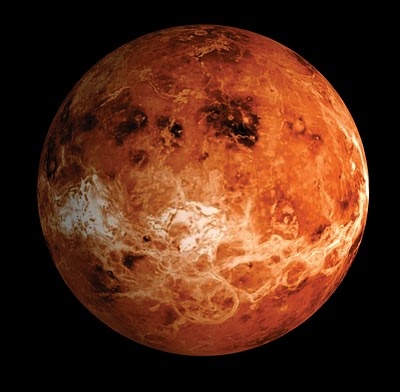
So we shouldn’t worry about the Earth turning into another Venus, a planetary greenhouse with surface temperatures of 800 degrees. That’s the good news.

71abd1cb372a70c9c80e80cfa60aaa91--space-planets-the-planets

For more on the bad news, there’s a companion article by the same author: “The New World: Envisioning Life After Climate Change”.

The moral of this story: We’ll still be around for a long time but we have plenty of work to do to make things not so bad.

And a note for the reactionaries who love oil and coal:

Since 2010, the cost of solar power and lithium-battery technology has fallen by more than 85 percent, the cost of wind power by more than 55 percent. The International Energy Agency recently predicted that solar power would become “the cheapest source of electricity in history,” and a report by Carbon Tracker found that 90 percent of the global population lives in places where new renewable power would be cheaper than new dirty power. 

Would an Assassination Help?

According to news reports, someone violently assaulted Paul Pelosi, the 82-year old husband of Nancy Pelosi, the Democratic Speaker of the House (who is second in line for the presidency). Mr. Pelosi survived, but got a fractured skull and other injuries. The person arrested for the assault appears to have been seriously delusional:

The San Francisco Bay area man arrested in the attack on … Nancy Pelosi’s husband filled a blog a week before the incident with delusional thoughts, including that an invisible fairy attacked an acquaintance and sometimes appeared to him in the form of a bird, according to online writings under his name.

[He] also published hundreds of blog posts in recent months sharing memes in support of fringe commentators and far-right personalities. Many of the posts were filled with screeds against Jews, Black people, Democrats, the media and transgender people [Washington Post].

We can assume the attacker was intending to injure or assassinate Nancy Pelosi, since he apparently asked her husband “Where’s Nancy?” She wasn’t there, she was in Washington. But that’s probably why her husband was allowed to go to the bathroom, where he happened to be charging his phone. That allowed him to call 911. The 911 operator then heard conversation between Pelosi and the other man. That led the operator to alert police, who responded within a couple minutes and witnessed the assault [Politico]. I suppose, understanding that Nancy Pelosi wasn’t there, and seeing that he was about to be arrested, it seemed like a good idea to eliminate Pelosi’s husband instead.

Nancy Pelosi has been demonized for years by the Republican Party and right-wing propaganda outlets like Fox News (Vox has an historical summary). It’s not surprising that somebody who’s been told over and over that a powerful woman, in league with various dark forces, wants to destroy America decided he had to do something about it. Given the intensity of right-wing attacks on Democratic politicians in recent years, it is surprising that there haven’t been more assaults and assassination attempts.

One question this episode raises is whether the assassination of a high-level official like Nancy Pelosi or President Biden would tone down right-wing rhetoric. Could it even break the hold of the most extreme Republicans on their party? Would it be a sufficient shock to the system that some voters — possibly the so-called “moderates” who have trouble deciding which party to support — would turn away from the Republican Party?

For a time, people thought the January 6th assault on the Capitol was bad enough to make people switch sides. But it doesn’t seem to have had that effect (otherwise the polls wouldn’t be so close). For one thing, the insurrectionists walking the halls calling out to Nancy Pelosi weren’t able to find her and bludgeon her to death. They didn’t find Vice President Pence, one of their other targets, either.

The early indications are that Friday’s attempt to maim or kill the Speaker of the House by someone steeped in right-wing propaganda won’t have much of an effect. An alternate reality is already being created:

An online forum devoted to former White House adviser Stephen K. Bannon’s right-wing radio show alerted its 78,000 subscribers to “very strange new details on Paul Pelosi attack.”

Roger Stone … took to the messaging app Telegram to call the assault on House Speaker Nancy Pelosi’s husband an “alleged attack,” telling his followers that a “stench” surrounded mainstream reporting about the Friday break-in….

The skepticism didn’t stay in right-wing echo chambers but seeped also into the feeds of popular online personalities, including Twitter’s new owner, Elon Musk.

“There is a tiny possibility there might be more to this story than meets the eye,” he wrote Sunday morning, pointing his 112 million followers to a sensationalist account of the episode published by a site known for spreading right-wing misinformation. 

The rush to sow doubt about the assault on Pelosi’s husband illustrates how aggressively influential figures on the right are seeking to dissuade the public from believing facts about the violence, seizing on the event to promote conspiracy theories and provoke distrust….

These merchants of misinformation, said Carl Cameron, a former longtime Fox News political correspondent, deceive their massive audiences using rumors and lies about everything from the integrity of elections to the details of a police report. “They are creating a dystopia wherein lying and physical violence become part of our politics,” he said.

Dinesh D’Souza … aired falsehoods and innuendo in a viral Twitter thread suggesting the attack on Paul Pelosi was a form of intentional misrepresentation sometimes referred to as a “false flag”…. “The Left is going crazy because not only are we not BUYING the wacky, implausible Paul Pelosi story but we are even LAUGHING over how ridiculous it is,” he wrote early Sunday morning. “What this means is that we are no longer intimidated by their fake pieties”….

Musk [Twitter’s new owner] also appeared unconvinced by the official story… In response to a tweet from Hillary Clinton condemning the attack and claiming it resulted from “hate and deranged conspiracy theories” spread by Republican politicians, he pointed instead to a story in the Santa Monica Observer claiming without evidence that Paul Pelosi was drunk at the time of the assault and “in a dispute with a male prostitute.” Musk, who later deleted the tweet, did not respond to an email seeking comment.

The website of the Santa Monica Observer, described by fact-checkers as a low-credibility source favoring the extreme right, was offline Sunday morning. But an archived version of the story promised to explain “what really happened early Friday morning in San Francisco”. It unspooled a lurid tale about nudists and a tryst gone terribly wrong….

Apart from our personal experience, we all learn by paying attention to trusted sources of information. If your sources of information are corrupt, you get a skewed view of reality. That’s why it will take more than an attack on the Capitol or a botched assassination attempt — or something of world-historical importance like the climate crisis — to change some people’s minds.

Anti-Semitism as Independent Thinking

Say it without quite saying it and then pretend to be outraged when people notice. Michelle  Michelle Goldberg of The New York Times has noticed:

In a sketch on the German comedy show “Browser Ballett,” a man in a Nazi uniform, replete with jackboots and a red swastika armband, is marching down a street in 1933 when another man hisses, “Nazi.” The Nazi, aghast at the insult, confronts him.

“When you’re running out of arguments it’s easy to play the Nazi card,” says the Nazi. He continues, “Just because someone doesn’t share the mainstream opinion he isn’t automatically a Nazi.” Flustered, the other man replies: “But being a Nazi is already mainstream. You National Socialists already have the power.” To which the Nazi, with a condescending grin, says: “Oh, I forgot. In your world everyone is a Nazi.”

It’s a perfect satire of how the modern right operates. The right-winger starts with a bigoted provocation and, when criticized, defaults to aggrieved claims of persecution and accusations of oversensitivity. He revels in the power he’s amassed even as he poses as a victim. This dynamic has been particularly stark since the musician Kanye West, who now goes by Ye, declared his intention to go “death con 3 on JEWISH PEOPLE.”

Usually, mainstream conservatives are a bit more nuanced in their antisemitism. They decry the Luciferian puppet master George Soros, or, as Dxxxx Txxxx did in a 2016 campaign ad featuring images of prominent Jews in finance, refer to “those who control the levers of power” and “global special interests.” Marjorie Taylor Greene attributed the 2018 California wildfires to space lasers controlled, in part, by the Rothschild banking family. Doug Mastriano, the Republican candidate for Pennsylvania governor — and not, in general, an opponent of religious education — has recently attacked his Democratic opponent, Josh Shapiro, for sending his kids to an “exclusive, elite” Jewish day school, saying it shows “disdain for people like us.”

Such insinuating rhetoric lets Republicans speak to antisemites and then take umbrage when other people notice. The umbrage itself then becomes part of the political message: Those people won’t let you say anything anymore! Usually, this performance depends on language with at least a shred of ambiguity, allowing the speaker to adopt a posture of put-upon faux naĂŻvetĂ©. “Apparently now it’s some kind of racist thing if I talk about the school,” huffed Mastriano.

Ye, however, doesn’t bother with ambiguity. Last week, after Sean Combs, the rapper known as Diddy, criticized him for his “White Lives Matter” T-shirts, Ye posted an exchange on Instagram accusing Combs of being controlled by Jews. That got Ye’s Instagram account frozen, so he went on Twitter, where he was welcomed back by the site’s likely future owner, Elon Musk. There, after announcing his vendetta against the Jewish people, Ye addressed us directly: “You guys have toyed with me and tried to blackball anyone whoever opposes your agenda.”

If Republicans were capable of shame they might have felt some. Ye, who long ago embraced Dxxxx Txxxx, had just given an interview to Tucker Carlson in which he lambasted the media’s “godless agenda” and railed against abortion. Always thirsty for celebrity validation, conservatives ate the interview up. The account for the Republicans on the House Judiciary Committee tweeted, “Kanye. Elon. Trump.” And now here was Ye showing, in a completely unvarnished way, just what his right-wing conversion entails. (As it turns out, Carlson already knew; Vice has since revealed that Ye’s most paranoid and unhinged comments were edited out.)

It’s not surprising that few conservatives are rushing to distance themselves from Ye, committed as they are to defending their right to malign their enemies without consequence. Antisemites, after all, may be the original trolls. As Jean-Paul Sartre wrote in “Anti-Semite and Jew,” first published in English in 1948, antisemites “know that their remarks are frivolous, open to challenge. But they are amusing themselves, for it is their adversary who is obliged to use words responsibly, since he believes in words.” It was antisemites who perfected the pose of just asking questions; the Holocaust denier David Irving famously demanded that Deborah Lipstadt, a scholar of the Holocaust, debate him.

Criticizing Ye requires acknowledging that there’s such a thing as going too far, and values higher than owning the libs. A few conservatives made the pivot; the hosts of “Fox & Friends Weekend,” who’d earlier condemned Ye’s Instagram suspension, called his tweets “ugly” and “unfortunate.” Others, however, stuck to the typical right-wing script.

On Twitter, Todd Rokita, the Indiana attorney general last in the news for attacking a doctor who performed an abortion on a 10-year-old rape victim, accused the media of targeting Ye for his “independent thinking” and for “having opposing thoughts from the norm of Hollywood”. The right-wing media figure Candace Owens — who’d worn a White Lives Matter shirt alongside Ye — [acted] outraged that anyone would interpret a man promising to wage his own personal war on the Jewish people as antisemitic.

“First and foremost, what is ‘death con three?’” she asked…. She added, indignant, “It’s like you cannot even say the word ‘Jewish’ without people getting upset.”

The absurdism here is darkly funny, but it shouldn’t distract us from the serious thing that’s happening. What’s striking about Ye’s naked antisemitism isn’t that he crossed a line but that, for some of his powerful allies, he didn’t….On Monday night, Owens was on Carlson’s show — one of the most-watched cable news shows in the country — praising Ye for standing up for oppressed white people. His tweets about Jews didn’t come up.