Whereof One Can Speak đŸ‡ș🇩

Nothing special, one post at a time since 2012

Why the Court Has Gone Rogue and Ideas on How to Fix It

Five justices nominated by Republican presidents (and two nominated by Democrats) passed Roe v. Wade in 1973. Four justices nominated by Republicans (and one nominated by a Democrat) upheld Roe v. Wade with some revisions in 1992.

That didn’t happen this week. David Roberts (of the Volts newsletter) helps explain how the Supreme Court got filled up with right-wing fanatics:

If you read about the birth of the Federalist Society, there’s a kind of theme in the background that’s worth elevating. Conservatives’ problem over the years is that they would nominate judges & then be “betrayed” as judges drifted left (or just moderate). Souter, Kennedy, Blackmun etc.

Conservatives have lots of ways to explain this to themselves. Being exposed to liberals corrupts the bodily fluids! Etc. But the most most sensible & obvious explanation is that decent people, once they survey the evidence & arguments, come out in a decent/compassionate/liberal place.

Now, noticing that the smart, decent people they nominated kept coming to compassionate/moderate conclusions, they did NOT conclude, “gosh, maybe we should be more compassionate/moderate, since that’s where good-faith study of the evidence seems to lead!”

Instead, they decided they needed a cult-like organization where they could create hyper-ideological zealots, people so committed to reactionary conclusions that NO amount of exposure to evidence or simple humanity could ever change their minds: thus, Federalist Society.

Thus we have the striking situation we get today: liberals looking for judges can pull them from anywhere. But conservatives looking for judges can ONLY find them in this creepy billionaire-funded hothouse fringe cult full of ditto-brained mediocrities.

It’s really a great illustration that if you want someone truly, consistently reactionary, you need to find a particular dysfunctional personality type that can selectively ignore evidence, ignore nuance & context, ignore simple humanity & human need. You need a zealot.

That’s why the conservatives on SCOTUS are, in addition to being so horrible on the law, just kind of weird & creepy — intellectually mediocre but hyper-prickly & vain. They were forged in the Federalist Society laboratory. That does not produce normal, healthy people.

Unquote.

Jamelle Bouie of The New York Times has some ideas about fixing the Court:

The Supreme Court does not exist above the constitutional system.

It can shape the constitutional order, it can say what the Constitution means, but it cannot shield itself from the power of the other branches. The Supreme Court can be checked and the Supreme Court can be balanced.

It is tempting, in the immediate wake of the court’s ruling in Dobbs v. Jackson Women’s Health, to say that there’s nothing to be done about the reactionary majority on the court. But that’s just not true. The Constitution provides a number of paths by which Congress can restrain and discipline a rogue court.

It can impeach and remove justices. It can increase or decrease the size of the court itself (at its inception, the Supreme Court had only six members). It can strip the court of its jurisdiction over certain issues or it can weaken its power of judicial review by requiring a supermajority of justices to sign off on any decision that overturns a law. Congress can also rebuke the court with legislation that simply cancels the decision in question.

In the face of a reckless, reactionary and power-hungry court, Congress has options. The problem is politics. Despite the arrogance of the current Supreme Court — despite its almost total lack of democratic legitimacy — there is little to no appetite within the Democratic Party for a fight over the nature of the court and its place in our constitutional system. For many Democrats, President Roosevelt’s attempt to expand the size of the court is less a triumph than a cautionary tale — a testament to the limits of presidential leadership and presidential power.

But Roosevelt did eventually get a Supreme Court that allowed most of the New Deal to stand. The threat worked. The court was humbled.

It will take time to build the kind of power and consensus needed to make significant changes to the court. But even the work of amassing that power and putting that consensus together can stand as a credible threat to a Supreme Court that has acted, under conservative control, as if it stands above the constitutional system, unaccountable to anyone other than itself.

The power to check the Supreme Court is there, in the Constitution. The task now is to seize it.

Unquote.

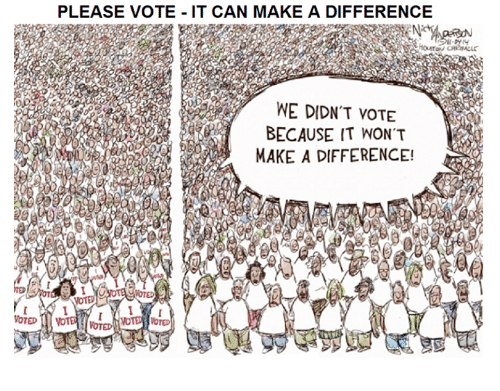
One way to begin is for anybody who had trouble voting for Barack Obama, Hillary Clinton or Joe Biden in a general election to recognize that the Democratic Party, lame as it often is, is the only institution that stands between us and living in an anti-democratic, Christianity-centered, climate crisis-denying, anti-woman, anti-gay, reactionary dystopia.

We also need to exert pressure on the aged leaders of the party to face reality. This isn’t 1991 anymore.

Use what’s left of our democracy or lose it.
Requiem for the Supreme Court

That’s the title of an article by Linda Greenhouse, the longtime observer of the Supreme Court for the New York Times. She writes:

They did it because they could.

It was as simple as that.

Greenhouse is no firebrand, but she concludes that the Court’s reactionaries have destroyed “the legitimacy of the Court”.

The title of Jill Filipovic’s article for The Guardian is “It’s time to say it: the US supreme court has become an illegitimate institution”. She writes:

As of 24 June 2022, the US Supreme Court should officially be understood as an illegitimate institution – a tool of minority rule over the majority, and as part of a far-right ideological and authoritarian takeover that must be snuffed out if we want American democracy to survive.

On Friday, in Dobbs v Jackson Women’s Health, the supreme court overruled its nearly 50-year precedent of Roe v Wade, the 1973 case that legalized abortion nationwide. It is difficult to overstate just how devastating this is for pregnant people, for women as a class and for anyone with even a passing interest in individual freedom and equality.

But it’s also devastating for those of us who care quite a bit about American democratic traditions and the strength of our institutions. Because, with this ruling, the Supreme Court has just signaled its illegitimacy – and it throws much of the American project into question. Which means that Democrats and others who want to see America endure as a representative democracy need to act.

Of the nine justices sitting on the current court, five – all of them in the majority opinion that overturned Roe – were appointed by presidents who initially lost the popular vote; the three appointed by D____ T____ were confirmed by senators who represent a minority of Americans. A majority of this court, in other words, were not appointed by a process that is representative of the will of the American people.

Two were appointed via starkly undemocratic means, put in place by bad actors willing to change the rules to suit their needs. Neil Gorsuch only has his seat because Republicans, led by Mitch McConnell, blocked the ability of Barack Obama to nominate Merrick Garland – or anyone – to a supreme court seat, claiming that, because it was an election year, voters should get to decide.

And then D____ T____ appointed Amy Coney Barrett in a radically rushed and incomplete, incoherent process – in an election year.

And now, this court, stacked with far-right judges appointed via ignoble means, has stripped from American women the right to control our own bodies. They have summarily placed women into a novel category of person with fewer rights not just than other people, but than fertilized eggs…. After all, no one else is forced to donate their organs for the survival of another – not parents to their children, not the dead to the living. It is only fertilized eggs, embryos and fetuses that are newly entitled to this right to use another’s body and organs against that other’s will; it is only women and other people who can get pregnant who are now subject to these unparalleled, radical demands.

This raises a fundamental question: can a country be properly understood as a democracy – an entity in which government derives its power from the people – if it subjugates half of its population, putting them into a category of sub-person with fewer rights, freedoms and liberties?

The global trend suggests that the answer to that is no. A clear pattern has emerged in the past few decades: as countries democratize, they tend to liberalize women’s rights, and they expand abortion and other reproductive rights. Luckily for the women of the world, this is where a great many nations are moving.

But the reverse is also true: as a smaller number of countries move toward authoritarian governance, they constrict the rights of women, LGBT people and many minority groups. We have seen this in every country that has scaled back abortion rights, reproductive rights, and women’s rights more broadly in the past several years: Russia, Hungary, Poland, Nicaragua and the United States.

The same week that the Supreme Court issued its decision in Dobbs, the US House of Representatives has been holding hearings to inform the public about what actually happened during the attempted coup of 6 January 2021, and to ideally hold perpetrators, traitors and seditionists to account. We are only a year and a half past that disgraceful day, when an angry mob decided that they, an authoritarian, patriarchal, white supremacist minority, should rule – that any other outcome, no matter how free and fair the election, was illegitimate.

The Supreme Court decision stems from that same rotted root: the idea that a patriarchal minority should have nearly unlimited authority over the majority. The [reactionaries] on the court rightly understand that individual rights and women’s freedoms are incompatible with a system of broad male control over women and children, and a broader male monopoly on the public, political and economic spheres.

But that authoritarian vision is also incompatible with democracy.

And so Democrats now have a choice. They can give speeches and send fundraising emails. Or they can act: declare this court illegitimate. Demand its expansion. Abolish the filibuster. Treat this like the emergency it is, and make America a representative democracy.

We Need To Work Together the Way They Have

The Atlantic has an article called “America Is Growing Apart, Possibly For Good”. It includes a few statistics that show how states with Democratic and Republic political leaders are diverging. 

For example, blue states lead in such factors as life expectancy, gross domestic product per person, median household income, spending on elementary and secondary education, access to health insurance, minimum wage rates, union membership and abortion rights

Red states have more children in poverty, more working households in poverty, more gun deaths, and higher maternal and COVID mortality rates.

It’s also easier to vote in blue states.

David Roberts, who publishes the Volts newsletter on politics and clean energy, cited the Atlantic article and took it from there:

The differences between red & blue America are rising to the surface again after a late-20th century period of anomalous convergence. This isn’t about misunderstanding or incivility or “partisanship” — these are real, deep, fundamental differences in values.

Red America is well into a program of attempting, with a numerical minority, to impose its will & its values on the entire country. It is aided by innumerable biases in the US constitutional system & a wildly unrepresentative Supreme Court.

This is all obvious enough (one would hope) by now, but all I want to add — as someone who woke to find his wife quietly sobbing at her computer & is filled with helpless fury — is that Red America has also been helped over the last several decades by the fact that a large number of people in Blue America refuse to take its side — refuse to take sides at all. Instead go about trying to impress each other with how above-it-all they are, how they see the flaws in both sides, how they’re too clever to just fucking fight.

I’m talking about the self-righteous lefties pissing on “libs”, the self-righteous moderates pissing on the activists, the pundits wringing their hands over process questions & tone policing, the gerontocratic Democrats lost in fantasies of bipartisanship.

Survey the whole landscape & you find legions of people naturally situated on one side of this battle simply refusing to fight it, refusing even to clearly describe the battle lines, mostly out of vanity masquerading as nobility.

Pick your episode — start with the stolen 2000 election, start earlier, whatever — and you find Blue America divided, squabbling, irresolute, taken by surprise again & again, bizarrely resistant to simply identifying Red America for what it is & trying to stop it.

Over & over again, it’s “well, maybe they have a point” or “sure I disagree but let’s not fight” or “if you squint, they’re actually just worried about lost factory jobs” or “the problem is us, we need to spend more time in diners,” on & on ad nauseam.

This isn’t unique to America of course — history provides plenty of examples of the Blue parts of society failing to take the Red parts seriously until it’s too late, only to find themselves swept up in rising autocracy & violence. A certain German example comes to mind.

So let’s make it plain: Red America wants a fundamentalist Christian patriarchal society, with white Christian men on top, protected by the law but not bound by it, & everyone else bound but not protected, begging for leftovers.

If you don’t want that — if you want a multiethnic, multiracial democracy in which every citizen is ensured a basic level of material security & dignity — then it’s time to wrench your gaze away from the ways fellow Blue Americans annoy you (yes, yes, I do too) and fix your gaze on the enemy of rising fascism.

“I’m too clever to be on any team” is over. Nobody’s impressed. Join the fucking fight or get out of the way.

Unquote.

As if the gun ruling and the abortion ruling weren’t enough, the renegade Supreme Court majority is poised to issue a ruling that could fundamentally change the way the federal government functions:

The Supreme Court is expected to issue a decision in the coming days that could curtail the [Environmental Protection Agency’s] ability to drive down carbon emissions at power plants.

But it could go much further than that.

Legal experts are waiting to see if the ruling in West Virginia v. EPA begins to chip away at the ability of federal agencies — all of them, not just EPA — to write and enforce regulations.

It would foreshadow a power shift with profound consequences, not just for climate policy but virtually everything the executive branch does, from directing air traffic to protecting investors [to dealing with pandemics].

Sherilyn Ifill, former head of the NAACP Legal Defense Fund, explains what we need to do to get out of this “democratic freefall”:

We need radical structural reform to the functioning of all three branches of government in this country. Extremists have found the keys to gaming & hijacking the system – in Congress, the White House, & [the Supreme Court].

We have witnessed the vulnerability of the rules that govern each branch of government, which have been weaponized to herd us toward minority rule. Do we have the boldness & courage to reset the rules of government so that they serve democracy? Because that’s the project. It begins with power.

If we hope to remain a democracy then we need to be prepared to fundamentally reset key aspects of how we’ve allowed our government to function (or malfunction): Congress, the Presidency, the Supreme Court. Healthy democracies learn & adjust. Can we? I don’t see how we make it any other way.

It’s a huge job, but we can do it.

FWD44E-UsAA-5md

Who’s To Blame for the Rural Crime Wave? (Not Bleeding Heart Liberals)

Paul Waldman of The Washington Post makes an excellent point: the rising crime rate isn’t an urban or Democratic problem — it’s an American one:

When we think about crime, most of us envision pictures of urban scenes…. So when crime becomes an “issue” — not just a thing that happens but a topic of political argument and debate over policy solutions — that context determines what we decide ought to be done about it.

Which is why some new reporting in the Wall Street Journal [behind a paywall] is such an important challenge to the way we’ve been thinking about crime, now that it has again become a political issue. As the Journal reports, the increase in crime, particularly homicides, that came with the onset of the coronavirus pandemic in 2020 has not just been an urban phenomenon. Rural areas have experienced more murders in recent years, leaving many communities reeling.

Here’s the big picture:

Violent crime isn’t just rising in the nation’s cities. Murder rates across the rural U.S. have soared during the pandemic, data show, bringing the kind of extreme violence long associated with major metropolises to America’s smallest communities.

Homicide rates in rural America rose 25% in 2020, according to the Centers for Disease Control and Prevention. It was the largest rural increase since the agency began tracking such data in 1999.

The individual stories are awful: shootings, stabbings; old victims, young victims; places where a murder happens only once every few years suddenly reporting a half-dozen homicides in a single year.

So how do we explain this? None of the things conservatives blame for crime — progressive prosecutors, lenient Democratic politicians, police feeling disrespected by racial justice protests, a lack of religious piety — are present in these places.

If — as we’ve all been told again and again — voters are fed up with “soft on crime” Democrats and are ready to “send them a message” in November’s midterm elections, to whom should a message be sent about the rural crime wave? And what should that message be?

Violent crime isn’t just rising in the nation’s cities. Murder rates across the rural U.S. have soared during the pandemic, data show, bringing the kind of extreme violence long associated with major metropolises to America’s smallest communities.

Homicide rates in rural America rose 25% in 2020, according to the Centers for Disease Control and Prevention. It was the largest rural increase since the agency began tracking such data in 1999.

The individual stories are awful: shootings, stabbings; old victims, young victims; places where a murder happens only once every few years suddenly reporting a half-dozen homicides in a single year.

So how do we explain this? None of the things conservatives blame for crime — progressive prosecutors, lenient Democratic politicians, police feeling disrespected by racial justice protests, a lack of religious piety — are present in these places.

If — as we’ve all been told again and again — voters are fed up with “soft on crime” Democrats and are ready to “send them a message” in November’s midterm elections, to whom should a message be sent about the rural crime wave? And what should that message be?

The causes of the rural crime wave are as complex as those of urban crime, but at heart they’re about the pandemic. It isolated people from the friends, family and institutions that traditionally provide support. For many it caused sickness and grief. It elevated everyone’s stress level, brought new mental illness, left people feeling angry and powerless. Many took those experiences and tensions out on each other.

You’ve probably seen the effects in small ways in your own life no matter where you live. People seem angrier and meaner, getting into arguments in public and driving more aggressively. You don’t even have to bring in the polarization of our politics; for instance, pedestrian fatalities increased 21 percent from 2019 to 2020, then rose 11.5 percent in 2021, according to preliminary data, reaching the highest level in four decades.

I’m reasonably certain people didn’t start mowing pedestrians down with their cars because Democrats are “soft” on reckless driving. And I’d sincerely like to hear what Republicans think of the rural crime wave, both why it has happened and what might be done about it.

My guess is that they wouldn’t say it’s a failure of political leadership. After all, in many if not most of the affected rural areas, every public official — from the sheriff to the mayor to the county council all the way up to the House member, the senators and the governor — is a conservative Republican.

But when crime goes up in urban areas, Republicans point the finger at local and national Democrats, saying it must have been their policy choices that produced the crime. Turn on Fox News and you’ll learn that cities run by Democrats are hellholes of lawbreaking and mayhem, where atomized individuals scurry around in constant fear for their lives.

But that’s not true; in fact, by some measures New York City is one of the safest places in America. And the states with the highest homicide rates are Mississippi, Louisiana, Alabama, Missouri and Arkansas. Although the governor of Louisiana is a conservative Democrat, the rest are run by Republicans; every one has a Republican legislature. Have they failed to bring down crime because they aren’t “tough” enough?

Speaking of failure, back in 2016, D____ T____ told rural Americans that if they elected him, he would solve all their problems, bring back all the jobs that had been lost and turn their communities into paradise. Yet they still struggle with lack of economic opportunity, high rates of drug addiction and violence.

Addressing those rural problems would require an examination of “root causes” — a focus that conservatives have always regarded with contempt when we were talking about urban crime. But no one is saying that rural White people just need to be punished more harshly so they finally learn to straighten up.

The truth about crime is one that doesn’t lend itself easily to political arguments: It’s complicated. We’d all do well to remember that.

The Fix Is In at the Supreme Court

The draft opinion overturning Roe v. Wade is built on the assumption fetuses deserve special treatment while denying that assumption is being made. Liza Batkin explains with “Deceit in Plain Sight” for the New York Review of Books:  

Justice Alito’s draft opinion in Dobbs v. Jackson Women’s Health Organization would have you believe that the forthcoming decision to overrule Roe v. Wade is a display of great judicial restraint and independence. The draft is written in the language of solemn duty: we do not want to take away abortion rights, the conservative justices say, but it does not matter what we want. “We can only do our job,” Alito writes, “which is to interpret the law,” and to do so regardless of personal preferences or public opinion. In the draft decision’s logic, it was Roe that exercised “raw judicial power” and Dobbs that will remedy this error by returning “the issue of abortion to the people’s elected representatives.”

These claims to neutrality and humility should make you nauseous and irate. For one thing, they come in the middle of a decision that would wield extraordinary power, disposing with a nearly half-century-old fundamental right and reshaping the lives of millions of Americans. It’s also skin-crawling that these justices pretend to be concerned with empowering “the people” through their representatives after eroding the voting rights and electoral rules that would have allowed them to be adequately represented.

This performance of duty comes from justices who have routinely championed religious interests, were nominated by Republican presidents, and have all been affiliated with the Federalist Society, an organization dedicated to promoting conservative legal ideology. While only Justice Barrett has made explicit her personal opinions about abortion, stating in a co-authored law review article in 1998 that it is “always immoral,” the others are clearly not sacrificing their moral or political views for some higher charge.

You don’t need to look very far to see that the decision is a power grab cloaked in false modesty. The flaws in the majority’s central argument, that Roe was wrong to recognize a fundamental right to abortion, have been well-exposed elsewhere. But there is another deceit at play here: while claiming fidelity to the constitutional text, the majority’s draft is steeped in unexplained views about the importance of protecting fetuses at all stages of development—views that do not come from the Constitution but have traditionally been the purview of conservative and religious antiabortion advocates, and that are exactly the kind of personal belief the majority claims not to rely on.

The issue of abortion since Roe has been a battle between competing rights: a pregnant person’s right to control their reproductive choices, and the state’s interest in protecting the potential life of a fetus. To balance these different interests, the Court has historically tried to avoid opining on the legal or moral claims of fetuses, since the issue teems with conflicting beliefs. One way to establish when the state’s interest in protecting potential life becomes compelling, the Court recognized in Roe, was to determine “when life begins.” But after a brief survey of opposing religious, philosophical, and theological views, the Court steered clear of the mire and landed instead on the line of viability, which protects the right to abortion until the fetus can survive outside the womb.

If you take Alito at his word, the Dobbs majority has managed to sidestep this balancing act altogether. The draft decision proclaims that it is “not based on any view about when a State should regard prenatal life as having rights or legally cognizable interests” and says little about the source, strength, or timing of the state’s interest in potential fetal life.

But the majority has not avoided the issue. While claiming high-minded neutrality, they hint over and over at views about the importance of protecting fetal life. Early in the opinion, Alito explains that abortion “is fundamentally different” from all other liberty interests “because it destroys what [Roe and Casey] called ‘fetal life’ and what the law now before us describes as an ‘unborn human being.’” As a result, the right to abortion presents a distinct and “critical moral question.” The draft makes this point four times.

There is, however, no reason to assert that abortion at all stages of a pregnancy presents a unique and “critical moral question” unless one already gives weight and legitimacy to moral claims for the protection of fetuses at all stages of development, starting even as soon as conception. How else can we explain the draft opinion’s circular insistence that the right to abortion is different from other rights simply because it destroys fetuses, which merely defines what an abortion does?

The terms the draft uses, too, are revealing. In veering from the “potential life” invoked by Roe and Casey and repeating without qualification the language used by the Mississippi legislature along with antiabortion amicus briefs that defend the rights of the “unborn human being” and the “unborn child,” the majority divulges its allegiances. The footnotes tell the same story. In addition to citing a large array of prior dissenting opinions by conservative justices which have no legal authority, the draft draws on amicus briefs and articles dedicated to proving that fetuses are people. Alito’s majority does all of this while claiming that it “has neither the authority nor the expertise to adjudicate” disputes about “the status of the fetus” and citing language that courts must not “substitute their social and economic beliefs for the judgment of legislative bodies.”

While we rally to protect the right of pregnant people to make decisions about their bodies and futures (and desperately hope that this draft decision does not become law), we should recognize what’s going on here. The [reactionary] justices are preparing to abuse their power, cause grievous harm, and treat us—the “people” they pretend to empower—like fools, assuming we won’t notice the contradictions they’ve left in plain sight.