I Am Dynamite!: A Life of Friedrich Nietzsche by Sue Prideaux

I’m more interested in Nietzsche’s philosophy than his life, but I visited a famous bookstore this summer and wanted to buy a book. I’m glad I bought this one.

It’s an understatement to say that Nietzsche was quite a character. He was an accomplished scholar who left the academy when he was 35, citing his poor health. He had enough income (partly from his academic pension) to travel about Europe, develop various friendships, propose marriage a couple times, spend lots of time with Richard Wagner and his wife Cosima, do a great deal of hiking, compose music nobody cared for and write philosophy books hardly anyone bought when they were published. He suffered terribly from unspecified ailments and wrote short bursts of text in order to protect his eyesight.

Although Nietzsche was a fairly normal, although brilliant, young man, he became more eccentric as the years passed, until he totally lost his mind at the age of 55. He lived another eleven years, being watched over by his horrible sister, Elisabeth, one of the nastiest people I’ve ever read about. Being a great admirer of Hitler (who admired her in return), Elisabeth used her control of Nietzsche’s writings to give him a reputation as a proto-Nazi, when in fact he wasn’t a German nationalist or anti-Semitic at all. He was a cultured, mild-mannered European with interesting, vividly-expressed ideas about how to live in a world without using religion as a crutch. (This is the positive, revisionist view of Nietzsche that’s become widely accepted among scholars in the last 70 years.)

I Am Dynamite! won a prize in Britain as the best book of 2019. From the prize’s announcement:

… this magnificent biography of a very strange and difficult subject is wonderfully well-written, lucid and clear-headed. It is full of sharp and stylish turns of phrase, it gallops along at an energetic pace, and it is often extremely and surprisingly funny, with a great gift for characterisation….

Friedrich Nietzsche’s work rocked the foundation of Western thinking, and continues to permeate our culture, high and low – yet he is one of history’s most misunderstood philosophers. Sue Prideaux’s myth-shattering book brings readers into the world of a brilliant, eccentric and deeply troubled man, illuminating the events and people that shaped his life and work. I Am Dynamite! is the essential biography for anyone seeking to understand Nietzsche: the philosopher who foresaw – and sought solutions to – our own troubled times.

Not everyone has been so enthusiastic. Brian Leiter, a philosophy professor at the University of Chicago, wrote a review in the Times Literary Supplement (which is mostly behind a paywall):

Prideaux is an especially vivid and engaging writer, who covers the facts of Nietzsche’s life well, although sometimes in soap-operatic detail….If Hollywood were to produce a movie of Nietzsche’s life, this book could provide the blueprint. Hollywood ought, however, to consult some philosophers if the movie is to do better than the book in conveying Nietzsche’s ideas.

Leiter argues briefly that Nietzsche wasn’t skeptical about science — he merely doubted science could teach us how to live. He says Prideaux gives too much importance to Nietzsche’s concept of the Übermensch and too little to his opinion that “human excellence, and the aesthetic pleasure it provided (think Beethoven or Goethe), made life worth living”. Leiter criticizes Prideaux for implying Nietzsche believed the universe has purpose, when he clearly didn’t, and that he was in pursuit of a “universal morality”, which is more debatable. The professor concludes:

Prideaux has the correct sense that Nietzsche is profound; but it is not clear she has much idea why.

I very much enjoyed this biography, but it is not for those wanting to learn something about the philosophy. Prideaux’s discussions of his ideas are at best superficial, at worst wrong.

I think the professor is a bit harsh in his assessment (as professors often are when a non-specialist writes about one of their particular specialties). I Am Dynamite! explains what it was like to be Friedrich Nietzsche and provides an introduction to his distinctive philosophy. If you want to understand more of what he thought, there are plenty of other books and articles to read, many of which feature opinions from experts who don’t always agree with Professor Leiter. As Nietzsche himself would say, his philosophy, as with most everything else in the world, is open to interpretation.
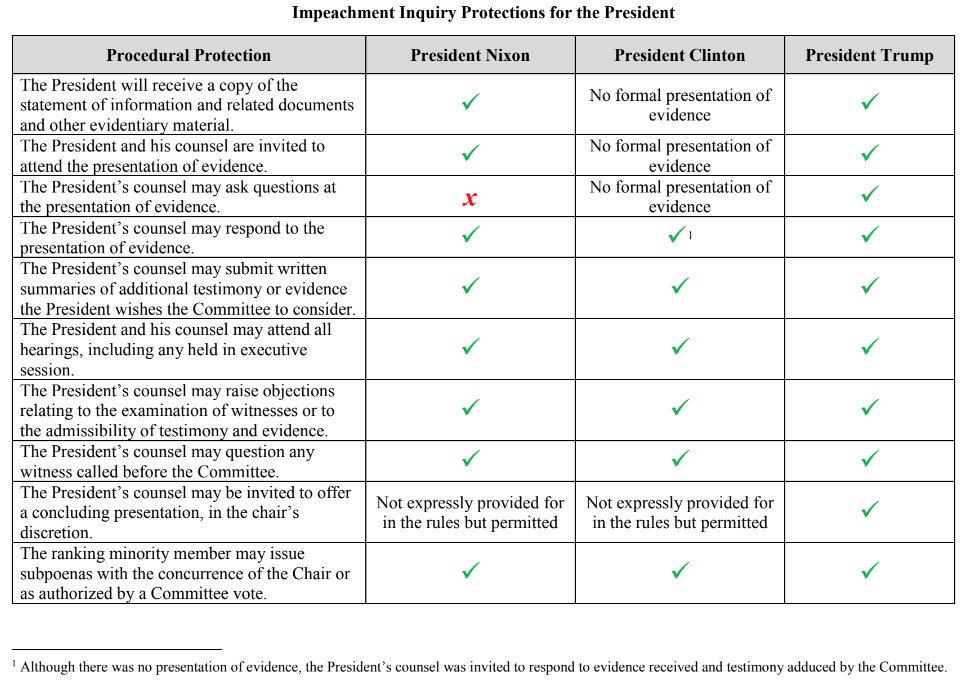
What the House Decided This Week

Sean Casten is a Democrat who represents the 6th Congressional District of Illinois. He went on Twitter this week to explain what the House of Representatives did regarding impeachment:

A brief thread is in order on what we decided to do yesterday, as there seems to be some confusion about what is in [House Resolution] 660:

First, please read the bill. Rather than relying on shoddy journalists or self-interested partisans, go to the original source material: congress.gov/bill/116th-con…

On the substance, let’s first state the obvious: we did not vote to impeach the President yesterday, nor did we vote to initiate an impeachment inquiry, nor did we vote on articles of impeachment. We voted to set the rules for the next (open) phase of the process.

The question we were all asked yesterday was not whether we should move forward, but whether we agree to move forward subject to a specific set of rules.

The rules we passed were not only fair, but in some cases more generous to the President than the rules that were passed for the Nixon and Clinton processes.

There is a very important point to be noted in that prior table. The protections afforded by this process are to the President, not his political party. As is appropriate, since he is the subject of our inquiry.

This weird narrative that the minority party deserves greater protection implicitly presumes that the minority party is on trial. No one is making that argument, except perhaps for those who doth protest too much.

So it’s worth asking the question why someone would vote “no” on yesterday’s resolution. There are only three logically possible reasons:

(a) Because you want greater protections to the President in this process than has ever been granted in prior processes

(b) Because you are opposed to majoritarian democracies where the actions of a legislative body require the consent of >50% of the members, or

(c) Because you think the Congress should not inquire as to whether the President should be impeached under any circumstances

That’s the extent of the logical objections. That’s not to say that there can’t be illogical objections of course… so let’s examine some of those.

Some have suggested that the prior phase should have been open. That’s irrelevant to what we do next. History is behind us.

However, the approach taken was fully appropriate given the circumstances.

In the Clinton and Nixon cases, impeachment hearings came AFTER the [Attorney General’s] office had led closed hearings to ensure that witnesses could not coordinate their stories. Barr’s failure to do so, and his efforts to distort the Mueller report forced a different process this time.

Others have suggested that the prior process required a vote of the house. That argument is silly, and unfounded. Every committee in Congress has the right to set their own agenda, subject to the majoritarian opinion of their members.

For example, no one would argue that the Science Committee cannot hold hearings on ocean acidification prior to a full vote of the House.

In the same fashion, it makes no sense to argue that the Intel, Oversight, Judiciary, Ways & Means, Financial Services or Foreign Affairs committees cannot hold hearings subject to their jurisdiction prior to a full vote of the House.

Indeed, if we DID require a full vote of the House to approve the agenda of any committee, the House would never get anything done. Every member of Congress knows that. But some are hoping the public doesn’t. That is irresponsible.

So what happens next? We wrap up closed sessions as soon as we can, and then move into open hearings subject to these rules. We do so with open minds and no pre-determined verdict.

I am sorry – and in many ways, angry – that not a single Republican saw fit to vote in favor of these rules. Their obedience and deference to the Executive branch is an abdication of their responsibilities.

But we – and by we, I mean all of us – cannot allow their obedience to conclude that a partisan vote is bad policy.

With heavy hearts, we move forward. No member of Congress celebrates this moment. But yesterday, I’m glad to at least report that the majority of us voted not to shirk our responsibility.

Unquote. 

I don’t know about the “heavy hearts”. I assume the Congressman means he’d rather not have a president like the Toddler who so clearly deserves to be impeached and removed from office.

I also wonder how many in Congress don’t know how they will vote. There is so much evidence of corruption and abuse of power that having to make up one’s mind now would betray a lack of attention.

There should be several articles of impeachment, not limited to the Ukraine scandal, and each article should include a list of “whereas he did this” and “whereas he did that”. If they can’t come up with 20 pages of “whereas” clauses for each article, they won’t be trying.

Presenting the evidence in detail would make it harder for some of the Toddler’s supporters and some of the nation’s voters to deny the harsh reality of the situation.

Political Science Says We Should Worry

There is a story in The Washington Post today about more officials in the Toddler’s administration refusing to honor Congressional subpoenas. This isn’t normal behavior. House Democrats could hold these officials in contempt and levy fines. They could even have them arrested, although that’s a power Congress hasn’t used in a long time. So far, the Democrats have asked nicely and sometimes gone to court, but I don’t think a single contested subpoena has been enforced.

Thomas Pepinsky, a professor of government at Cornell, explains why this is a very serious matter:

For decades, Republicans and Democrats fought over the same things: whose values and policies work best for American democracy. But now, those age-old fights are changing. What was once run-of-the-mill partisan competition is being replaced by a disagreement over democracy itself.

This is particularly evident as the president and many of his allies crow about the illegitimacy of the House impeachment inquiry, calling it an attempted coup, and as the White House refuses to comply with multiple congressional subpoenas as part of the probe.

This marks a new phase in American politics. Democrats and Republicans might still disagree about policy, but they are increasingly also at odds over the very foundations of our constitutional order.

Political scientists have a term for what the United States is witnessing right now. It’s called “regime cleavage,” a division within the population marked by conflict about the foundations of the governing system itself—in the American case, our constitutional democracy. In societies facing a regime cleavage, a growing number of citizens and officials believe that norms, institutions and laws may be ignored, subverted or replaced.

And there are serious consequences: An emerging regime cleavage in the United States brought on by [the Toddler] and his defenders could signal that the American public might lose faith in the electoral process altogether or incentivize elected politicians to mount even more direct attacks on the independence of the judiciary and the separation of powers. Regime cleavages emerge only in governing systems in crisis, and our democracy is indeed in crisis.

Just look at the hardening split among the American people on impeachment: The fraction of citizens who oppose the impeachment inquiry is the same as that who approve of the president, signifying that partisan disagreement over policy has turned into a partisan divide over political legitimacy. This cleavage … is clearest in the argument that it would amount to a “coup” to remove the president via conviction in the Senate, and thus that the regular functioning of the legislative branch would be illegitimate. These divisions are over the laws that set out plainly in our Constitution how the president can be subject to sanction.

Regime cleavages are different from other political “cleavages.” Conflict between left and right, for example, over issues such as taxation and redistribution, is healthy. Other cleavages are based on identity, such as racial conflict in South Africa, or religious divides between Hindus and Muslims in India or Protestants and Catholics during the past century in the Netherlands. Identity cleavages can be dangerous, but they are common across the world’s democracies and can be endured, just so long as different groups respect the rule of law and the legitimacy of the electoral process.

Regime cleavages, by contrast, focus the electorate’s attention on the political system as a whole. Instead of seeking office to change the laws to obtain preferred policies, politicians who oppose the democratic order ignore the laws when necessary to achieve their political goals, and their supporters stand by or even endorse those means to their desired ends. Today, when [the Toddler] refuses to comply with the House impeachment inquiry, he makes plain his indifference to the Constitution and to the separation of powers. When Senate Majority Leader Mitch McConnell argues that impeachment overturns an election result, he is doing the same. In the minds of Trump, his allies and, increasingly, his supporters, it’s not just Democrats but American democracy that is the obstacle.

As Harvard political scientists Steven Levitsky and Daniel Ziblatt have argued, democracy can manage political conflict only if citizens and politicians allow the institutions of democracy—elections, representative bodies, the judiciary—to do so. Parties and politicians must not be rewarded for refusing to adhere to laws and institutions. Decades ago, a regime cleavage divided Chileans, with conservatives aligning against the elected government of Salvador Allende and eventually leading to a coup that replaced him with General Augusto Pinochet. The United States has confronted a regime cleavage, too: The last emerged in the 1850s, prior to the Civil War, when many in the slave states began to advocate secession—a clear challenge to the legitimacy of the Union.

Growing fights over executive power can mark an emerging regime cleavage in a democracy like ours….Politics becomes no longer about who delivers the best policy or who best represents voters’ ideals, but rather who can control the executive and how far they can push the limits of the rule of law.

But what distinguishes the current moment … from the normal, albeit worsening, politics of executive-legislative relations in the United States is the politicization of the very notion of executive constraint in the face of an impeachment hearing—this is the source of the regime cleavage.

American politics is not yet fully consumed by this current, emerging regime cleavage. But if it continues without a forceful, bipartisan rebuke, we can expect that politics in the United States will increasingly come to be characterized by the kinds of intractable conflicts … that have characterized presidential democracies in countries like Argentina and, more recently, Taiwan. Our regime cleavage has not yet hardened to the extent that it has in these countries, but if it does, … both sides of the regime cleavage will argue that the other is illegitimate and undemocratic. Voters, understandably, will lose what faith they have left in the value of democracy itself. In the worst-case scenario, presidents and their supporters would be entirely unaccountable to Congress, while their opponents would reject the legitimacy of the presidency altogether.

Even worse: What if [the Toddler] refuses to acknowledge defeat by a Democratic opponent in 2020? What would happen in that case? Might the president’s supporters resort to violence? Might broad segments of the [Republican Party] simply refuse to recognize an elected Democratic executive as well?

Protecting the rule of law, defending the separation of powers and restoring constitutional order to Washington increasingly seem as though they will require the impeachment, conviction and removal from office of the current president. At the very least, Americans of every political persuasion must demand that the administration take part in the impeachment proceedings, even if the Republicans in the Senate ultimately weigh partisanship over evidence in their vote. So long as the executive and legislative branches respect the procedures and powers outlined in the Constitution, we must all respect their legitimacy—regardless of the outcome. If we fail to agree on and abide by our common democratic principles, our emerging regime cleavage will harden, and the future for American democracy will be bleak.

Unquote.

Chaos: Charles Manson, the CIA, and the Secret History of the Sixties by Tom O’Neill

This book comes with a story. The author got an assignment from an entertainment magazine to write about the effect of the Manson Family murders on Hollywood. It was to be published in 1999, to mark the thirty-year anniversary of the horrible events of August 1969.  The magazine went out of business before he finished the article. In fact, he never finished the article. He finished this book instead. Chaos was published this year, in time to mark the fiftieth anniversary of the murders. He found the subject so complex and so mysterious, he did so much research, he conducted so many interviews, that it took him twenty years to finally publish something (with the help of another writer). The story of how the book got written is part of the book.

I bought Chaos after reading a brief interview with the author in the New York Times. Having grown up in Southern California and being old enough to remember 1969, I was  interested in the topic, not especially in Manson or his followers, but in the setting, the investigation and prosecution, and one of the people involved, Dennis Wilson.

The book’s subtitle refers to the “secret history” of the Sixties. Some of the history the author recounts isn’t that secret. It’s been known for years that police departments, the FBI and the CIA engaged in questionable, even illegal, practices in the Sixties, trying to fight or take advantage of the counterculture.

The real secrets the author uncovers pertain to relationships between Manson and various organs of the state, including the Los Angeles County Sheriff’s Department, the Los Angeles Police Department, the office of the L.A. County District Attorney, Manson’s parole officers, scientists on the government payroll and shadowy figures apparently associated with the FBI or CIA. He doesn’t figure out that someone else committed the crimes, but he does cast a lot of doubt on the famous “Helter Skelter” explanation for what happened, i.e. that Manson wanted to start a race war and thought killing innocent people who lived in nice houses would do the trick.

O’Neill lists some of his accomplishments:

I’d discovered [what] no one else had, what I knew I had to share with the world. Like: Stephen Kay [a Manson prosecutor] telling me that my findings were important enough to overturn the verdicts. Lewis Watnick, the retired DA, saying that Manson had to be an informant. [Researcher] Jolly West writing to his CIA handlers to announce that he’d implanted a false memory in someone….The DA’s office conspiring with a judge to replace a defense attorney. Charlie Guenther fighting back tears to tell me about the wiretap he’d heard [which suggested the murders were committed to help jailed Family member Bobby Beausoleil look innocent]. [425-426]

But way too many mysteries remained:

The evidence I’d amassed against the official version of the Manson murders was so voluminous, from so many angles, that it was overdetermined. I could poke a thousand holes in the story, but I couldn’t say what really happened. In fact, the major arms of my research were often in contradiction with one another. It couldn’t be the case that the truth involved a drug burn gone wrong [revenge for being sold poor quality drugs], orgies with Hollywood elite, a counter-insurgency trained CIA infiltrator in the Family, a series of unusually lax sheriff’s deputies and district attorneys and judges and parole officers, an FBI plot to smear leftists and Black Panthers, an effort to see if research on drugged mice applied to hippies, and LSD mind-control experiments tested in the field … could it? There was no way. [394-395]

The two tantalizing theories I came away with were (1) that Manson was a government informant, which explains why he was able to get away with so much obvious criminal behavior without being tossed back in prison for violating his parole, and (2) that an uneducated ex-con like him was able to convince a group of hippies to commit terrible crimes because somebody who had researched the question taught him how to use acid and speed to screw with impressionable people’s minds. Whether either of those theories have any truth to them, you’ll come away from Chaos convinced that there is more to the story than what was reported over and over fifty years ago and has been repeated ever since.

The Professor Got Educated

I wish every voter in the country would read this article. Okay, relatively few will, but I’m convinced she’ll be our next president anyway. From “The Education of Elizabeth Warren” in the New York Times, here’s a much shorter version:

By 1981, Ms. Warren and her husband had secured temporary teaching posts at the University of Texas, where she agreed to teach bankruptcy law. She quickly earned a reputation for lively lectures, putting students on the spot and peppering them with questions and follow-up questions…

Even visitors to her class got the treatment. One of them was Stefan A. Riesenfeld, a renowned bankruptcy professor who had come to lecture on the Bankruptcy Reform Act of 1978. The law, which had expanded bankruptcy protection for consumers, was already under attack by the credit industry, which argued that it made personal bankruptcy too attractive.

Even so, Mr. Riesenfeld explained to Ms. Warren’s class, those who filed personal bankruptcy were “mostly day laborers and housemaids who had lived at the economic margins and always would,” she wrote in her 2014 memoir.

“I asked the obvious follow-up question: ‘How did he know?’” Ms. Warren wrote. After more questioning, it became clear that not only did Mr. Riesenfeld have no real answer, he was irritated by Ms. Warren’s probing.

The subject struck close to home. When she was growing up in Oklahoma, her father’s heart attack had thrown their household into precarious financial territory, forcing her mother to take a minimum-wage job answering telephones at Sears.

She remembers being fearful as she lay in bed at night listening to her mother cry. “She thought I had gone to sleep. I didn’t know for sure the details of why she was crying, but I knew it was bad and that we could lose everything,” Ms. Warren said.

(Later, the oil glut of the 1980s would destroy her brother David’s once-thriving business delivering supplies to oil rigs. Her brother John, a construction worker, would also struggle after the oil market collapsed….)

She wanted answers, more than Professor Riesenfeld could provide….

Dozens of people would eventually be involved in the … analysis of a quarter million pieces of data gathered from bankruptcy cases filed from 1981 through 1985.

Among the researchers was Kimberly S. Winick, then a University of Texas law student … While Ms. Warren didn’t talk a lot about her views, Ms. Winick said she believed that the project’s initial theory was that, “If you filed bankruptcy, you must be cheating.”

“Liz was from a more conservative place,” Ms. Winick said. “And she was somebody who had worked very, very, very hard all her life. And she had never walked away from a debt. And I think she kind of started with the view — let’s see what people are doing and how they’re cadging on their debts and screwing their creditors.”

That was the conventional thinking of the day….

While the [bankruptcy files] did not tell the whole story, they provided enough evidence for Mr. Warren and her co-authors to write, “Repeatedly, we have been surprised by the data and forced to rethink our own understanding of bankruptcy”.

… Over the years, the research elevated Ms. Warren’s status, from little-known Texas professor to sought-after lecturer, writer and consultant in bankruptcy law. It also set the stage for her career in politics.

In 1995, Mike Synar, a former Democratic congressman from her home state, asked Ms. Warren, by then a Harvard professor, to advise a special commission reviewing the bankruptcy system….

It was during that period, in 1996, that she switched her party affiliation from Republican to Democrat, though she insists that her essential conversion was from “not political” to “political”.

“I didn’t come from a political family,” she said. “I hadn’t been political as an adult. I was raising a family, teaching school and doing my research,” she said.

Then she went to Capitol Hill.

“I quickly discovered that every single Republican was on the side of the banks and half the Democrats were,” she said. “But whenever there was someone who would stand up for working families, it was a Democrat.”

She added, “I picked sides, got in the fight, and I’ve been in the fight ever since”.

merlin_159494604_bb8319a0-292c-4940-9d65-d3e2c6834404-jumboUniversity of Texas, 1985.

An appropriate addendum.