Whereof One Can Speak 🇺🇦

Nothing special, one post at a time since 2012

What Is Neoliberalism? It’s Market Fundamentalism

Neoliberalism has had a titanic effect on the world, but it’s the worst-named political-economic doctrine there is. Robert Kuttner explains neoliberalism at length below (you can read the even longer original for free if you register at the New York Review of Books):

Beginning with the presidency of Jimmy Carter, a succession of Democratic presidents joined Republicans in turning away from the New Deal model of regulated capitalism toward what has come to be known as “neoliberalism”. The neoliberal credo claims that markets work efficiently and that government attempts to constrain them via regulation and public spending invariably fail, backfire, or are corrupted by politics. As public policy, neoliberalism has relied on deregulation, privatization, weakened trade unions, less progressive taxation, and new trade rules to reduce the capacity of national governments to manage capitalism. These shifts have resulted in widening inequality, diminished economic security, and reduced confidence in the ability of government to aid its citizens.

The Republican embrace of this doctrine is hardly surprising. Given the lessons learned about the necessity of government interventions following the 1929 stock market collapse and the success of the Roosevelt administration as a model for the Democratic Party, the allure of neoliberalism to many Democrats is a puzzle worth exploring.

The term “neoliberalism” itself is confusing, because for at least a century “liberalism” in the United States has meant moderate left, not free-market right.

Neoliberalism in its current economic sense draws on the older meaning of “liberalism”, which is still common in Europe and which holds that free markets are the counterpart of a free and democratic society. That was the claim of classical liberals like Adam Smith and Thomas Jefferson.

Only in the twentieth century, after the excesses of robber-baron capitalism, did modern liberals begin supporting extensive government intervention—the use of “Hamiltonian means” to carry out “Jeffersonian ends,” in the 1909 formulation of Herbert Croly, one of the founders of The New Republic.

This view defined the ideology of both presidents Roosevelt and was reinforced by the economics of John Maynard Keynes. In Britain, the counterpart in the same era was the “radical liberalism” of social reform put forth by the Liberal prime minister David Lloyd George.

The term “neoliberalism also gets muddled because some on the left use it as an all-purpose put-down of conservatism—to the point where one might wonder whether it is just an annoying buzzword. But neoliberalism does have a precise and useful meaning, as a reversion to the verities of classical economics, with government as guardian of unregulated markets.

In his new book, The Rise and Fall of the Neoliberal Order, Gary Gerstle, an American historian, … argues that neoliberalism needs to be understood as a “political order,” which he defines as an era in which a certain set of ideas and policies have become politically hegemonic. “A key attribute of a political order is the ability of its ideologically dominant party to bend the opposition party to its will,” he writes. “Thus, the Republican Party of Dwight D. Eisenhower acquiesced to the core principles of the New Deal order,” just as “the Democratic Party of Bill Clinton accepted the central principles of the neoliberal order in the 1990s.” Gerstle’s lens helps us appreciate the self-reinforcing power of neoliberalism. As government became a less dependable source of economic security, people were made to feel that they were on their own, thus internalizing an individualist rather than collectivist view of citizen and society.

What differentiates neoliberalism from the older ideal of laissez-faire is the recognition that a free market will not reemerge if the government simply gets out of the way. The neoliberal perspective, as first articulated in the 1930s by the Austrian economist Friedrich Hayek and by Henry Simons of the University of Chicago, holds that if we want entrepreneurs, financiers, and ordinary citizens to be liberated from state regulation, strong government rules must protect the market from the state. Milton Friedman, in a 1951 essay titled “Neo-Liberalism and Its Prospects,” agreed that this project went well beyond laissez-faire. Gerstle writes, “This strategy was built on a paradox: namely, that government intervention was necessary to free individuals from the encroachments of government.” The historian Quinn Slobodian, in his authoritative intellectual history of neoliberalism, Globalists (2018), goes further: “The neoliberal project was focused on designing institutions—not to liberate markets but to encase them, to inoculate capitalism against the threat of democracy.”

Leftist theorists had long appreciated the role of the state in defining the market. As Karl Polanyi famously wrote, relishing the paradox, “laissez-faire was planned.” And indeed it was. To function at all, even “free” markets require extensive rules defining property itself, the terms of credit and debt, contracts, corporations, bankruptcy, rights and obligations of labor, and so on. The difference between the New Deal or social-democratic view of markets and the neoliberal ideal is that progressives want the government’s rules to act as democratic counterweights to the abuses of capitalism, while neoliberals want them to protect market freedoms. But both accept that capitalism requires rules.

As a dissenting remnant of pre-Keynesian economics, neoliberalism languished until the New Deal model faltered in the 1970s with the improbable combination of inflation and stagnation [“stagflation”]. Classical economic liberals like Friedman, who had been politically marginal, got a fresh hearing. Carter, never much of a Roosevelt liberal and facing political fallout from stagflation, hoped that deregulation and market competition might restrain prices. Reduced government intervention was congenial to the business elites who were again ascendant during the Reagan presidency. Neoliberalism became the ideological underpinning of a relentless turning away from a managed form of capitalism.

Gerstle explains how the cultural left also found the libertarian and antibureaucratic aspects of neoliberalism appealing, weakening the New Deal order and its political coalition in yet another way. In the culture wars of the 1960s, the New Left rejected corporate cold war liberalism and unresponsive big government in favor of a wished-for “participatory democracy.” Some of this entailed challenging public institutions. “Both left and right … shared a deep conviction,” Gerstle writes, that the bureaucratized system “was suffocating the human spirit.” A few years later, Ralph Nader became convinced that several regulatory agencies had become hopelessly captured by the industries that they regulated and helped persuade Carter that the remedy was deregulation.

Despite neoliberals’ embrace of economic liberties, they can be cavalier about political liberties. As theorists such as Isaiah Berlin appreciated, people depend on positive as well as negative rights. The freedom to get an education or receive medical care regardless of one’s income exists in the realm of citizenship. These are freedoms that markets don’t provide and that proponents of neoliberalism ignore….

Neoliberalism not only protects the market from the regulatory state; more radically, it expands market principles to realms thought to be partially social. Whereas Polanyi, for instance, warned about the tendency of a market society to relentlessly “commodify” social relations, neoliberal theorists embrace this as a virtue, arguing that market measures can be efficiently applied to value everything from human life to the environment.

In the neoliberal view, labor is better understood as “human capital,” a concept associated with Friedman’s University of Chicago colleague Gary Becker. According to Becker, markets pay workers precisely what they deserve, even though in some cases wages are insufficient to sustain a decent life. Conversely, even rapacious billionaires merit their earnings, by definition, because markets are presumed perfectly efficient when protected from government interference.

In the absence of counterweights such as government regulation and strong unions, these dynamics become more intense over time. Since labor is just another commodity, production can be offshored to countries where it is cheapest. More recently, with computer-aided innovations such as ride-sharing platforms like Uber, delivery services such as Instacart, and odd-jobs bidding sites like TaskRabbit, workers compete directly against one another as vendors in an open marketplace while being monitored minute by minute for efficiency. This was the sort of pure “spot market” in labor celebrated by Friedman and abhorred by Karl Marx.

Corporations, though creations of the democratic state, are said by neoliberal theorists to have no reciprocal responsibility to communities or employees, only to shareholders. Public education is not a public good but another marketplace with mechanisms such as vouchers, which give families money toward tuition at the school of their choice. In health care, cost disciplines are deemed to operate best with the use of market incentives and for-profit vendors. Retirement income is better served by private accounts rather than by public social security. Environmental goals are to be achieved with marketlike measures, such as auctioning the right to pollute, not “command and control” regulation. Taxation rates should be low and consistent across all income levels, rather than redistributive. Antitrust enforcement is gratuitous and even perverse, because markets police themselves through supply and demand.

Government’s role should be largely reduced to maintaining physical security and protecting markets from state interference—the “night-watchman state.”

This has indeed been the dominant set of beliefs behind the policies of the past four decades. Was it a success or a failure? That depends on who you are. For economic elites and the Republican Party, it has been a splendid success. For the Democratic Party, the neoliberal order has been a catastrophe, eviscerating the core claim of progressives since FDR that government can serve the common people. Neoliberalism has thus been both antidemocratic and anti-Democratic.

As economic policy, neoliberalism largely failed to improve economic performance. Growth rates were far higher between the 1940s and early 1970s, when the economy was governed by principles of managed capitalism. However, neoliberal policies did drastically increase income inequality, with virtually all economic growth benefiting the top few percent, while earnings and job security for most people stagnated or declined.

With concentrated wealth came concentrated political power to promote even more neoliberalism, as countervailing institutions such as labor unions were weakened and direct public programs like Medicare were partly privatized.

Notwithstanding the ubiquity of computers during the neoliberal era, productivity growth has been no better than it was in the postwar period. Health insurance became more costly and less reliable as both insurance companies and hospitals were increasingly transformed into for-profit institutions, avoiding unprofitable patients. Retirement security was weakened, as guaranteed pensions were shed by corporations in favor of marketized 401(k) accounts that shifted all the risk and most of the cost to workers. The deregulation of financial markets led to innovations, but they mainly served speculation by insiders and resulted in the financial collapse of 2008….

Why, then, did Democratic presidents embrace an economic credo that annihilated their own public philosophy and its appeal to the electorate? As Gerstle recounts, it was Bill Clinton who turned the Democrats to full-on neoliberalism. Clinton, who had been attracted to the New Left in his youth, began as more of an economic progressive, espousing New Deal–scale programs such as universal health insurance. The early Clinton presidency was a tug-of-war between more left-wing advisers … and free-market conservatives…

But Clinton was unable to get major progressive legislation through Congress, and Republicans became the congressional majority after 1994. A centerpiece of Clinton’s early program was NAFTA, a “free trade” initiative…. Clinton also made common cause with Republicans in Congress to “end welfare as we know it,” repealing the New Deal’s Aid to Families with Dependent Children program in favor of a stingier and more punitive alternative….. Budget balance, a core neoliberal principle, became an article of faith for Clinton….Federal spending [was reduced] to its lowest share of GDP in decades.

Gerstle characterizes these shifts as mainly opportunistic, and he’s not wrong. Neoliberalism also allowed Democrats to compete with Republicans for business support and campaign money. By the end of his two terms, Clinton … had sponsored more financial deregulation than Reagan or Bush, allowing the growth in speculative credit derivatives and subprime mortgages that set the economy up for a crash. Clinton also made budget balance the centerpiece of his economic program, at the expense of social spending and needed fiscal stimulus. Obama then pursued deficit reduction instead of economic recovery in 2010, when unemployment was still far too high….. As Gerstle observes, Obama was “a captive of the moment…. Obama would also prove captive to his own inexperience and resulting caution”….

The book’s lack of attention to globalization as both emblem and vector of neoliberalism [is a problem]…. The era between Roosevelt and Reagan was one in which capitalism was substantially national. This was a deliberate legacy of the Bretton Woods system, which was established in 1944 and provided for fixed exchange rates and controls on the movement of private capital. Those rules made it more feasible to regulate capitalism …because capitalists could not do an end run around the nation-state… Governments could pursue full employment without pressure from financial markets to pursue austerity—the favorite neoliberal remedy for loss of investor confidence….

In the 1980s and 1990s, … “hyper-globalization” became an important neoliberal instrument for weakening the nation-state in favor of a global market that would be much more difficult to control..Many forms of financial regulation were defined as improper barriers to free trade….

With the Biden presidency, we have seen a welcome turning away from neoliberal ideas more generally. His administration has sought to move back to something closer to the New Deal, with greater public investment, more regulation, progressive taxation, skepticism about free trade, and increased support for labor unions. But unlike FDR and LBJ, Biden does not have a working legislative majority. [There are other] obstacles to Biden’s success: the climate calamity, racial divisions that the right deftly exploits, the lingering political power of liberated finance, the continuing appeal of T____ism, and a gridlocked Congress.

Gerstle’s title refers to the “fall” of neoliberalism. But … that characterization may be premature. Neoliberalism has indeed been discredited, as both theory and practice…. Yet because of the residual power of financial elites and their intellectual allies, the appeal of market fundamentalism is far from dead.

This political moment is not necessarily a turning point. It could be an inconclusive stalemate that will produce even more mass disaffection from democratic government and politics (and from the Democratic Party), along with more support for autocrats. As the Italian Marxist Antonio Gramsci wrote of an earlier period, “The crisis consists precisely in the fact that the old is dying and the new cannot be born; in this interregnum a great variety of morbid symptoms appear.”

I Suppose This Is a Hobby

I retired almost thirteen years ago and have rarely thought about getting a job, even a part-time job, since. But it appears I’ve settled on a hobby, without really intending to. This blog has been part of it for twelve years. Another part is a philosophical “book” about perspective (or points of view) I’ve been “working on” for almost ten years. The other part is lots and lots of comments I’ve spread around the internet.

Many of these comments have been deposited at an interesting site called Three Quarks Daily. It’s mainly an aggregator. They link to articles of intellectual interest at other sites. They also have a Monday Magazine, which features original content.

Untitled

The site is free, although a “one-time donation” or “small monthly payment” makes advertisements disappear. Most of us don’t need more to read on the internet or elsewhere, but I highly recommend 3 Quarks Daily.

What led me to writing this post is that I spent part of last night and most of this afternoon responding to four articles at 3 Quarks (which is more than average output for me).

The first was a response to a Guardian article called “The Federal Reserve Says Its Remedies For Inflation ‘Will Cause Pain’, But To Whom?”. At 3 Quarks, I merely quoted some of Sen. Elizabeth Warren’s recent dialogue with the Fed Chairman, Jerome Powell:

Warren asked Powell if Fed rate increases will lower gas prices, which have hit record highs this month. “I would not think so,” Powell said.

Warren asked if grocery prices will go down because of the Fed’s war on inflation. “I wouldn’t say so, no,” Powell said.

“Rate hikes won’t make Putin turn his tanks around and leave Ukraine,” Warren said, adding that they won’t break up corporate monopolies or stop Covid-19.

“Inflation is like an illness and the medicine needs to be tailored to the specific problem, otherwise you could make things a lot worse,” Warren said. ” … the Fed can slow demand by getting a lot of people fired and making families poorer.”

The Massachusetts Democrat urged Powell to proceed cautiously with further rate hikes.: “You know what’s worse than high inflation and low unemployment? It’s high inflation with a recession and millions of people out of work”.

Next was a response to an article at Aeon called “Armchair science: Thought experiments played a crucial role in the history of science. But do they tell us anything about the real world?”

I disagreed with one of the philosophers quoted in the article, James Robert Brown of the University of Toronto. He said he was extremely impressed with Galileo’s thoughts regarding falling objects. 

Suppose we connect the two objects [a musket-ball and a heavier cannonball] with a short, stiff rod. One could argue that the lighter musket-ball acts as a brake on the heavier cannonball, slowing its fall. Then again, one could also argue that the composite body, whose weight is equal to the sum of the two original bodies, must fall faster than either body alone. This is obviously a contradiction. The only solution, Galileo says, is that all bodies fall at the same rate, independent of their weight.

“I fell out of my chair when I heard it,” Brown said. ‘”It was the most wonderful intellectual experience perhaps of my entire life.” Brown went on to become a leading authority on thought experiments.

At Three Quarks Daily, I expressed skepticism, concluding that Galileo’s thought experiments didn’t prove anything except that it was worth getting empirical evidence on the question (trying it out) before reaching a conclusion.

Number 3 concerned an original article at Three Quarks written by Thomas R. Wells, a “British academic philosopher living in the Netherlands”. He called his article “We Should Fix Climate Change, But We Should Not Regret It”.

Mr. Wells argues that the climate crisis began with the Industrial Revolution, but we shouldn’t regret the Industrial Revolution because of what it’s led to. I’m not sure any sane environmentalists actually regret the Industrial Revolution. I left the fifth comment:

We can agree the Industrial Revolution was a good thing, while also noting that climate change [is] the result of regrettable choices we made along the way, not by starting the Industrial Revolution, but by ignoring our effect on the climate, even though scientists discovered that effect decades ago.

We could have made this a “vastly better world for most people” without making it a vastly worse world for so many other living things. Not exactly coining a phrase, but other living things matter.

Finally, another Three Quarks contributor, Mike Bendzela, who I believe teaches in the English department at the University of South Maine, published an article today called “Abort All Thought That Life Begins”. He argues that there is no such thing as the “beginning of life”. Life has always developed as a gradual process without any particular beginning (its ending isn’t always clear either).

As you might expect, this article has elicited a variety of comments (they’re still landing). I responded to another reader this way:

Justice Blackmun, who wrote the Roe v Wade opinion, shared an internal memo with the other justices before the majority decision was published. He wrote “You will observe that I have concluded that the end of the first trimester is critical. This is arbitrary, but perhaps any other selected point, such as quickening or viability, is equally arbitrary.” [https://en.wikipedia.org/wi…]

… I believe the author … is making the point that any decision regarding a moment when there is “conversion from not human to human” is somewhat (or totally) arbitrary. I’d say the transition from “not human enough” to “human enough” is a matter of convention.

That’s how the five Republicans and two Democrats on the Court ruled in 1973 — they came to a nuanced agreement based on trimesters and viability. It was a reasonable compromise that worked well enough for 50 years, until the Court was corruptly (after Senatorial hypocrisy and lies told to the Judiciary committee) taken over by ideologues.

I see that the person I responded to has now responded to me. Once more unto the breach…

I’ve never read all of Roe v. Wade or the dissents, and I know some lawyers and scholars who oppose forced births (women who get pregnant being compelled by the state to eventually give birth) disagree with the Roe majority’s legal reasoning.

However, as others have pointed out, the 9th Amendment to the Constitution says: “The enumeration in the Constitution, of certain rights, shall not be construed to deny or disparage others retained by the people”. Even though the Constitution doesn’t mention a right to privacy, or pregnancy or abortion for that matter, I agree with Tim Quick above that we all have certain fundamental rights, including the ones he mentioned that justify women and their doctors sometimes ending a pregnancy without interference from the government.

If topics like these interest you, I recommend Three Quarks Daily. You don’t have to read the comments.

We Need To Work Together the Way They Have

The Atlantic has an article called “America Is Growing Apart, Possibly For Good”. It includes a few statistics that show how states with Democratic and Republic political leaders are diverging. 

For example, blue states lead in such factors as life expectancy, gross domestic product per person, median household income, spending on elementary and secondary education, access to health insurance, minimum wage rates, union membership and abortion rights

Red states have more children in poverty, more working households in poverty, more gun deaths, and higher maternal and COVID mortality rates.

It’s also easier to vote in blue states.

David Roberts, who publishes the Volts newsletter on politics and clean energy, cited the Atlantic article and took it from there:

The differences between red & blue America are rising to the surface again after a late-20th century period of anomalous convergence. This isn’t about misunderstanding or incivility or “partisanship” — these are real, deep, fundamental differences in values.

Red America is well into a program of attempting, with a numerical minority, to impose its will & its values on the entire country. It is aided by innumerable biases in the US constitutional system & a wildly unrepresentative Supreme Court.

This is all obvious enough (one would hope) by now, but all I want to add — as someone who woke to find his wife quietly sobbing at her computer & is filled with helpless fury — is that Red America has also been helped over the last several decades by the fact that a large number of people in Blue America refuse to take its side — refuse to take sides at all. Instead go about trying to impress each other with how above-it-all they are, how they see the flaws in both sides, how they’re too clever to just fucking fight.

I’m talking about the self-righteous lefties pissing on “libs”, the self-righteous moderates pissing on the activists, the pundits wringing their hands over process questions & tone policing, the gerontocratic Democrats lost in fantasies of bipartisanship.

Survey the whole landscape & you find legions of people naturally situated on one side of this battle simply refusing to fight it, refusing even to clearly describe the battle lines, mostly out of vanity masquerading as nobility.

Pick your episode — start with the stolen 2000 election, start earlier, whatever — and you find Blue America divided, squabbling, irresolute, taken by surprise again & again, bizarrely resistant to simply identifying Red America for what it is & trying to stop it.

Over & over again, it’s “well, maybe they have a point” or “sure I disagree but let’s not fight” or “if you squint, they’re actually just worried about lost factory jobs” or “the problem is us, we need to spend more time in diners,” on & on ad nauseam.

This isn’t unique to America of course — history provides plenty of examples of the Blue parts of society failing to take the Red parts seriously until it’s too late, only to find themselves swept up in rising autocracy & violence. A certain German example comes to mind.

So let’s make it plain: Red America wants a fundamentalist Christian patriarchal society, with white Christian men on top, protected by the law but not bound by it, & everyone else bound but not protected, begging for leftovers.

If you don’t want that — if you want a multiethnic, multiracial democracy in which every citizen is ensured a basic level of material security & dignity — then it’s time to wrench your gaze away from the ways fellow Blue Americans annoy you (yes, yes, I do too) and fix your gaze on the enemy of rising fascism.

“I’m too clever to be on any team” is over. Nobody’s impressed. Join the fucking fight or get out of the way.

Unquote.

As if the gun ruling and the abortion ruling weren’t enough, the renegade Supreme Court majority is poised to issue a ruling that could fundamentally change the way the federal government functions:

The Supreme Court is expected to issue a decision in the coming days that could curtail the [Environmental Protection Agency’s] ability to drive down carbon emissions at power plants.

But it could go much further than that.

Legal experts are waiting to see if the ruling in West Virginia v. EPA begins to chip away at the ability of federal agencies — all of them, not just EPA — to write and enforce regulations.

It would foreshadow a power shift with profound consequences, not just for climate policy but virtually everything the executive branch does, from directing air traffic to protecting investors [to dealing with pandemics].

Sherilyn Ifill, former head of the NAACP Legal Defense Fund, explains what we need to do to get out of this “democratic freefall”:

We need radical structural reform to the functioning of all three branches of government in this country. Extremists have found the keys to gaming & hijacking the system – in Congress, the White House, & [the Supreme Court].

We have witnessed the vulnerability of the rules that govern each branch of government, which have been weaponized to herd us toward minority rule. Do we have the boldness & courage to reset the rules of government so that they serve democracy? Because that’s the project. It begins with power.

If we hope to remain a democracy then we need to be prepared to fundamentally reset key aspects of how we’ve allowed our government to function (or malfunction): Congress, the Presidency, the Supreme Court. Healthy democracies learn & adjust. Can we? I don’t see how we make it any other way.

It’s a huge job, but we can do it.

FWD44E-UsAA-5md

What Does It Sound Like When You Hear Inflation Rose 8% in May?

The Consumer Price Index picked up by 8.6 percent, as price increases climbed at the fastest pace in more than 40 years (New York Times).

If you don’t think about it too hard, it sounds like prices rose 8.6% in May. But that’s not true.

The Department of Labor’s Consumer Price Index actually rose 1.0% in May. The 8.6% increase refers to the fact that the index was 8.6% higher than a year ago.

Would it be too hard for news people to write headlines that clearly conveyed what happened? No, but it wouldn’t sound as “newsworthy” (i.e. interesting) to say prices rose 1.0% in May or that they rose 8.6% in the past year.

What makes this especially annoying is that this is how the government announced the latest inflation news:

The Consumer Price Index for All Urban Consumers (CPI-U) increased 1.0 percent in May on a seasonally adjusted basis after rising 0.3 percent in April, the U.S. Bureau of Labor Statistics reported today. Over the last 12 months, the all items index increased 8.6 percent before seasonal adjustment.

The increase was broad-based, with the indexes for shelter, gasoline, and food being the largest contributors. After declining in April, the energy index rose 3.9 percent over the month with the gasoline index rising 4.1 percent and the other major component indexes also increasing. The food index rose 1.2 percent in May as the food at home index increased 1.4 percent.

The index for all items less food and energy rose 0.6 percent in May, the same increase as in April. While almost all major components increased over the month, the largest contributors were the indexes for shelter, airline fares, used cars and trucks, and new vehicles.

It’s so much easier to simply say, as the Wall Street Journal did:

Inflation Reaches 8.6% in May

Back to the New York Times for an explanation, not a headline:

In the short term, high inflation can be the result of a hot economy — one in which people have a lot of surplus cash or are accessing a lot of credit and want to spend. If consumers are buying goods and services eagerly enough, businesses may raise prices because they lack adequate supply. Or companies may choose to charge more because they realize they can raise prices and improve their profits without losing customers.

But inflation can — and often does — rise and fall based on developments that have little to do with economic conditions. Limited oil production can make gas expensive. Supply chain problems can keep goods in short supply, pushing up prices.

The inflationary burst America has experienced this year has been driven partly by quirks and partly by demand.

On the quirk side, the coronavirus has caused factories to shut down and has clogged shipping routes, helping to limit the supply of cars and couches and pushing prices higher. Airfares and rates for hotel rooms have rebounded after dropping in the depths of the pandemic. Gas prices have also contributed to heady gains recently.

For those who think gas prices are all Biden’s fault, a word from the Deputy Director of the National Economic Council:

A big reason gas prices are up is because companies cut refinery capacity in 2020 under the last administration [you know who’s]. US refinery capacity went down by 800,000 barrels per day. Refiners are now making bigger [profits by] raising prices at the pump.

The second big reason gas prices are up is Putin’s actions in Ukraine and the global response raising oil prices. Pump prices are up more than $1.60 since then. Our response had the backing of Republicans…

At any rate, here is US oil production in thousands of barrels starting in 2020, a year before Biden took office (there is no Biden “War on Oil”):

Untitled

And back to the Times:

But it is also the case that consumers, who collectively built up big savings thanks to months in lockdown and repeated government stimulus checks, are spending robustly and their demand is driving part of inflation. They are continuing to buy even as costs … rise, and they are shouldering increases in rent and home prices. The indefatigable shopping is helping to keep price increases brisk….

Officials say they do not yet see evidence that rapid inflation is turning into a permanent feature of the economic landscape, even as prices rise very quickly.

But nobody knows for sure. One thing I do know is that the Republicans who are blaming Democrats for high inflation have no plan to address it, and cutting taxes for the rich and corporations (their standard, well, only policy idea) would make inflation worse.

In case you’re really interesting, here are the monthly price increase for the past 13 months, which, by my arithmetic, add up to more than 8%:

MAY ’21 +0.7%   JUNE +0.9%   JULY +0.5%      AUG. +0.3%        SEPT. +0.4%              OCT. +0.9%        NOV. +0.7%    DEC. +0.6%     JAN. ’22 +0.6%    FEB. +0.8%          MARCH +1.2%   APRIL +0.3%   MAY +1.0%

I bet June will be lower.

Yeah, There’s a Name for It

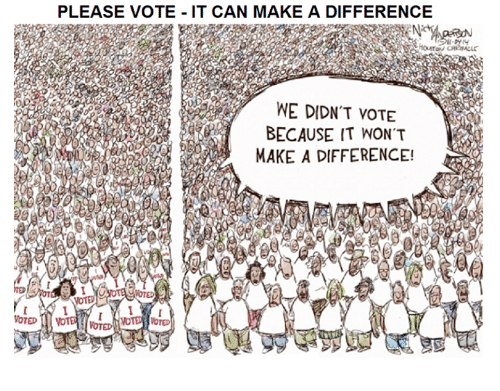
We’re having a primary election today. The people I planned to vote for had no opposition, but I walked over and voted anyway. Voting is a ritual of democracy! (Plus our local election workers used to provide cookies.)

It was worth the trip. They have new, electronic, paper ballot machines. You put in a piece of paper, vote on the touchscreen, and then you look through a little window to see your votes printed on the paper. If it all looks ok, you press “cast your ballot” and the paper goes into a container. So there’s a paper trail if there’s a recount. Very cool. Every voter in the US should be able to use a machine like that. While voting still matters.

From Greg Sargent of The Washington Post:

“1776 motherfuckers.”

That’s what an associate texted to Enrique Tarrio, then the leader of the Proud Boys, just after members of the group stormed the Capitol on Jan. 6, 2021. In a new indictment that prosecutors filed against them, variations on that idea abound: Members refer to the insurrection as a glorious revival of 1776 again and again, with almost comic predictability.

… The way 1776 comes up in the indictment — combined with some surprising new details it reveals — should prompt a serious look at how far-right extremist groups genuinely think about the long struggle that they envision themselves waging.

In short, groups such as these generally are driven by a dangerous vision of popular sovereignty. It essentially holds that the will of the truly authentic “people,” a flexible category they get to define, is being suppressed, requiring periodic “resets” of the system, including via violent, extralegal means.

Such groups aren’t going away anytime soon. We should understand what drives them.

The new indictment that a grand jury returned on Monday against Tarrio and four other Proud Boys is for “seditious conspiracy.” This requires prosecutors to prove that at least two people conspired to use force to overthrow the U.S. government or subvert the execution of U.S. law.

To build this case, prosecutors have sought to present extensive evidence that the Proud Boys fully intended to use force to subvert governmental authority and relevant laws concerning the transfer of presidential power. This included arming themselves with paramilitary gear and discussing violent disruptions online in advance…. The indictment alleges that they attacked police officers, breached police lines with violence, and helped coordinate the storming of the Capitol in real time.

What’s more, in the indictment prosecutors disclose highly revealing text exchanges between Tarrio — who was not present that day — and another member later on Jan. 6. The exchanges appear to refer back to a document Tarrio possessed called “1776 returns,” which reportedly contains a detailed scheme to attack government buildings.

Those text exchanges compare Jan. 6 to both 1776 and the attack on “the Winter Palace,” which helped lead to the Russian Revolution. This seeming reference back to that document perhaps suggests they viewed Jan. 6 as the successful execution of a premeditated plan….

In this context, while all the 1776-oriented talk might seem like posturing, it points to something real and enduring on the far right.

It isn’t easy to pin down the Proud Boys, who tend to define themselves as defenders of Western civilization. Tarrio’s views appear pretty convoluted. In a 2021 interview, he admitted that the 2020 election had not been stolen from former president Donald Trump,… yet he openly celebrated the “fear” that members of Congress felt of “the people,” and helped mobilize Proud Boys to mass around the Capitol that day.

So how to make sense of that, as well as the broader tangle of ideologies on the far right?

helpful framework comes from Joseph Lowndes, a scholar of the right wing at the University of Oregon. As Lowndes notes, a longtime strain in American political culture treats procedural democracy as itself deeply suspect, as subverting a more authentic subterranean popular will.

For such ideologues, what constitutes “the people” is itself redefined by spasmodic revolutionary acts, including violence. The people’s sovereignty, and with it the defining lines of the republic, are also effectively redrawn, or even rebirthed, by such outbursts of energy and militant action.

In this vision, Lowndes told me, the “people” and the “essence of the republic” are “made new again through acts of violent cleansing.” He noted that in this imagining, the “people” are something of a “fiction,” one that is essentially created out of the violent “act.”

“This regeneration through violence is going to be with us for a long time,” Lowndes said, “because it is fundamental to the right-wing political imagination.”

Lurking behind all the 1776 cosplay, then, is a tangle of very real radical and extreme ideologies…. They aren’t going away.

Unquote.

Journalist John Ganz sums up the current situation in response to a New York Times article by a “National Review fellow”, Nate Hochman:

Since he’s fond of Marxist categories, I’d like to introduce Hochman to another one: totality. This refers to the notion that we have to analyze a social and political situation in its entirety, and that failing to do so will give us a false or incomplete picture. While he is more frank than most, Hochman doesn’t want to look at the Right in its totality. While he seems comfortable with the portions of the right that, despite being demagogic and repressive, remain within the bounds of legal and civic behavior, like the anti-trans and anti-Critical Race Theory campaigns, he doesn’t really want to talk about January 6th, or the stolen election myth, great replacement, or the cultish worship of T____, or the Proud Boys, who now have a significant presence in [the] Miami-Dade Republican party….

But these things are as much, if not more, emblematic of the modern Republican party as young Mr. Hochman in his blazer over there at The National Review….

So now let’s recapitulate the totality of the political situation, with the help of Mr. Hochman’s fine essay. He wants to say this new right is essentially a secular [non-religious] party of the aggrieved, [a coalition that feels] the national substance has been undermined by a group of cosmopolitan elites, who have infiltrated all the institutions of power. That believes immigrants threaten to replace the traditional ethnic make up of the country. That borrows conceptions and tactics from the socialist tradition but retools them for counter-revolutionary ends. That is animated by myths of national decline and renewal. That instrumentalizes racial anxieties. That brings together dissatisfied and alienated members of the intelligentsia with the conservative families of the old bourgeoisie and futurist magnates of industry. That looks to a providential figure like T___ for leadership. That has street fighting and militia cadres. That has even attempted an illegal putsch to give their leader absolute power.

If only there was historical precedent and even a neat little word for all that.

Unquote.

Well, here’s a hint. The precedent is Nazi Germany and the neat little word is “FASCISM”.
