Giordano Bruno: Philosopher / Heretic by Ingrid D. Rowland

Giordano Bruno was a 16th century Italian priest and free-thinker. At the age of 28, he left the monastery where he’d lived for 11 years because he was about to be indicted for questioning the divinity of Jesus and owning the banned writings of Erasmus. He then wandered around Europe for 25 years, studying, writing, teaching and trailing controversy wherever he went.

Bruno had a lot of radical opinions. He is best known today for his belief that the Sun is merely one among an infinite number of stars, all of which are circled by their own inhabited planets. He reasoned that God wouldn’t have created anything less than an infinite universe full of other worlds and people. He also believed that everyone, sinners or not, would eventually receive God’s grace (God’s free and unmerited favor).

In 1592, although it’s unclear why, he returned to Italy. He must have thought the Inquisition would no longer be interested in him. Unfortunately, he soon got into trouble with a local dignitary, who had Bruno arrested as a blasphemer and a heretic. The religious authorities in Venice imprisoned and investigated him for a year before transferring him to Rome, where he was imprisoned and interrogated for another seven years.

Bruno cooperated with the Inquisition to some extent, but questioned the Inquisition’s authority and ultimately refused to recant all his beliefs. He was burned at the stake in 1600. Almost three centuries later, over the objections of the Vatican, the city government erected an impressive statue of Bruno in the square where he was executed. 

Bruno, being the person he was and living the life he did, deserves a better biography than this. The author’s descriptions of Bruno’s life and thought are clear enough, but she goes off on tangents way too often. As soon as you think you’re finally going to learn more about Bruno, you get observations on architecture, church history or the life of someone Bruno met in his travels.

Vivian Maier, Street Photographer

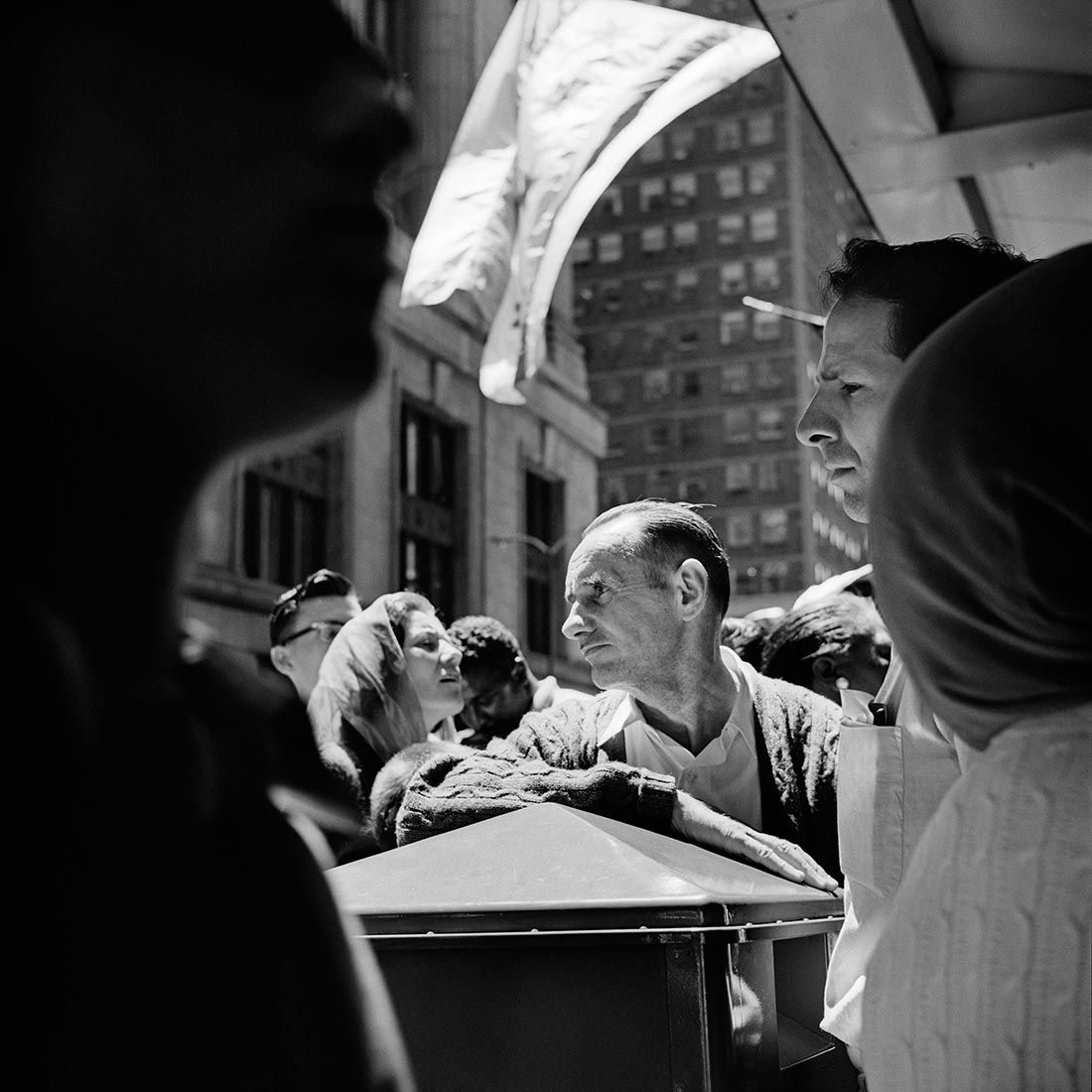
Vivian Maier arrived in New York in 1951. She later moved to Chicago and worked as a nanny. In her spare time, she took more than 100,000 photographs. But she didn’t share them with anyone. In 2007, when she was 81 and living in poverty, an auction house sold thousands of her prints and negatives for $400. Since then, her work has been exhibited in the United States and Europe, she’s been the subject of a book and now there’s a documentary, Finding Vivian Maier. Of course, there are websites too, including this one, which has lots of information about her and a wonderful selection of her work. She took this picture of herself in 1953. She died in 2009.  

vv 029A few more from vivianmaier.com:

1963. Chicago, IL

Chicago, IL

Undated

Getting a Handle on Nietzsche

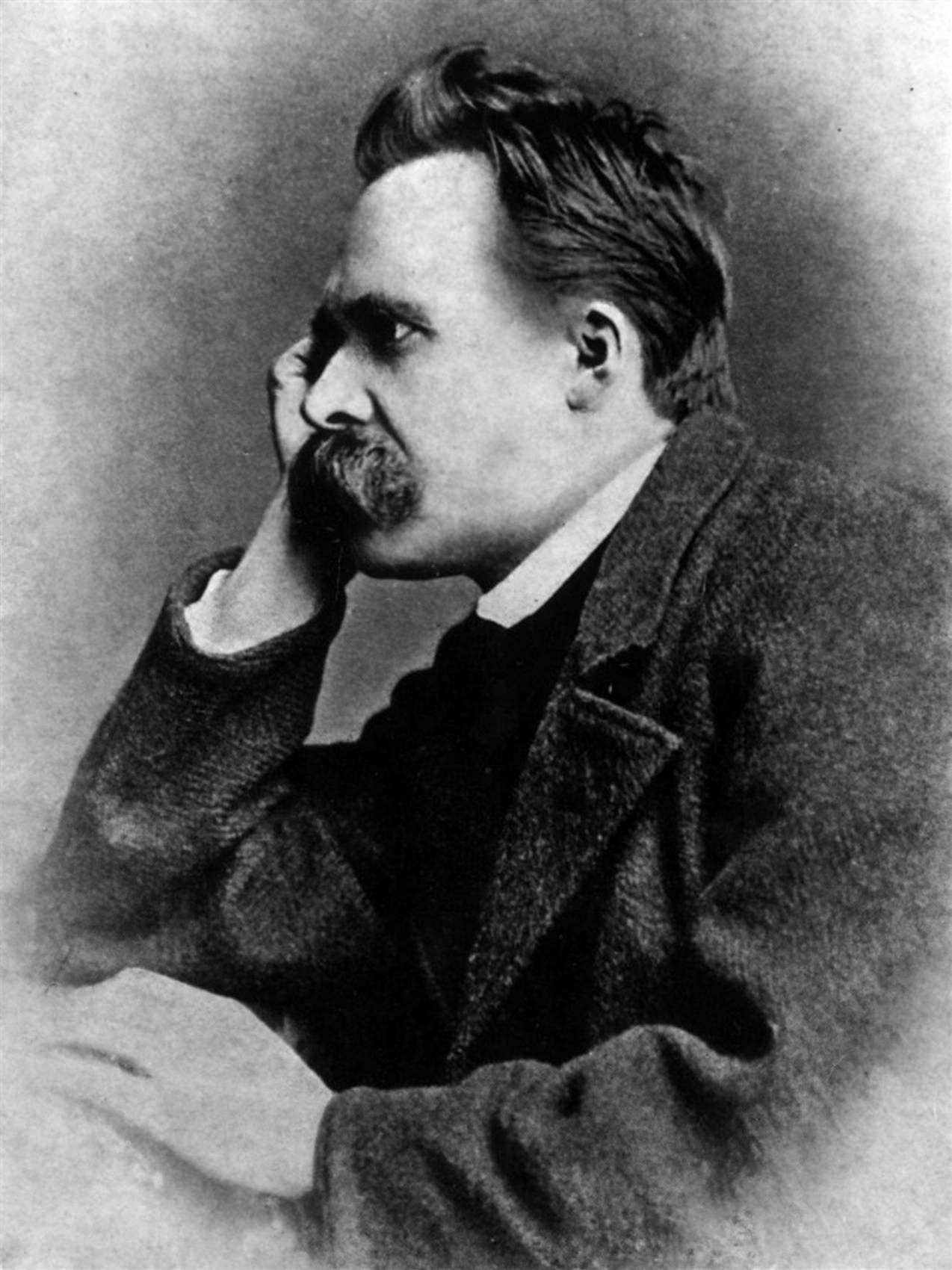
Nietzsche1882Walter Kaufmann’s Nietzsche: Philosopher, Psychologist, Antichrist is the book that got Anglo-American philosophers to start taking Friedrich Nietzsche seriously. It was originally published in 1950 and has been selling ever since. Some observers think Kaufmann, who was a professor at Princeton and died in 1980, was too easy on Nietzsche, but there’s no doubt that Nietzsche is a classic and Nietzsche is worth taking seriously.

Nietzsche viewed the “will to power” as humanity’s basic motivating force, but didn’t worship violence or the state. Despite what’s commonly believed, he wasn’t a proto-Nazi or an anti-Semite. (That was his sister Elisabeth, who was able to present her version of Nietzsche to the world after she took control of his estate.)

Neither was he a political liberal. Kaufmann suggests it’s best to view Nietzsche as a kind of aristocrat, in the way that Aristotle was an aristocrat when he extolled the virtues of the “great-souled man” (“a person is thought to be great-souled if he claims much and deserves much”).

According to Nietzsche, there is a natural aristocracy of individuals who can control their passions and channel their will to power into the accomplishment of great things. Caesar and Napoleon were natural aristocrats, but so were Socrates, Jesus, Shakespeare, Spinoza, Beethoven and Goethe: 

Quite generally, Nietzsche distinguishes between (a) men whom he admires, (b) the ideas for which they stand, and (c) their followers. Only in terms of some such categories can one understand Nietzsche’s complex attitude toward Jesus, Christianity and Christendom [i.e. he admired the first, criticized the second and hated the third.]

Similarly, Nietzsche admired Schopenhauer; respected but criticized Schopenhauer’s philosophy; and despised his followers. Nietzsche admired Wagner and felt drawn to much of his music, but he abominated the ostentatiously Christian nationalists and anti-Semites who congregated in Bayreuth…

Nietzsche’s fight against Socrates thus takes two forms: denunciations of his epigoni [his disciples] and respectful criticisms of his doctrines… [Socrates] is the very embodiment of Nietzsche’s highest ideal: the passionate man who can control his passions [398-399].

By all accounts, Nietzsche was a kind, considerate person despite his critical nature and his celebration of power (and his apparent misogyny). He even argued that the strong should be considerate of the weak (that’s most of us, the bulk of humanity). I haven’t read much of his work, and have found him paradoxical and hard to understand, so it was a relief to read the passage from Kaufmann above.

It explains how Nietzsche can speak well of accomplished individuals, while evaluating, often negatively, the details of their accomplishments and vigorously attacking their disciples. That makes sense if you cherish leadership and creativity as things in themselves. You can still find fault with the particulars (nobody’s perfect) and see no virtue in being a follower (even a follower of Nietzsche): 

When he had said that, his disciple shouted … : “But I believe in your cause and consider it so strong that I shall say everything, everything that I can find in my heart to say against it.” The innovator laughed … : “This kind of discipleship”, he said then, is the best … ” [The Gay Science, 106].

Nietzsche: Philosopher, Psychologist, Antichrist by Walter Kaufmann

Walter Kaufmann’s Nietzsche is the book that got Anglo-American philosophers to take Nietzsche seriously after World War II. It was originally published in 1950 and has been selling ever since. Some observers think Kaufmann may have been a bit too easy on Nietzsche, but there is no doubt that Kaufmann’s book is a classic and Nietzsche was a great philosopher whose works justify serious consideration.

Nietzsche viewed the “will to power” as humanity’s basic motivating force, but didn’t worship violence. Despite what’s commonly believed, Nietzsche wasn’t a proto-Nazi or an anti-Semite. Neither was he a political liberal. It’s best to view him as a kind of aristocrat, in the way that Aristotle was an aristocrat when he wrote n favor of the “great-souled man” (“a person is thought to be great-souled if he claims much and deserves much”).

According to Nietzsche, there is a natural aristocracy of individuals who can control their passions and channel their will to power into the accomplishment of great things. In Nietzsche’s view, Caesar and Napoleon were natural aristocrats, but so were Socrates, Jesus, Michaelangelo, Spinoza, Goethe and Wagner:

Quite generally, Nietzsche distinguishes between (a) men whom he admires, (b) the ideas for which they stand, and (c) their followers. Only in terms of some such categories can one understand Nietzsche’s complex attitude toward Jesus, Christianity and Christendom [i.e. he admired the first, criticized the second and hated the third.]

Similarly, Nietzsche admired Schopenhauer; respected but criticized Schopenhauer’s philosophy; and despised his followers. Nietzsche admired Wagner and felt drawn to much of his music, but he abominated the ostentatiously Christian nationalists and anti-Semites who congregated in Bayreuth…

Nietzsche’s fight against Socrates thus takes two forms: denunciations of his epigoni [his disciples] and respectful criticisms of his doctrines… [Socrates] is the very embodiment of Nietzsche’s highest ideal: the passionate man who can control his passions [398-399].

By all accounts, Nietzsche was a kind and considerate person despite his critical nature. He even argued that the strong should be considerate of the weak (the bulk of humanity). I’d recommend Kaufmann’s book as a helpful and enjoyable account of Nietzsche’s philosophy, but Kaufmann spends a lot of time responding to old, misleading descriptions of Nietzsche’s positions. That made sense 60 years ago, but it makes Nietzsche (the book, not the philosopher), feel somewhat dated now.

The Fendertones Take Us Back to 1965

The Fendertones are an informal group of white guys from the Philadelphia area who have so far blessed the world with 17 YouTube videos and a Facebook page. They occasionally get together to reproduce the complex sound Brian Wilson created for the Beach Boys. It’s one more win for the Internet.

They posted four videos yesterday, including “Sloop John B” (a big hit for the Beach Boys in 1965) and “Kiss Me Baby” (a relatively unknown but brilliant album track from the same year):

While we’re at it, two performances from a 2004 charity concert: 1965’s “California Girls” and its flip side, one of my favorites, “Let Him Run Wild”: