Liking What Dorothy Parker Said (or Didn’t)

Amazon bought a site called Goodreads earlier this year. It’s a social network thing for readers that supposedly has 20 million members. I’m not one of them, but I noticed today that they have a selection of quotes from famous authors. And since it’s the internet, they allow you to click a button and say you like a particular quote.

Goodreads features more than 200 quotes from Dorothy Parker, the extremely witty woman who said, among other things:

“If you want to know what God thinks of money, just look at the people he gave it to.”

“By the time you swear you’re his,
Shivering and sighing.
And he vows his passion is,
Infinite, undying.
Lady make note of this —
One of you is lying.”

“If you wear a short enough skirt, the party will come to you.” 

“Women and elephants never forget.”

“I like to have a martini,
Two at the very most.
After three I’m under the table,
after four I’m under my host.”

“I hate writing, I love having written.”

“You can lead a horticulture, but you can’t make her think.” 

“Oh, life is a glorious cycle of song,
a medley of extemporanea,
And love is a thing that can never go wrong,
and I am Marie of Romania.”

Yet the most popular Dorothy Parker quote on Goodreads, by a very, very large margin, is this lame observation:

“The cure for boredom is curiosity.
There is no cure for curiosity.”

Which isn’t even true: 
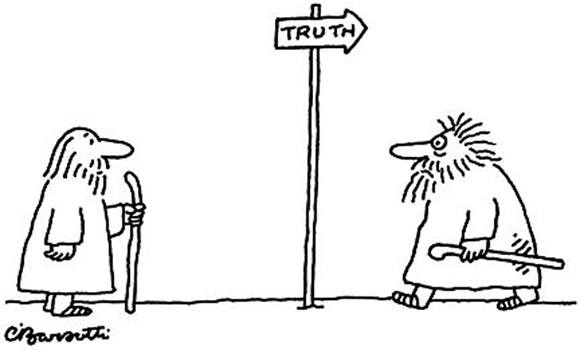
1185826_624857754206173_601665606_n

Postscript:  According to a comment from Mr. T. Pedersen, the most-liked quote isn’t something Dorothy Parker actually wrote. Which, assuming he’s right, is to her credit.

http://www.goodreads.com/author/quotes/24956.Dorothy_Parker

https://www.facebook.com/NewYorkerCartoons

Lolita by Vladimir Nabokov

I browsed through Lolita when I was much younger, looking for the good parts. I was seriously disappointed. When I was older, I started it a few times but very quickly lost interest. Now I’ve finally read what many consider to be one of the best novels of the 20th century, maybe even the best.

For the most part, I wasn’t that impressed. Most of the novel details Humbert’s obsessive fascination with his young step-daughter. Nabokov engages in lots of entertaining word-play and makes fun of the American cultural scene, but it’s claustrophobic being locked up in Humbert’s fevered brain. Lolita’s body is present, but as a character she is pretty much a cipher.

That’s part of Nabokov’s purpose, of course. At the end of the novel, Humbert admits to himself that he’s stolen her childhood. He hasn’t allowed her to be a person. Lolita (the character) finally emerges when Humbert meets her a few years later, after she’s run away and started her own life. That’s when Lolita (the novel) at last delivers some emotional impact. It’s terribly sad to meet someone you still love who doesn’t love you — and in this case never did, for good reason.

Postscript:  Coincidentally, I just came upon an article about Nabokov, in which the author suggests that Humbert’s expression of guilt regarding Lolita’s stolen childhood is merely a device to gain the reader’s sympathy (Lolita is supposedly written by Humbert as a confession after he’s arrested). That could be, but I found his words convincing as a reaction to the sadness of meeting Lolita again and the memories it evoked.

The Weight of the World

There is a funny scene in Annie Hall in which the young Alvy and his mother visit the doctor. Alvy is depressed because he’s learned that the universe is expanding. Eventually, it will all come apart. So what’s the point of doing homework?

We rational adults understand that it’s silly to worry about what’s going to happen to the universe billions of years from now. Nevertheless, like Alvy, I’m troubled by a situation that is way too big to worry about.

The good news is that I’m nowhere near as troubled as Woody Allen’s alter ego (or Woody Allen himself). If I had homework, I’d do it all, pointless or not. But I figured I’d share my concern here, since confession can be good for the psyche.

It seems to me that the world is too big and complex to function. By “the world”, I don’t mean the natural world. Remove human beings from the world and it would chug along just fine. I mean the human world, the world that we’ve created, the world of fiber optic cables, water treatment plants, international air travel, electrical grids, server farms, Amazon fulfillment centers, health insurance for dogs and the global market in fruits and vegetables.

I walk into my local supermarket and am confronted by an array of apples, oranges, broccoli, lettuce, some of which was transported to our town from thousands of miles away. Consider the number of grocery stores in America and the rest of the world, all of them selling fruits and vegetables. Where does all this stuff come from? How can this gigantic cornucopia be produced and distributed so that it can make its way to our shopping carts in an edible condition? Can this system really work? I don’t think so.

The whole enterprise, i.e. human civilization, seems like a giant house of cards.

I mean, have you ever considered the number of pipes running under Manhattan? The amount of fresh water that’s consumed every day by a billion Chinese? The number of ingredients that go into a package of frozen Swedish meatballs?

I have – and it’s a lot.

Where the Girls and Boys Are

The Washington Post has an article called “40 Maps That Explain the World”. They don’t explain the whole world, but this one is interesting:

population-map

There are about 7 billion people in the world, and more than 3 billion of them live in 5 countries in that circle: China, India, Indonesia, Bangladesh and Japan. If you throw in the other countries in the circle, like the Philippines and Vietnam, you get another 600 million people. That means 51% of the world’s population lives in that relatively small part of the world.

The map above is number 24 in the list, which is here:

http://www.washingtonpost.com/blogs/worldviews/wp/2013/08/12/40-maps-that-explain-the-world/

Six Men with Something to Say about Israel and the Palestinians

If you’re interested in the Israeli-Palestinian conflict, you should consider watching The Gatekeepers. It’s an Israeli documentary from 2012 that features interviews with six men, each of whom has been in charge of Shin Bet, Israeli’s internal security service. Apparently, none of these men had ever been interviewed on camera before.

They talk about the history of Shin Bet, including the assassination of Prime Minister Yitzhak Rabin, but more importantly they express their opinions regarding the conflict with the Palestinians. The impression I got was that they would all prefer fewer Israeli settlements in the occupied territories, in addition to more cooperation and negotiation with the Palestinian authorities. 

These are all men who spent years working for Shin Bet protecting their fellow Israelis from terrorist attacks. It’s highly significant that they support a less confrontational approach to the Israeli-Palestinian conflict. One of them says he’s in favor of talking to everyone, including Israel’s enemies. Another observes that Israel is winning battles but losing the war.