Whereof One Can Speak 🇺🇦

Nothing special, one post at a time since 2012

Laboratories of Autocracy

Normal people were shocked when they heard about the 10-year old girl in Ohio who was raped, became pregnant, and was forced to travel to Indiana to get an abortion because Ohio’s new forced-birth law doesn’t have an exception for rape. From a long article by Jane Mayer for The New Yorker:

[Ohio’s] residents tend to be politically moderate, and polls consistently show that a majority of Ohio voters support legal access to abortion…. Yet, as the recent ordeal of a pregnant ten-year-old rape victim has illustrated, Ohio’s state legislature has become radically out of synch with its constituents….

Longtime Ohio politicians have been shocked by the state’s transformation into a center of extremist legislation, not just on abortion but on such divisive issues as guns and transgender rights. Ted Strickland, a Democrat who served as governor between 2007 and 2011, told me, “The legislature is as barbaric, primitive, and Neanderthal as any in the country. It’s really troubling”…. The story is similar in several other states with reputations for being moderate, such as Wisconsin and Pennsylvania: their legislatures have also begun proposing laws so far to the right that they could never be passed in the U.S. Congress…..

A 2020 survey indicated that less than fourteen per cent of Ohioans support banning all abortions without exceptions for rape and incest…. But the Democrats in the Ohio legislature had no way to mount resistance: since 2012, the Republicans have had a veto-proof super-majority in both chambers….

… The General Assembly’s increasingly radical Republican majority is poised to pass even more repressive restrictions … when it returns from a summer recess. State Representative Gary Click … has proposed a “Personhood Act,” which would prohibit any interference with embryonic development from the moment of conception, unless the mother’s life is endangered. If the bill passes, it could outlaw many kinds of contraception, not to mention various practices commonly used during in-vitro fertilization.

[David Niven, a University of Cincinnati professor,] told me that, according to one study, the laws being passed by Ohio’s statehouse place it to the right of the deeply conservative legislature in South Carolina. How did this happen, given that most Ohio voters are not ultra-conservatives? “It’s all about gerrymandering,” Niven told me.

The legislative-district maps in Ohio have been deliberately drawn so that many Republicans effectively cannot lose, all but insuring that the Party has a veto-proof super-majority. As a result, the only contests most Republican incumbents need worry about are the primaries—and, because hard-core partisans dominate the vote in those contests, the sole threat most Republican incumbents face is the possibility of being outflanked by a rival even farther to the right.

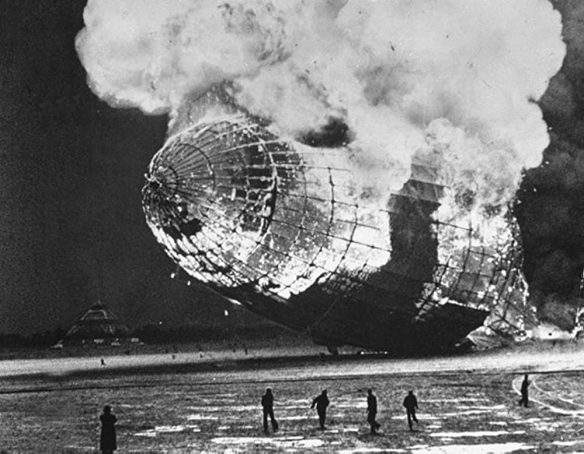
The national press has devoted considerable attention to the gerrymandering of congressional districts, but state legislative districts have received much less scrutiny, even though they are every bit as skewed, and in some states far more so. “Ohio is about the second most gerrymandered statehouse in the country,” Niven told me. “It doesn’t have a voter base to support a total abortion ban, yet that’s a likely outcome.” He concluded, “Ohio has become the Hindenburg of democracy.”
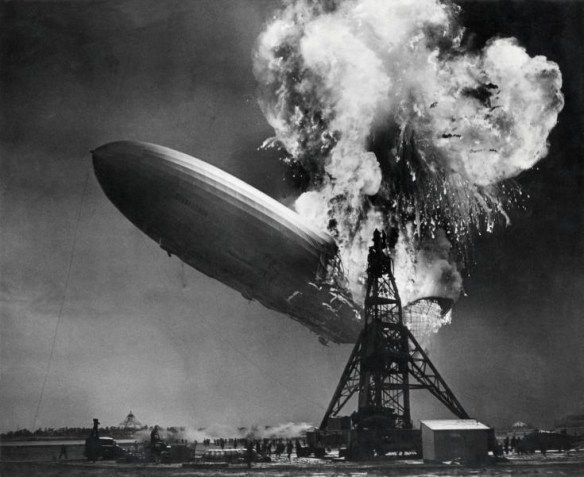
Hindenburg_disaster

David Pepper, an election-law professor, has a book, “Laboratories of Autocracy,” whose title offers a grim spin on a famous statement, attributed to the Supreme Court Justice Louis Brandeis, calling America’s state legislatures “laboratories of democracy”…. He is determined to get the Democratic political establishment to stop lavishing almost all its money and attention on U.S. House, Senate, and gubernatorial races … and to focus more energy on what he sees as a greater emergency: the collapse of representative democracy in one statehouse after another.

Unquote. The article discusses how inattention to local politics has allowed right-wing extremists to take control of state legislatures, assisted by the Supreme Court’s Citizens United decision, and how lower court decisions have been ignored: 

Swept out of power in Washington, the Republican Party’s smartest operatives decided to exploit the only opening they could find: the possibility of capturing state legislatures in the 2010 midterm elections. They knew that, in 2011, many congressional and local legislative districts would be redrawn based on data from the 2010 census—a process that occurs only once a decade. If Republicans reshaped enough districts, they could hugely advantage conservative candidates, even if many of the Party’s policies were unpopular.

In 2010, the Supreme Court issued its controversial Citizens United decision, which allowed dark money to flood American politics. Donors, many undisclosed, soon funneled thirty million dollars into the Republicans’ redistricting project, called REDMAP, and the result was an astonishing success: the Party picked up nearly seven hundred legislative seats, and won the power to redraw the maps for four times as many districts as the Democrats….

The Ohio statehouse has grown only more lopsided in the past decade. Currently, the Republican members have a 64–35 advantage in the House and a 25–8 advantage in the Senate. This veto-proof majority makes the Republican leaders of both chambers arguably the most powerful officeholders in the state….

The vast majority of Ohio residents clearly want legislative districts that are drawn more fairly. By 2015, the state’s gerrymandering problem had become so notorious that seventy-one per cent of Ohioans voted to pass an amendment to the state constitution demanding reforms. As a result, the Ohio constitution now requires that districts be shaped so that the makeup of the General Assembly is proportional to the political makeup of the state. In 2018, an even larger bipartisan majority—seventy-five per cent of Ohio voters—passed a similar resolution for the state’s congressional districts.

Though these reforms were democratically enacted, the voters’ will has thus far been ignored…. [Republicans] proposed districts [that] were nowhere near proportional to the state’s political makeup. The Democrats argued that the Republicans had flagrantly violated the reforms that had been written into the state constitution.

This past spring, an extraordinary series of legal fights were playing out. The Ohio Supreme Court struck down the map—and then struck down four more, after the Republican majority on the redistricting commission continued submitting maps that defied the spirit of the court’s orders…. The Republicans’ antics lasted so long that they basically ran out the clock. Election deadlines were looming, and the makeup of Ohio’s districts still hadn’t been settled. … A federal court [was asked] to intervene, on the ground that the delay was imperiling the fair administration of upcoming elections. The decision was made by a panel of three federal judges—two of whom had been appointed by T____. Over the strenuous objection of the third judge, the two T___ judges ruled in the group’s favor, allowing the 2022 elections to proceed with a map so rigged that Ohio’s top judicial body had rejected it as unconstitutional.

On Twitter, Bill Seitz, the majority leader of the Ohio House, jeered at his Democratic opponents: “Too bad so sad. We win again. The game is over and you lost.”

Ohio Democrats, including David Pepper, are outraged. “The most corrupt state in the country was told more than five times that it was violating the law, and then the federal court said it was O.K.,” he told me. “If you add up all the abnormalities, it’s a case study—we’re seeing the disintegration of the rule of law in Ohio. They intentionally created an illegal map, and are laughing about it.”

[A Democratic legislator] likens the Republicans’ stunning contempt for the Ohio Supreme Court to the January 6th insurrection: “People are saying, ‘Where is the accountability when you disregard the rule of law and attack democracy?’ Because that’s what’s happening in the statehouses, and Ohio is a perfect example.”

Unquote. Ohio isn’t the only state where this has happened. From The New York Times:

Since January, judges in Alabama, Georgia, Louisiana and Ohio have found that Republican legislators illegally drew those states’ congressional maps along racial or partisan lines, or that a trial very likely would conclude that they did. In years past, judges who have reached similar findings have ordered new maps, or had an expert draw them, to ensure that coming elections were fair.

But a shift in election law philosophy at the Supreme Court, combined with a new aggressiveness among Republicans who drew the maps, has upended that model for the elections in November. This time, all four states are using the rejected maps, and questions about their legality for future elections will be hashed out in court later.
MV5BZWE5MWU1OGItYzFjZC00OTRhLTljNDUtNjU1NDYxYjc5ZTg2L2ltYWdlXkEyXkFqcGdeQXVyMTIxMDUyOTI@._V1_FMjpg_UX1000_

Let’s Review the History of the Party Since Around 1994 (in 1,600 Words)

Dana Milbank of The Washington Post shares some of his new book, The Destructionists: The Twenty-Five Year Crack-Up of the Republican Party (although he says the crack-up  started closer to 30 years ago). This is an excerpt from his excerpt:

“We have become in danger of losing our own civilization,” Newt Gingrich warned.

Americans had seldom heard a politician talk this way, and certainly not a speaker of the House. But that’s what Gingrich became after the GOP’s landslide victory in the 1994 election. The Contract With America made little headway — only three minor provisions (paperwork reduction!) became law — but the rise of Gingrich and his shock troops set the nation on a course toward the ruinous politics of today.

Much has been made of the ensuing polarization in our politics, and it’s true that moderates are a vanishing breed. But the problem isn’t primarily polarization. The problem is that one of our two major political parties has ceased good-faith participation in the democratic process. Of course, there are instances of violence, disinformation, racism and corruption among Democrats and the political left, but the scale isn’t at all comparable. Only one party fomented a bloody insurrection and even after that voted in large numbers (139 House Republicans, a two-thirds majority) to overturn the will of the voters in the 2020 election. Only one party promotes a web of conspiracy theories in place of facts. Only one party is trying to restrict voting and discredit elections. Only one party is stoking fear of minorities and immigrants….

Republicans and their allied donors, media outlets, interest groups and fellow travelers have been yanking on the threads of democracy and civil society for the past quarter-century; that’s a long time, and the unraveling is considerable. You can measure it in the triumph of lies and disinformation, in the mainstreaming of racism and white supremacy, in the erosion of institutions and norms of government, and in the dehumanizing of opponents and stoking of violence. In the process, Republicans became Destructionists: They destroyed truth, they destroyed decency, they destroyed patriotism, they destroyed national unity, they destroyed racial progress, they destroyed their own party, and they are well on their way to destroying the world’s oldest democracy.

Consider just a few of the milestones along this path of destruction — all of which, we can now see, made T____ possible, if not inevitable:

Long before T____ promulgated more than 30,000 falsehoods during his presidency, including disinformation about the covid-19 pandemic that contributed to countless deaths:

  • House Republicans encouraged the conspiracy theory that Vincent Foster, a lawyer in the Clinton White House, had been murdered — possibly, in the belief’s craziest formulation, by Hillary Clinton. After four separate, independent investigations concluded it was suicide, Gingrich said, “I just don’t accept it,” and one of his committee chairmen, Dan Burton, shot a melon in his backyard to reenact the “murder.”
  • The George W. Bush administration, to make the case for war, distorted the available intelligence to suggest that Iraq was responsible for the 9/11 attacks, that it was on the cusp of obtaining nuclear weapons and that U.S. troops would be “greeted as liberators.” When a former diplomat publicly disputed Bush’s false claims, aides retaliated by disclosing the identity of his wife, a CIA operative.
  • Sarah Palin, the party’s vice-presidential nominee in 2008, falsely proclaimed in 2009 the existence of “death panels” in Barack Obama’s Affordable Care Act. Republican lawmakers lined up to make the false claim a centerpiece of their attempt to defeat Obamacare. About a third of Americans came to believe the falsehood.

Long before T____ spoke of immigrants as rapists and murderers coming from “shithole countries” and told Democratic congresswomen of color to “go back” to other countries:

  • Patrick J. Buchanan, who ran insurgent bids for the GOP presidential nomination in 1992 and 1996, offered generous words for Hitler, lamented the treatment of “European-Americans” and “non-Jewish whites,” warned of a migrant “invasion,” and ran on a promise to “put America first.”
  • Conservative radio giant Rush Limbaugh aired the song “Barack the Magic Negro,” Fox News’s Glenn Beck claimed President Obama had a “deep-seated hatred for White people,” and tea party activists chanted the n-word at Black members of Congress outside the Capitol.
  • Fox News in 2011 served as the forum for T____ and others to perpetrate the “birther” libel asserting that Obama, the first Black president, was not American-born. Palin told Obama to stop his “shuck and jive shtick.”
  • Rep. Steve King (R-Iowa) said in 2013 of the “dreamers” (those brought illegally to the United States as children): “For every one who’s a valedictorian, there’s another 100 out there that weigh 130 pounds and they’ve got calves the size of cantaloupes because they’re hauling 75 pounds of marijuana across the desert.”
Long before T____ told the violent Proud Boys to “stand by” instead of condemning them:
  • Conservative radio host G. Gordon Liddy in 1994 told listeners that if federal agents try to disarm them, “go for a head shot” and “kill the sons of bitches.” Other hosts, and GOP members of Congress, warned of federal agents in “black helicopters” planning “a paramilitary style attack against Americans” and the need for an “armed revolution” to resist a “New World Order,” and Gingrich and other Republicans spoke supportively of antigovernment militias.
  • Thousands of Tea Party activists, on the eve of final passage of Obamacare in the House in 2010, got to within 50 feet of the Capitol. Democrats worried about violence, and police officers struggled to maintain security, but GOP lawmakers inflamed the crowd, waving signs and leading chants of “Kill the bill.”
  • Palin, urging supporters “don’t retreat, instead — RELOAD!,” in 2010 promoted a map of 20 Democratic-held congressional districts in target crosshairs. A GOP Senate nominee spoke of using “Second Amendment remedies.” Threats and vandalism against Democratic lawmakers spread, and, in 2011, Rep. Gabby Giffords (D-Ariz.), one of those listed in Palin’s map, was shot in the head by a gunman who killed six others….

Long before T____ discredited democratic institutions with his “big lie” about election fraud:

  • Republican operatives intimidated the Miami-Dade County Elections Department into stopping the recount of the 2000 election results. A partisan crowd flooded into the elections office, chanting “Stop the fraud!” “Stop the count!” and “Cheaters!” Democratic officials were kicked, pushed and punched.
  • John Ashcroft, who became attorney general after the Supreme Court’s 5-4 decision in Bush v. Gore handed the presidency to George W. Bush, falsely claimed in 2001 that dead people had voted and that “votes have been bought, voters intimidated and ballot boxes stuffed.”
  • House Majority Leader Tom DeLay in 2003, trying to create a “permanent majority,” forced through a Texas redistricting that shifted six House seats to Republicans — and when Democratic legislators left the state to block the scheme, DeLay attempted to use the FBI and the Federal Aviation Administration to track them down.
  • The Supreme Court’s conservative majority stacked the deck for Republicans with its 2010 Citizens United decision, which made it possible for wealthy interests to flood elections with unlimited, unregulated “dark money,” and its 2013 gutting of the 1965 Voting Rights Act, which invited GOP-led states to restrict voting in ways that disproportionately affect voters of color. Republican senators cemented the high court’s reputation as an arm of the GOP when from 2016 into 2017 they blocked Obama for 11 months from filling the vacancy left by Justice Antonin Scalia’s death.

Long before the dysfunction of the T____ era:

  • Gingrich in 1995 announced that he forced a shutdown of the federal government in part because he was asked to exit Air Force One via the rear stairway after a trip to Israel with President Bill Clinton. Republicans debuted a new era of manufactured crises over debt-limit deadlines, and repeated government shutdowns, whenever Democrats held the White House.
  • The Republican National Committee drafted an “autopsy” in 2013 after Mitt Romney lost to Obama, calling for more outreach to Black, Hispanic, Asian and gay Americans. GOP lawmakers in the House swiftly abandoned the idea, killing a comprehensive immigration reform bill that had sailed through the Senate by a bipartisan 68-32.
  • House Speaker John A. Boehner announced his retirement in 2015, later saying he was disgusted with the growing “circle of crazy” inside his party. Republicans “couldn’t govern at all,” Boehner wrote. “Incrementalism? Compromise? That wasn’t their thing,” Boehner wrote of the insurgents. “A lot of them wanted to blow up Washington. … They wanted wedge issues and conspiracies and crusades.” Boehner concluded that he was “living in Crazytown. … Every second of every day since Barack Obama became president, I was fighting one bats–t idea after another.”

Against that quarter-century of ruin, what we are living through today is just a continuation of the GOP’s direction for the past 30 years: the appeals to white nationalism, the sabotage of the functions of government, the routine embrace of disinformation, stoking the fiction of election fraud and the “big lie,” and the steady degradation of democracy.

Now, it seems, that degradation is accelerating….

As they avert their gaze from the cascading horrors of the failed coup, Republicans are instead looking to a familiar guide: Gingrich. The former speaker, now a board member of the pro-T____ America First Policy Institute, announced this year that he is serving as a consultant to House GOP leader Kevin McCarthy and his team.

No sooner had this been disclosed than Gingrich, on Fox News, threatened the imprisonment of lawmakers serving on the Jan. 6 committee, saying they’re “going to face a real risk of jail” after Republicans take over Congress. Throwing political opponents in jail for investigating an attack on the U.S. Capitol and a coup against the U.S. government?

Replied Wyoming Rep. Liz Cheney, one of two Republicans on the committee: “This is what it looks like when the rule of law unravels.” But Gingrich knows that. He’s the one who first started tugging at the threads.

Prognosis: Not Good At All

American democracy is dying, according to Brian Klaas of University College London, and “when they start dying … they usually don’t recover”:

For decades, the United States has proclaimed itself a “shining city upon a hill,” a beacon of democracy that can lead broken nations out of their despotic darkness. That overconfidence has been instilled into its citizens, leading me a decade ago to the mistaken, naïve belief that countries [with faltering democracies] have something to learn from the U.S. rather than also having wisdom to teach us.

During the D____ T____ presidency, the news covered a relentless barrage of “unprecedented” attacks on the norms and institutions of American democracy. But they weren’t unprecedented. Similar authoritarian attacks had happened plenty of times before. They were only unprecedented to us.

I’ve spent the past 12 years studying the breakdown of democracy and the rise of authoritarianism around the world, in places such as Thailand, Tunisia, Belarus, and Zambia…. My studies and experiences have taught me that democracies can die in many ways. In the past, most ended in a quick death….. But in the 21st century, most democracies die like a chronic but terminal patient. The system weakens as the disease spreads. The agony persists over years. Early intervention increases the rate of survival, but the longer the disease festers, the more that miracles become the only hope.

American democracy is dying. There are plenty of medicines that would cure it. Unfortunately, our political dysfunction means we’re choosing not to use them, and as time passes, fewer treatments become available to us, even though the disease is becoming terminal. No major pro-democracy reforms have passed Congress. No key political figures who tried to overturn an American election have faced real accountability. The president who orchestrated the greatest threat to our democracy in modern times is free to run for reelection, and may well return to office.

Our current situation started with a botched diagnosis….Most American pundits and journalists used an “outsider comes to Washington” framework to process T____’s campaign and his presidency, when they should have been fitting every fresh fact into an “authoritarian populist” framework or a “democratic death spiral” framework. While debates raged over tax cuts and offensive tweets, the biggest story was often obscured: The system itself was at risk…..

The basic problem is that one of the two major parties in the U.S. … has become authoritarian to its core. Consequently, there are two main ways to protect American democracy. The first is to reform the Republican Party, so that it’s again a conservative, but not authoritarian, party….

The second is to perpetually block authoritarian Republicans from wielding power. But to do that, Democrats need to win every election. When you’re facing off against an authoritarian political movement, each election is an existential threat to democracy. “Democracies can’t depend on one of two major parties never holding power,” argues Brendan Nyhan, a government professor at Dartmouth College….Eventually, the authoritarian party will win.

Erica Frantz, an Michigan State University expert on authoritarianism, told me she shares that concern: With Republicans out of the White House and in the congressional minority, “democratic deterioration in the U.S. has simply been put on pause”….

When democracies start to die, they usually don’t recover. Instead, they end up as authoritarian states with zombified democratic institutions: rigged elections in place of legitimate ones, corrupt courts rather than independent judges, and propagandists replacing the press.

There are exceptions. Frantz pointed to Ecuador, Slovenia, and South Korea as recent examples. In all three cases, a political shock acted as a wake-up call, in which the would-be autocrat was removed and their political movement either destroyed or reformed. In South Korea, President Park Geun-hye was ousted from office and sent to prison. But more important, Frantz explained, “there was a cleaning of the house after Park’s impeachment, with the new administration aggressively getting rid of those who had been complicit in the country’s slide to authoritarianism.”

Those examples once signaled a hopeful possibility for the United States. At some point, T____’s spell over the country and his party could break. He would go too far, or there would be a national calamity, and we’d all come to our democratic senses.

By early 2021, [he] had gone too far and there had been a national calamity. That’s why, on January 6, 2021, as zealots and extremists attacked the Capitol, I felt an unusual emotion mixed in with the horror and sadness: a dark sense that there was a silver lining.

Finally, the symptoms were undeniable. After T____ stoked a bona fide insurrection, the threat to democracy would be impossible to ignore. As Lindsey Graham and Mitch McConnell denounced Trump on the Senate floor, it looked like Republicans might follow the South Korean path and America could finally take its medicine.

In reality, the denunciations were few and temporary. According to a new poll from the University of Monmouth, six in 10 Republican voters now believe that the attack on the Capitol was a form of “legitimate protest”….And rather than cleaning house, the Republicans who dared to condemn T____ are now the party’s biggest pariahs….

That leaves American democracy with a bleak prognosis. Barring an electoral wipeout of Republicans in 2022 (which looks extremely unlikely), the idea that the party will suddenly abandon its anti-democracy positioning is a delusion.

Pro-democracy voters now have only one way forward: Block the authoritarian party from power, elect pro-democracy politicians in sufficient numbers, and then insist that they produce lasting democratic reforms.

The wish list from several democracy experts I spoke with is long, and includes passing the Electoral Count Act [which may soon happen], creating a constitutional right to vote, reforming districting so more elections are competitive, … electing the president via popular vote, reducing the gap in representation between states like California and Wyoming, introducing some level of proportional representation or multimember districts, aggressively regulating campaign spending and the role of money in politics, and enforcing an upper age limit for Supreme Court justices. But virtually all of those ideas are currently political fantasies.

The American system isn’t just dysfunctional. It’s dying. Nyhan believes there is now a “significant risk” that the 2024 election outcome will be illegitimate. Even Frantz, who has been more optimistic about America’s democratic resilience in the past, doesn’t have a particularly reassuring retort to the doom-mongers: “I don’t think U.S. democracy will collapse, but just hover in a flawed manner, as in Poland.”

We may not be doomed. But we should be honest: The optimistic assessment from experts who study authoritarianism globally is that the United States will most likely settle into a dysfunctional equilibrium that mirrors a deep democratic breakdown. It’s not yet too late to avoid that. But the longer we wait, the more the cancer of authoritarianism will spread. We don’t have long before it’s inoperable.

An Expert on Civil War Predicts We Have Insurgency in Our Future

Wikipedia quotes this definition of ”insurgency”:

A violent, armed rebellion against authority waged by small, lightly armed bands who practice guerrilla warfare from primarily rural base areas. The key descriptive feature of insurgency is its asymmetric nature: small irregular forces face a large, well-equipped, regular military force state adversary.

This is part of an interview from March in The Washington Post:

Barbara F. Walter is a political science professor at the University of California at San Diego and the author of How Civil Wars Start: And How to Stop Them….

We we actually know a lot about civil wars — how they start, how long they last, why they’re so hard to resolve, how you end them. And we know a lot because since 1946, there have been over 200 major armed conflicts. And for the last 30 years, people have been collecting a lot of data, analyzing the data, looking at patterns. I’ve been one of those people.

We went from thinking, even as late as the 1980s, that every one of these was unique. …Then methods and computers got better, and people like me came and could collect data and analyze it. And what we saw is that there are lots of patterns at the macro level.

In 1994, the [CIA] put together this Political Instability Task Force. They were interested in trying to predict what countries around the world were going to become unstable, potentially fall apart, experience political violence and civil war.

Originally, {our] model included over 30 different factors, like poverty, income inequality, how diverse religiously or ethnically a country was. But only two factors came out again and again as highly predictive. And it wasn’t what people were expecting, even on the task force. We were surprised.

The first was this variable called anocracy. There’s this nonprofit based in Virginia called the Center for Systemic Peace. And every year it measures all sorts of things [to decide] how autocratic or how democratic a country is…. Negative 10 is the most authoritarian, so think about North Korea, Saudi Arabia, Bahrain. Positive 10 are the most democratic, [like]  Denmark, Switzerland, Canada. The U.S. was a positive 10 for many, many years…. The U.S. was briefly downgraded to a 5 and is now an 8.

And what scholars found was that this anocracy variable was really predictive of a risk for civil war. That full democracies almost never have civil wars. Full autocracies rarely have civil wars. All of the instability and violence is happening in this middle zone. And there’s all sorts of theories why this middle zone is unstable, but one of the big ones is that these governments tend to be weaker. They’re transitioning — some of the authoritarian features are loosening up — so it’s easier to organize a challenge. Or, these are democracies that are backsliding, and there’s a sense that these governments are not that legitimate… Anyway, that turned out to be highly predictive.

The second factor was whether populations in these partial democracies began to organize politically, not around ideology — not based on whether you’re a communist or not, or you’re a liberal or a conservative — but where the parties themselves were based almost exclusively around identity: ethnic, religious or racial identity. The quintessential example of this is what happened in the former Yugoslavia.

What was the moment you thought: Wait a minute, I see these patterns in my country right now?

My dad is from Germany. He was born in 1932 and lived through the war there… And starting in early 2016, my dad was so agitated. All he wanted to do was talk about T____ and what he was seeing happening. He was really nervous. He was just, like, “Please tell me T___’s not going to win…. I saw this once before. And I’m seeing it again, and the Republicans, they’re just falling in lockstep behind him.”

I remember saying: “Dad, what’s really different about America today from Germany in the 1930s is that our democracy is really strong. Our institutions are strong. So, even if you had a T____ come into power, the institutions would hold strong.” Of course, then T____ won. My dad would draw all these parallels. The brownshirts and the attacks on the media and the attacks on education and on books. And he’s just, like, “I’m seeing it all again here”. And that’s really what shook me out of my complacency…  And I was like, am I being naive to think that we’re different?

That’s when I started to follow the data. And then, watching what happened to the Republican Party really was the bigger surprise — that, wow, they’re doubling down on this almost white supremacist strategy…. And then I was like, Oh my gosh. The only way this is a winning strategy is if you begin to weaken the institutions; this is the pattern we see in other countries…. These two factors [the status of the government and how people are organizing] are emerging here, and people don’t know.

… When people think about civil war, they think about the first civil war [and think] that’s what a second one would look like. And, of course, that’s not the case at all. People [need to] conceptualize what a 21st-century civil war against a really powerful government might look like.

After January 6th of last year, … I wasn’t surprised, right? People who study this, we’ve been seeing these groups have been around now for over 10 years. They’ve been growing. I know that they’re training. They’ve been in the shadows, but we know about them. I wasn’t surprised.

The biggest emotion was just relief, oh my gosh, this is a gift. Because it’s bringing it out into the public eye in the most obvious way. And the result has to be that we can’t deny or ignore that we have a problem. Because it’s right there before us. And what has been surprising, actually, is how hard the Republican Party has worked to continue to deny it and to create this smokescreen — and in many respects, how effective that’s been, at least among their supporters.

Even the most public act of insurrection, probably a treasonous act that 10, 20 years ago would have just cut to the heart of every American, there are still real attempts to deny it. But it was a gift because it brought this cancer that those of us who have been studying it, have been watching it growing, it brought it out into the open.

Does it make you at all nervous when you think about the percentage of people who were at, say, January 6th who have some military or law enforcement connection?

Yes. The CIA also has a manual on insurgency…. It was written to help the U.S. government identify very, very early stages of insurgency… What are signs that we should be looking out for?

The manual talks about three stages. The first stage is pre-insurgency. That’s when you start to have groups beginning to mobilize around a particular grievance. It’s oftentimes just a handful of individuals who are just deeply unhappy about something. They begin to articulate those grievances [and] to try to grow their membership.

The second stage is called the incipient conflict stage. And that’s when these groups begin to build a military arm. Usually a militia. And they start to obtain weapons and get training. They’ll start to recruit from the ex-military or military and law enforcement….

When the CIA put together this manual, it’s about what they’ve observed … in other countries. It’s just shocking, the parallels. In the second stage, you start to have a few isolated attacks….The danger in this stage is that governments and citizens aren’t aware that this is happening. So when an attack occurs, it’s usually just dismissed as an isolated incident, and people are not connecting the dots.

And because they’re not connecting the dots, the movement is allowed to grow until you have open insurgency, when you start to have a series of consistent attacks, and it becomes impossible to ignore.

… Here in the United States, because we had a series of long wars in Afghanistan and Iraq, we’ve had more than 20 years of returning soldiers… This creates a ready-made subset of the population that you can recruit from.

What do you say to people who charge that this is all overblown?

… Groups — we’ll call them violence entrepreneurs, the violent extremists who want to tear everything down and want to institute their own radical vision of society — they benefit from the element of surprise, right? They want people to be confused when violence starts happening…. Which is why people who lived through the start of the violence in Sarajevo or Baghdad or Kyiv, they all say that they were surprised. And they were surprised in part because they didn’t know what the warning signs were.

But also because people had a vested interest in distracting them or denying it so that when an attack happened, or when you had paramilitary troops sleeping in the hills outside of Sarajevo, they would make up stories. You know, “We’re just doing training missions”…

I wish it were the case that by not talking about it we could prevent anything from happening. But the reality is, if we don’t talk about it, [violent extremists] are going to continue to organize, and they’re going to continue to train. There are definitely lots of groups on the far right who want war. They are preparing for war. And not talking about it does not make us safer.

What we’re heading toward is an insurgency, which is a form of a civil war. That is the 21st-century version of a civil war, especially in countries with powerful governments and powerful militaries, which is what the United States is. And it makes sense. An insurgency tends to be much more decentralized, often fought by multiple groups…. Sometimes they coordinate their behavior. They use unconventional tactics. They target infrastructure. They target civilians. They use domestic terror and guerrilla warfare. Hit-and-run raids and bombs.

We’ve already seen this in other countries with powerful militaries, right? The IRA took on the British government. Hamas has taken on the Israeli government. These are two of the most powerful militaries in the world….

Here it’s called leaderless resistance. That method of how to defeat a powerful government like the United States is outlined in what people are calling the bible of the far right: “The Turner Diaries,” which is this fictitious account of a civil war against the U.S. government. It lays out how you do this. And one of the things it says is, do not engage the U.S. military. You know, avoid it at all costs. Go directly to targets around the country that are difficult to defend and disperse yourselves so it’s hard for the government to identify you and infiltrate you and eliminate you entirely.

Are these the things that will be or just that may be?

I can’t say when it’s going to happen. I think it’s really important for people to understand that countries that have these two factors, who get put on this watch list, have a little bit less than a 4 percent annual risk of civil war. That seems really small, but it’s not. It means that, every year that those two factors continue, the risk increases.

The analogy is smoking. If I started smoking today, my risk of dying of lung cancer or some smoking-related disease is very small. If I continue to smoke for the next 10, 20, 30, 40 years, my risk eventually of dying of something related to smoking is going to be very high if I don’t change my behavior.

I think that’s one of the actually optimistic things: We know the warning signs. And we know that if we strengthen our democracy, and if the Republican Party decides it’s no longer going to be an ethnic faction that’s trying to exclude everybody else, then our risk of civil war will disappear. We know that. And we have time to do it. But you have to know those warning signs in order to feel an impetus to change them.

Two Nations, Not One? Or One Under Reactionary Control?

It’s no secret that the division of America into blue Democratic states and red Republican ones roughly corresponds to the two sides in the Civil War. It’s also pretty clear that the Civil War never quite ended. Ronald Brownstein of The Atlantic says we should assume the blue/red division will become more pronounced in the coming years:

In a private newsletter that he writes for a small group of activists, [Michael Podhorzer, a longtime labor union political strategist] recently laid out a detailed case for thinking of the two blocs as fundamentally different nations uneasily sharing the same geographic space.

… Podhorzer writes: “In truth, we have never been one nation. We are more like a federated republic of two nations: Blue Nation and Red Nation. This is not a metaphor; it is a geographic and historical reality”.

To Podhorzer, the growing divisions between red and blue states represent a reversion to the lines of separation through much of the nation’s history. The differences among states [today], he writes, are “very similar, both geographically and culturally, to the divides between the Union and the Confederacy. And those dividing lines were largely set at the nation’s founding, when slave states and free states forged an uneasy alliance to become ‘one nation.’”

Podhorzer isn’t predicting another civil war …, but he’s warning that the pressure on the country’s fundamental cohesion is likely to continue ratcheting up in the 2020s. Like other analysts who study democracy, he views the faction that now dominates the Republican Party—what he terms the “MAGA movement”—as the U.S. equivalent to the authoritarian parties in places such as Hungary and Venezuela. It is a multipronged, fundamentally antidemocratic movement that has built a solidifying base of institutional support through conservative media networks, evangelical churches, wealthy Republican donors, GOP elected officials, paramilitary white-nationalist groups, and a mass public following. And it is determined to impose its policy and social vision on the entire country—with or without majority support. “The structural attacks on our institutions that paved the way for T____’s candidacy will continue to progress,” Podhorzer argues, “with or without him at the helm.”

All of this is fueling what I’ve called “the great divergence” now under way between red and blue states. This divergence itself creates enormous strain on the country’s cohesion, but more and more even that looks like only a way station. What’s becoming clearer over time is that the [Republican Party] is hoping to use its electoral dominance of the red states, the small-state bias in the Electoral College and the Senate, and the GOP-appointed majority on the Supreme Court to impose its economic and social model on the entire nation—with or without majority public support. As measured on fronts including the January 6 insurrection, the procession of Republican 2020 election deniers running for offices that would provide them with control over the 2024 electoral machinery, and the systematic advance of a Republican agenda by the Supreme Court, the underlying political question of the 2020s remains whether majority rule—and democracy as we’ve known it—can survive this offensive….

The hardening difference between red and blue, Podhorzer maintains, “empowers” the 10 purple states (if you include Arizona and Georgia) to “decide which of the two superpower nations’ values, Blue or Red, will prevail” in presidential and congressional elections. And that leaves the country perpetually teetering on a knife’s edge: The combined vote margin for either party across those purple states has been no greater than two percentage points in any of the past three presidential elections, he calculates.

The increasing divergence—and antagonism—between the red nation and the blue nation is a defining characteristic of 21st-century America. That’s a reversal from the middle decades of the 20th century, when the basic trend was toward greater convergence.

Mr. Brownstein then devotes several paragraphs to describing differences between the two parts of the country. The blue states are richer, healthier, better educated and more productive than the red states, by all kinds of measures, the same way cities in red states tend to be richer, healthier, better educated and more productive than their rural surroundings. Obviously, blue states and red states are also diverging in the kind of laws they’re passing: it’s easier to end an unwanted pregnancy in a blue state and easier to shoot a stranger in a red state. Mr. Brownstein continues:

To Podhorzer, the growing separation means that after the period of fading distinctions, bedrock differences dating back to the country’s founding are resurfacing. And one crucial element of that, he argues, is the return of what he calls “one-party rule in the red nation.”

… He documents a return to historical patterns from the Jim Crow era in which the dominant party (segregationist Democrats then, conservative Republicans now) has skewed the playing field to achieve a level of political dominance in the red nation far beyond its level of popular support. Undergirding that advantage, he argues, are laws that make registering or voting in many of the red states more difficult, and severe gerrymanders that have allowed Republicans to virtually lock in indefinite control of many state legislatures….

The core question that Podhorzer’s analysis raises is how the United States will function with two sections that are moving so far apart. History, in my view, offers two models.

During the seven decades of legal Jim Crow segregation from the 1890s through the 1960s, the principal goal of the southern states at the core of red America was defensive: They worked tirelessly to prevent federal interference with state-sponsored segregation but did not seek to impose it on states outside the region.

By contrast, in the last years before the Civil War, the South’s political orientation was offensive: Through the courts (the 1857 Dred Scott decision) and in Congress (the Kansas-Nebraska Act in 1854), its principal aim was to authorize the expansion of slavery into more territories and states. Rather than just protecting slavery within their borders, the Southern states sought to control federal policy to impose their vision across more of the nation, including, potentially, to the point of overriding the prohibitions against slavery in the free states.

It seems unlikely that the [today’s] Republicans installing the policy priorities of their preponderantly white and Christian coalition across the red states will be satisfied just setting the rules in the places now under their control. [Many believe] that the MAGA movement’s long-term goal is to tilt the electoral rules in enough states to make winning Congress or the White House almost impossible for Democrats. Then, with support from the GOP-appointed majority on the Supreme Court, Republicans could impose red-state values and programs nationwide, even if most Americans oppose them. The “MAGA movement is not stopping at the borders of the states it already controls,” Podhorzer writes. “It seeks to conquer as much territory as possible by any means possible.”

The model, in other words, is more the South in 1850 than the South in 1950…. That doesn’t mean that Americans are condemned to fight one another again as they did after the 1850s. But it does mean that the 2020s may bring the greatest threats to the country’s basic stability since those dark and tumultuous years.

Unquote.

For more on the defensive vs. offensive efforts of the Republican Party and the historical background in the South, see this column by Jamelle Bouie of the New York Times. He says this is the party’s goal:

A government of reactionaries, by reactionaries and for reactionaries. Or, put a little differently, Heads we win, tails you lose.