We Need To Declare Independence from the Founding Fathers

Washington Post columnist Paul Waldman is one of the most sensible people writing about politics today. (Is it a coincidence that I almost always agree with him?) This Fourth of July, he advises us to respect the Founding Fathers but not worship them (and not pretend to worship them like some of our most prominent right-wingers do):

Two hundred and forty-six years ago, Americans did something extraordinary, declaring their independence from a colonial rule enforced from a great distance with the cruel and arbitrary hand of oppression. And now it’s time for us to declare our own independence, from Founding Father fetishism.

This is not a call to repudiate the men who signed the Declaration of Independence and crafted the Constitution. We don’t have to tear down every statue of them (though frankly the statues don’t do anyone much good), or cast them only as villains in our national story.

But we need to liberate ourselves from the toxic belief that those men were perfect in all things, vessels of sacred wisdom that must bind our society today no matter how much damage it might cause.

As we’ve seen recently, the American right has found in the framers an extraordinarily effective tool with which they can roll back social progress and undermine our democracy. It may have found its most ridiculous manifestation in the tea party movement that emerged when Barack Obama was president, when people started prancing around in tricorn hats and every Republican was supposed to have a favorite Founder. But today it has gone from an affectation to a weapon, and a brutally effective one.

We saw it in the recent Supreme Court decisions that supercharged the legal philosophy of “originalism” on abortion and guns. Reproductive rights, said Justice Samuel A. Alito Jr., are neither found in the explicit words of the Constitution nor “deeply rooted in the Nation’s history and traditions,” so they don’t exist as rights. As for states that want to regulate guns, said Justice Clarence Thomas, only regulations that have “a distinctly similar historical regulation” from the 18th century will be allowed. The America of 1789 becomes a prison the conservative justices can lock us all in whenever it suits them.

Originalism was a scam from the start, a foolproof methodology for conservatives to arrive at whatever judicial result matches their policy preferences: Cherry-pick a few quotes from the Federalist Papers, cite an obscure 1740 ordinance from the Virginia colony one of your clerks dug up, then claim that scripture leads us inexorably to only one outcome.

By happy coincidence, that outcome is always the one Republicans seek. Anyone who disagrees, or who shows how absurd the right’s historical analysis is even on its own terms, simply isn’t respecting the divine will of the framers.

I am no spirit medium, able to communicate with the framers through the mists of time, and neither is anyone on the Supreme Court. But I suspect they themselves would find the originalist project as practiced on the right to be utterly absurd. Imagine you could travel back and describe to them the idea that hundreds of years hence we’d all be bound to their utterances and the condition of their society. They’d probably say, “That sounds insane.”

But this is the conceit of today’s right: The Founders were essentially perfect, and only we conservatives are capable of interpreting their will.

One of the lies conservatives tell — and to which they cling all the more fiercely in the face of new understandings of history — is that the founding and the men who drove it were straightforward and easy to understand.

But like the country they shaped, they were complicated. They were brilliant and visionary, and weak and compromised. It does not diminish their accomplishments to see that they were human beings.

So what do you do about a figure such as Thomas Jefferson? He had one of the most extraordinary minds of his age, capable of crafting brilliant works of political philosophy we read to this day and designing structures that still stand. Yet he also owned other human beings.

The answer conservatives have is that we must shield our eyes from Jefferson’s shortcomings (along with those of the other enslavers among the Founders). If you’re Gov. Ron DeSantis of Florida, you bring public school teachers to a “civics education” seminar where they’re told to instruct children that Jefferson and George Washington were principled in their opposition to slavery; maybe the kids won’t bother asking why that opposition was never so firmly held that it extended to the men, women and children they held in bondage.

But trust me, kids can handle complexity. They want complexity. They walk every day through a rapidly changing world, and they deal with that change much better than adults do.

That’s the thing about America: It’s all about change, and always has been. At its best, it’s about imagination, and dynamism, and progress. That’s what it was in 1776, and that’s what it is now.

We are a country filled with achievements and shortcomings, virtues and vices. We have more Nobel Prize winners than any other nation, yet we’re the only highly developed country that doesn’t provide health coverage to all its citizens. We invent new sports and musical genres and see them spread throughout the world, yet alarmingly few of us speak more than one language. People everywhere thirst for American culture and dream of coming here, yet they look at our unreal levels of carnage and don’t understand how we can live in a society drowning in guns.

I’ve never been more fearful for the future of America than I am today; there are good reasons to believe that the democracy we began to fashion two and a half centuries ago may not survive the next decade. And the people most eager to strangle it are the same ones who most loudly proclaim their devotion to the Founders.

So we need to liberate ourselves from those men. We should study them, and understand them, and honor the great things they did. But they were not gods. They can’t take us to a future of freedom and justice. We have to do it for ourselves.
Bye Bye, Bozo

From The Washington Post:

The Biden campaign has said that should [you know who] refuse to leave on Jan. 20, “the United States government is perfectly capable of escorting trespassers out of the White House” . . . 

But weren’t the Founders obsessed with the encroaching nature of tyranny [e.g. presidents who won’t go away]? Didn’t they worry constantly about a president having too much power?

Most of them did, yes, though not all. During the Constitutional Convention in 1787, Alexander Hamilton floated the idea of presidents serving for life, but when put to a vote, the proposal failed 4-6.

The power that scared many founders the most was that of commander-in-chief.

Though not necessarily tied to an election loss, ”there was a lot of discussion of the possibility that a president with control of the Army might refuse to relinquish power,” said Michael McConnell, a constitutional law professor at Stanford . . .

At the Virginia ratifying convention, Patrick Henry said, “If your American chief be a man of ambition and abilities, how easy is it for him to render himself absolute! The army is in his hands, and if he be a man of address, it will be attached to him; and it will be the subject of long meditation with him to seize the first auspicious moment to accomplish his design.”

Gouverneur Morris, who wrote the preamble to the Constitution, warned that if a president was limited to one term, he might “be unwilling to quit his exaltation … he will be in possession of the sword, a civil war will ensue, and the commander of the victorious army on which ever side, will be the despot of America.”

Perhaps most ominously, one prominent Pennsylvanian identifying himself only as “An Old Whig,” wrote about this in Anti-Federalist No. 70, and is worth quoting at length:

“Let us suppose this man to be a favorite with his army, and that they are unwilling to part with their beloved commander in chief … and we have only to suppose one thing more, that this man is without the virtue, the moderation and love of liberty which possessed the mind of our late general [Washington] – and this country will be involved at once in war and tyranny.

… We may also suppose, without trespassing upon the bounds of probability, that this man may not have the means of supporting, in private life, the dignity of his former station; that like Caesar, he may be at once ambitious and poor, and deeply involved in debt. Such a man would die a thousand deaths rather than sink from the heights of splendor and power, into obscurity and wretchedness.”

Some Founders who supported the Constitution still predicted that it wouldn’t stop a president from seizing power.

“The first man put at the helm will be a good one,” Benjamin Franklin said, referring to Washington. “Nobody knows what sort may come afterwards. The executive will be always increasing here, as elsewhere, till it ends in a monarchy.”

So why didn’t the founders plan for this particular scenario, of a president simply denying that he had lost an election? Because they couldn’t even fathom it, [according to Jeffrey Engel, the director of the Center for Presidential History at Southern Methodist University].

“They couldn’t fathom two things: a person who had become president who was so utterly lacking in classical virtue that they would deign or dare to put their own interests above the unity of the country. And the second thing is, I think they couldn’t fathom how any president who would so vividly display disdain for the unity of the country, and mock and undermine the legitimacy of American democracy, why that person [wouldn’t have] already been impeached and removed from office.”

Unquote.

But the Founders never imagined the Republican Party.

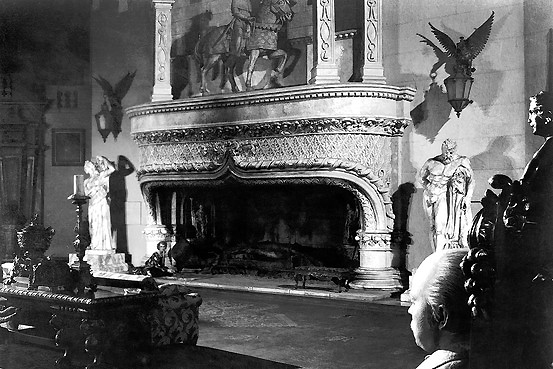
Anyway, it’s much more likely our president will have vacated the White House long before January 20th. He now spends most of his time watching TV, all alone, sulking. Next stop, Xanadu.

Kane_-_2

American Creation: Triumphs and Tragedies at the Founding of the Republic by Joseph J. Ellis

American Creation is an excellent summary of what Ellis calls “the Founding Era”, defined as the 28 years between the start of the War for Independence in 1775 and the Louisiana Purchase in 1803.

The author’s method is to focus on six key periods or events: the 15 months between the violence at Lexington and Concord and the signing of the Declaration of Independence; the Continental Army’s winter at Valley Forge, “a pivotal moment” when George Washington realized he could not win the war by winning full-scale battles with the British; the political battle between the Federalists and Anti-Federalists to ratify the Constitution; the approval of the Treaty of New York in 1791 between the United States and the Creek Nation; the beginning of party politics with the creation of the original Republican Party by Thomas Jefferson and James Madison, mainly in response to Alexander Hamilton’s proposed Bank of the United States; and finally the Louisiana Purchase, when President Jefferson doubled the size of the United States but set the stage for the Civil War by ignoring the issue of slavery’s expansion to the new territory.

Being relatively ignorant about the history of this period, it was especially surprising to read about Thomas Jefferson’s checkered career and the creation of the first Republican Party, which later became the Democratic-Republican Party and eventually split into two parties, the Democrats and the Whigs (it’s ironic that the current Republican Party is known as the Grand Old Party, even though the Democratic Party is 30 years older). Jefferson and his follower Madison engaged in all kinds of bad behavior premised on the bizarre idea that people like Washington and John Adams wanted to restore monarchy to America.

The other especially surprising story is the attempt by members of Washington’s administration to create a policy that would protect the interests of the Indians east of the Mississippi. The Creek Nation occupied much of the American South and was lead by Alexander McGillivray, an expert negotiator who was only one-quarter Indian. McGillivray eventually agreed to the Treaty of New York, which reserved a large part of the South for the Indians and included the promise that Federal troops would stop any further settlement in the area by American colonists. As with most treaties between the United States and the Indians, the agreement was immediately broken by the Federal government, mostly because there weren’t enough Federal troops to enforce it.   

One of Ellis’s principal conclusions is that the struggle over the balance of power between the central government and the states was built into the Constitution from the beginning and has defined much of American history, even to the present day. My conclusion is that we’ve been lucky to do as well as we have, given the political and economic conflicts that have existed since the Founding Era and will apparently never be resolved.