Whereof One Can Speak 🇺🇦

Nothing special, one post at a time since 2012

Let’s Review the History of the Party Since Around 1994 (in 1,600 Words)

Dana Milbank of The Washington Post shares some of his new book, The Destructionists: The Twenty-Five Year Crack-Up of the Republican Party (although he says the crack-up  started closer to 30 years ago). This is an excerpt from his excerpt:

“We have become in danger of losing our own civilization,” Newt Gingrich warned.

Americans had seldom heard a politician talk this way, and certainly not a speaker of the House. But that’s what Gingrich became after the GOP’s landslide victory in the 1994 election. The Contract With America made little headway — only three minor provisions (paperwork reduction!) became law — but the rise of Gingrich and his shock troops set the nation on a course toward the ruinous politics of today.

Much has been made of the ensuing polarization in our politics, and it’s true that moderates are a vanishing breed. But the problem isn’t primarily polarization. The problem is that one of our two major political parties has ceased good-faith participation in the democratic process. Of course, there are instances of violence, disinformation, racism and corruption among Democrats and the political left, but the scale isn’t at all comparable. Only one party fomented a bloody insurrection and even after that voted in large numbers (139 House Republicans, a two-thirds majority) to overturn the will of the voters in the 2020 election. Only one party promotes a web of conspiracy theories in place of facts. Only one party is trying to restrict voting and discredit elections. Only one party is stoking fear of minorities and immigrants….

Republicans and their allied donors, media outlets, interest groups and fellow travelers have been yanking on the threads of democracy and civil society for the past quarter-century; that’s a long time, and the unraveling is considerable. You can measure it in the triumph of lies and disinformation, in the mainstreaming of racism and white supremacy, in the erosion of institutions and norms of government, and in the dehumanizing of opponents and stoking of violence. In the process, Republicans became Destructionists: They destroyed truth, they destroyed decency, they destroyed patriotism, they destroyed national unity, they destroyed racial progress, they destroyed their own party, and they are well on their way to destroying the world’s oldest democracy.

Consider just a few of the milestones along this path of destruction — all of which, we can now see, made T____ possible, if not inevitable:

Long before T____ promulgated more than 30,000 falsehoods during his presidency, including disinformation about the covid-19 pandemic that contributed to countless deaths:

  • House Republicans encouraged the conspiracy theory that Vincent Foster, a lawyer in the Clinton White House, had been murdered — possibly, in the belief’s craziest formulation, by Hillary Clinton. After four separate, independent investigations concluded it was suicide, Gingrich said, “I just don’t accept it,” and one of his committee chairmen, Dan Burton, shot a melon in his backyard to reenact the “murder.”
  • The George W. Bush administration, to make the case for war, distorted the available intelligence to suggest that Iraq was responsible for the 9/11 attacks, that it was on the cusp of obtaining nuclear weapons and that U.S. troops would be “greeted as liberators.” When a former diplomat publicly disputed Bush’s false claims, aides retaliated by disclosing the identity of his wife, a CIA operative.
  • Sarah Palin, the party’s vice-presidential nominee in 2008, falsely proclaimed in 2009 the existence of “death panels” in Barack Obama’s Affordable Care Act. Republican lawmakers lined up to make the false claim a centerpiece of their attempt to defeat Obamacare. About a third of Americans came to believe the falsehood.

Long before T____ spoke of immigrants as rapists and murderers coming from “shithole countries” and told Democratic congresswomen of color to “go back” to other countries:

  • Patrick J. Buchanan, who ran insurgent bids for the GOP presidential nomination in 1992 and 1996, offered generous words for Hitler, lamented the treatment of “European-Americans” and “non-Jewish whites,” warned of a migrant “invasion,” and ran on a promise to “put America first.”
  • Conservative radio giant Rush Limbaugh aired the song “Barack the Magic Negro,” Fox News’s Glenn Beck claimed President Obama had a “deep-seated hatred for White people,” and tea party activists chanted the n-word at Black members of Congress outside the Capitol.
  • Fox News in 2011 served as the forum for T____ and others to perpetrate the “birther” libel asserting that Obama, the first Black president, was not American-born. Palin told Obama to stop his “shuck and jive shtick.”
  • Rep. Steve King (R-Iowa) said in 2013 of the “dreamers” (those brought illegally to the United States as children): “For every one who’s a valedictorian, there’s another 100 out there that weigh 130 pounds and they’ve got calves the size of cantaloupes because they’re hauling 75 pounds of marijuana across the desert.”
Long before T____ told the violent Proud Boys to “stand by” instead of condemning them:
  • Conservative radio host G. Gordon Liddy in 1994 told listeners that if federal agents try to disarm them, “go for a head shot” and “kill the sons of bitches.” Other hosts, and GOP members of Congress, warned of federal agents in “black helicopters” planning “a paramilitary style attack against Americans” and the need for an “armed revolution” to resist a “New World Order,” and Gingrich and other Republicans spoke supportively of antigovernment militias.
  • Thousands of Tea Party activists, on the eve of final passage of Obamacare in the House in 2010, got to within 50 feet of the Capitol. Democrats worried about violence, and police officers struggled to maintain security, but GOP lawmakers inflamed the crowd, waving signs and leading chants of “Kill the bill.”
  • Palin, urging supporters “don’t retreat, instead — RELOAD!,” in 2010 promoted a map of 20 Democratic-held congressional districts in target crosshairs. A GOP Senate nominee spoke of using “Second Amendment remedies.” Threats and vandalism against Democratic lawmakers spread, and, in 2011, Rep. Gabby Giffords (D-Ariz.), one of those listed in Palin’s map, was shot in the head by a gunman who killed six others….

Long before T____ discredited democratic institutions with his “big lie” about election fraud:

  • Republican operatives intimidated the Miami-Dade County Elections Department into stopping the recount of the 2000 election results. A partisan crowd flooded into the elections office, chanting “Stop the fraud!” “Stop the count!” and “Cheaters!” Democratic officials were kicked, pushed and punched.
  • John Ashcroft, who became attorney general after the Supreme Court’s 5-4 decision in Bush v. Gore handed the presidency to George W. Bush, falsely claimed in 2001 that dead people had voted and that “votes have been bought, voters intimidated and ballot boxes stuffed.”
  • House Majority Leader Tom DeLay in 2003, trying to create a “permanent majority,” forced through a Texas redistricting that shifted six House seats to Republicans — and when Democratic legislators left the state to block the scheme, DeLay attempted to use the FBI and the Federal Aviation Administration to track them down.
  • The Supreme Court’s conservative majority stacked the deck for Republicans with its 2010 Citizens United decision, which made it possible for wealthy interests to flood elections with unlimited, unregulated “dark money,” and its 2013 gutting of the 1965 Voting Rights Act, which invited GOP-led states to restrict voting in ways that disproportionately affect voters of color. Republican senators cemented the high court’s reputation as an arm of the GOP when from 2016 into 2017 they blocked Obama for 11 months from filling the vacancy left by Justice Antonin Scalia’s death.

Long before the dysfunction of the T____ era:

  • Gingrich in 1995 announced that he forced a shutdown of the federal government in part because he was asked to exit Air Force One via the rear stairway after a trip to Israel with President Bill Clinton. Republicans debuted a new era of manufactured crises over debt-limit deadlines, and repeated government shutdowns, whenever Democrats held the White House.
  • The Republican National Committee drafted an “autopsy” in 2013 after Mitt Romney lost to Obama, calling for more outreach to Black, Hispanic, Asian and gay Americans. GOP lawmakers in the House swiftly abandoned the idea, killing a comprehensive immigration reform bill that had sailed through the Senate by a bipartisan 68-32.
  • House Speaker John A. Boehner announced his retirement in 2015, later saying he was disgusted with the growing “circle of crazy” inside his party. Republicans “couldn’t govern at all,” Boehner wrote. “Incrementalism? Compromise? That wasn’t their thing,” Boehner wrote of the insurgents. “A lot of them wanted to blow up Washington. … They wanted wedge issues and conspiracies and crusades.” Boehner concluded that he was “living in Crazytown. … Every second of every day since Barack Obama became president, I was fighting one bats–t idea after another.”

Against that quarter-century of ruin, what we are living through today is just a continuation of the GOP’s direction for the past 30 years: the appeals to white nationalism, the sabotage of the functions of government, the routine embrace of disinformation, stoking the fiction of election fraud and the “big lie,” and the steady degradation of democracy.

Now, it seems, that degradation is accelerating….

As they avert their gaze from the cascading horrors of the failed coup, Republicans are instead looking to a familiar guide: Gingrich. The former speaker, now a board member of the pro-T____ America First Policy Institute, announced this year that he is serving as a consultant to House GOP leader Kevin McCarthy and his team.

No sooner had this been disclosed than Gingrich, on Fox News, threatened the imprisonment of lawmakers serving on the Jan. 6 committee, saying they’re “going to face a real risk of jail” after Republicans take over Congress. Throwing political opponents in jail for investigating an attack on the U.S. Capitol and a coup against the U.S. government?

Replied Wyoming Rep. Liz Cheney, one of two Republicans on the committee: “This is what it looks like when the rule of law unravels.” But Gingrich knows that. He’s the one who first started tugging at the threads.
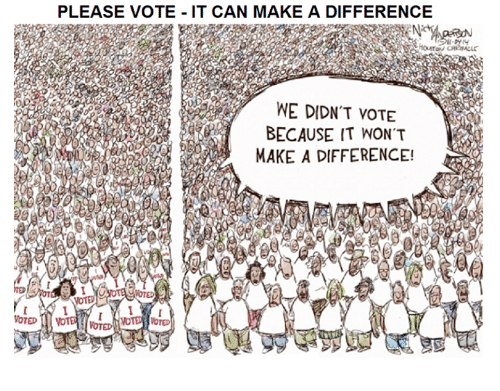
Prognosis: Not Good At All

American democracy is dying, according to Brian Klaas of University College London, and “when they start dying … they usually don’t recover”:

For decades, the United States has proclaimed itself a “shining city upon a hill,” a beacon of democracy that can lead broken nations out of their despotic darkness. That overconfidence has been instilled into its citizens, leading me a decade ago to the mistaken, naïve belief that countries [with faltering democracies] have something to learn from the U.S. rather than also having wisdom to teach us.

During the D____ T____ presidency, the news covered a relentless barrage of “unprecedented” attacks on the norms and institutions of American democracy. But they weren’t unprecedented. Similar authoritarian attacks had happened plenty of times before. They were only unprecedented to us.

I’ve spent the past 12 years studying the breakdown of democracy and the rise of authoritarianism around the world, in places such as Thailand, Tunisia, Belarus, and Zambia…. My studies and experiences have taught me that democracies can die in many ways. In the past, most ended in a quick death….. But in the 21st century, most democracies die like a chronic but terminal patient. The system weakens as the disease spreads. The agony persists over years. Early intervention increases the rate of survival, but the longer the disease festers, the more that miracles become the only hope.

American democracy is dying. There are plenty of medicines that would cure it. Unfortunately, our political dysfunction means we’re choosing not to use them, and as time passes, fewer treatments become available to us, even though the disease is becoming terminal. No major pro-democracy reforms have passed Congress. No key political figures who tried to overturn an American election have faced real accountability. The president who orchestrated the greatest threat to our democracy in modern times is free to run for reelection, and may well return to office.

Our current situation started with a botched diagnosis….Most American pundits and journalists used an “outsider comes to Washington” framework to process T____’s campaign and his presidency, when they should have been fitting every fresh fact into an “authoritarian populist” framework or a “democratic death spiral” framework. While debates raged over tax cuts and offensive tweets, the biggest story was often obscured: The system itself was at risk…..

The basic problem is that one of the two major parties in the U.S. … has become authoritarian to its core. Consequently, there are two main ways to protect American democracy. The first is to reform the Republican Party, so that it’s again a conservative, but not authoritarian, party….

The second is to perpetually block authoritarian Republicans from wielding power. But to do that, Democrats need to win every election. When you’re facing off against an authoritarian political movement, each election is an existential threat to democracy. “Democracies can’t depend on one of two major parties never holding power,” argues Brendan Nyhan, a government professor at Dartmouth College….Eventually, the authoritarian party will win.

Erica Frantz, an Michigan State University expert on authoritarianism, told me she shares that concern: With Republicans out of the White House and in the congressional minority, “democratic deterioration in the U.S. has simply been put on pause”….

When democracies start to die, they usually don’t recover. Instead, they end up as authoritarian states with zombified democratic institutions: rigged elections in place of legitimate ones, corrupt courts rather than independent judges, and propagandists replacing the press.

There are exceptions. Frantz pointed to Ecuador, Slovenia, and South Korea as recent examples. In all three cases, a political shock acted as a wake-up call, in which the would-be autocrat was removed and their political movement either destroyed or reformed. In South Korea, President Park Geun-hye was ousted from office and sent to prison. But more important, Frantz explained, “there was a cleaning of the house after Park’s impeachment, with the new administration aggressively getting rid of those who had been complicit in the country’s slide to authoritarianism.”

Those examples once signaled a hopeful possibility for the United States. At some point, T____’s spell over the country and his party could break. He would go too far, or there would be a national calamity, and we’d all come to our democratic senses.

By early 2021, [he] had gone too far and there had been a national calamity. That’s why, on January 6, 2021, as zealots and extremists attacked the Capitol, I felt an unusual emotion mixed in with the horror and sadness: a dark sense that there was a silver lining.

Finally, the symptoms were undeniable. After T____ stoked a bona fide insurrection, the threat to democracy would be impossible to ignore. As Lindsey Graham and Mitch McConnell denounced Trump on the Senate floor, it looked like Republicans might follow the South Korean path and America could finally take its medicine.

In reality, the denunciations were few and temporary. According to a new poll from the University of Monmouth, six in 10 Republican voters now believe that the attack on the Capitol was a form of “legitimate protest”….And rather than cleaning house, the Republicans who dared to condemn T____ are now the party’s biggest pariahs….

That leaves American democracy with a bleak prognosis. Barring an electoral wipeout of Republicans in 2022 (which looks extremely unlikely), the idea that the party will suddenly abandon its anti-democracy positioning is a delusion.

Pro-democracy voters now have only one way forward: Block the authoritarian party from power, elect pro-democracy politicians in sufficient numbers, and then insist that they produce lasting democratic reforms.

The wish list from several democracy experts I spoke with is long, and includes passing the Electoral Count Act [which may soon happen], creating a constitutional right to vote, reforming districting so more elections are competitive, … electing the president via popular vote, reducing the gap in representation between states like California and Wyoming, introducing some level of proportional representation or multimember districts, aggressively regulating campaign spending and the role of money in politics, and enforcing an upper age limit for Supreme Court justices. But virtually all of those ideas are currently political fantasies.

The American system isn’t just dysfunctional. It’s dying. Nyhan believes there is now a “significant risk” that the 2024 election outcome will be illegitimate. Even Frantz, who has been more optimistic about America’s democratic resilience in the past, doesn’t have a particularly reassuring retort to the doom-mongers: “I don’t think U.S. democracy will collapse, but just hover in a flawed manner, as in Poland.”

We may not be doomed. But we should be honest: The optimistic assessment from experts who study authoritarianism globally is that the United States will most likely settle into a dysfunctional equilibrium that mirrors a deep democratic breakdown. It’s not yet too late to avoid that. But the longer we wait, the more the cancer of authoritarianism will spread. We don’t have long before it’s inoperable.

How To Be a Reactionary

I happened to finish a book called The Rhetoric of Reaction around the same time I read a Twitter thread regarding the “reactionary worldview”. The book and the thread don’t cover the same ground, but they might be helpful if you aspire to be a reactionary (it’s the latest thing: there could be a Supreme Court seat in your future).

First, the thread from David Roberts of the Volts newsletter and podcast:

… The fundamental feature of the reactionary worldview is that life/culture is a zero-sum contest of tribe vs. tribe. Your tribe is either being dominated and humiliated or dominating and humiliating other tribes. There are no other options. Your average liberal has genuine difficulty wrapping their mind around: to a reactionary, talk about non-hierarchical relationships — equality, mutual respect — is literally fantastical, like talk about unicorns. They can only hear it as a scam, i.e., as someone trying to get one over on them. That’s the only way they can interpret liberals: as just another tribe, using “equality” talk as a sneaky means of domination. They experience calls for tolerance and mutual respect as attacks. Thus, you get this bizarre dynamic of reactionaries thinking of liberals as tyrannical, as a force imposing, uh, tolerance. “They want everyone to think the same!” Where “the same” is, “allow everyone to think and behave how they want as long as they don’t hurt others.”

Or as I once opined, maybe to myself: When Republicans hear a Democrat say we’re all in this together, they think it’s a threat.

Next, the book. It was written by the economist Albert O. Hirschman. Published in 1991, The Rhetoric of Reaction deals with three typical arguments made by reactionaries (or the milder reactionaries known as “conservatives”). He labeled them the Perversity, Futility and Jeopardy arguments:

According to the perversity thesis, any purposive action to improve some feature of the political, social, or economic order only serves to exacerbate the condition one wishes to remedy.

The futility thesis holds that attempts at social transformation will be unavailing, that they will simply fail to “make a dent”.

The jeopardy thesis argues that the cost of the proposed change or reform is too high as it endangers some previous, precious accomplishment.

Hirschman discusses various instances of these arguments, beginning with the 18th century. Near the end of the book, he has a chapter on progressive counterarguments:

By demonstrating that each of the reactionary arguments has one or more progressive counterparts, I generated contrasting pairs of reactionary and progressive statements about social action.

PERVERSITY — Reactionary: The contemplated action will bring disastrous consequences [in particular, the opposite of what was intended].

— Progressive: Not to take the contemplated action will bring disastrous consequences [the opposite of what was intended].

JEOPARDY — Reactionary: The new reform will jeopardize the older one.

— Progressive: The new and the old reforms will mutually reinforce each other.

FUTILITY —  Reactionary: The contemplated action attempts to change permanent structural characteristics (“laws”) of the social order; it is therefore bound to be wholly ineffective, futile.

— Progressive: The contemplated action is backed up by powerful historical forces that are already “on the march”; opposing them would be utterly futile.

Hirschman then draws a conclusion regarding the possibility of a stable democracy:

What I have ended up doing, in effect, has been to map the rhetorics of intransigence as they have long been practiced by both reactionaries and progressives….

Yet my purpose is not to cast “a plague on both your houses.” Rather, it is to move public discourse beyond extreme, intransigent postures of either kind, with the hope that in the process our debates will become more “democracy friendly”….

Recent reflections on democracy have yielded two valuable insights, a historical one on the origins of pluralistic democracies and a theoretical one on the long-run conditions for stability and legitimacy of such regimes. Modern pluralistic regimes have typically come into being, it is increasingly recognized, not because of some preexisting wide consensus on “basic values,” but rather because various groups that had been at each other’s throats for a prolonged period had to recognize their mutual inability to achieve dominance. Tolerance and acceptance of pluralism resulted eventually from a standoff between bitterly hostile opposing groups.

This historical point of departure of democracy does not bode particularly well for the stability of these regimes. The point is immediately obvious, but it becomes even more so when it is brought into contact with the theoretical claim that a democratic regime achieves legitimacy to the extent that its decisions result from full and open deliberation among its principal groups, bodies, and representatives. Deliberation is here conceived as an opinion-forming process: the participants should not have fully or definitively formed opinions at the outset; they are expected to engage in meaningful discussion, which means that they should be ready to modify initially held opinions in the light of arguments of other participants and also as a result of new information which becomes available in the course of the debate.

If this is what it takes for the democratic process to become self-sustaining and to acquire long-run stability and legitimacy, then the gulf that separates such a state from democratic-pluralistic regimes as they emerge historically from strife and civil war is uncomfortably and perilously wide. A people that only yesterday was engaged in fratricidal struggles is not likely to settle down overnight to those constructive give-and-take deliberations.

Far more likely, there will initially be agreement to disagree, but without any attempt at melding the opposing points of view—that is indeed the nature of religious tolerance. Or, if there is discussion, it will be a typical “dialogue of the deaf”—a dialogue that will in fact long function as a prolongation of, and a substitute for, civil war. Even in the most “advanced” democracies, many debates are, to paraphrase Clausewitz, a “continuation of civil war with other means.” Such debates, with each party on the lookout for arguments that kill, are only too familiar from democratic politics as usual.

There remains then a long and difficult road to be traveled from the traditional internecine, intransigent discourse to a more “democracy-friendly” kind of dialogue. For those wishing to undertake this expedition there should be value in knowing about a few danger signals, such as arguments that are in effect contraptions specifically designed to make dialogue and deliberation impossible. I have here attempted to supply a systematic and historically informed account of these arguments on one side of the traditional divide between “progressives” and “conservatives”—and have then added, much more briefly, a similar account for the other side. As compared to my original aim of exposing the simplicities of reactionary rhetoric alone, I end up with a more even-handed contribution—one that could ultimately serve a more ambitious purpose.

Unquote.

Hence, to be a reactionary, consider dividing the world into tribes all out to take advantage of each other (your tribe being the best) and using the same arguments over and over again: doing something won’t work, it will backfire and it will undo what’s already been done.

We Need To Work Together the Way They Have

The Atlantic has an article called “America Is Growing Apart, Possibly For Good”. It includes a few statistics that show how states with Democratic and Republic political leaders are diverging. 

For example, blue states lead in such factors as life expectancy, gross domestic product per person, median household income, spending on elementary and secondary education, access to health insurance, minimum wage rates, union membership and abortion rights

Red states have more children in poverty, more working households in poverty, more gun deaths, and higher maternal and COVID mortality rates.

It’s also easier to vote in blue states.

David Roberts, who publishes the Volts newsletter on politics and clean energy, cited the Atlantic article and took it from there:

The differences between red & blue America are rising to the surface again after a late-20th century period of anomalous convergence. This isn’t about misunderstanding or incivility or “partisanship” — these are real, deep, fundamental differences in values.

Red America is well into a program of attempting, with a numerical minority, to impose its will & its values on the entire country. It is aided by innumerable biases in the US constitutional system & a wildly unrepresentative Supreme Court.

This is all obvious enough (one would hope) by now, but all I want to add — as someone who woke to find his wife quietly sobbing at her computer & is filled with helpless fury — is that Red America has also been helped over the last several decades by the fact that a large number of people in Blue America refuse to take its side — refuse to take sides at all. Instead go about trying to impress each other with how above-it-all they are, how they see the flaws in both sides, how they’re too clever to just fucking fight.

I’m talking about the self-righteous lefties pissing on “libs”, the self-righteous moderates pissing on the activists, the pundits wringing their hands over process questions & tone policing, the gerontocratic Democrats lost in fantasies of bipartisanship.

Survey the whole landscape & you find legions of people naturally situated on one side of this battle simply refusing to fight it, refusing even to clearly describe the battle lines, mostly out of vanity masquerading as nobility.

Pick your episode — start with the stolen 2000 election, start earlier, whatever — and you find Blue America divided, squabbling, irresolute, taken by surprise again & again, bizarrely resistant to simply identifying Red America for what it is & trying to stop it.

Over & over again, it’s “well, maybe they have a point” or “sure I disagree but let’s not fight” or “if you squint, they’re actually just worried about lost factory jobs” or “the problem is us, we need to spend more time in diners,” on & on ad nauseam.

This isn’t unique to America of course — history provides plenty of examples of the Blue parts of society failing to take the Red parts seriously until it’s too late, only to find themselves swept up in rising autocracy & violence. A certain German example comes to mind.

So let’s make it plain: Red America wants a fundamentalist Christian patriarchal society, with white Christian men on top, protected by the law but not bound by it, & everyone else bound but not protected, begging for leftovers.

If you don’t want that — if you want a multiethnic, multiracial democracy in which every citizen is ensured a basic level of material security & dignity — then it’s time to wrench your gaze away from the ways fellow Blue Americans annoy you (yes, yes, I do too) and fix your gaze on the enemy of rising fascism.

“I’m too clever to be on any team” is over. Nobody’s impressed. Join the fucking fight or get out of the way.

Unquote.

As if the gun ruling and the abortion ruling weren’t enough, the renegade Supreme Court majority is poised to issue a ruling that could fundamentally change the way the federal government functions:

The Supreme Court is expected to issue a decision in the coming days that could curtail the [Environmental Protection Agency’s] ability to drive down carbon emissions at power plants.

But it could go much further than that.

Legal experts are waiting to see if the ruling in West Virginia v. EPA begins to chip away at the ability of federal agencies — all of them, not just EPA — to write and enforce regulations.

It would foreshadow a power shift with profound consequences, not just for climate policy but virtually everything the executive branch does, from directing air traffic to protecting investors [to dealing with pandemics].

Sherilyn Ifill, former head of the NAACP Legal Defense Fund, explains what we need to do to get out of this “democratic freefall”:

We need radical structural reform to the functioning of all three branches of government in this country. Extremists have found the keys to gaming & hijacking the system – in Congress, the White House, & [the Supreme Court].

We have witnessed the vulnerability of the rules that govern each branch of government, which have been weaponized to herd us toward minority rule. Do we have the boldness & courage to reset the rules of government so that they serve democracy? Because that’s the project. It begins with power.

If we hope to remain a democracy then we need to be prepared to fundamentally reset key aspects of how we’ve allowed our government to function (or malfunction): Congress, the Presidency, the Supreme Court. Healthy democracies learn & adjust. Can we? I don’t see how we make it any other way.

It’s a huge job, but we can do it.

FWD44E-UsAA-5md

Our Interesting Times

Millions of Democrats and millions of Republicans think our democracy, or what’s left of it, is fading away. But they don’t agree on what that means. From Paul Waldman of The Washington Post:

A new Yahoo News-YouGov poll asked people whether America is becoming a more or less democratic country, and 58 percent — including 60 percent of Democrats and 61 percent of Republicans — said it is becoming less democratic.

Even more alarming, 55 percent of Democrats and 53 percent of Republicans said it was likely that “America will cease to be a democracy in the future.”

Underneath that agreement, Democrats and Republicans think about both the threat and the solution in opposite ways. And in the near term at least, Republicans — who want to actively accelerate the destruction of American democracy (even if they describe what they’re doing as just the opposite) — have the upper hand.

… We don’t know what every respondent thinks when they hear the word “democracy,” and there will always be people ready to say everything is going to hell. But at the very least, the results suggest a deep well of pessimism about our political future.

I’ve seen it lately among my liberal friends, and perhaps you have, too. Even the ones whose work involves trying to improve the world are feeling something close to despair. What they see is a system that was already undemocratic, built on structures and practices such as the appalling inequality of the U.S. Senate (where 600,000 Wyoming residents have the same two votes as 40 million Californians), the filibuster, and gerrymandering, and is now under siege by a party that is eagerly nominating deranged conspiracy theorists and radical extremists to run that very system.

When liberals say they fear democracy will cease to exist, they’re responding to overwhelming evidence that the Republican Party, the beneficiary of all those advantages that enable its minority rule, has utterly abandoned any commitment to democracy, if Republicans ever had one to begin with.

Under the leadership of possibly [possibly ???] the most corrupt president in American history — still their god-king no matter how high his misdeeds pile up — Republicans justify a violent attempt to overturn a presidential election, spin insane fictions of voter fraud conspiracies, pass law after law to make voting harder, and cheer the use of state power to target their enemies.

Worst of all from the perspective of liberals, it seems to be working. A strategy of chaos, it turns out, is easier to implement than a strategy meant to shore up vulnerable institutions.

Democrats work diligently to devise procedures to make partisan mischief less effective and assiduously fact-check every preposterous GOP claim. And they worry it all might be for naught.

As for Republicans, when they say “democracy” might cease to exist, what do they mean? It’s hard to discern much beyond the idea that if Democrats win an election and try to implement the policies they got elected on, then democracy has been destroyed.

Remember that when Barack Obama was president, Republicans cried endlessly that every policy decision he made was “tyranny,” driven by his secret desire to destroy the country. The fact that his eight years as an ordinary center-left Democratic president didn’t actually destroy the country did not change their minds. The “tyranny,” as far as they were concerned, came from the simple fact that Democrats were in charge.

When they say they fear for democracy’s survival, what they’re afraid of is the idea that we might continue to have a competitive system, in which elections are contested, Democrats sometimes win, and when they do, they get to implement their policies.

One struggles to discern how much of this is sincere and how much is just a useful fiction. But my guess is that for the Republican elite it’s an act, and for their base it’s genuinely felt.

The rhetorical legal scam of “originalism” taught Republicans an important lesson: The more radical you want to be, the more useful it is to pretend your agenda is the truest manifestation of the divine will of the Framers. Grab a quote from the Federalist Papers or a letter James Madison wrote to his tailor, then brandish it as proof that the only course faithful to the Constitution is to destroy collective bargaining, flood the streets with military-style weapons, allow billionaires to buy elections, or whatever else it is that conservatives want to do.

If your agenda is the only living expression of the country’s sainted Founders and sacred texts, then any political victory by your opponents must by definition be a blow against the country and democracy itself.

While Republican leaders know it’s a con, the rank and file bought into it. And today they’ve convinced themselves that “democracy” means having elections overseen not by nonpartisan, independent civil servants but by the most partisan, conspiracy-addled right-wing extremists. Only that will ensure that Republicans always win, and only a system where Republicans always win is truly democratic.

If Republicans get their way, the liberals who fear democracy’s end will turn out to be right.

Unquote.

Another view is that we’ll keep democracy of a sort but it will be unstable. This appraisal is apparently from an article in Foreign Affairs that I couldn’t get to. It’s called “America’s Coming Age of Instability: Why Constitutional Crises and Political Violence Might Soon Become the Norm”:

Rather than autocracy, the United States appears headed toward endemic regime instability. Such a scenario would be marked by frequent constitutional crises, including contested or stolen elections and severe conflict between presidents and Congress (such as impeachments and executive efforts to bypass Congress), the judiciary (such as efforts to purge or pack the courts), and state governments (such as intense battles over voting rights and the administration of elections). The United States would likely shift back and forth between dysfunctional democracy and periods of competitive authoritarian rule during which incumbents abuse state power, tolerate or encourage violent extremism, and tilt the electoral playing field against their rivals.

Peter Turchin, who trained as a biologist but has since been investigating cycles in human history, has argued that political instability is a recurring phenomenon, in books like Ages of Discord: A Structural-demographic Analysis of American History. From his website:

Historical analysis shows that long spells of equitable prosperity and internal peace are succeeded by protracted periods of inequity, increasing misery, and political instability. These crisis periods—“Ages of Discord”—tend to share characteristic features, identifiable in many societies throughout history. Modern Americans, for example, may be disconcerted to learn that the US right now has much in common with the Antebellum 1850s and, even more surprisingly, with ancien régime France on the eve of the French Revolution. Can it really be true that our troubled age is nothing new, and that it arises periodically for similar underlying reasons? It can. Ages of Discord marshals a cohesive theory and detailed historical data to show that this is, indeed, the case. The book takes the reader on a roller-coaster ride through American history, from the Era of Good Feelings of the 1820s to our first Age of Discord, which culminated in the American Civil War, to post-WW2 prosperity and, finally, to our present, second Age of Discord.

Perhaps we today were destined to live in “interesting times”.