Whereof One Can Speak 🇺🇦

Nothing special, one post at a time since 2012

Law and Order Comes to Mar-a-Lago (Plus a Knock Knock Joke)

FZrPPgiWIAMh-36

Sophisticated humor aside, nobody knows what’s going to happen to the 45th president (otherwise known as a dangerous, buffoonish cancer on America). Maybe the DOJ and a DC jury of his peers will finally LOCK HIM UP. Maybe the Fulton County, Georgia, district attorney will get it done. If she does, maybe the governor of George will pardon him. Maybe he’ll run for president from prison, get enough Electoral College help from fascist officials around the country and then pardon himself. Maybe he’ll get probation and agree not to run for political office again. Maybe he’ll abscond to Moscow and run for president from there. Maybe he’ll have a debilitating stroke. Maybe he’ll go straight to Hell. The big questions remain: how is it that a major political party chose this “person” and might easily choose him again?

Amid right-winger calls for elimination of the FBI or immediate civil war, one of my favorite columnists, Paul Waldman of The Washington Post, had a few thoughts on the hysterical Republican reaction to yesterday’s FBI visit [among which I asserted a few italicized ones of my own]:

In his recent speeches, D____ T____ has taken to saying that he is “the most persecuted person in the history of our country.” The millions who lived and died in slavery? Native Americans who endured the Trail of Tears? Sure, they suffered. But did they get kicked off Twitter?

Now that the FBI has executed a search warrant at T____’s Mar-a-Lago Club, the former president can indulge what has become his most important impulse, his driving motivation, his very reason for being: to whine and complain.

The gleeful enthusiasm with which his party has rallied to his defense shows how invested Republicans have become in T____’s personal narrative of oppression, one that is notable for its distance from anything that might affect the lives of the Americans whose votes T____ might soon be seeking again.

Let’s keep in mind one vital fact about the FBI’s action Monday: No one you see commenting on this matter — not the angry members of Congress, TV hosts or the pundits aplenty — knows precisely what crime the bureau is investigating or what evidence was presented to the judge who approved the search warrant [although the ex-president could make the search warrant public if he wanted to].

That hasn’t stopped T____’s defenders from assuming [no, saying, not assuming] that he can’t possibly have done anything that would justify the search. After all, we know how careful he has always been about following rules, particularly with regard to classified information.

… In order to get a warrant, the FBI had to convince a judge that it had probable cause to believe a search would locate evidence of a crime. One would like to think that if T____ had committed crimes, even Republicans would admit that it would be appropriate to investigate.

But the nearly universal [fascist] response has been that the search can only have been politically motivated, despite the fact that no one commenting knows what the FBI was looking for or what it found [Republicans are fond of politicizing the Department of Justice, so figure Democrats do it too].

“I stand with President T____ against this outrageous action of the FBI,” said Sen. Marsha Blackburn (R-Tenn.). “The Biden Admin has fully weaponized DOJ & FBI to target their political enemies,” tweeted Sen. Ted Cruz (R-Tex.). House Minority Leader Kevin McCarthy (R-Calif.) said, “The Department of Justice has reached an intolerable state of weaponized politicization.” On Fox News, the hosts and guests all but lost their minds in rage. Kari Lake, the T____-endorsed GOP nominee for governor of Arizona, thundered in a statement that “We must fire the Federal Government,” whatever that means…..

There’s no question that this was an extraordinary action for the Justice Department to have taken, which is why it’s almost certain that it came after lengthy deliberation and in the belief that a crime (or multiple crimes) had been committed. The department [including the FBI Director nominated by T____] had to be fully aware of the political firestorm that would erupt.

Attorney General Merrick Garland is hardly some kind of hothead, and the other top Justice Department officials likely to have been part of the decision-making aren’t the collection of knaves and buffoons T____ had gathered around himself…. In this Democratic administration, the officials in charge are serious people.

And of course, the reaction of T____’s defenders was going to be political. But the way that they’re making their case shows how profound a hold T____’s cult of personality still has on his party.

… What are Republicans saying to you right now, besides “D____ T____ should be above the law”? [And everything bad in the world is Biden’s fault while he’s had nothing to do with anything good.]

… Some did make a halfhearted effort to link T____’s personal oppression to some hypothetical future oppression you might experience yourself [note that these are House Republicans with a special interest in the proper functioning of the legal system]:

What’s the “it” here? Execute a search warrant approved by a judge to investigate unlawful seizure of classified materials, and perhaps other crimes as well? … The federal government might do that to me or you, but I confess I’m not particularly worried.
Laboratories of Autocracy

Normal people were shocked when they heard about the 10-year old girl in Ohio who was raped, became pregnant, and was forced to travel to Indiana to get an abortion because Ohio’s new forced-birth law doesn’t have an exception for rape. From a long article by Jane Mayer for The New Yorker:

[Ohio’s] residents tend to be politically moderate, and polls consistently show that a majority of Ohio voters support legal access to abortion…. Yet, as the recent ordeal of a pregnant ten-year-old rape victim has illustrated, Ohio’s state legislature has become radically out of synch with its constituents….

Longtime Ohio politicians have been shocked by the state’s transformation into a center of extremist legislation, not just on abortion but on such divisive issues as guns and transgender rights. Ted Strickland, a Democrat who served as governor between 2007 and 2011, told me, “The legislature is as barbaric, primitive, and Neanderthal as any in the country. It’s really troubling”…. The story is similar in several other states with reputations for being moderate, such as Wisconsin and Pennsylvania: their legislatures have also begun proposing laws so far to the right that they could never be passed in the U.S. Congress…..

A 2020 survey indicated that less than fourteen per cent of Ohioans support banning all abortions without exceptions for rape and incest…. But the Democrats in the Ohio legislature had no way to mount resistance: since 2012, the Republicans have had a veto-proof super-majority in both chambers….

… The General Assembly’s increasingly radical Republican majority is poised to pass even more repressive restrictions … when it returns from a summer recess. State Representative Gary Click … has proposed a “Personhood Act,” which would prohibit any interference with embryonic development from the moment of conception, unless the mother’s life is endangered. If the bill passes, it could outlaw many kinds of contraception, not to mention various practices commonly used during in-vitro fertilization.

[David Niven, a University of Cincinnati professor,] told me that, according to one study, the laws being passed by Ohio’s statehouse place it to the right of the deeply conservative legislature in South Carolina. How did this happen, given that most Ohio voters are not ultra-conservatives? “It’s all about gerrymandering,” Niven told me.

The legislative-district maps in Ohio have been deliberately drawn so that many Republicans effectively cannot lose, all but insuring that the Party has a veto-proof super-majority. As a result, the only contests most Republican incumbents need worry about are the primaries—and, because hard-core partisans dominate the vote in those contests, the sole threat most Republican incumbents face is the possibility of being outflanked by a rival even farther to the right.

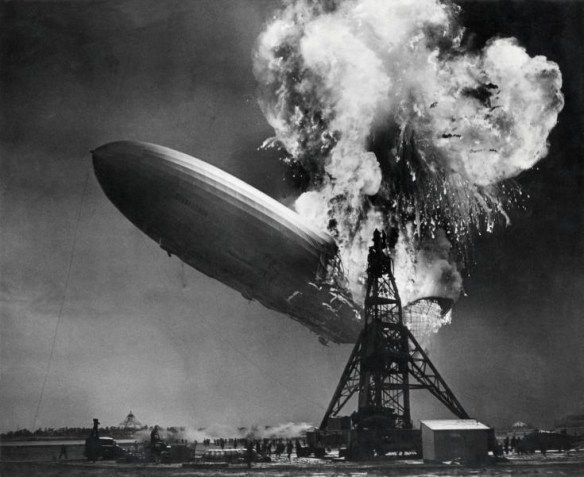
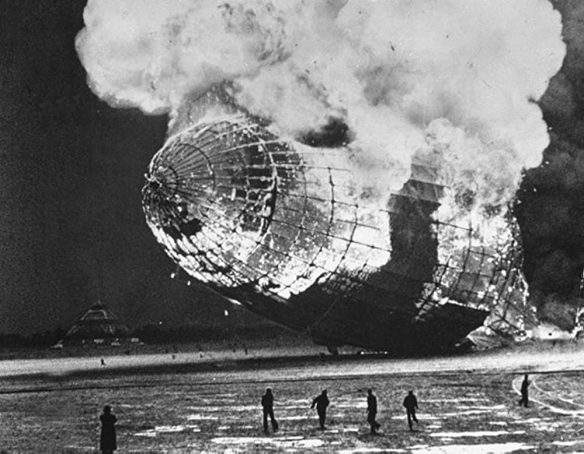
The national press has devoted considerable attention to the gerrymandering of congressional districts, but state legislative districts have received much less scrutiny, even though they are every bit as skewed, and in some states far more so. “Ohio is about the second most gerrymandered statehouse in the country,” Niven told me. “It doesn’t have a voter base to support a total abortion ban, yet that’s a likely outcome.” He concluded, “Ohio has become the Hindenburg of democracy.”

Hindenburg_disaster

David Pepper, an election-law professor, has a book, “Laboratories of Autocracy,” whose title offers a grim spin on a famous statement, attributed to the Supreme Court Justice Louis Brandeis, calling America’s state legislatures “laboratories of democracy”…. He is determined to get the Democratic political establishment to stop lavishing almost all its money and attention on U.S. House, Senate, and gubernatorial races … and to focus more energy on what he sees as a greater emergency: the collapse of representative democracy in one statehouse after another.

Unquote. The article discusses how inattention to local politics has allowed right-wing extremists to take control of state legislatures, assisted by the Supreme Court’s Citizens United decision, and how lower court decisions have been ignored: 

Swept out of power in Washington, the Republican Party’s smartest operatives decided to exploit the only opening they could find: the possibility of capturing state legislatures in the 2010 midterm elections. They knew that, in 2011, many congressional and local legislative districts would be redrawn based on data from the 2010 census—a process that occurs only once a decade. If Republicans reshaped enough districts, they could hugely advantage conservative candidates, even if many of the Party’s policies were unpopular.

In 2010, the Supreme Court issued its controversial Citizens United decision, which allowed dark money to flood American politics. Donors, many undisclosed, soon funneled thirty million dollars into the Republicans’ redistricting project, called REDMAP, and the result was an astonishing success: the Party picked up nearly seven hundred legislative seats, and won the power to redraw the maps for four times as many districts as the Democrats….

The Ohio statehouse has grown only more lopsided in the past decade. Currently, the Republican members have a 64–35 advantage in the House and a 25–8 advantage in the Senate. This veto-proof majority makes the Republican leaders of both chambers arguably the most powerful officeholders in the state….

The vast majority of Ohio residents clearly want legislative districts that are drawn more fairly. By 2015, the state’s gerrymandering problem had become so notorious that seventy-one per cent of Ohioans voted to pass an amendment to the state constitution demanding reforms. As a result, the Ohio constitution now requires that districts be shaped so that the makeup of the General Assembly is proportional to the political makeup of the state. In 2018, an even larger bipartisan majority—seventy-five per cent of Ohio voters—passed a similar resolution for the state’s congressional districts.

Though these reforms were democratically enacted, the voters’ will has thus far been ignored…. [Republicans] proposed districts [that] were nowhere near proportional to the state’s political makeup. The Democrats argued that the Republicans had flagrantly violated the reforms that had been written into the state constitution.

This past spring, an extraordinary series of legal fights were playing out. The Ohio Supreme Court struck down the map—and then struck down four more, after the Republican majority on the redistricting commission continued submitting maps that defied the spirit of the court’s orders…. The Republicans’ antics lasted so long that they basically ran out the clock. Election deadlines were looming, and the makeup of Ohio’s districts still hadn’t been settled. … A federal court [was asked] to intervene, on the ground that the delay was imperiling the fair administration of upcoming elections. The decision was made by a panel of three federal judges—two of whom had been appointed by T____. Over the strenuous objection of the third judge, the two T___ judges ruled in the group’s favor, allowing the 2022 elections to proceed with a map so rigged that Ohio’s top judicial body had rejected it as unconstitutional.

On Twitter, Bill Seitz, the majority leader of the Ohio House, jeered at his Democratic opponents: “Too bad so sad. We win again. The game is over and you lost.”

Ohio Democrats, including David Pepper, are outraged. “The most corrupt state in the country was told more than five times that it was violating the law, and then the federal court said it was O.K.,” he told me. “If you add up all the abnormalities, it’s a case study—we’re seeing the disintegration of the rule of law in Ohio. They intentionally created an illegal map, and are laughing about it.”

[A Democratic legislator] likens the Republicans’ stunning contempt for the Ohio Supreme Court to the January 6th insurrection: “People are saying, ‘Where is the accountability when you disregard the rule of law and attack democracy?’ Because that’s what’s happening in the statehouses, and Ohio is a perfect example.”

Unquote. Ohio isn’t the only state where this has happened. From The New York Times:

Since January, judges in Alabama, Georgia, Louisiana and Ohio have found that Republican legislators illegally drew those states’ congressional maps along racial or partisan lines, or that a trial very likely would conclude that they did. In years past, judges who have reached similar findings have ordered new maps, or had an expert draw them, to ensure that coming elections were fair.

But a shift in election law philosophy at the Supreme Court, combined with a new aggressiveness among Republicans who drew the maps, has upended that model for the elections in November. This time, all four states are using the rejected maps, and questions about their legality for future elections will be hashed out in court later.

MV5BZWE5MWU1OGItYzFjZC00OTRhLTljNDUtNjU1NDYxYjc5ZTg2L2ltYWdlXkEyXkFqcGdeQXVyMTIxMDUyOTI@._V1_FMjpg_UX1000_

Let’s Review the History of the Party Since Around 1994 (in 1,600 Words)

Dana Milbank of The Washington Post shares some of his new book, The Destructionists: The Twenty-Five Year Crack-Up of the Republican Party (although he says the crack-up  started closer to 30 years ago). This is an excerpt from his excerpt:

“We have become in danger of losing our own civilization,” Newt Gingrich warned.

Americans had seldom heard a politician talk this way, and certainly not a speaker of the House. But that’s what Gingrich became after the GOP’s landslide victory in the 1994 election. The Contract With America made little headway — only three minor provisions (paperwork reduction!) became law — but the rise of Gingrich and his shock troops set the nation on a course toward the ruinous politics of today.

Much has been made of the ensuing polarization in our politics, and it’s true that moderates are a vanishing breed. But the problem isn’t primarily polarization. The problem is that one of our two major political parties has ceased good-faith participation in the democratic process. Of course, there are instances of violence, disinformation, racism and corruption among Democrats and the political left, but the scale isn’t at all comparable. Only one party fomented a bloody insurrection and even after that voted in large numbers (139 House Republicans, a two-thirds majority) to overturn the will of the voters in the 2020 election. Only one party promotes a web of conspiracy theories in place of facts. Only one party is trying to restrict voting and discredit elections. Only one party is stoking fear of minorities and immigrants….

Republicans and their allied donors, media outlets, interest groups and fellow travelers have been yanking on the threads of democracy and civil society for the past quarter-century; that’s a long time, and the unraveling is considerable. You can measure it in the triumph of lies and disinformation, in the mainstreaming of racism and white supremacy, in the erosion of institutions and norms of government, and in the dehumanizing of opponents and stoking of violence. In the process, Republicans became Destructionists: They destroyed truth, they destroyed decency, they destroyed patriotism, they destroyed national unity, they destroyed racial progress, they destroyed their own party, and they are well on their way to destroying the world’s oldest democracy.

Consider just a few of the milestones along this path of destruction — all of which, we can now see, made T____ possible, if not inevitable:

Long before T____ promulgated more than 30,000 falsehoods during his presidency, including disinformation about the covid-19 pandemic that contributed to countless deaths:

  • House Republicans encouraged the conspiracy theory that Vincent Foster, a lawyer in the Clinton White House, had been murdered — possibly, in the belief’s craziest formulation, by Hillary Clinton. After four separate, independent investigations concluded it was suicide, Gingrich said, “I just don’t accept it,” and one of his committee chairmen, Dan Burton, shot a melon in his backyard to reenact the “murder.”
  • The George W. Bush administration, to make the case for war, distorted the available intelligence to suggest that Iraq was responsible for the 9/11 attacks, that it was on the cusp of obtaining nuclear weapons and that U.S. troops would be “greeted as liberators.” When a former diplomat publicly disputed Bush’s false claims, aides retaliated by disclosing the identity of his wife, a CIA operative.
  • Sarah Palin, the party’s vice-presidential nominee in 2008, falsely proclaimed in 2009 the existence of “death panels” in Barack Obama’s Affordable Care Act. Republican lawmakers lined up to make the false claim a centerpiece of their attempt to defeat Obamacare. About a third of Americans came to believe the falsehood.

Long before T____ spoke of immigrants as rapists and murderers coming from “shithole countries” and told Democratic congresswomen of color to “go back” to other countries:

  • Patrick J. Buchanan, who ran insurgent bids for the GOP presidential nomination in 1992 and 1996, offered generous words for Hitler, lamented the treatment of “European-Americans” and “non-Jewish whites,” warned of a migrant “invasion,” and ran on a promise to “put America first.”
  • Conservative radio giant Rush Limbaugh aired the song “Barack the Magic Negro,” Fox News’s Glenn Beck claimed President Obama had a “deep-seated hatred for White people,” and tea party activists chanted the n-word at Black members of Congress outside the Capitol.
  • Fox News in 2011 served as the forum for T____ and others to perpetrate the “birther” libel asserting that Obama, the first Black president, was not American-born. Palin told Obama to stop his “shuck and jive shtick.”
  • Rep. Steve King (R-Iowa) said in 2013 of the “dreamers” (those brought illegally to the United States as children): “For every one who’s a valedictorian, there’s another 100 out there that weigh 130 pounds and they’ve got calves the size of cantaloupes because they’re hauling 75 pounds of marijuana across the desert.”
Long before T____ told the violent Proud Boys to “stand by” instead of condemning them:
  • Conservative radio host G. Gordon Liddy in 1994 told listeners that if federal agents try to disarm them, “go for a head shot” and “kill the sons of bitches.” Other hosts, and GOP members of Congress, warned of federal agents in “black helicopters” planning “a paramilitary style attack against Americans” and the need for an “armed revolution” to resist a “New World Order,” and Gingrich and other Republicans spoke supportively of antigovernment militias.
  • Thousands of Tea Party activists, on the eve of final passage of Obamacare in the House in 2010, got to within 50 feet of the Capitol. Democrats worried about violence, and police officers struggled to maintain security, but GOP lawmakers inflamed the crowd, waving signs and leading chants of “Kill the bill.”
  • Palin, urging supporters “don’t retreat, instead — RELOAD!,” in 2010 promoted a map of 20 Democratic-held congressional districts in target crosshairs. A GOP Senate nominee spoke of using “Second Amendment remedies.” Threats and vandalism against Democratic lawmakers spread, and, in 2011, Rep. Gabby Giffords (D-Ariz.), one of those listed in Palin’s map, was shot in the head by a gunman who killed six others….

Long before T____ discredited democratic institutions with his “big lie” about election fraud:

  • Republican operatives intimidated the Miami-Dade County Elections Department into stopping the recount of the 2000 election results. A partisan crowd flooded into the elections office, chanting “Stop the fraud!” “Stop the count!” and “Cheaters!” Democratic officials were kicked, pushed and punched.
  • John Ashcroft, who became attorney general after the Supreme Court’s 5-4 decision in Bush v. Gore handed the presidency to George W. Bush, falsely claimed in 2001 that dead people had voted and that “votes have been bought, voters intimidated and ballot boxes stuffed.”
  • House Majority Leader Tom DeLay in 2003, trying to create a “permanent majority,” forced through a Texas redistricting that shifted six House seats to Republicans — and when Democratic legislators left the state to block the scheme, DeLay attempted to use the FBI and the Federal Aviation Administration to track them down.
  • The Supreme Court’s conservative majority stacked the deck for Republicans with its 2010 Citizens United decision, which made it possible for wealthy interests to flood elections with unlimited, unregulated “dark money,” and its 2013 gutting of the 1965 Voting Rights Act, which invited GOP-led states to restrict voting in ways that disproportionately affect voters of color. Republican senators cemented the high court’s reputation as an arm of the GOP when from 2016 into 2017 they blocked Obama for 11 months from filling the vacancy left by Justice Antonin Scalia’s death.

Long before the dysfunction of the T____ era:

  • Gingrich in 1995 announced that he forced a shutdown of the federal government in part because he was asked to exit Air Force One via the rear stairway after a trip to Israel with President Bill Clinton. Republicans debuted a new era of manufactured crises over debt-limit deadlines, and repeated government shutdowns, whenever Democrats held the White House.
  • The Republican National Committee drafted an “autopsy” in 2013 after Mitt Romney lost to Obama, calling for more outreach to Black, Hispanic, Asian and gay Americans. GOP lawmakers in the House swiftly abandoned the idea, killing a comprehensive immigration reform bill that had sailed through the Senate by a bipartisan 68-32.
  • House Speaker John A. Boehner announced his retirement in 2015, later saying he was disgusted with the growing “circle of crazy” inside his party. Republicans “couldn’t govern at all,” Boehner wrote. “Incrementalism? Compromise? That wasn’t their thing,” Boehner wrote of the insurgents. “A lot of them wanted to blow up Washington. … They wanted wedge issues and conspiracies and crusades.” Boehner concluded that he was “living in Crazytown. … Every second of every day since Barack Obama became president, I was fighting one bats–t idea after another.”

Against that quarter-century of ruin, what we are living through today is just a continuation of the GOP’s direction for the past 30 years: the appeals to white nationalism, the sabotage of the functions of government, the routine embrace of disinformation, stoking the fiction of election fraud and the “big lie,” and the steady degradation of democracy.

Now, it seems, that degradation is accelerating….

As they avert their gaze from the cascading horrors of the failed coup, Republicans are instead looking to a familiar guide: Gingrich. The former speaker, now a board member of the pro-T____ America First Policy Institute, announced this year that he is serving as a consultant to House GOP leader Kevin McCarthy and his team.

No sooner had this been disclosed than Gingrich, on Fox News, threatened the imprisonment of lawmakers serving on the Jan. 6 committee, saying they’re “going to face a real risk of jail” after Republicans take over Congress. Throwing political opponents in jail for investigating an attack on the U.S. Capitol and a coup against the U.S. government?

Replied Wyoming Rep. Liz Cheney, one of two Republicans on the committee: “This is what it looks like when the rule of law unravels.” But Gingrich knows that. He’s the one who first started tugging at the threads.

But Could He Be Elected from a Jail Cell?

On a very hot summer afternoon, what better to consider than what to do about “a pathetic, degenerate huckster capable of great violence and evil” who is going to run for president again? Followed by some encouraging words from Merrick Garland. First, from Charles Blow of The New York Times:

His entire foray into politics has been one of testing the fences for weaknesses. Every time a fence has failed, he has been encouraged. He has become a better political predator.

With the conclusion of this series of hearings about the Jan. 6 insurrection, it has become ever clearer to me that T____ should be charged with multiple crimes. But I’m not a prosecutor. I’m not part of the Department of Justice. That agency will make the final decision on federal charges.

The questions before the Justice Department are not only whether there is convincing evidence that T____ committed the crimes he is accused of but also whether the country could sustain the stain of a criminal prosecution of a former president.

I would turn the latter question around completely: Can the country afford not to prosecute Trump? I believe the answer is no.

He has learned from his failures and is now more dangerous than ever.

He has learned that the political system is incapable of holding him accountable. He can try to extort a foreign nation for political gain and not be removed from office. He can attempt a coup and not be removed from office.

He has learned that many of his supporters have almost complete contempt for women. It doesn’t matter how many women accuse you of sexual misconduct; your base, including some of your female supporters, will brush it away. You can even be caught on tape boasting about sexually assaulting women, and your followers will discount it.

He has learned that the presidency is the greatest grift of his life. For decades, he has sold gilded glamour to suckers — hawking hotels and golf courses, steaks and vodka — but with the presidency, he needed to sell them only lies that affirmed their white nationalism and justified their white fragility, and they would happily give him millions of dollars. Why erect a building when you could simply erect a myth? T____ will never willingly walk away from this.

Now with the investigation into his involvement in the insurrection and his attempts to steal the election, he is learning once again from his failures. He is learning that his loyalty tests have to be even more severe. He is learning that his attempts to grab power must come at the beginning of his presidency, not the end. He is learning that it is possible to break the political system.

Not only does T____ apparently want to run again for president; The New York Times reported that he might announce as soon as this month, partly to shield himself “from a stream of damaging revelations emerging from investigations into his attempts to cling to power after losing the 2020 election.”

T____ isn’t articulating any fully fleshed-out policy objectives he hopes to accomplish for the country, but that should come as no surprise. His desire to regain power has nothing to do with the well-being of the country. His quest is brazenly self-interested. He wants to retake the presidency because its power is a shield against accountability and a mechanism through which to funnel money.

Should his re-election bid prove successful, T____’s second term will likely be far worse than the first.

He would tighten his grip on all those near him. Mike Pence was a loyalist but in the end wouldn’t fully kowtow to him. The same can be said of Bill Barr. T____ will not again make the mistake of surrounding himself with people who would question his authority.

Some of the people who demonstrated more loyalty to the country than they did to T____ during these investigations were lower-level staff members. For the former president, they, too, present an obstacle. But he might have a fix for that as well.

Axios reported on Friday that “T____’s top allies are preparing to radically reshape the federal government if he is re-elected, purging potentially thousands of civil servants and filling career posts with loyalists to him and his ‘America First’ ideology”.

According to Axios, this strategy appears to revolve around his reimposing an executive order that would reassign tens of thousands of federal employees with “some influence over policy” to Schedule F, which would strip them of their employee protections so that T____ could fire them without recourse to appeal. [Note: T____ created Schedule F by executive order a few weeks before the 2020 election. It gave him unprecedented power to ignore civil service rules. President Biden repealed the executive order on his second day in office.]

Perhaps most dangerous, though, is that T____ will have learned that while presidents aren’t too big to fail, they are too big to jail. If a president can operate with impunity, the presidency invites corruption, and it defies the ideals of this democracy.

A T____ free of prosecution is a T____ free to rampage.

Some could argue that prosecuting a former president would forever alter presidential politics. But I would counter that not prosecuting him threatens the collapse of the entire political ecosystem and therefore the country.

Unquote.

We don’t know what it will mean, but Attorney General Merrick Garland repeated his intention to hold everybody responsible for January 6th (and possibly the entire attempted coup):

It Was Religion, Plain and Simple (and Crazy)

It’s the official doctrine of the Catholic Church that a zygote, blastocyst, embryo or fetus is just as much a human being as you or me. It’s a crazy idea, but it shouldn’t matter to the rest of us what a church’s doctrine is as long as they leave the rest of us alone (and don’t do anything crazy to their children on religious grounds). It shouldn’t even matter to the rest of us that a lot of non-Catholics have adopted the same peculiar idea. The problem is that millions of people who accept this strange religious doctrine want the rest of us to act as if we accept it too.

I don’t know how many people who want to force pregnant women and girls to give birth are motivated by the religious idea or by the desire to control women’s and girls’ lives. Some or many are motivated by both. Linda Greenhouse, who writes about the judicial system for the New York Times, says she originally put the Dobbs decision that overturned Roe v. Wade in the abortion category, but then decided it was really about religion:

My own way of keeping track of a Supreme Court term is to log each of the term’s decisions on a chart labeled by category: criminal law, administrative law, speech, federalism and so on. For this past term, one of my charts was, of course, labeled “abortion,” and naturally that’s where I recorded Dobbs v. Jackson Women’s Health Organization….

But the other day, going over my charts before filing them away to prepare for the next term, a realization struck me. I had put Dobbs in the wrong place. Along with the decision about the praying football coach and the one requiring Maine to subsidize parochial school tuition, Dobbs belongs under “religion”….

Justice Alito took pains to present the majority’s conclusion as the product of pure legal reasoning engaged in by judges standing majestically above the fray of Americans’ “sharply conflicting views” on the “profound moral issue” of abortion, as he put it in the opinion’s first paragraph. And yet that very framing, the assumption that the moral gravity of abortion is singular and self-evident, gives away more than members of the majority, all five of whom were raised in the Catholic Church, may have intended.

recent essay in my local newspaper by a Congregational minister, John Nelson, was a powerful reminder that in speaking from one particular religious tradition, the court ignored other vital streams of religious thought. “Samuel Alito is as free as any person to hold forth on morals and politics,” Pastor Nelson wrote, “but his opening salvo is backed up with no reflection on the sources, claims or nuances of morality, leaving the impression that the decision was developed through moral bias rather than moral reasoning.” Describing his own response to the decision as one of “fury,” the pastor said that the justices, in their “concern for the lives of fetuses,” overlooked the “lived experience” of women. “To show no regard for a lived experience is immoral,” he wrote.

Indeed, the fetus is the indisputable star of the Dobbs opinion. That is not necessarily obvious at first reading: The opinion’s 79 pages are larded with lengthy and, according to knowledgeable historians, highly partial and substantially irrelevant accounts of the history of abortion’s criminalization. In all those pages, there is surprisingly little actual law. And women, as I have observed before, are all but missing. It is in paragraphs scattered throughout the opinion that the fetus shines.

“None of the other decisions cited by Roe” and Planned Parenthood of Pennsylvania v. Casey, the 1992 ruling that reaffirmed the right to abortion, “involved the critical moral question posed by abortion,” Justice Alito wrote. “They are therefore inapposite.” Further on, he wrote: “The dissent has much to say about the effects of pregnancy on women, the burdens of motherhood, and the difficulties faced by poor women. These are important concerns. However, the dissent evinces no similar regard for a state’s interest in protecting prenatal life.”

This was a strange criticism of the dissenting opinion, signed jointly by Justices Stephen Breyer, Sonia Sotomayor and Elena Kagan. They argued vigorously for retaining the 1992 Casey decision, which in fact, in a departure from Roe, declared that the state’s interest in fetal life was present from the moment of conception. Casey authorized the states to impose waiting periods and “informed consent” requirements that the court in the years following Roe v. Wade had deemed unconstitutional.

Justice Alito knows the Casey decision very well. As a federal appeals court judge, he had been a member of the panel that upheld most of Pennsylvania’s Abortion Control Act in the case that became Casey. Then-Judge Alito, alone on the panel, wanted to uphold a provision of the state law that required a married woman to inform her husband of her plan to get an abortion.

In affirming the appeals court’s decision, the Supreme Court in Casey emphasized in one of the opinion’s most vivid passages the unconstitutional burden that the spousal notice requirement placed on women: “We must not blind ourselves to the fact that the significant number of women who fear for their safety and the safety of their children are likely to be deterred from procuring an abortion as surely as if the Commonwealth had outlawed abortion in all cases.” Perhaps that aspect of the Casey decision still rankled. In any event, Justice Alito’s attack on his dissenting colleagues for ignoring the state’s interest in fetal life was seriously misguided.

Of course, from his point of view, Casey didn’t go far enough because the weight the court gave to fetal life was well below 100 percent. The Casey decision was five days shy of 30 years old when the court overturned it, along with Roe v. Wade, on June 24. Given that this was their goal from the start, the justices in the Dobbs majority really had only one job: to explain why. They didn’t, and given the remaining norms of a secular society, they couldn’t.

There is another norm, too, one that has for too long restrained the rest of us from calling out the pervasive role that religion is playing on today’s Supreme Court. In recognition that it is now well past time to challenge that norm, I’ll take my own modest step and relabel Dobbs for the religion case that it is, since nothing else explains it.