Our Former President Invites an Odious Comparison

You’ve probably heard that the first person to mention Hitler or the Nazis automatically loses the argument. That’s not true, of course, but it does suggest that Hitler or Nazi comparisons shouldn’t be made lightly. (This adage is different from Godwin’s Law, which says “As an online discussion continues, the probability of a reference or comparison to Hitler or Nazis approaches 1”.

Yet, these days, with America’s right wing becoming ever more extreme, it’s natural to wonder how far they’ll go. Journalist Brian Beutler names a few names:

We see all around us people clothed in immense power whom we know, to a practical certainty, would have been enthusiastic allies to George Wallace or Jefferson Davis or even Adolf Hitler, and we see many, many more who would quite evidently have made their peace with segregation, or slavery, or genocide as an acceptable moral compromise for maintaining their wealth or social sway. 

It’s a testament to the durable temptation of wickedness—to the fact that “Never Again!” without constant vigilance is a chant of delusion. But it’s also prima facie evidence that we remain insufficiently vigilant, or that a large subset of liberals is in denial about the totalitarian temptation washing over the right. The people would side with us overwhelmingly if they understood the stakes this way, but all too frequently we won’t even tell them. 

Anybody who’s paid to write or speak for a big corporation like The New York Times or a smaller one like the Corporation for Public Broadcasting needs to come across as fair and balanced. That’s a big problem if the subject they’re writing or speaking about, American politics, is no longer balanced at all. What words are appropriate when there is news like this, in this case reported by the Times:

[The former president] and his allies are planning a sweeping expansion of presidential power over the machinery of government if voters return him to the White House in 2025, reshaping the structure of the executive branch to concentrate far greater authority directly in his hands.

Their plans to centralize more power in the Oval Office stretch far beyond the former president’s recent remarks that he would order a criminal investigation into his political rival, President Biden, signaling his intent to end the post-Watergate norm of Justice Department independence from White House political control.

[He] and his associates have a broader goal: to alter the balance of power by increasing the president’s authority over every part of the federal government that now operates, by either law or tradition, with any measure of independence from political interference by the White House, according to a review of his campaign policy proposals and interviews with people close to him.

[He] intends to bring independent agencies — like the Federal Communications Commission, which makes and enforces rules for television and internet companies, and the Federal Trade Commission, which enforces various antitrust and other consumer protection rules against businesses — under direct presidential control.

He wants to revive the practice of “impounding” funds, refusing to spend money Congress has appropriated for programs a president doesn’t like — a tactic that lawmakers banned under President Richard Nixon.

He intends to strip employment protections from tens of thousands of career civil servants, making it easier to replace them if they are deemed obstacles to his agenda. And he plans to scour the intelligence agencies, the State Department and the defense bureaucracies to remove officials he has vilified as “the sick political class that hates our country.”.

[He] and his advisers are making no secret of their intentions — proclaiming them in rallies and on his campaign website, describing them in white papers and openly discussing them….

“What we’re trying to do is identify the pockets of independence and seize them,” said Russell T. Vought, who ran the Office of Management and Budget [for the former president].

The Times reporters don’t draw the obvious conclusion. In response to the Times article, Ryan Cooper of the American Prospect does:

Donald Trump is plotting to make himself dictator. His plan it to make the federal government his plaything, and many Republican elites are behind him.

When Vladimir Putin came to power in Russia in 1999, he did not become dictator overnight. It took him many years to crush independent media, make the oligarch class dependent on him, and suppress organized political opposition… That process of power consolidation has accelerated since the invasion of Ukraine, as the former “hybrid regime” with some tacit limited freedoms has become a full-blown autocracy.

Trump is openly planning something similar, should he win the 2024 election…. Given [his] history, it’s clear that should he become president again, he will try to set up a dictatorship….

When [he] first came to power, he had little idea of how the federal government worked or even what he wanted to do with it, much less how to bend it to his will….

Eventually, [he] figured out how to get what he wanted. The answer was not to conform his acts to the existing system, but to break it. By issuing hundreds of executive orders, threatening those who stood in his way, and above all installing cronies throughout the executive branch and the judiciary, he could break through the procedures and norms that had constrained previous presidents (which turned out to be a lot more feeble than many assumed).

By 2020, Presidential Personnel Office head John McEntee was running a plan to install Trump stooges throughout the federal bureaucracy even over the objections of Trump’s own Cabinet members.

This process culminated in the attempted putsch on January 6, 2021, which as usual was poorly planned and led, yet got alarmingly close to success nonetheless. For the first time in American history, a fascist mob sacked the national legislature and disrupted the process of transferring power—all under the direction of the losing president, who was trying to cling to power through violence….

The Times report is characteristically stuffy about what is going on here. Yet the reporters got enough [of his] cronies on the record to make the stakes abundantly clear. The plan is called Project 2025—a transition project … with the explicit purpose of making the entire government beholden to [the president’s] every whim…. The only way to satisfy his craving for limitless money and power, and to inflict ruthless vengeance against his enemies, is to turn the presidency into a dictatorship.

[He] won’t necessarily succeed, even if he does win the election—it is unwise for a would-be autocrat to cultivate deep unpopularity among the armed forces, just for starters—but that is what he’s determined to do.

The Hitler of 1943? No. The Hitler of 1933? The evidence is clear.
The End of Democracy: A Reading List

Articles calling attention to the perilous state of America’s politics have proliferated this week in light of Tuesday’s election. The New York Times has a list of books to read in order to understand the disheartening big picture. The article contains brief summaries and links to review of the books. This is its beginning and end, along with the list:

Autocratic demagogues. The erosion of the rule of law. Growing inequality. The upending of elections. Normalization of violence. These are all symptoms of what the scholar Larry Diamond has called “democratic recession” — and we are seeing them not just in America, but around the world. Over the last 16 years, according to Freedom House, a nonprofit that researches and promotes global democracy, more nations have moved away from democratic principles than strengthened their embrace of them. The list includes the United States. What’s new is that this trend is happening in modern, prosperous, liberal democracies.

At the same time — and, of course, because of it — there has been a miniboom in books about the decline of democracy. These range from works that diagnose the causes of democratic unraveling or seek to put it in historical context to those that forecast the grim consequences. Despite different points of view, these books all have a few core ideas in common: that democracies are fragile; that democratic norms are necessary but crumbling; that authoritarianism is seductive; that while America is one of the world’s oldest surviving democracies, it is not immune to the forces that have abraded our form of government elsewhere….

It has become cliché in publishing that no matter how pessimistic your book title, you have to add a clause to the subtitle along the lines of: “and what we can do about it.” The problem in this case is that what we can do about democratic decline is not very clear; the diagnosis has been much more extensively analyzed than the potential cures. All the books on this list call for less inequality, more fairness, less social media, more facts. Easier said than done.

But the potential end of our democracy is an urgent matter. Remember, modern democracies vote themselves out of existence, and the midterms are around the corner. Though the authors of these books have different views of our current political situation, they would probably agree on this: If you have one party in a two-party democracy that does not accept election results, you don’t really have a democracy anymore. The question is no longer: Can it happen here? (The answer to that is yes.) The question is now: Will it happen here?

I’ll add a highly relevant book the Times didn’t mention:

Democracy for Realists: Why Elections Do Not Produce Responsive Government, Christopher H. Achen and Larry M. Bartels (2017)

From the publisher:

Christopher Achen and Larry Bartels deploy a wealth of social-scientific evidence … to show that the familiar ideal of thoughtful citizens steering the ship of state from the voting booth is fundamentally misguided. They demonstrate that voters—even those who are well informed and politically engaged—mostly choose parties and candidates on the basis of social identities and partisan loyalties, not political issues. They also show that voters adjust their policy views and even their perceptions of basic matters of fact to match those loyalties. When parties are roughly evenly matched, elections often turn on irrelevant or misleading considerations such as economic spurts or downturns beyond the incumbents’ control; the outcomes are essentially random….

Achen and Bartels argue that democratic theory needs to be founded on identity groups and political parties, not on the preferences of individual voters…. Democracy for Realists provides a powerful challenge to conventional thinking, pointing the way toward a fundamentally different understanding of the realities and potential of democratic government.

Let’s wish ourselves and the American experiment luck this Tuesday and the days thereafter.

President Biden Speaks to the Nation Again, but Ignores a Big Part of the Story

Last night, President Biden gave a televised speech about the right-wing attack on democracy. But he didn’t express the obvious truth that most Republican politicians are in on it. Maybe he actually believes it’s just those extreme MAGA Republicans we have to worry about, not the average ones who are lukewarm on democracy and the rule of law. Anyway, here’s most of what he said:

Just a few days ago, a little before 2:30 a.m. in the morning, a man smashed the back windows and broke into the home of the Speaker of the House of Representatives, the third-highest-ranking official in America. He carried in his backpack zip ties, duct tape, rope and a hammer.

As he told the police, he had come looking for Nancy Pelosi to take her hostage, to interrogate her, to threaten to break her kneecaps. But she wasn’t there. Her husband … was home alone. The assailant tried to take Paul hostage….

The assailant entered the home asking: “Where’s Nancy? Where’s Nancy?” Those are the very same words used by the mob when they stormed the United States Capitol on January 6th, when they broke windows, kicked in the doors, brutally attacked law enforcement, roamed the corridors hunting for officials and erected gallows….

It was an enraged mob that had been whipped up into a frenzy by a president repeating over and over again the Big Lie, that the election of 2020 had been stolen. It’s a lie that’s fueled the dangerous rise in political violence and voter intimidation over the past two years.

Even before January 6th, we saw election officials and election workers in a number of states subjected to menacing calls, physical threats, even threats to their lives…. 

This intimidation, this violence against Democrats, Republicans and nonpartisan officials just doing their jobs, are the consequence of lies told for power and profit, lies of conspiracy and malice, lies repeated over and over to generate a cycle of anger, hate, vitriol and even violence.

In this moment, we have to confront those lies with the truth. The very future of our nation depends on it. My fellow Americans, we’re facing a defining moment, an inflection point. We must with one overwhelming unified voice speak as a country and say there’s no place, no place for voter intimidation or political violence in America. Whether it’s directed at Democrats or Republicans. No place, period. No place ever.

I speak today near Capitol Hill, near the U.S. Capitol, the citadel of our democracy. I know there’s a lot at stake in these midterm elections, from our economy, to the safety of our streets, to our personal freedoms, to the future of health care and Social Security, Medicare. It’s all important. But we’ll have our differences, we’ll have our difference of opinion. And that’s what it’s supposed to be.

But there’s something else at stake, democracy itself. I’m not the only one who sees it. Recent polls have shown an overwhelming majority of Americans believe our democracy is at risk, that our democracy is under threat. They too see that democracy is on the ballot this year, and they’re deeply concerned about it. [Note: The president failed to point out that Democrats are worried about a real threat to democracy, while Republicans are worried about an imaginary one premised on the Big Lie. Voting by mail? Truckloads of counterfeit ballots?]

So today, I appeal to all Americans, regardless of party, to meet this moment of national and generational importance. We must vote knowing what’s at stake and not just the policy of the moment. Institutions that have held us together as we’ve sought a more perfect union are also at stake. We must vote knowing who we have been, what we’re at risk of becoming.

Look, my fellow Americans, the old expression, “Freedom is not free,” it requires constant vigilance. From the very beginning, nothing has been guaranteed about democracy in America. Every generation has had to defend it, protect it, preserve it, choose it. For that’s what democracy is. It’s a choice, a decision of the people, by the people and for the people. The issue couldn’t be clearer, in my view.

We the people must decide whether we will have fair and free elections, and every vote counts. We the people must decide whether we’re going to sustain a republic, where reality’s accepted, the law is obeyed and your vote is truly sacred.

We the people must decide whether the rule of law will prevail or whether we will allow the dark forces and thirst for power put ahead of the principles that have long guided us.

You know, American democracy is under attack because the defeated former president of the United States refused to accept the results of the 2020 election. If he refuses to accept the will of the people, if he refuses to accept the fact that he lost, he’s abused his power and put the loyalty to himself before loyalty to the Constitution. And he’s made a big lie an article of faith in the MAGA Republican Party, the minority of that party [Unfortunately, recent polls say up to 60% of Republicans accept the lie.]

The great irony about the 2020 election is that it’s the most attacked election in our history. And, yet, there’s no election in our history that we can be more certain of its results. Every legal challenge that could have been brought was brought. Every recount that could have been undertaken was undertaken. Every recount confirmed the results. Wherever fact or evidence had been demanded, the Big Lie has been proven to be just that, a big lie. Every single time.

Yet now extreme MAGA Republicans aim to question not only the legitimacy of past elections, but elections being held now and into the future. The extreme MAGA element of the Republican Party [is] its driving force. It’s trying to succeed where they failed in 2020, to suppress the right of voters and subvert the electoral system itself. That means denying your right to vote and deciding whether your vote even counts.

Instead of waiting until an election is over, they’re starting well before it. They’re starting now. They’ve emboldened violence and intimidation of voters and election officials. It’s estimated that there are more than 300 election deniers on the ballot all across America this year. We can’t ignore the impact this is having on our country. It’s damaging, it’s corrosive and it’s destructive.

And I want to be very clear, this is not about me, it’s about all of us…. It’s about the durability of our democracy. For democracies are more than a form of government. They’re a way of being, a way of seeing the world, a way that defines who we are, what we believe, why we do what we do. Democracy is simply that fundamental.

We must, in this moment, dig deep within ourselves and recognize that we can’t take democracy for granted any longer. With democracy on the ballot, we have to remember these first principles. Democracy means the rule of the people, not the rule of monarchs or the moneyed, but the rule of the people.

Autocracy is the opposite of democracy. It means the rule of one, one person, one interest, one ideology, one party. To state the obvious, the lives of billions of people, from antiquity till now, have been shaped by the battle between these competing forces, between the aspirations of the many and the greed and power of the few, between the people’s right for self-determination, and the self-seeking autocrat, between the dreams of a democracy and the appetites of an autocracy.

What we’re doing now is going to determine whether democracy will long endure and, in my view, it is the biggest of questions, whether the American system that prizes the individual bends toward justice and depends on the rule of law, whether that system will prevail. This is the struggle we’re now in….

There’s been anger before in America. There’s been division before in America. But we’ve never given up on the American experiment. And we can’t do that now.… We have to face this problem. We can’t turn away from it. We can’t pretend it’s just going to solve itself.

There’s an alarming rise in the number of our people in this country condoning political violence, or simply remaining silent, because silence is complicity. To the disturbing rise of voter intimidation, the pernicious tendency to excuse political violence or at least, at least trying to explain it away. We can’t allow this sentiment to grow. We must confront it head on now. It has to stop now….

Look, even as I speak here tonight, 27 million people have already cast their ballot in the midterm elections. Millions more will cast their ballots in the final days leading up to November the 9th — 8th, excuse me…. Once again we’re seeing record turnout all over the country. And that’s good. We want Americans to vote. We want every American’s voice to be heard. Now we have to move the process forward. We know that more and more ballots are cast in early voting or by mail in America. We know that many states don’t start counting those ballots till after the polls close on Nov. 8.

That means in some cases we won’t know the winner of the election for a few days — until a few days after the election. It takes time to count all legitimate ballots in a legal and orderly manner. It’s always been important for citizens in the democracy to be informed and engaged. Now it’s important for a citizen to be patient as well. That’s how this is supposed to work.

This is the first election since the events of January 6th, 2021….I wish I could say the assault on our democracy ended that day, but I cannot.

As I stand here today, there are candidates running for every level of office in America — for governor, Congress, attorney general, secretary of state — who won’t commit, that will not commit to accepting the results of the election that they’re running in. This is a path to chaos in America. It’s unprecedented. It’s unlawful, and it’s un-American.

… So I ask you to think long and hard about the moment we’re in. In a typical year, we’re not faced with questions of whether the vote we cast will preserve democracy or put us at risk. But this year we are. This year I hope you’ll make the future of our democracy an important part of your decision to vote and how you vote….You have the power, it’s your choice, it’s your decision, the fate of the nation, the fate of the soul of America lies where it always does, with the people, in your hands, in your heart, in your ballot….

Laboratories of Autocracy

Normal people were shocked when they heard about the 10-year old girl in Ohio who was raped, became pregnant, and was forced to travel to Indiana to get an abortion because Ohio’s new forced-birth law doesn’t have an exception for rape. From a long article by Jane Mayer for The New Yorker:

[Ohio’s] residents tend to be politically moderate, and polls consistently show that a majority of Ohio voters support legal access to abortion…. Yet, as the recent ordeal of a pregnant ten-year-old rape victim has illustrated, Ohio’s state legislature has become radically out of synch with its constituents….

Longtime Ohio politicians have been shocked by the state’s transformation into a center of extremist legislation, not just on abortion but on such divisive issues as guns and transgender rights. Ted Strickland, a Democrat who served as governor between 2007 and 2011, told me, “The legislature is as barbaric, primitive, and Neanderthal as any in the country. It’s really troubling”…. The story is similar in several other states with reputations for being moderate, such as Wisconsin and Pennsylvania: their legislatures have also begun proposing laws so far to the right that they could never be passed in the U.S. Congress…..

A 2020 survey indicated that less than fourteen per cent of Ohioans support banning all abortions without exceptions for rape and incest…. But the Democrats in the Ohio legislature had no way to mount resistance: since 2012, the Republicans have had a veto-proof super-majority in both chambers….

… The General Assembly’s increasingly radical Republican majority is poised to pass even more repressive restrictions … when it returns from a summer recess. State Representative Gary Click … has proposed a “Personhood Act,” which would prohibit any interference with embryonic development from the moment of conception, unless the mother’s life is endangered. If the bill passes, it could outlaw many kinds of contraception, not to mention various practices commonly used during in-vitro fertilization.

[David Niven, a University of Cincinnati professor,] told me that, according to one study, the laws being passed by Ohio’s statehouse place it to the right of the deeply conservative legislature in South Carolina. How did this happen, given that most Ohio voters are not ultra-conservatives? “It’s all about gerrymandering,” Niven told me.

The legislative-district maps in Ohio have been deliberately drawn so that many Republicans effectively cannot lose, all but insuring that the Party has a veto-proof super-majority. As a result, the only contests most Republican incumbents need worry about are the primaries—and, because hard-core partisans dominate the vote in those contests, the sole threat most Republican incumbents face is the possibility of being outflanked by a rival even farther to the right.

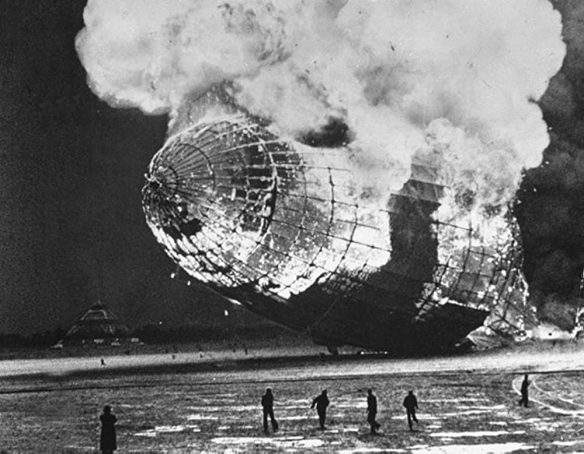
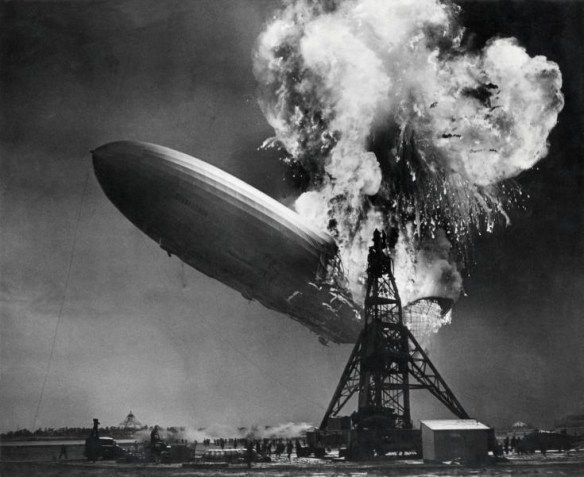
The national press has devoted considerable attention to the gerrymandering of congressional districts, but state legislative districts have received much less scrutiny, even though they are every bit as skewed, and in some states far more so. “Ohio is about the second most gerrymandered statehouse in the country,” Niven told me. “It doesn’t have a voter base to support a total abortion ban, yet that’s a likely outcome.” He concluded, “Ohio has become the Hindenburg of democracy.”

Hindenburg_disaster

David Pepper, an election-law professor, has a book, “Laboratories of Autocracy,” whose title offers a grim spin on a famous statement, attributed to the Supreme Court Justice Louis Brandeis, calling America’s state legislatures “laboratories of democracy”…. He is determined to get the Democratic political establishment to stop lavishing almost all its money and attention on U.S. House, Senate, and gubernatorial races … and to focus more energy on what he sees as a greater emergency: the collapse of representative democracy in one statehouse after another.

Unquote. The article discusses how inattention to local politics has allowed right-wing extremists to take control of state legislatures, assisted by the Supreme Court’s Citizens United decision, and how lower court decisions have been ignored: 

Swept out of power in Washington, the Republican Party’s smartest operatives decided to exploit the only opening they could find: the possibility of capturing state legislatures in the 2010 midterm elections. They knew that, in 2011, many congressional and local legislative districts would be redrawn based on data from the 2010 census—a process that occurs only once a decade. If Republicans reshaped enough districts, they could hugely advantage conservative candidates, even if many of the Party’s policies were unpopular.

In 2010, the Supreme Court issued its controversial Citizens United decision, which allowed dark money to flood American politics. Donors, many undisclosed, soon funneled thirty million dollars into the Republicans’ redistricting project, called REDMAP, and the result was an astonishing success: the Party picked up nearly seven hundred legislative seats, and won the power to redraw the maps for four times as many districts as the Democrats….

The Ohio statehouse has grown only more lopsided in the past decade. Currently, the Republican members have a 64–35 advantage in the House and a 25–8 advantage in the Senate. This veto-proof majority makes the Republican leaders of both chambers arguably the most powerful officeholders in the state….

The vast majority of Ohio residents clearly want legislative districts that are drawn more fairly. By 2015, the state’s gerrymandering problem had become so notorious that seventy-one per cent of Ohioans voted to pass an amendment to the state constitution demanding reforms. As a result, the Ohio constitution now requires that districts be shaped so that the makeup of the General Assembly is proportional to the political makeup of the state. In 2018, an even larger bipartisan majority—seventy-five per cent of Ohio voters—passed a similar resolution for the state’s congressional districts.

Though these reforms were democratically enacted, the voters’ will has thus far been ignored…. [Republicans] proposed districts [that] were nowhere near proportional to the state’s political makeup. The Democrats argued that the Republicans had flagrantly violated the reforms that had been written into the state constitution.

This past spring, an extraordinary series of legal fights were playing out. The Ohio Supreme Court struck down the map—and then struck down four more, after the Republican majority on the redistricting commission continued submitting maps that defied the spirit of the court’s orders…. The Republicans’ antics lasted so long that they basically ran out the clock. Election deadlines were looming, and the makeup of Ohio’s districts still hadn’t been settled. … A federal court [was asked] to intervene, on the ground that the delay was imperiling the fair administration of upcoming elections. The decision was made by a panel of three federal judges—two of whom had been appointed by T____. Over the strenuous objection of the third judge, the two T___ judges ruled in the group’s favor, allowing the 2022 elections to proceed with a map so rigged that Ohio’s top judicial body had rejected it as unconstitutional.

On Twitter, Bill Seitz, the majority leader of the Ohio House, jeered at his Democratic opponents: “Too bad so sad. We win again. The game is over and you lost.”

Ohio Democrats, including David Pepper, are outraged. “The most corrupt state in the country was told more than five times that it was violating the law, and then the federal court said it was O.K.,” he told me. “If you add up all the abnormalities, it’s a case study—we’re seeing the disintegration of the rule of law in Ohio. They intentionally created an illegal map, and are laughing about it.”

[A Democratic legislator] likens the Republicans’ stunning contempt for the Ohio Supreme Court to the January 6th insurrection: “People are saying, ‘Where is the accountability when you disregard the rule of law and attack democracy?’ Because that’s what’s happening in the statehouses, and Ohio is a perfect example.”

Unquote. Ohio isn’t the only state where this has happened. From The New York Times:

Since January, judges in Alabama, Georgia, Louisiana and Ohio have found that Republican legislators illegally drew those states’ congressional maps along racial or partisan lines, or that a trial very likely would conclude that they did. In years past, judges who have reached similar findings have ordered new maps, or had an expert draw them, to ensure that coming elections were fair.

But a shift in election law philosophy at the Supreme Court, combined with a new aggressiveness among Republicans who drew the maps, has upended that model for the elections in November. This time, all four states are using the rejected maps, and questions about their legality for future elections will be hashed out in court later.

MV5BZWE5MWU1OGItYzFjZC00OTRhLTljNDUtNjU1NDYxYjc5ZTg2L2ltYWdlXkEyXkFqcGdeQXVyMTIxMDUyOTI@._V1_FMjpg_UX1000_

Where Putin’s Head Is At

A Russian journalist, Mikhail Zygar, offers this explanation of Putin’s behavior. From The New York Times:

I have been talking to high-level businessmen and Kremlin insiders for years. In 2016 I published a book, “All the Kremlin’s Men,” about Mr. Putin’s inner circle. Since then I’ve been gathering reporting for a potential sequel. While the goings on around the president are opaque — Mr. Putin, a former K.G.B. officer, has always been secretive and conspiratorial — my sources, who speak to me on condition of anonymity, have regularly been correct.

What I have heard about the president’s behavior over the past two years is alarming. His seclusion and inaccessibility, his deep belief that Russian domination over Ukraine must be restored and his decision to surround himself with ideologues and sycophants have all helped to bring Europe to its most dangerous moment since World War II.

Mr. Putin spent the spring and summer of 2020 quarantining at his residence in Valdai, approximately halfway between Moscow and St. Petersburg. According to sources in the administration, he was accompanied there by Yuri Kovalchuk. Mr. Kovalchuk, who is the largest shareholder in Rossiya Bank and controls several state-approved media outlets, has been Mr. Putin’s close friend and trusted adviser since the 1990s. But by 2020, according to my sources, he had established himself as the de facto second man in Russia, the most influential among the president’s entourage.

Mr. Kovalchuk has a doctorate in physics. . . But he isn’t just a man of science. He is also an ideologue, subscribing to a worldview that combines Orthodox Christian mysticism, anti-American conspiracy theories and hedonism. This appears to be Mr. Putin’s worldview, too. Since the summer of 2020, Mr. Putin and Mr. Kovalchuk have been almost inseparable, and the two of them have been making plans together to restore Russia’s greatness.

According to people with knowledge of Mr. Putin’s conversations with his aides over the past two years, the president has completely lost interest in the present: the economy, social issues, the coronavirus pandemic, these all annoy him. Instead, he and Mr. Kovalchuk obsess over the past. A French diplomat told me that President Emmanuel Macron of France was astonished when Mr. Putin gave him a lengthy history lecture during one of their talks last month. He shouldn’t have been surprised.

In his mind, Mr. Putin finds himself in a unique historical situation in which he can finally recover for the previous years of humiliation. In the 1990s, when Mr. Putin and Mr. Kovalchuk first met, they were both struggling to find their footing after the fall of the Soviet Union, and so was the country. The West, they believe, took advantage of Russia’s weakness to push NATO as close as possible to the country’s borders. In Mr. Putin’s view, the situation today is the opposite: It is the West that’s weak. The only Western leader that Mr. Putin took seriously was Germany’s previous chancellor, Angela Merkel. Now she is gone and it’s time for Russia to avenge the humiliations of the 1990s.

It seems that there is no one around to tell him otherwise. Mr. Putin no longer meets with his buddies for drinks and barbecues, according to people who know him. In recent years — and especially since the start of the pandemic — he has cut off most contacts with advisers and friends. While he used to look like an emperor who enjoyed playing on the controversies of his subjects, listening to them denounce one another and pitting them against one another, he is now isolated and distant, even from most of his old entourage.

. . . No one can see the president without a week’s quarantine — not even Igor Sechin, once his personal secretary, now head of the state-owned oil company Rosneft. Mr. Sechin is said to quarantine for two or three weeks a month, all for the sake of occasional meetings with the president.

In “All the Kremlin’s Men” I described the phenomenon of the “collective Putin” — the way his entourage always tried to eagerly anticipate what the president would want. These cronies would tell Mr. Putin exactly what he wanted to hear. The “collective Putin” still exists: The whole world saw it on the eve of the invasion when he summoned top officials, one by one, and asked them their views on the coming war. All of them understood their task and submissively tried to describe the president’s thoughts in their own words . . .

As I have reported for years, some members of Mr. Putin’s entourage have long worked to convince him that he is the only person who can save Russia, that every other potential leader would only fail the country. This was the message that the president heard going back to 2003, when he contemplated stepping down, only to be told by his advisers — many of whom also had backgrounds in the K.G.B. — that he should stay on. A few years later, Mr. Putin and his entourage were discussing “Operation Successor” and Dmitri Medvedev was made president. But after four years, Mr. Putin returned to replace him. Now he has really and truly come to believe that only he can save Russia. In fact, he believes it so much that he thinks the people around him are likely to foil his plans. He can’t trust them either. . . .