Whereof One Can Speak 🇺🇦

Nothing special, one post at a time since 2012

Finally

With Vice President Kamala Harris casting the tie-breaking vote, Senate Democrats accomplished something important today, over the solid opposition of their Republican colleagues. It’s a big deal. The Democratic majority in the House of Representatives now needs to approve the bill. It’s hard to imagine that won’t happen.

First, however, it should be noted that news people can’t resist attaching a dollar amount to a bill like this. The Guardian, for example, has this headline:

Senate passes $739bn healthcare and climate bill after months of wrangling.

You have to read the article to figure out what the $739 billion refers to. Is it what the government will spend? Over what period of time? Or is it what the government will collect in new taxes? When will that happen? It’s a really dumb way to point out that it’s a big piece of legislation.

Much more helpfully, here’s how The Washington Post began its analysis of the bill:

Major changes to the Affordable Care Act. The nation’s biggest-ever climate bill. The largest tax hike on corporations in decades. And dozens of lesser-known provisions that will affect millions of Americans.

The legislation Democrats muscled through the Senate on Sunday would represent one of the most consequential pieces of economic policy in recent U.S. history.

The article includes the Congressional Budget Office’s most recent analysis of what the bill will do in coming years.

There will be new spending and tax breaks amounting to $385 billion on green energy and the climate crisis (including rebates for electric vehicles and other technology) and $100 billion for improved healthcare.

There will be increased taxes and other revenue totaling $470 billion from a new 15% minimum tax on corporations, a tax on companies buying their own stock, and a strengthened IRS, plus $320 billion in mostly drug-related healthcare savings (including allowing Medicare to negotiate drug prices).

$485 billion in spending and tax breaks and $790 billion in revenue and savings (roughly the Guardian’s number) equates to a reduction of $305 billion in the federal deficit. Lowering the federal deficit and lower prices on things like prescription drugs and green technology justified calling it the Inflation Reduction Act, although “Deficit and Inflation Reduction” would have been more accurate.

For now, a few comments. From Paul Krugman:

This was a victory for urgently needed policy. Democrats came into power with a three-part agenda: climate, infrastructure, and social programs [they delivered on infrastructure with a bit of Republican help last year].

They just delivered on the first, which was the most crucial — and no, it wasn’t far less than they sought. It accomplished most of the original objective [it’s estimated that this bill delivers about 80% of the cumulative emissions reductions over 10 years that that Biden’s original  Build Back Better plan would have].

What got lost were the extensive social programs. That’s a tragedy; we could have virtually eliminated child poverty, among other things [except Sen. Joe Manchin was opposed to doing that]. Even there, this bill expanded the enhanced subsidies that have helped bring the percentage of the uninsured to a record low.

But overall, it’s a remarkable record for a party with 50 senators and a relentlessly obstructionist opposition [and two obstructive Democrats, Manchin and Sinema].

From a Washington Post reporter:

Sen. Brian Schatz of Hawaii is visibly emotional and wiping away tears after final passage of the Inflation Reduction Act. “This is a planetary emergency, and this is the first time the federal government has taken action that is worthy of the moment,” he tells reporters. “Now I can look my kids in the eye.”

And just to keep in mind who Republican politicians represent, this is from Rolling Stone:

“Republicans have just gone on the record in favor of expensive insulin,” Sen. Ron Wyden said after Republicans voted to remove an insulin price cap from the Inflation Reduction Act. “After years of tough talk about taking on insulin makers, Republicans have once against wilted in the face of heat from Big Pharma.”

Democrats needed 60 votes, according to Senate math, in order to keep the private insurance cap in the Inflation Reduction Act. While seven Republicans voted to retain the cap, that was still three senators short of the 60 needed.

Around 37.3 million Americans, 11.3 percent of the population, have diabetes. … Insulin is a “catastrophic” expense for 14 percent of the seven million Americans who need it daily, according to a Yale University study. That means those 14 percent are spending at least 40 percent of their monthly income (after paying for food and housing) on insulin.

The goods news is that the bill — at least for the moment — maintained a $35 per month cap on insulin costs for people on Medicare.

Need I mention there’s an election in three months? Make sure you’re registered and vote for Democrats up and down the ballot!
A Tax Break That Will Never Die: Part 2 (Humorous Edition)

A few minutes ago, Senate Majority Leader Charles Schumer began the process of passing the Democrats’ Inflation Reduction Act. Among other things, it will make the tax system fairer and give more Americans access to healthcare. It also includes provisions dealing with the climate crisis that are big enough to please Al Gore:

The Inflation Reduction Act has the potential to be a historic turning point. It represents the single largest investment in climate solutions & environmental justice in US history. Decades of tireless work by climate advocates across the country led to this moment.

No deal is perfect and we need many more actions to solve the climate crisis. Yet, this bill is a long overdue and necessary step to ensure the US takes decisive action on the climate crisis that helps our economy and provides leadership for the world by example.

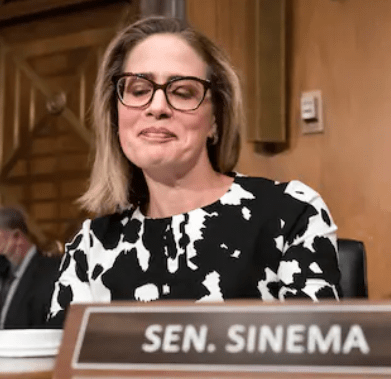
But Al Gore isn’t very funny. Alexandra Petri, who writes for The Washington Post, is. Yesterday, she channeled Krysten Sinema, the “Democratic” senator from Arizona with a unique approach to legislation:

Just to be clear: I do want to reform the carried interest tax loophole! I am so excited to work on it. Sounds bad! Seems bad! It is a no-good, rotten thing, and I don’t want it to keep existing. I look forward to legislating it away. That being said, if you remove it right now, in this Inflation Reduction Act, I will vote against it, and I will torpedo the whole bill.

Why? Whimsy! I just wanted to leave my own special Kyrsten Sinema touch on the bill!

I am a manic pixie dream senator who wants to make this bill slow down and embrace life! Everyone else is sitting there in their penguin outfits in neutral tones! Their idea of a fun, whimsical thing to do is a vote-a-rama! At most, they will go sit on a yacht for a brief time. Not me; I’m different! And I’m here to make sure this bill is different, too.

Inflation Reduction Act, why are you so staid and straightforward? Look at you, sitting there just closing tax loopholes for hedge funds! And you’ve got that across-the-board 15 percent tax on corporations. Don’t you know that corporations can sometimes be friends? Maybe not all corporations deserve an across-the-board tax. Some corporations are really chill, actually, and other corporations are donors and sometimes a private equity firm has a whole other side you might not have expected, if you just give it a chance!

Maybe, you’re so busy closing loopholes that you forgot how to be open. Maybe you need to open up, actually, those loopholes, please. That’s why I’m here: Someone’s got to be just that little bit random, conveniently in a way that consistently involves decreasing the amount of money corporations and the absurdly wealthy pay in taxes.

Sometimes you see a bill and you see how hard that bill is working to do good. That poor bill looks exhausted, doing so much! Reducing carbon emissions and decreasing the deficit and lowering ACA premiums and — and — and! And you’re like, “Bill! Relax! You don’t need to do it all! What you need to do is to stop and smell the roses. Or the rosés, like at the private equity-adjacent winery where I interned in 2020 — while serving as senator! Unrelatedly, do we really need to close the carried-interest tax loophole now? Maybe, actually, we need to live a little.”

I can be the friend this bill needs to urge it to run through a sprinkler at dusk and spin around on a beach listening to the Shins. It’ll be like Amelie, but if instead of freeing garden gnomes from people’s yards, we liberated them from pesky taxes, and if instead of gnomes, those were the account books of private equity firms! You know what they say: Is it really quirky and spontaneous if it doesn’t coincidentally also happen to benefit corporations and hedge funds? Maybe, but we can’t take that chance!

Think about who stands to gain from this bill: Lots of people! People who want to have a nice habitable planet in the future! People who want to pay lower health-care premiums! People who want lower inflation! But now think about the people whom this bill will make sad: hedge funders!

Doesn’t that make you sad? Can’t we do something nice for the hedge funders, too, just — ’cause? We’d better, though, or I won’t support it.

Come, bill! Come put your toes in the grass and run through the rain with me, and also, just for fun, let’s make certain that the new 15 percent minimum tax on corporations doesn’t affect that particular corporation! Or that one! Or that one! I’m pointing randomly, I swear! Just from whimsy, again, my driving feature! But I am finding exemptions — a lot of them!

I don’t know what life is all about, but it’s too short not to do what you can to prevent wealthy corporations and private equity firms from paying taxes. And then we’ll go dance in the moonlight and make a sound nobody has heard before.

Ready? I’ll start, by saying a sentence that has never been said: “I think this loophole that allows private equity firms to pay less than their fair share in taxes should be left open!” Hahaha, wow, I can’t believe I just said that! Maybe no one will ever say it again! Except me. Who knows? I might say it lots of times!

Untitled

A Tax Break That Will Never Die

Democrats are on the verge of passing a major bill that will attack the climate crisis, expand healthcare, slow down inflation, reduce the deficit, and even deal with tax evasion. In order to get all fifty Democratic senators to support the bill, a piece of the bill that would have raised taxes on a small number of very wealthy people was dropped. It’s a classic example of the way money corrupts American politics. From The New York Times:

Once again, carried interest carried the day.

The last-minute removal by Senate Democrats of a provision in the climate and tax legislation that would narrow what is often referred to as the “carried interest loophole” represents the latest win for the private equity and hedge fund industries. For years, those businesses have successfully lobbied to kill bills that aimed to end or limit a quirk in the tax code that allows executives to pay lower tax rates than many of their salaried employees.

In recent weeks, it appeared that the benefit could be scaled back, but a last-minute intervention by Senator Kyrsten Sinema, the Arizona Democrat, eliminated what would have been a $14 billion tax increase targeting private equity.

Lawmakers’ inability to address a tax break that Democrats and some Republicans have called unfair underscores the influence of lobbyists for the finance industry and how difficult it can be to change the tax code….

On Friday, the private equity and hedge fund industries applauded the development, describing it as a win for small business [of course they did].

“The private equity industry directly employs over 11 million Americans, fuels thousands of small businesses and delivers the strongest returns for pensions,” said Drew Maloney, the chief executive of the American Investment Council, a lobbying group. “We encourage Congress to continue to support private capital investment in every state across our country”….

Carried interest is the percentage of an investment’s gains that a private equity partner or hedge fund manager takes as compensation. At most private equity firms and hedge funds, the share of profits paid to managers is about 20 percent [so the people who manage these small investment firms take around 20% of the firm’s investment profits as their salaries, not because they invested their own money but because they expect to be paid for their labor].

Under existing law, that money is taxed at a capital-gains rate of 20 percent for top earners. That’s about half the rate of the top individual income tax bracket, which is 37 percent….

An agreement reached last week by Senator Joe Manchin III, Democrat of West Virginia, and Senator Chuck Schumer of New York, the majority leader, would have [made it more harder for the managers of these firms] to take advantage of the lower 20 percent tax rate.

But Ms. Sinema, who has received political donations from wealthy financiers who usually donate to Republicans and who was cool to the idea of targeting carried interest last year, objected.

In the past five years, the senator has received $2.2 million in campaign contributions from investment industry executives and political action committees, according to OpenSecrets, a nonprofit group that tracks money in politics. The industry was second only to retired individuals in giving to Ms. Sinema and just ahead of the legal profession, which gave her $1.8 million. Executives of some of those firms have made campaign contributions to Ms. Sinema, including George Roberts, Henry Kravis and Joseph Bae at KKR and Sean Klimczak and Eli Nagler at Blackstone.

For years, carried interest has been a tax policy piñata that never cracks open.

During the 2016 presidential campaign, D____  J. T____ said, “We will eliminate the carried interest deduction, well-known deduction, and other special-interest loopholes that have been so good for Wall Street investors and for people like me but unfair to American workers.”

When President Biden ran for president in 2020, his campaign said he would “eliminate special tax breaks that reward special interests and get rid of the capital gains loophole for multimillionaires.” To do that, he said, he would tax long-term capital gains at the ordinary top income tax rate, essentially wiping away the special treatment of carried interest.

A similar proposal appeared in Mr. Biden’s budget last spring, but, as Democrats tried unsuccessfully to pass their Build Back Better legislation in the summer and fall, carried interest disappeared.

Jared Bernstein, a member of the White House’s Council of Economic Advisers, lamented that outcome. “This is a loophole that absolutely should be closed,” Mr. Bernstein told CNBC last September. “When you go up to Capitol Hill and you start negotiating on taxes, there are more lobbyists in this town on taxes than there are members of Congress”….

Opinions on the carried interest tax treatment vary even within the financial industry. In posts on Twitter in late July, Bill Ackman, the founder of Pershing Square Capital Management, a New York hedge fund, said that while “favorable tax treatment” for the founders of new businesses was essential, people who manage funds that own many companies should not be entitled to the same benefit.

“The carried interest loophole is a stain on the tax code,” he wrote in one post. “It does not help small businesses, pension funds, other investors in hedge funds or private equity and everyone in the industry knows it. It is an embarrassment and it should end now.”

Some analysts were skeptical all along that lawmakers would actually change the carried interest tax treatment in the final bill. While it has become a high-profile target, the change Democrats were seeking would have raised little tax revenue compared with other provisions in the legislation, known as the Inflation Reduction Act….

“The proposal that was in the bill until last night made a technical adjustment [regarding] assets that qualified for carried interest treatment,” said Jean Ross, a senior fellow at the Center for American Progress, a liberal research group in Washington. “A better approach would tackle the issue head-on and say that compensation for services managing an investment fund should be taxed like work and subject to ordinary tax rates”….

Ms. Sinema herself has said little about why she considered it so important to preserve the carried interest tax treatment [could that possibly mean she has no good reason for doing that?]. She has said that she plans to work on legislation with Senator Mark Warner, Democrat of Virginia, to address the loophole. But if the legislation is not included in the current package, which is being fast-tracked under an arcane budget process, any reform will require support from at least 10 Republicans [which everyone, including Sinema, knows will mean nothing is done, since Republican politicians don’t like rich people to be taxed].

“I think we reached agreement that there are areas where there’s been abuse,” Mr. Warner said in an interview, adding, “I’m disappointed it didn’t get in this bill, but I’m looking forward to working with Senator Sinema — and others — to see if we can address this [news flash: you can’t and you won’t address it].

Unquote.

To summarize, if you’re an accountant that works at one of these firms, you get a salary and pay income tax at the rate for regular income. If you’re a customer at one of these firms and your investment did well, the profits you get are taxed at the lower rate for capital gains. If you run the firm, you take some of the profits from your customers’ investments as your compensation, but the government taxes your compensation as if you made the investment with your own money, so you get to pay significantly less income tax. If Democrats try to fix this absurdity, Republicans and even some Democrats will stand in the way, while you claim that your compensation should be taxed at the lower rate because, well, because your customers get the lower rate and the investments you make help other businesses (while sometimes destroying others).

Which shows once again that too many politicians work for their donors, not the people they represent.

Let’s Review the History of the Party Since Around 1994 (in 1,600 Words)

Dana Milbank of The Washington Post shares some of his new book, The Destructionists: The Twenty-Five Year Crack-Up of the Republican Party (although he says the crack-up  started closer to 30 years ago). This is an excerpt from his excerpt:

“We have become in danger of losing our own civilization,” Newt Gingrich warned.

Americans had seldom heard a politician talk this way, and certainly not a speaker of the House. But that’s what Gingrich became after the GOP’s landslide victory in the 1994 election. The Contract With America made little headway — only three minor provisions (paperwork reduction!) became law — but the rise of Gingrich and his shock troops set the nation on a course toward the ruinous politics of today.

Much has been made of the ensuing polarization in our politics, and it’s true that moderates are a vanishing breed. But the problem isn’t primarily polarization. The problem is that one of our two major political parties has ceased good-faith participation in the democratic process. Of course, there are instances of violence, disinformation, racism and corruption among Democrats and the political left, but the scale isn’t at all comparable. Only one party fomented a bloody insurrection and even after that voted in large numbers (139 House Republicans, a two-thirds majority) to overturn the will of the voters in the 2020 election. Only one party promotes a web of conspiracy theories in place of facts. Only one party is trying to restrict voting and discredit elections. Only one party is stoking fear of minorities and immigrants….

Republicans and their allied donors, media outlets, interest groups and fellow travelers have been yanking on the threads of democracy and civil society for the past quarter-century; that’s a long time, and the unraveling is considerable. You can measure it in the triumph of lies and disinformation, in the mainstreaming of racism and white supremacy, in the erosion of institutions and norms of government, and in the dehumanizing of opponents and stoking of violence. In the process, Republicans became Destructionists: They destroyed truth, they destroyed decency, they destroyed patriotism, they destroyed national unity, they destroyed racial progress, they destroyed their own party, and they are well on their way to destroying the world’s oldest democracy.

Consider just a few of the milestones along this path of destruction — all of which, we can now see, made T____ possible, if not inevitable:

Long before T____ promulgated more than 30,000 falsehoods during his presidency, including disinformation about the covid-19 pandemic that contributed to countless deaths:

  • House Republicans encouraged the conspiracy theory that Vincent Foster, a lawyer in the Clinton White House, had been murdered — possibly, in the belief’s craziest formulation, by Hillary Clinton. After four separate, independent investigations concluded it was suicide, Gingrich said, “I just don’t accept it,” and one of his committee chairmen, Dan Burton, shot a melon in his backyard to reenact the “murder.”
  • The George W. Bush administration, to make the case for war, distorted the available intelligence to suggest that Iraq was responsible for the 9/11 attacks, that it was on the cusp of obtaining nuclear weapons and that U.S. troops would be “greeted as liberators.” When a former diplomat publicly disputed Bush’s false claims, aides retaliated by disclosing the identity of his wife, a CIA operative.
  • Sarah Palin, the party’s vice-presidential nominee in 2008, falsely proclaimed in 2009 the existence of “death panels” in Barack Obama’s Affordable Care Act. Republican lawmakers lined up to make the false claim a centerpiece of their attempt to defeat Obamacare. About a third of Americans came to believe the falsehood.

Long before T____ spoke of immigrants as rapists and murderers coming from “shithole countries” and told Democratic congresswomen of color to “go back” to other countries:

  • Patrick J. Buchanan, who ran insurgent bids for the GOP presidential nomination in 1992 and 1996, offered generous words for Hitler, lamented the treatment of “European-Americans” and “non-Jewish whites,” warned of a migrant “invasion,” and ran on a promise to “put America first.”
  • Conservative radio giant Rush Limbaugh aired the song “Barack the Magic Negro,” Fox News’s Glenn Beck claimed President Obama had a “deep-seated hatred for White people,” and tea party activists chanted the n-word at Black members of Congress outside the Capitol.
  • Fox News in 2011 served as the forum for T____ and others to perpetrate the “birther” libel asserting that Obama, the first Black president, was not American-born. Palin told Obama to stop his “shuck and jive shtick.”
  • Rep. Steve King (R-Iowa) said in 2013 of the “dreamers” (those brought illegally to the United States as children): “For every one who’s a valedictorian, there’s another 100 out there that weigh 130 pounds and they’ve got calves the size of cantaloupes because they’re hauling 75 pounds of marijuana across the desert.”
Long before T____ told the violent Proud Boys to “stand by” instead of condemning them:
  • Conservative radio host G. Gordon Liddy in 1994 told listeners that if federal agents try to disarm them, “go for a head shot” and “kill the sons of bitches.” Other hosts, and GOP members of Congress, warned of federal agents in “black helicopters” planning “a paramilitary style attack against Americans” and the need for an “armed revolution” to resist a “New World Order,” and Gingrich and other Republicans spoke supportively of antigovernment militias.
  • Thousands of Tea Party activists, on the eve of final passage of Obamacare in the House in 2010, got to within 50 feet of the Capitol. Democrats worried about violence, and police officers struggled to maintain security, but GOP lawmakers inflamed the crowd, waving signs and leading chants of “Kill the bill.”
  • Palin, urging supporters “don’t retreat, instead — RELOAD!,” in 2010 promoted a map of 20 Democratic-held congressional districts in target crosshairs. A GOP Senate nominee spoke of using “Second Amendment remedies.” Threats and vandalism against Democratic lawmakers spread, and, in 2011, Rep. Gabby Giffords (D-Ariz.), one of those listed in Palin’s map, was shot in the head by a gunman who killed six others….

Long before T____ discredited democratic institutions with his “big lie” about election fraud:

  • Republican operatives intimidated the Miami-Dade County Elections Department into stopping the recount of the 2000 election results. A partisan crowd flooded into the elections office, chanting “Stop the fraud!” “Stop the count!” and “Cheaters!” Democratic officials were kicked, pushed and punched.
  • John Ashcroft, who became attorney general after the Supreme Court’s 5-4 decision in Bush v. Gore handed the presidency to George W. Bush, falsely claimed in 2001 that dead people had voted and that “votes have been bought, voters intimidated and ballot boxes stuffed.”
  • House Majority Leader Tom DeLay in 2003, trying to create a “permanent majority,” forced through a Texas redistricting that shifted six House seats to Republicans — and when Democratic legislators left the state to block the scheme, DeLay attempted to use the FBI and the Federal Aviation Administration to track them down.
  • The Supreme Court’s conservative majority stacked the deck for Republicans with its 2010 Citizens United decision, which made it possible for wealthy interests to flood elections with unlimited, unregulated “dark money,” and its 2013 gutting of the 1965 Voting Rights Act, which invited GOP-led states to restrict voting in ways that disproportionately affect voters of color. Republican senators cemented the high court’s reputation as an arm of the GOP when from 2016 into 2017 they blocked Obama for 11 months from filling the vacancy left by Justice Antonin Scalia’s death.

Long before the dysfunction of the T____ era:

  • Gingrich in 1995 announced that he forced a shutdown of the federal government in part because he was asked to exit Air Force One via the rear stairway after a trip to Israel with President Bill Clinton. Republicans debuted a new era of manufactured crises over debt-limit deadlines, and repeated government shutdowns, whenever Democrats held the White House.
  • The Republican National Committee drafted an “autopsy” in 2013 after Mitt Romney lost to Obama, calling for more outreach to Black, Hispanic, Asian and gay Americans. GOP lawmakers in the House swiftly abandoned the idea, killing a comprehensive immigration reform bill that had sailed through the Senate by a bipartisan 68-32.
  • House Speaker John A. Boehner announced his retirement in 2015, later saying he was disgusted with the growing “circle of crazy” inside his party. Republicans “couldn’t govern at all,” Boehner wrote. “Incrementalism? Compromise? That wasn’t their thing,” Boehner wrote of the insurgents. “A lot of them wanted to blow up Washington. … They wanted wedge issues and conspiracies and crusades.” Boehner concluded that he was “living in Crazytown. … Every second of every day since Barack Obama became president, I was fighting one bats–t idea after another.”

Against that quarter-century of ruin, what we are living through today is just a continuation of the GOP’s direction for the past 30 years: the appeals to white nationalism, the sabotage of the functions of government, the routine embrace of disinformation, stoking the fiction of election fraud and the “big lie,” and the steady degradation of democracy.

Now, it seems, that degradation is accelerating….

As they avert their gaze from the cascading horrors of the failed coup, Republicans are instead looking to a familiar guide: Gingrich. The former speaker, now a board member of the pro-T____ America First Policy Institute, announced this year that he is serving as a consultant to House GOP leader Kevin McCarthy and his team.

No sooner had this been disclosed than Gingrich, on Fox News, threatened the imprisonment of lawmakers serving on the Jan. 6 committee, saying they’re “going to face a real risk of jail” after Republicans take over Congress. Throwing political opponents in jail for investigating an attack on the U.S. Capitol and a coup against the U.S. government?

Replied Wyoming Rep. Liz Cheney, one of two Republicans on the committee: “This is what it looks like when the rule of law unravels.” But Gingrich knows that. He’s the one who first started tugging at the threads.

One Way to Dilute the Senate’s Filibuster Rule

Jennifer Rubin of The Washington Post suggests a way to get around the Senate filibuster that I’ve never heard before. It’s probably too rational for “Democratic” filibuster fans like Sen. Joe Manchin and Sen. Krysten Sinema to accept, but it’s interesting just the same:

… Democrats are close to pulling off something that has eluded them for the past year and a half: passing legislation to address climate change and the costs of health care [note: while reducing the deficit and moderating inflation], and doing it without any Republican votes,” The Post reports. “This has been one of President Biden’s top goals since he took office, so much so that he and Democratic leadership have reserved their one legislative tool to get it done: reconciliation.” Pretty impressive, huh?

Now, imagine telling [Sen. Joe Manchin, the West Virginia Democrat] he would need 60 votes to pass the package. Even he would likely agree that would be an outrageous hurdle to overcome.

As Manchin explained on CNN’s “State of the Union” on Sunday, Republicans have refused to engage in any reasonable discussion on the deal. “I think it’s a great piece of legislation and on normal times, my Republican colleagues would be for something such as this,” he said. He pointed out that their opposition is irrational and driven by rank partisanship. “We’ve basically paid down debt, [which] is what they want. We’ve accelerated [issuing drilling permits], which is what they want,” he said. “And we’ve increased production of energy, which is what they want. We’ve done things that we should be doing together.”

But since Republicans won’t cooperate, Democrats must move ahead with the reconciliation process — a gigantic loophole in the allegedly sacrosanct filibuster rules. Huge policy goals can be achieved even though the other side willfully obstructs progress.

Why, then, do Manchin and others cling so tightly to the filibuster rules when equally important — if not more important — policy goals are up for discussion, such as on abortion rights, voting rights and reforming the Supreme Court? It’s tautology to say that the reconciliation process applies only to tax and spending rules under limited circumstances. Why should items not directly tied to spending have to be stripped out of legislation?

Democrats can leave the filibuster in place if they must but can simply alter the Senate’s “Byrd rules” governing reconciliation bills so that measures pertaining to the restoration or protection of fundamental rights can be included. An infrastructure bill could also include “democracy infrastructure” that protects voting rights. The same limit on reconciliation legislation (once or twice per fiscal year) could still apply.

Manchin’s current legislative effort highlights just how hypocritical he is for opposing filibuster fixes. Indeed, he has relied on demonstrably false premises to defend his position.

For example, he often argues that Democrats and Republicans can always negotiate things together. Not so in the era of petulant obstruction from MAGA Republicans. In the case of his own mammoth bill, Manchin has realized that Democrats should not allow Republican opposition to deter them.

Manchin also frequently insists that if Democrats take steps to weaken the filibuster, Republicans will do the same when they are in power. Well, Republicans have already weakened Senate rules by lowering the votes needed to confirm Supreme Court justices to a simple majority. Republicans have also already used the reconciliation process in an attempt to pass bills such as the repeal of the Affordable Care Act. That failed because their extreme measures were so unpopular that they could not get even a majority for that.

I don’t expect Manchin to acknowledge his intellectual dishonesty and blatant inconsistency. But that doesn’t mean the rest of his party has to go along. If voters send two more Democrats to the Senate and somehow hold the House (if not in 2022, then win it back in 2024), they should consider using [no, absolutely use] their power to secure fundamental constitutional rights that the Supreme Court has stripped away.