Whereof One Can Speak 🇺🇦

Nothing special, one post at a time since 2012

Crime and Punishment

Given the extreme rhetoric Republican politicians and pundits have been spewing this week, it was predictable that somebody from the former president’s cult would try to kill an FBI agent or some other government official. Fortunately, the criminal is the one who died. Does likely violence mean T____ should be left alone? Michelle Cottle of The New York Times answers that question:

It took many accidents, catastrophes, misjudgments and mistakes for D____ T____ to win the presidency in 2016. Two particularly important errors came from James Comey, then the head of the F.B.I., who was excessively worried about what T____’s supporters would think of the resolution of the investigation into Hillary Clinton’s emails.

First, in July 2016, Comey broke protocol to give a news conference in which he criticized Clinton even while announcing that she’d committed no crime. He reportedly did this because he wanted to protect the reputation of the F.B.I. from inevitable right-wing claims that the investigation had been shut down for political reasons.

Then, on Oct. 28, just days before the election, Comey broke protocol again, telling Congress that the Clinton investigation had been reopened because of emails found on the laptop of the former congressman Anthony Weiner. The Justice Department generally discourages filing charges or taking “overt investigative steps” close to an election if they might influence the result. Comey disregarded this because, once again, he dreaded a right-wing freakout once news of the reopened investigation emerged.

“The prospect of oversight hearings, led by restive Republicans investigating an F.B.I. ‘cover-up,’ made everyone uneasy,” The New Yorker reported. In Comey’s memoir, he admitted fearing that concealing the new stage of the investigation — which ended up yielding nothing — would make Clinton, who he assumed would win, seem “illegitimate.” (He didn’t, of course, feel similarly compelled to make public the investigation into T____’s ties to Russia.)

Comey’s attempts to pre-empt a conservative firestorm blew up in his face. He helped put T____ in the White House, where T____ did generational damage to the rule of law and led us to a place where prominent Republicans are calling for abolishing the F.B.I.

This should be a lesson about the futility of shaping law enforcement decisions around the sensitivities of T____’s base. Yet after the F.B.I. executed a search warrant at T____’s beachfront estate this week, some … have questioned the wisdom of subjecting the former president to the normal operation of the law because of the effect it will have on his most febrile admirers.

Andrew Yang, one of the founders of a new centrist third party, tweeted about the “millions of Americans who will see this as unjust persecution.” Damon Linker, usually one of the more sensible centrist thinkers, wrote, “Rather than healing the country’s civic wounds, the effort to punish T____ will only deepen them.”

The Atlantic’s Tim Alberta described feeling “nauseous” watching coverage of the raid. “What we must acknowledge — even those of us who believe T____ has committed crimes, in some cases brazenly so, and deserves full prosecution under the law — is that bringing him to justice could have some awful consequences,” he wrote…. The former president relishes his ability to stir up a mob; it’s part of what makes him so dangerous.

We already know, however, that the failure to bring T____ to justice — for his company’s alleged financial chicanery and his alleged sexual assault, for obstructing Robert Mueller’s special counsel investigation and turning the presidency into a squalid influence-peddling operation, for trying to steal an election and encouraging an insurrection — has been disastrous.

What has strengthened [him] has not been prosecution but impunity, an impunity that some of those who stormed the Capitol thought, erroneously, applied to them as well. [His] mystique is built on his defiance of rules that bind everyone else. He is reportedly motivated to run for president again in part because the office will protect him from prosecution. If we don’t want the presidency to license crime sprees, we should allow presidents to be indicted, not accept some dubious norm that ex-presidents shouldn’t be.

We do not know the scope of the investigation that led a judge to authorize the search of Mar-a-Lago, though it reportedly involves classified documents that T____ failed to turn over to the government even after being subpoenaed. More could be revealed soon: Attorney General Merrick Garland announced on Thursday that the Justice Department had filed to unseal the search warrant.

It should go without saying that T____ and his followers, who howled “Lock her up!” about Clinton, do not believe that it is wrong for the Justice Department to pursue a probe against a presidential contender over the improper handling of classified material. What they believe is that it is wrong to pursue a case against T____, who bonds with his acolytes through a shared sense of aggrieved victimization.

The question is how much deference the rest of us should give to this belief. No doubt, T____’s most inflamed fans might act out in horrifying ways; many are heavily armed and speak lustily about civil war. To let this dictate the workings of justice is to accept an insurrectionists’ veto. The far right is constantly threatening violence if it doesn’t get its way. Does anyone truly believe that giving in to its blackmail will make it less aggressive?

It was T____ himself who signed a law making the removal and retention of classified documents a felony punishable by up to five years in prison. Those who think that it would be too socially disruptive to apply such a statute to him should specify which laws they believe the former president is and is not obliged to obey. And those in charge of enforcing our laws should remember that the caterwauling of the T____ camp is designed to intimidate them and such intimidation helped him become president in the first place.

T____ shouldn’t be prosecuted because of politics, but he also shouldn’t be spared because of them. The only relevant question is whether he committed a crime, not what crimes his devotees might commit if he’s held to account.

Unquote.

There’s a similar situation in Ukraine. Some people say we shouldn’t provoke Putin for fear he’ll do something worse. But allowing him to do whatever he wants in Ukraine won’t make him less dangerous.

The FBI Searches Mar-a-Lago: Point and Counterpoint

It’s happened but not here.

In other democratic countries, political leaders can and do face criminal investigations and trials for their alleged misdeeds. South Korea impeached and tried then-President Park Geun-hye in 2017 and 2018 over corruption allegations, for which she served five years in prison out of a more-than-twenty-year sentence. A French jury convicted former President Nicolas Sarkozy last year on campaign-finance charges, effectively ending his political career. The legal troubles of former Italian Prime Minister Silvio Berlusconi are so extensive that they defy casual description; Wikipedia dedicates an entire article to them with more than two dozen subsections [The New Republic].

To avoid it happening here, the Department of Justice bent way over backwards to give the former president the opportunity to return classified documents that didn’t belong to him. After months of discussions with his lawyers, the former president returned a vanload of documents. Believing the former president hadn’t fully complied, a US Attorney and the FBI convinced a judge to approve a search warrant. The search revealed that there were indeed more documents that should have been returned. Except for the hysterical reaction of right-wing pundits and politicians, that would have been the end of the story unless the former president’s lawyers challenged the search warrant in court or prosecutors decided to pursue the matter. However, in all fairness, there is another view, as this piece from an Australian magazine clearly states: 

We are certainly no fans of D____ T____ – let’s make that clear from the outset. But yesterday’s raid by the FBI on the home of a former president sets a dangerous precedent.

A precedent which now means that anyone who evades taxes, attempts to undermine an election, sexually assaults women, manipulates the value of their assets, uses state resources to enrich themselves or aids and abets the overthrow of a democratically elected government will be subject to investigation.

Is that the world we want to live in? Where anyone accused of insurrection can be subject to questioning from law enforcement officers?

It’s a slippery slope. Before we know it, regular citizens accused of defrauding the government, concealing evidence, manipulating financial documents, tampering with witnesses or perverting the course of justice will also be held to account.

Or to put it another way, if we simply shrug our shoulders and fail to question the actions of the FBI, soon any old Joe Citizen who is suspected of ripping classified government documents into small pieces and flushing them down the toilet will be obliged to answer to law enforcement, as well as their plumber.

If we don’t ask the hard questions about the potential motives of the FBI now, soon any one of us who buries our ex-wife in a small grave at the side of their golf course in order to gain a tax concession will be treated with suspicion.

As T____ supporters put it so clearly yesterday, if this can happen to a President, it could happen to anyone who has committed insurrection, assault or fraud. That’s a chilling thought.

We are on new ground here. As D____ T____ himself made clear, this is the first time a former president’s home has been raided. Proof, if ever we needed it, that the FBI shamefully only targets people who it considers to have committed a crime. Who gave FBI director Chris Wray that authority?

As we made clear earlier, we’re certainly not T____ supporters. But in today’s partisan world, it would be easy to fall into the trap of cheering on the FBI’s actions, without taking a step back to look at the bigger picture. If T____ goes to jail, it opens the door for every lying, corrupt, perverted piece of shit to go to jail too. Is that what we want?

Untitled

Law and Order Comes to Mar-a-Lago (Plus a Knock Knock Joke)

FZrPPgiWIAMh-36

Sophisticated humor aside, nobody knows what’s going to happen to the 45th president (otherwise known as a dangerous, buffoonish cancer on America). Maybe the DOJ and a DC jury of his peers will finally LOCK HIM UP. Maybe the Fulton County, Georgia, district attorney will get it done. If she does, maybe the governor of George will pardon him. Maybe he’ll run for president from prison, get enough Electoral College help from fascist officials around the country and then pardon himself. Maybe he’ll get probation and agree not to run for political office again. Maybe he’ll abscond to Moscow and run for president from there. Maybe he’ll have a debilitating stroke. Maybe he’ll go straight to Hell. The big questions remain: how is it that a major political party chose this “person” and might easily choose him again?

Amid right-winger calls for elimination of the FBI or immediate civil war, one of my favorite columnists, Paul Waldman of The Washington Post, had a few thoughts on the hysterical Republican reaction to yesterday’s FBI visit [among which I asserted a few italicized ones of my own]:

In his recent speeches, D____ T____ has taken to saying that he is “the most persecuted person in the history of our country.” The millions who lived and died in slavery? Native Americans who endured the Trail of Tears? Sure, they suffered. But did they get kicked off Twitter?

Now that the FBI has executed a search warrant at T____’s Mar-a-Lago Club, the former president can indulge what has become his most important impulse, his driving motivation, his very reason for being: to whine and complain.

The gleeful enthusiasm with which his party has rallied to his defense shows how invested Republicans have become in T____’s personal narrative of oppression, one that is notable for its distance from anything that might affect the lives of the Americans whose votes T____ might soon be seeking again.

Let’s keep in mind one vital fact about the FBI’s action Monday: No one you see commenting on this matter — not the angry members of Congress, TV hosts or the pundits aplenty — knows precisely what crime the bureau is investigating or what evidence was presented to the judge who approved the search warrant [although the ex-president could make the search warrant public if he wanted to].

That hasn’t stopped T____’s defenders from assuming [no, saying, not assuming] that he can’t possibly have done anything that would justify the search. After all, we know how careful he has always been about following rules, particularly with regard to classified information.

… In order to get a warrant, the FBI had to convince a judge that it had probable cause to believe a search would locate evidence of a crime. One would like to think that if T____ had committed crimes, even Republicans would admit that it would be appropriate to investigate.

But the nearly universal [fascist] response has been that the search can only have been politically motivated, despite the fact that no one commenting knows what the FBI was looking for or what it found [Republicans are fond of politicizing the Department of Justice, so figure Democrats do it too].

“I stand with President T____ against this outrageous action of the FBI,” said Sen. Marsha Blackburn (R-Tenn.). “The Biden Admin has fully weaponized DOJ & FBI to target their political enemies,” tweeted Sen. Ted Cruz (R-Tex.). House Minority Leader Kevin McCarthy (R-Calif.) said, “The Department of Justice has reached an intolerable state of weaponized politicization.” On Fox News, the hosts and guests all but lost their minds in rage. Kari Lake, the T____-endorsed GOP nominee for governor of Arizona, thundered in a statement that “We must fire the Federal Government,” whatever that means…..

There’s no question that this was an extraordinary action for the Justice Department to have taken, which is why it’s almost certain that it came after lengthy deliberation and in the belief that a crime (or multiple crimes) had been committed. The department [including the FBI Director nominated by T____] had to be fully aware of the political firestorm that would erupt.

Attorney General Merrick Garland is hardly some kind of hothead, and the other top Justice Department officials likely to have been part of the decision-making aren’t the collection of knaves and buffoons T____ had gathered around himself…. In this Democratic administration, the officials in charge are serious people.

And of course, the reaction of T____’s defenders was going to be political. But the way that they’re making their case shows how profound a hold T____’s cult of personality still has on his party.

… What are Republicans saying to you right now, besides “D____ T____ should be above the law”? [And everything bad in the world is Biden’s fault while he’s had nothing to do with anything good.]

… Some did make a halfhearted effort to link T____’s personal oppression to some hypothetical future oppression you might experience yourself [note that these are House Republicans with a special interest in the proper functioning of the legal system]:

What’s the “it” here? Execute a search warrant approved by a judge to investigate unlawful seizure of classified materials, and perhaps other crimes as well? … The federal government might do that to me or you, but I confess I’m not particularly worried.

This Land Is Ours. We Stole It Fair and Square.

Texas was part of Mexico until American newcomers decided to make it their own country. Whether the new Republic of Texas would join the Union and whether it would be a slave state were much-debated issues until 1845 when Congress agreed to admit Texas as the 18th state. We’d soon be at war with Mexico. (American politics hasn’t totally changed since 1845, although the Democrats eventually switched sides and became less warlike.)

From “Heirs of the Founders: The Epic Rivalry of Henry Clay, John Calhoun and Daniel Webster” by H. W. Brands:

Four months [after Texas joined the Union], James Polk made prophets of Henry Clay and Daniel Webster by commencing a war with Mexico. Polk’s war was a land grab wrapped in self-defense. Texas entered the Union with its southern boundary in dispute. The United States claimed the Rio Grande as the border; Mexico claimed the Rio Nueces, more than a hundred miles to the north. Mexico nominally claimed the rest of Texas as well, never having acknowledged the loss of its rebellious province. But though it responded to the American annexation of Texas by severing relations with the United States, it took no military action to challenge the new regime on its northern frontier. This frustrated Polk.

The president’s expansionist appetite grew with the eating; not content with depriving Mexico of Texas, Polk coveted California as well. He attempted to purchase California, but the Mexican government rebuffed him. Polk then sought a pretext for declaring war on Mexico. He sent troops to the disputed strip between the rivers, hoping to goad the Mexicans to attack.

Weeks went by and the Mexicans refused to take the bait. Polk, more vexed than ever, prepared a war message for Congress, in which he blamed the Mexicans for insults and injuries against American honor and interests. It was a flimsy document, as Polk himself recognized, but he was determined to have California and its Pacific harbors, by whatever means necessary.

Then, just as he was about to transmit his message to Congress, he received news that Mexican troops had finally engaged the Americans. “After reiterated menaces, Mexico has passed the boundary of the United States, has invaded our territory and shed American blood upon the American soil,” Polk told Congress. “War exists, and notwithstanding all our efforts to avoid it, exists by the act of Mexico itself.” For emphasis the president added, “The two nations are now at war.”

John Calhoun begged to differ. Polk wanted Congress simply to endorse his assertion that war existed and give him authority to prosecute it. Calhoun wasn’t going to be stampeded into anything. “The question now submitted to us is one of the gravest character, and the importance of the consequences which may result from it we cannot now determine,” he told the Senate. “The president has announced that there is war; but according to my interpretation, there is no war according to the sense of our Constitution.”

Calhoun didn’t challenge Polk’s account of the attack on American forces. Nor did he question Polk’s authority to resist and repel such attacks. But he distinguished hostilities from war. “It is our sacred duty to make war,” he told his fellow senators, “and it is for us to determine whether war shall be declared. If we have declared war, a state of war exists, and not till then.”

Calhoun succeeded in slowing the rush to war, but not by much. Congress debated the president’s request, with most of the negative comments coming from the Whigs [Polk, like Andrew Jackson, was a Democrat].

Some asked whether Polk had done all he could to avoid armed conflict; their strong implication was that he had not. A few went so far as to charge Polk with provoking the war. “This war was begun by the president,” Garrett Davis, a Kentucky Whig, told the House. Some inquired whether the Mexican attack, if it indeed had occurred as the president said, had been authorized by the Mexican government. Still others rejected Polk’s assertion that the soil on which the blood had been shed was American. Some said flatly that it was Mexican; others remarked that ownership was still in dispute.

But Polk knew the American political mind better than the dissenters did. He understood that the shedding of American blood—under whatever circumstances—created an irresistible impulse toward war. A negative vote could be characterized as an unpatriotic vote, and no lawmaker lightly risked that. The few surviving former Federalists remembered how their party had wrecked on its opposition to the War of 1812. In the end scarcely a dozen Whigs refused the president’s request. John Calhoun haughtily abstained.

Unquote.

Ulysses S. Grant fought in the Mexican War as a young lieutenant. Years later, he called it “one of the most unjust ever waged by a stronger against a weaker nation”.

Laboratories of Autocracy

Normal people were shocked when they heard about the 10-year old girl in Ohio who was raped, became pregnant, and was forced to travel to Indiana to get an abortion because Ohio’s new forced-birth law doesn’t have an exception for rape. From a long article by Jane Mayer for The New Yorker:

[Ohio’s] residents tend to be politically moderate, and polls consistently show that a majority of Ohio voters support legal access to abortion…. Yet, as the recent ordeal of a pregnant ten-year-old rape victim has illustrated, Ohio’s state legislature has become radically out of synch with its constituents….

Longtime Ohio politicians have been shocked by the state’s transformation into a center of extremist legislation, not just on abortion but on such divisive issues as guns and transgender rights. Ted Strickland, a Democrat who served as governor between 2007 and 2011, told me, “The legislature is as barbaric, primitive, and Neanderthal as any in the country. It’s really troubling”…. The story is similar in several other states with reputations for being moderate, such as Wisconsin and Pennsylvania: their legislatures have also begun proposing laws so far to the right that they could never be passed in the U.S. Congress…..

A 2020 survey indicated that less than fourteen per cent of Ohioans support banning all abortions without exceptions for rape and incest…. But the Democrats in the Ohio legislature had no way to mount resistance: since 2012, the Republicans have had a veto-proof super-majority in both chambers….

… The General Assembly’s increasingly radical Republican majority is poised to pass even more repressive restrictions … when it returns from a summer recess. State Representative Gary Click … has proposed a “Personhood Act,” which would prohibit any interference with embryonic development from the moment of conception, unless the mother’s life is endangered. If the bill passes, it could outlaw many kinds of contraception, not to mention various practices commonly used during in-vitro fertilization.

[David Niven, a University of Cincinnati professor,] told me that, according to one study, the laws being passed by Ohio’s statehouse place it to the right of the deeply conservative legislature in South Carolina. How did this happen, given that most Ohio voters are not ultra-conservatives? “It’s all about gerrymandering,” Niven told me.

The legislative-district maps in Ohio have been deliberately drawn so that many Republicans effectively cannot lose, all but insuring that the Party has a veto-proof super-majority. As a result, the only contests most Republican incumbents need worry about are the primaries—and, because hard-core partisans dominate the vote in those contests, the sole threat most Republican incumbents face is the possibility of being outflanked by a rival even farther to the right.

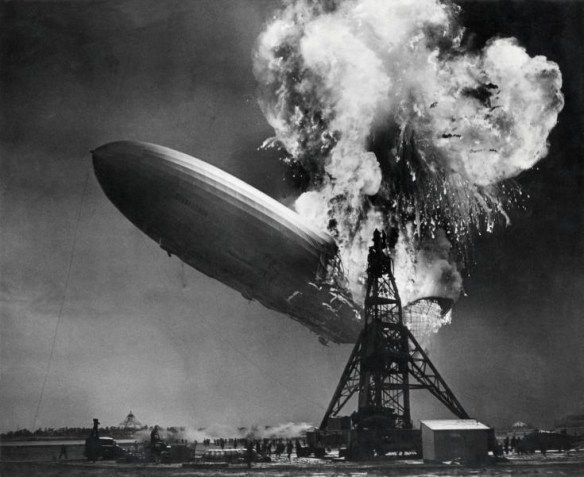
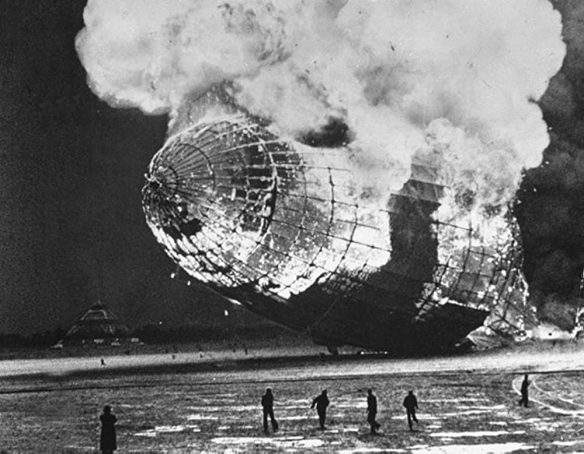
The national press has devoted considerable attention to the gerrymandering of congressional districts, but state legislative districts have received much less scrutiny, even though they are every bit as skewed, and in some states far more so. “Ohio is about the second most gerrymandered statehouse in the country,” Niven told me. “It doesn’t have a voter base to support a total abortion ban, yet that’s a likely outcome.” He concluded, “Ohio has become the Hindenburg of democracy.”

Hindenburg_disaster

David Pepper, an election-law professor, has a book, “Laboratories of Autocracy,” whose title offers a grim spin on a famous statement, attributed to the Supreme Court Justice Louis Brandeis, calling America’s state legislatures “laboratories of democracy”…. He is determined to get the Democratic political establishment to stop lavishing almost all its money and attention on U.S. House, Senate, and gubernatorial races … and to focus more energy on what he sees as a greater emergency: the collapse of representative democracy in one statehouse after another.

Unquote. The article discusses how inattention to local politics has allowed right-wing extremists to take control of state legislatures, assisted by the Supreme Court’s Citizens United decision, and how lower court decisions have been ignored: 

Swept out of power in Washington, the Republican Party’s smartest operatives decided to exploit the only opening they could find: the possibility of capturing state legislatures in the 2010 midterm elections. They knew that, in 2011, many congressional and local legislative districts would be redrawn based on data from the 2010 census—a process that occurs only once a decade. If Republicans reshaped enough districts, they could hugely advantage conservative candidates, even if many of the Party’s policies were unpopular.

In 2010, the Supreme Court issued its controversial Citizens United decision, which allowed dark money to flood American politics. Donors, many undisclosed, soon funneled thirty million dollars into the Republicans’ redistricting project, called REDMAP, and the result was an astonishing success: the Party picked up nearly seven hundred legislative seats, and won the power to redraw the maps for four times as many districts as the Democrats….

The Ohio statehouse has grown only more lopsided in the past decade. Currently, the Republican members have a 64–35 advantage in the House and a 25–8 advantage in the Senate. This veto-proof majority makes the Republican leaders of both chambers arguably the most powerful officeholders in the state….

The vast majority of Ohio residents clearly want legislative districts that are drawn more fairly. By 2015, the state’s gerrymandering problem had become so notorious that seventy-one per cent of Ohioans voted to pass an amendment to the state constitution demanding reforms. As a result, the Ohio constitution now requires that districts be shaped so that the makeup of the General Assembly is proportional to the political makeup of the state. In 2018, an even larger bipartisan majority—seventy-five per cent of Ohio voters—passed a similar resolution for the state’s congressional districts.

Though these reforms were democratically enacted, the voters’ will has thus far been ignored…. [Republicans] proposed districts [that] were nowhere near proportional to the state’s political makeup. The Democrats argued that the Republicans had flagrantly violated the reforms that had been written into the state constitution.

This past spring, an extraordinary series of legal fights were playing out. The Ohio Supreme Court struck down the map—and then struck down four more, after the Republican majority on the redistricting commission continued submitting maps that defied the spirit of the court’s orders…. The Republicans’ antics lasted so long that they basically ran out the clock. Election deadlines were looming, and the makeup of Ohio’s districts still hadn’t been settled. … A federal court [was asked] to intervene, on the ground that the delay was imperiling the fair administration of upcoming elections. The decision was made by a panel of three federal judges—two of whom had been appointed by T____. Over the strenuous objection of the third judge, the two T___ judges ruled in the group’s favor, allowing the 2022 elections to proceed with a map so rigged that Ohio’s top judicial body had rejected it as unconstitutional.

On Twitter, Bill Seitz, the majority leader of the Ohio House, jeered at his Democratic opponents: “Too bad so sad. We win again. The game is over and you lost.”

Ohio Democrats, including David Pepper, are outraged. “The most corrupt state in the country was told more than five times that it was violating the law, and then the federal court said it was O.K.,” he told me. “If you add up all the abnormalities, it’s a case study—we’re seeing the disintegration of the rule of law in Ohio. They intentionally created an illegal map, and are laughing about it.”

[A Democratic legislator] likens the Republicans’ stunning contempt for the Ohio Supreme Court to the January 6th insurrection: “People are saying, ‘Where is the accountability when you disregard the rule of law and attack democracy?’ Because that’s what’s happening in the statehouses, and Ohio is a perfect example.”

Unquote. Ohio isn’t the only state where this has happened. From The New York Times:

Since January, judges in Alabama, Georgia, Louisiana and Ohio have found that Republican legislators illegally drew those states’ congressional maps along racial or partisan lines, or that a trial very likely would conclude that they did. In years past, judges who have reached similar findings have ordered new maps, or had an expert draw them, to ensure that coming elections were fair.

But a shift in election law philosophy at the Supreme Court, combined with a new aggressiveness among Republicans who drew the maps, has upended that model for the elections in November. This time, all four states are using the rejected maps, and questions about their legality for future elections will be hashed out in court later.

MV5BZWE5MWU1OGItYzFjZC00OTRhLTljNDUtNjU1NDYxYjc5ZTg2L2ltYWdlXkEyXkFqcGdeQXVyMTIxMDUyOTI@._V1_FMjpg_UX1000_