Smarter Works Better Than Tougher – Stairway Postscript

The French phrase “l’esprit de l’escalier” refers to that unpleasant moment when you realize what you should have said. According to the usual source, Denis Diderot originated the expression:

During a dinner at the home of the statesman Jacques Necker, a remark was made to Diderot which left him speechless at the time, because, he explains, “a sensitive man, such as myself, overwhelmed by the argument leveled against him, becomes confused and can only think clearly again [when he reaches] the bottom of the stairs” (“l’homme sensible, comme moi, tout entier Ă  ce qu’on lui objecte, perd la tĂŞte et ne se retrouve qu’au bas de l’escalier“).

Hence, the wit (not the spirit) of the stairs.

The phrase doesn’t quite apply to what happened this afternoon, but it’s close enough. I was driving to the grocery store when I realized what I should have included in my previous post. I should have mentioned Greece’s ongoing financial crisis. Sensible people understand that Greece will never be able to pay back everything it owes, partly because the economic austerity demanded by its creditors has slowed the Greek economy, making Greece poorer and even less able to pay off its debts. Even the International Monetary Fund, one of Greece’s creditors, understands this. The Greeks need debt relief, like the Germans received after World War 2.

The Germans, however, believe they and the other creditors need to get tougher with Greece. More austerity and more pain will eventually convince the Greeks to get their fiscal house in order or drive Greece out of the eurozone, leading to who knows what consequences for the Greeks, Europe and the rest of the world. In this case, the Germans, like the Republicans, prefer tougher over smarter.

But how was I going to get Germany’s bad behavior into a post about the Republicans? (Believe it or not, I’ve got literary standards.) Then it hit me, probably when I was making a right turn. Remember that rabid speech given by arch-right winger, modern-day fascist Pat Buchanan at the 1992 Republican National Convention? The late Molly Ivins said “it probably sounded better in the original German”.

See, it fits together after all. It’s what I should have said.

In Foreign Policy, Smarter Works Better Than Tougher

The world will be a better place when normal relations are established between the United States and Cuba. But right-wing politicians disagree. They think we should treat Cuba even worse than we do now. If we tighten the screws on Cuba, the Cuban people will eventually rise up or their government will see the error of its ways.

Likewise, it will be a step forward when the United States and Iran establish better relations. Right-wing politicians disagree. They think we should treat Iran worse than we do now. We shouldn’t negotiate with Iran. We should tighten the screws even further and threaten military action. The Iranian people will rise up or their government will see the light.

The Atlantic has an interesting little article called “Why the Iran Deal Makes Obama’s Critics So Angry” that helps explain the Republican obsession with “toughness” in foreign policy:

When critics focus incessantly on the gap between the present [Iran nuclear] deal and a perfect one, what they’re really doing is blaming Obama for the fact that the United States is not omnipotent. This isn’t surprising given that American omnipotence is the guiding assumption behind contemporary Republican foreign policy. Ask any GOP presidential candidate except Rand Paul what they propose doing about any global hotspot and their answer is the same: be tougher. America must take a harder line against Iran’s nuclear program, against ISIS, against Bashar al-Assad, against Russian intervention in Ukraine and against Chinese ambitions in the South China Sea….

.[Behind Obama’s] drive for an Iranian nuclear deal is the effort to make American foreign policy “solvent” again by bringing America’s ends into alignment with its means. That means recognizing that the United States cannot bludgeon Iran into total submission, either economically or militarily. The U.S. tried that in Iraq.

It is precisely this recognition that makes the Iran deal so infuriating to Obama’s critics. It codifies the limits of American power. And recognizing the limits of American power also means recognizing the limits of American exceptionalism. It means recognizing that no matter how deeply Americans believe in their country’s unique virtue, the United States is subject to the same restraints that have governed great powers in the past. For the Republican right, that’s a deeply unwelcome realization. For many other Americans, it’s a relief. It’s a sign that, finally, the Bush era in American foreign policy is over.

It’s a Matter of Perspective

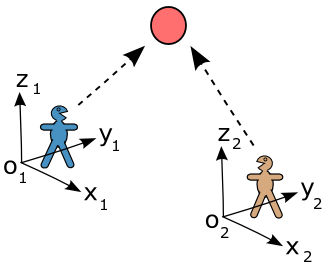
One afternoon, about four years ago, I was walking along in our neighborhood when it occurred to me that every perception or thought we have, every emotion we feel, every conclusion we reach, every command we issue or question we ask is from our particular, individual perspective.

Well, of course. That’s a truism, a statement so obviously true it’s hardly worth stating. We each have our own perspective. So what?

I don’t know, but ever since then I’ve been thinking about what it means to have a perspective or be from a perspective, and how different perspectives relate to each other. Not every waking moment, of course. But you might be surprised how often you’ll see the word “perspective” or a similar expression like “point of view” or “frame of reference” once you start paying attention.

For instance, there’s the way paintings or drawings give the impression that a two-dimensional surface has three dimensions. Turner used perspective when he painted Oxford’s High Street: 

high_turner

Underlying the artistic technique is the fact that we each have a physical perspective from which we observe the world. Each observer has what physicists call a “reference frame”, a “coordinate system attached to [the] individual observer’s perspective”, from which measurements are made. It’s one of the key concepts in Einstein’s theory of relativity.

Frame_of_reference

In addition to our physical perspective, we each have what our own “personal” perspective. It includes our particular desires, needs and interests. Personally speaking, It seems like a good idea — from my perspective — to be writing this (I have my reasons). From your personal perspective, it might be better to take a walk or go to bed.

Another type of perspective depends on what conceptual schemes or ways of thinking. We usually deal with the world from what we think is a practical or prudential perspective, but sometimes opt for a perspective that’s ethical or religious. We complain about politicians who function from a purely political perspective and celebrate those who champion a scientific or global perspective. There are so many perspectives that library shelves sag under books with inviting (?) subtitles like “Ecological and Experimental Perspectives”, “A Probabilistic Perspective”, “Perspectives from Philosophy, Psychology and Theology”, “Multicultural Perspectives” and “A Supply-Chain Perspective”.

In future posts, I’d like to occasionally discuss perspective from various perspectives. For example, why choose one perspective instead of another? Are multiple perspectives always better? How can a perspective be justified? Can it only be done from another perspective? Is there or should there be a hierarchy of perspectives? Is it really possible to adopt someone else’s perspective? Does morality depend on being able to do so? How does the philosophical position called “perspectivism”, associated with Nieztsche, differ from relativism? And is perspectivism preferable to the better-known view? 

For now, here’s a passage from Sarah Bakewell’s How to Live: Or a Life of Montaigne in One Question and Twenty Attempts at an Answer:

In the view of William James, as of Leonard Woolf and Montaigne, we do not live immured in our separate perspectives, like Descartes in his room.We live porously and sociably. We can glide out of our own minds, if only for a few moments, in order to occupy another being’s point of view. This ability is the real meaning of “Be convivial”, this chapter’s answer to the question of how to live, and the best hope for civilization.

Eyes on the Street

I used to work near the big Family Court building in Brooklyn. One afternoon, as I was walking by, I saw a woman punch a little boy in the stomach. Presumably, it was her son and he’d made her angry. Maybe she had to go to court and was stressed out. I can’t remember if I said something, but I probably did, because I remember walking away and wondering if I’d made the little boy’s situation even worse by embarrassing his mother. Would she be even harder on him when they got home? Should I have done more or less?

Something that happened online this week made me remember that moment in Brooklyn. Somebody made a comment on a discussion board, claiming that supporting same-sex marriage means you probably aren’t a Christian. The comment wasn’t directed at me, but I thought I should respond and set the record straight. So I found a recent poll that says same-sex marriage is supported by most Catholics and white mainline Protestants. It’s evangelical Christians and black Protestants who are mostly opposed.

So I left my comment and hoped (but doubted) that would be the end of it. When I visited the site again later that night, it wasn’t a big surprise to see that the person I’d responded to had apparently responded to me. I don’t know for sure, since I didn’t read what he or she had to say. I didn’t want to get involved in one of those unpleasant “discussions”.

The next day, the whole thread was gone. Apparently, things had gotten ugly and the moderator had deleted my post and everyone else’s. Which was fine with me. I figured I’d done my bit and it was just as well the moderator had stepped in.

Online forums are like city streets. The moderators (the police) sometimes intervene when things get bad. But the rest of us (the people in the neighborhood or passersby) have a responsibility to keep an eye on things and sometimes get actively involved. It’s an idea called “eyes on the street”. Jane Jacobs wrote about it in her great book The Life and Death of American Cities:

… there must be eyes upon the street, eyes belonging to those we might call the natural proprietors of the street. The buildings on a street equipped to handle strangers, to insure the safety of both residents and strangers, must be oriented to the street. They cannot turn their backs or blank sides on it and leave it blind…. the sidewalk must have users on it fairly continuously, both to add to the number of effective eyes on the street and to induce the people in buildings along the street to watch the sidewalks in sufficient numbers. Nobody enjoys sitting on a stoop or looking out a window at an empty street. Almost nobody does such a thing. Large numbers of people entertain themselves, off and on, by watching street activity.

Eyes on the street discourage bad behavior and sometimes lead people to speak up (or call the authorities). It’s the same on a discussion board, except for two differences. Nobody on a discussion board is in immediate danger of being robbed or physically assaulted. And the sole purpose of discussion boards, unlike city streets, is to allow people, even strangers, to speak up.

My tendency is to say something when I see a significant factual error. For example, claiming that support for same-sex marriage means a person isn’t a Christian. Of course, not every error (like being mistaken about when a TV show went on the air) needs to be corrected, but some deserve to be, even at the risk of getting into an argument. Preferring to avoid online warfare, I avoid getting personal in my response. I’ll say “X is Y”, but avoid “You are Z” (the third person is less personal than the second person).

And then I’ll usually go away. That means I may miss out on some fruitful discussion, or be corrected myself (unthinkable as that might be!), but reading further responses often leads to more of the same. It seems sufficient to make my point and then disappear, even though this allows someone else to get in the all-important Last Word! Will my silence suggest that I’ve given up? It probably will to some people, but you can’t have everything. And maybe the cops will show up.

Religious Liberty and Same-Sex Sex

Marriage isn’t an obscure practice. I bet you know married people even if you aren’t married yourself. Since marriage (the monogamous kind anyway) has always been defined as a relationship between a man (the husband) and a woman (the wife), it’s understandable that many of us are having trouble with the new definition. 

It’s also understandable that some people, including blinkered members of the Supreme Court, are resisting same-sex marriage, arguing that it’s just too weird or that the Constitution doesn’t require legalizing it (their argument being that “equal protection of the laws” doesn’t necessarily mean equal protection of the laws). 

But there’s another reason being offered against same-sex marriage that I’m having more trouble understanding. Here’s the relevant language from Justice Thomas’s dissent (which begins at page 78 of this file):

… the majority’s decision threatens the religious liberty our Nation has long sought to protect….In our society, marriage is not simply a governmental institution; it is a religious institution as well….Today’s decision might change the former, but it cannot change the latter. It appears all but inevitable that the two will come into conflict, particularly as individuals and churches are confronted with demands to participate in and endorse civil marriages between same-sex couples….

Religious liberty is about more than just the protection for “religious organizations and persons . . . as they seek to teach the principles that are so fulfilling and so central to their lives and faiths” …  Religious liberty is about freedom of action in matters of religion generally, and the scope of that liberty is directly correlated to the civil restraints placed upon religious practice [pp. 14-15 of the dissent].

Thomas’s concern is that religious liberty includes “freedom of action in matters of religion” and that legalizing same-sex marriage will lead to lots of situations in which people won’t be allowed to practice their religion as they wish. He doesn’t provide any examples, but claims that demands will be made to “participate in and endorse” marriage-related activities to which people object on religious grounds. In support of his position, Thomas refers to the amicus curiae (friend of the court) brief submitted by the Seventh-Day Adventist Church.

The Church anticipates problems of two kinds:

(1) Churches and church-affiliated organizations won’t be eligible for certain benefits if they discriminate against same-sex married couples. For example, church-run adoption agencies might lose their state licenses if they refuse to place children with same-sex couples. Church-run homeless shelters could lose government grants. Religious colleges might lose their accreditation or their access to government financial aid programs. Likewise, individual employees might lose their jobs or be disciplined if they refuse to provide services to same-sex couples.

(2) Individuals will bring lawsuits against churches and church-affiliated organizations that discriminate against such couples, charging illegal discrimination. Religious institutions might be subject to public accommodation laws that require businesses to provide products and services to anyone who can pay. Same-sex couples denied student housing might sue. Employees in same-sex marriages might sue religious organizations in order to keep their jobs.

In these various cases, the Church is arguing that anyone who conscientiously objects to same-sex marriage on religious grounds should have the right to discriminate against same-sex couples. On the face of it, that sounds illegal. But it might not be. An article in The Atlantic explains why:

No law, state or federal, forbids “discrimination” generally. Employers, landlords, and businesses “discriminate” all the time—on the basis of low credit ratings, bad references, and poor employment histories, among other factors. Any type of private discrimination is legal unless a state or federal law specifically forbids it….

Thus, a civil-rights statute has two key parts. The first lays out the traits it governs, the forbidden grounds—for example, … “race, color, religion, sex, or national origin.” To state a claim, plaintiff must show that he or she has been treated less favorably than others who differ in one of the covered traits, and that the unfavorable treatment was because of that trait….

Then the law specifies what activities it covers, and usually offers certain exemptions. For example, … the Fair Housing Act bars a landlord from refusing to rent to anyone because of “race, color, religion, sex, familial status, or national origin.” But it allows religious organizations that own dwellings to favor members of their own sect…

The question, therefore, is where to draw the line between people’s freedom to practice their religion as they see fit and other people’s right to be treated fairly. Religious opponents of same-sex marriage want to draw the line so they can discriminate against same-sex couples in lots of different ways (“we won’t let you attend our college”). Supporters of same-sex marriage want same-sex couples to be treated like other married couples.

Maybe everyone would agree that a minister who thinks same-sex marriage isn’t sacred should not have to officiate at a same-sex wedding. It makes some sense to me that a church-run adoption agency might not want to give a child to a same-sex couple (a Catholic charity in Boston apparently shut down their adoption services to avoid doing that — I’m not endorsing their decision — I’m simply saying it’s understandable from their perspective). But it’s hard to believe there are good religious reasons for the many kinds of discrimination the Seventh Day Adventists and other churches apparently want to practice. 

How can it be against someone’s religion to provide counseling to a same-sex married couple? Or give them food or shelter? Or allow them to attend the college you administer? Or buy flowers or a cake from your shop?

The answer, of course, is that those kinds of discrimination aren’t required by anyone’s religion. In this case, claiming to have religious reasons (or “core religious beliefs”) that justify treating certain people worse than others is a way to attack or renounce their sexual orientation. That’s why the phrase “aid and abet” sometimes appears in discussions of this issue. Opponents don’t want to “aid and abet” what they consider to be deviant sexual behavior, as if that behavior were criminal. They somehow think that acknowledging same-sex marriage or providing aid and comfort to same-sex couples amounts to endorsing same-sex sex.

Certainly, many oppose this evolution in the definition of marriage because it’s strange and new. Following religions that are thousands of years old tends to foster conservatism (the kind that honors tradition, not the fake “conservatism” we hear so much about these days). But the real reason same-sex marriage bothers some people so much is that being in a same-sex marriage is public confirmation that a person has same-sex sex. A person can be gay or a lesbian without announcing that fact to their minister or rabbi, or their college administration, or the staff at their local county clerk’s office. But getting married to someone of the same sex delivers a very clear message. You have the kind of sex that really bothers some people. And you’re planning to have a lot of it for a very long time. You aren’t going through a phase. You aren’t going to change your ways with a bit of counseling. So deal with it.

As a religious person, you can react to this new situation in different ways. You can say “Yuck! I don’t like this at all!” and maybe offer some reasons, religious or otherwise. Or you can mind your own business (“let him who is without sin…”). Or be thankful that more people will be getting married, which is supposed to be a good thing. But you shouldn’t use your religion as an excuse for discrimination. Why make life difficult for people who haven’t done you any harm? Their liberties are just as important as yours.