The Ethics of “Sweet Illusions and Darling Lies”

Are we morally responsible for what we believe? To some extent, we are. The acceptance of lies and bizarre conspiracy theories by so many of our fellow citizens makes the issue extremely relevant. The philosopher Regina Rini discusses the ethics of belief for the Times Literary Supplement:  

On January 6, the US Capitol building was stormed by a mob, motivated by beliefs that were almost entirely false, absurd and nonsensical: the QAnon conspiracy; the President’s [lies] about massive voter fraud, and the various conspiracy theories that he and his lawyers peddled in support of overturning the election results.

In 1877, the English philosopher William Clifford published a now famous essay, “The Ethics of Belief”, setting out the view that we can be morally faulted for shoddy thinking. Clifford imagines a ship-owner who smothers his doubts about the seaworthiness of a creaky vessel, and adopts the sincere but unjustified belief that it is safe to send passengers across the Atlantic. The ship then sinks. Clifford (himself a shipwreck survivor) asks: don’t we agree that the ship-owner was “verily guilty” of the passengers’ deaths, and that he “must be held responsible for it”? If we agree to this, Clifford continues, then we must also agree that the ship-owner would deserve blame even if the ship hadn’t sunk. It is epistemic carelessness that makes the ship-owner guilty, even if catastrophe is luckily avoided. “The question of right or wrong has to do with the origin of his belief … not whether it turned out to be true or false, but whether he had a right to believe on such evidence as was before him.”

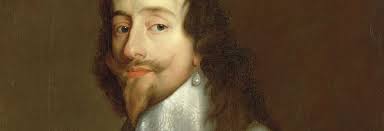
Clifford’s views went out of favour among philosophers for most of a century. Moral evaluation, it was thought, should stop at the mind’s edge. After all, we cannot directly control our beliefs in the way we control our fists. I can’t just decide, here and now, to stop believing that Charles I had a pointy beard . . . And if I can’t control my beliefs, how can I be held accountable for them?
download

Yet in recent decades, many philosophers have become less impressed by this objection (sometimes called the problem of “doxastic voluntarism”). After all, I can control how I acquire and maintain beliefs by shaping my informational environment. Suppose I do really want to change my beliefs about Charles I’s grooming. I could join a renegade historical society and surround myself with dissenting portraiture. Slowly, indirectly, I can retrain my thoughts and I can be held accountable for choosing to do so.

More to the point, I can also fail to take action to shape my beliefs in healthy ways. The social media era has made this point especially acute, as we can each now curate our own information environment, following sources that challenge our beliefs, or flatter our preconceptions, as we please. Digital epistemic communities are then made up of people who amplify one another’s virtues or vices. Credulously accepting conspiracy stories that vilify my partisan enemies not only dulls my own wits, but encourages my friends to dull theirs. Clifford himself was quite sharp on this point: “Habitual want of care about what I believe leads to habitual want of care in others about the truth of what is told to me … It may matter little to me, in my cloud-castle of sweet illusions and darling lies; but it matters much to Man that I have made my neighbours ready to deceive”.

So far, then, Clifford’s 150-year-old diagnosis seems precisely to explain the epistemic culpability of those who stormed the Capitol on a wave of delusion and lies. But there is a wrinkle here. Clifford thought that credulity – insufficient scepticism toward the claims of others – was the most troubling intellectual vice. But the epistemic shambles of QAnon show a more subtle problem. After all, if there’s anything conspiracy fanatics possess, it is scepticism. They are sceptical of what government officials say, sceptical of what vaccine scientists say, sceptical even of what astronauts say about the shape of the Earth. If anything, they show that critical thinking is a bit like cell division; valuable in proportion, but at risk of harmful metastasis. In the eyes of QAnon devotees, we are the “sheeple” who fail to “do the research” of tumbling down every hyperlinked rabbit-hole.

Conspiracy aficionados are all too willing to think for themselves – that is how they end up believing that Democrats are Satan-worshippers or that 5G phone towers cause Covid-19. And that’s where Clifford’s moralizing – “No simplicity of mind, no obscurity of station, can escape the universal duty of questioning all that we believe” – goes wrong. The ethics of belief should not be a Calvinistic demand for hard epistemic labour. Conspiracists work at least as hard as the rest of us, pinning notes and photos to their bulletin boards late into the night. Hard epistemic labour is just as prone to amplifying epistemic mistakes as overcoming them.

In fact, we should not be focused on individual intellectual virtue at all. The epistemic practices that justify our beliefs are fundamentally interpersonal. Most of our knowledge of the world depends essentially on the say-so of others. Consider: how do you know that I live in Toronto? Well, it says so right at the bottom of this column. But that’s not the same as going to Toronto and seeing me there with your own eyes. So even this simple belief requires trusting the say-so of me or the [Times Literary Supplement].

Perhaps you want to be an uncompromising epistemic individualist, refusing to believe until you’ve verified it yourself? Well, you’ll need to come to Toronto to check. But how will you find Toronto? You can’t use Google Maps (that’s just more say-so from others). Maybe you’ll set out with a compass and enterprising disposition. But how do you know what that compass is pointing to? How do you know where the North Pole is, or how magnetism works? Have you been to the North Pole? Have you done all the magnetism experiments yourself? The list goes on.

No one lives like that. We are all deeply, ineradicably dependent on the say-so of others for nearly all our beliefs about the world. It’s only through a massive division of cognitive labour that we’ve come to know so much. So genuine epistemic responsibility isn’t a matter of doubting all that can be doubted, or only believing what you’ve proven for yourself. It’s a matter of trusting the right other people. That takes wisdom.

Not everyone in the Capitol mob was a QAnon believer. Some were white supremacists aiming to violently uphold a president who refused to condemn their hate. Others were merely insurrection tourists. Still, many do seem to have genuinely believed they were fighting a monstrous regime of Satanic child-harmers. Those beliefs did not appear in a vacuum. A Bellingcat investigation of the social media history of Ashli Babbitt, the woman shot by police while attempting to storm the House of Representatives, suggests that she held relatively mainstream political views until about a year ago, when she veered off into deep QAnon obsession. She put her trust in the wrong people, and all her epistemic labour only made things worse.

That is the most delicate and important lesson to draw from last week’s horror show. QAnon believers are culpable for their bad judgment. But that culpability extends far beyond them, through to everyone whose actions fed their dangerous beliefs. It’s not enough to insist that responsibility falls entirely on the believer, because we are all dependent on others for our knowledge, and we must all trust someone. That mutual reliance means we are all our neighbour’s epistemic keeper.

Most obviously the blame for last week’s catastrophe extends to politicians who cynically courted and channelled [lies] to support their false allegations of election fraud. Donald Trump spoke to the mob moments before their assault, declaring “you’ll never take back our country with weakness. You have to show strength and you have to be strong”, and ordered them to march against the Capitol. That evening, after Congress regained control of its chambers, senators such as Josh Hawley continued to flog “objections and concerns” about the presidential election which had been dismissed by numerous courts and Trump’s own Justice Department.

But manipulative politicians are not the only ones to blame. The culture of the internet played a big role as well. An investigation of QAnon’s origins by the podcast Reply All found that the conspiracy began life as a joke on the ultra-ironic website 4chan. In 2017, “Q” was one of only several fake government source characters being played, tongue-in-cheek, by forum participants who all understood it was a game. Gradually the Q persona became the most popular, and then outsiders – who didn’t get the joke – stumbled onto Q’s tantalizing nonsense. Within a year, thousands of people looking for anything to fill the gap left by their scepticism toward authority developed a sincere belief in Q. Behind the scenes, someone, with cynical political or commercial motives, was happy to oblige.

Unquote. 

Prof. Rini’s analysis sounds right. The next question, of course, is: how should we respond? Millions of people are being immoral with regard to what they believe. Is there anything to be done about it? We have laws against some immoral behavior, like theft and assault. Although we can’t have laws that control what people believe, we can have limited government regulation of the companies that distribute those lies (such as Facebook, Fox News and your local cable TV company). The public can also exert pressure on companies, TV networks, for instance, that give certain politicians and pundits repeated opportunities to lie in public. And in our personal lives, when we hear somebody say something that’s simply not true, we can speak up, even though it’s easier to stay quiet.

It Has To Be Different This Time

Joe Biden’s proposed Covid-19 relief plan is a big deal. From Vox:

The proposal, called the American Rescue Plan, is divvied up into three buckets:

$400 billion for dealing with the coronavirus, including vaccines and testing;

$1 trillion in direct relief to families; and

$400 billion in aid to communities and businesses.

It includes money for testing, vaccines, and public health workers; $400 a week in extended federal unemployment insurance through September; rental assistance; emergency paid leave; and funding for reopening schools, among other items. And, as Democrats promised when campaigning in Georgia, Biden’s plan would send out another $1,400 in stimulus checks, bringing the total this year to $2,000.

Greg Sargent of The Washington Post discusses the relatively encouraging politics of the matter:

The sheer scale of the economic rescue package that Joe Biden has unveiled has surprised a lot of observers who were expecting the president-elect to offer something more in line with his centrist, incrementalist past.

In unveiling the new [roughly] $1.9 trillion package, Biden declared that rather than worry about “our debt situation,” it’s time to spend big “with interest rates at historic lows.” As Slate’s Jordan Weissmann put it: “I would not have anticipated that Joe Biden would become a clear and forceful advocate of deficit spending.”

What accounts for this ambition? Most obviously, this crisis is truly extraordinary. The new leadership must execute a massive vaccine-distribution operation amid a broader effort to tame a raging pandemic, while securing assistance to struggling Americans plus a big burst of stimulus spending to address a deepening economic crisis.

Another obvious answer is that the politics have shifted. The Democratic Party has moved left on fundamental economic questions, due in large part to advocacy from Sen. Bernie Sanders (I-Vt.), Sen. Elizabeth Warren (D-Mass.) and others.

But still another reason, one that has been less remarked-upon, is that many Democrats have lived through what happened when former president Barack Obama inherited another major economic crisis from another Republican president.

As has been endlessly hashed out, Obama opted for a stimulus that fell short of what was needed. Putting aside why that happened, what everyone now knows is that it was a serious mistake. Democrats lost the House in 2010 and spent the remainder of Obama’s presidency locked in brutal fiscal trench warfare with a GOP determined to starve the recovery with austerity to cripple his presidency under the guise of fake concerns about spending and deficits.

Many Democrats who lived through that, a lot of whom are still in Congress and some of whom are advising Biden — who himself lived through it as vice president — must be wary of a repeat.

Making them even more wary, one hopes, is the fact that Republican deficit concerns evaporated once a Republican became president. Indeed, the economy was good (at least until the coronavirus shattered it) precisely because it was fueled by stimulus.

As Neil Irwin reports, the Trump years have caused a change among economists, who are now more receptive to a hotter economy — with higher deficits and lower unemployment — and less wary of inflation than they traditionally have been. That has fueled a political shift toward tolerance of deficits, making Democrats less wary of bad-faith criticism for overspending.

But on top of that sea change, Democrats have to be feeling extra-burned by the fact that the GOP pivoted so abruptly from voicing phony deficit concerns under a Democratic president to not caring about them anymore under a Republican.

The lesson of those years is that Txxxx the political beneficiary of that chicanery. He consistently had high approval ratings on the economy, and he might have won reelection on the strength of that if the coronavirus hadn’t intervened.

Democrats appear to be learning from that lesson right now.

On still another front, the makeup of the Senate Democratic caucus is different. During the Obama years you had centrist old-liners chairing key committees . . . Expected to chair those respective committees in the new Senate now are Ron Wyden of Oregon, Sanders, and Sherrod Brown of Ohio. All are far more progressive than those previous Democratic chairs. . . .

Wyden, for his part, believes this combination of things — an awareness of getting played by phony GOP deficit concerns and more progressive Senate committee chairs — will make this time very different from 2009 and 2010.

“The key lessons we learned were the importance of not assuming there will be multiple bites at the apple and not taking your foot off the gas in the middle of economic recovery,” Wyden told me in a statement. “We cannot let a popular recovery agenda get derailed by fiscal fearmongering that we know is unjustified and phony.”

“Committee chairs are going to be aggressive, and want to get things done,” Wyden added. “Overall, I think the dynamics have changed a lot since 2009.”

To be sure, it still remains to be seen how big a package Biden will actually wrest from Congress. He has already announced he hopes to pursue bipartisan support in the Senate rather than try to get the legislation passed with a simple majority via the “reconciliation” process.

So it’s still possible that Biden could end up on a futile hunt for Republican support or end up compromising his stimulus package downward. But there is at least some reason for optimism that Democrats have learned from what happened last time. . . .

A Nation-State and Its Enemies

The Spanish philosopher JosĂ© Ortega y Gasset (1883-1955) had an idea about what a nation is that’s relevant to our current predicaments. This is from Philosophy Now:

Published posthumously in 1960, Ortega’s resultant book Meditación de Europa (Meditation on Europe) discusses the nation-state, its role, and its future. After being forced from his own country by a fascist regime and witnessing two World Wars, it’s hardly surprising that the nation-state was an important topic to Ortega. He believed the issue lay partly in the fact that, whilst the nation-state generates a great deal of fanaticism, we are often incapable of providing an exact definition of one – which however Ortega had already done long ago in The Revolt of the Masses. As he said at a conference in 1951:

“I will repeat it once again: the reality which we call the State is not the spontaneous coming together of those united by ties of blood. The State begins when groups naturally divided find themselves obliged to live in common. This obligation is not violently forced upon them, but implies an impelling purpose, a common task which is set before the divided groups. Above all, the State is a plan of action and a program of collaboration. The men are called upon so that together they may do something. The State is neither consanguinity, nor linguistic unity, nor territorial unity, nor proximity of habitation. It is nothing material, inert, fixed, limited. It is pure dynamism – the will to do something in common – and thanks to this the concept of the State is bounded by no physical limits.”

Just like any enterprise, the nation-state has a set of values, insignia through which it is recognized (a flag), and a general set of customs that unite its members, creating cultural coherence amongst them. The nation-state, however, is built upon diversity, and belonging to it does not mean that sub-groups lose their individuality. Be it Catalonia in Spain or Scotland in the UK, belonging to a nation doesn’t remove their spirit as separate entities. And in the same way, all other groups which make up the members of a state do not lose their identity simply by becoming part of the nation: being Spanish doesn’t imply that you are of any particular faith, age, gender, race, and whilst it may be assumed that you speak Spanish, it is not necessarily your mother tongue. Even borders – which might seem like pretty stable definers of a nation – are the present result of centuries of conflict and negotiations. They have constantly changed throughout history, and there’s no reason to think that they won’t do so again in the future.

So instead of understanding a nation as something static, bound fast together by metaphysical connections, it should be viewed as a dynamic – something we do instead of something we are. Thanks to historical records, we have a documented account of Rome from its beginning until its fall – its lifespan, you might say. We Europeans have also witnessed the birth of our modern nation-states from the ruins of the Roman Empire, including their growth and incorporation of surrounding communities. But nation-states are also prone to shrink, fall apart, maybe even die. As a work in progress, nations are by no means eternal features that exist naturally on the face of the earth, leaving them open to whatever fate we bestow. As dynamic, ever-changing projects, nations must be open to change and to the incorporation of new groups, whose ideas could contribute to solving their problems and reaching their goals.

From Eugene Robinson for The Washington Post:

The biggest problem facing the nation now is not what to do with Txxxx, who will soon become yesterday’s news. The crisis is that more than 70 percent of Republican voters believe — falsely — that there was some kind of widespread fraud in the election. The essence of democracy is accepting both victory and loss as legitimate outcomes.

A GOP that internalizes and retains Txxxx’s conspiratorial worldview is not a political party. It is a dangerous cult. Elected officials who have cynically — or cravenly — gone along with that cult’s lies will not find it easy to reverse course.

Much more important than whether Txxxx is convicted in his coming trial is whether Republicans level with their constituents and tell them that Txxxx is lying.

If Republicans won’t — or can’t — tell the truth about the November election, they are no longer participants in our [nation-state’s] democracy. They are its enemies. 

This Is Almost Unbelievable

From The Washington Post (MY EMPHASIS ADDED):

When Health and Human Services Secretary Alex Azar announced this week that the federal government would begin releasing coronavirus vaccine doses held in reserve for second shots, NO SUCH RESERVE EXISTED, according to state and federal officials briefed on distribution plans. The Txxxx administration had already begun shipping out what was available beginning at the end of December, taking second doses directly off the manufacturing line.

Now, health officials across the country who had anticipated their extremely limited vaccine supply as much as doubling beginning next week are confronting the reality that their allocations will not immediately increase, dashing hopes of dramatically expanding eligibility for millions of elderly people and those with high-risk medical conditions. Health officials in some cities and states were informed in recent days about the reality of the situation, while others are still in the dark.

Unquote.

A message from our local doctors:

Untitled

Dear SMG Patient,

Recent eligibility changes for the COVID-19 vaccine have created a massive spike in demand for the vaccine. AT THIS TIME WE ARE NOT ABLE TO ACCOMMODATE ADDITIONAL VACCINE APPOINTMENT REQUESTS.

The volume of appointment requests via phone and through our patient portal is limiting our ability to care for patients who need both sick and well visits. 

We will contact eligible patients as soon as we are able to vaccinate you.

Unquote.

One reasonable theory: These bastards want millions of people to be disappointed that they can’t get a vaccination and blame the president — who will be Joe Biden five days from now.

I hope Biden puts a paragraph in his inaugural address (a “by the way, folks”) explaining that the outgoing administration claimed they’d have many millions of us already vaccinated, but they totally screwed up and then lied about it on their way out the door.

A Republican Explains Her Vote to the People Back Home

Jaime Herrera Beutler is one of the ten Republicans in the House of Representatives with enough integrity, courage or patriotism (or disgust) to vote to impeach the president. Some of her constituents weren’t too clear on why she voted that way, so she offered a brief summary of the case against him on Twitter:

In conversations w/residents about this week’s impeachment vote, some are unclear on what transpired before & during that involved President Txxxx.

Here are the indisputable and publicly available facts

The president helped organize the January 6 rally. Example: 

Peter Navarro releases 36-page report alleging election fraud ‘more than sufficient’ to swing victory to Trump https://t.co/D8KrMHnFdK. A great report by Peter. Statistically impossible to have lost the 2020 Election. Big protest in D.C. on January 6th. Be there, will be wild!

— Donald J. Trump (@realDonaldTrump) December 19, 2020

For months, he insisted the election had been stolen and consistently urged people to “fight” in order to change the results: “WE HAVE JUST BEGUN TO FIGHT!!!” (Tweet, Dec. 12)

“@ senatemajldr and Republican Senators have to get tougher, or you won’t have a Republican Party anymore. We won the Presidential Election, by a lot. FIGHT FOR IT. Don’t let them take it away!” (Dec. 18)

“The ‘Justice’ Department& the FBI have done nothing about the 2020 Presidential Election Voter Fraud, the biggest SCAM in our nation’s history despite overwhelming evidence. They should be ashamed. History will remember. Never give up. See everyone in DC on January 6th”(Dec. 26)

He led Americans to believe that Mike Pence could overturn the Electoral College results, even though the VP does not have that power. On Jan. 5 he tweeted, “The Vice President has the power to reject fraudulently chosen electors.”

He told supporters at Georgia rally that day, “I hope Mike Pence comes through for us, I have to tell you. I hope that our great Vice President, our great Vice President, comes through for us. He’s a great guy. Of course if he doesn’t come through I won’t like him quite as much.”

During the president’s rally on January 6, he repeated phrases like “fight like hell,” and “we’re going to have to fight much harder.”

Many coming to the rally did intend to fight, with physical violence. Leading up to the rally, specific threats were numerous. Hundreds of TikTok videos promoted violence. Thousands of used hashtags promoting a second civil war.

One said, “Take your motherf—ing guns. That’s the whole point of going.” Another online comment said: “travel in packs and do not let them disarm someone without stacking bodies.”

Rather than take any action to curb the threats, the president at his rally said, “When you catch somebody in a fraud, you are allowed to go by very different rules.” He said “You’ll never take our country back with weakness.”

While the riot was in full swing & a mob was in the Capitol hunting Mike Pence, the president tweeted: “Mike Pence didn’t have the courage to do what should have been done to protect our Country and our Constitution, giving States a chance to certify a corrected set of facts, …. not the fraudulent or inaccurate ones which they were asked to previously certify.”

The mob at the Capitol chanting “Hang Mike Pence.”

Trump supporters threaten to hang Mike Pence at Capitol – YouTube

This one of the mob attacking a Capitol Police officer. As we know, many were beaten and one died because of his injuries.

Mob beating Capitol Police officer – YouTube

The commander in chief’s primary job is to protect U.S. citizens. While this mob hunted for Pence, who had fled to a secure location, the only action we know the president took was calling GOP Senators, seeking their support to delay the Electoral College certification.

Hours after the Capitol was breached, the president released a pathetic video denouncing the violence but telling the perpetrators “I love you,” and “you are special.”

Unquote.

Those are some of the indisputable, publicly available facts. One I hadn’t heard before is how the president exploded the prices at his Washington hotel for inauguration week. This report was published by the Independent on January 1st:

The rooms initially opened at higher prices than usual, ranging from doubles for $886 to suites at $2,225. 

However, the prices seem to have been hiked further, as the hotel’s website now says a two-night minimum is required for guests visiting during the week of inauguration, with even the cheapest rooms priced at $2,225 a night for 19 and 20 January.

Make a buck. Make a coup. It’s all the same to him.