Whereof One Can Speak 🇺🇦

Nothing special, one post at a time since 2012

The FBI Searches Mar-a-Lago: Point and Counterpoint

It’s happened but not here.

In other democratic countries, political leaders can and do face criminal investigations and trials for their alleged misdeeds. South Korea impeached and tried then-President Park Geun-hye in 2017 and 2018 over corruption allegations, for which she served five years in prison out of a more-than-twenty-year sentence. A French jury convicted former President Nicolas Sarkozy last year on campaign-finance charges, effectively ending his political career. The legal troubles of former Italian Prime Minister Silvio Berlusconi are so extensive that they defy casual description; Wikipedia dedicates an entire article to them with more than two dozen subsections [The New Republic].

To avoid it happening here, the Department of Justice bent way over backwards to give the former president the opportunity to return classified documents that didn’t belong to him. After months of discussions with his lawyers, the former president returned a vanload of documents. Believing the former president hadn’t fully complied, a US Attorney and the FBI convinced a judge to approve a search warrant. The search revealed that there were indeed more documents that should have been returned. Except for the hysterical reaction of right-wing pundits and politicians, that would have been the end of the story unless the former president’s lawyers challenged the search warrant in court or prosecutors decided to pursue the matter. However, in all fairness, there is another view, as this piece from an Australian magazine clearly states: 

We are certainly no fans of D____ T____ – let’s make that clear from the outset. But yesterday’s raid by the FBI on the home of a former president sets a dangerous precedent.

A precedent which now means that anyone who evades taxes, attempts to undermine an election, sexually assaults women, manipulates the value of their assets, uses state resources to enrich themselves or aids and abets the overthrow of a democratically elected government will be subject to investigation.

Is that the world we want to live in? Where anyone accused of insurrection can be subject to questioning from law enforcement officers?

It’s a slippery slope. Before we know it, regular citizens accused of defrauding the government, concealing evidence, manipulating financial documents, tampering with witnesses or perverting the course of justice will also be held to account.

Or to put it another way, if we simply shrug our shoulders and fail to question the actions of the FBI, soon any old Joe Citizen who is suspected of ripping classified government documents into small pieces and flushing them down the toilet will be obliged to answer to law enforcement, as well as their plumber.

If we don’t ask the hard questions about the potential motives of the FBI now, soon any one of us who buries our ex-wife in a small grave at the side of their golf course in order to gain a tax concession will be treated with suspicion.

As T____ supporters put it so clearly yesterday, if this can happen to a President, it could happen to anyone who has committed insurrection, assault or fraud. That’s a chilling thought.

We are on new ground here. As D____ T____ himself made clear, this is the first time a former president’s home has been raided. Proof, if ever we needed it, that the FBI shamefully only targets people who it considers to have committed a crime. Who gave FBI director Chris Wray that authority?

As we made clear earlier, we’re certainly not T____ supporters. But in today’s partisan world, it would be easy to fall into the trap of cheering on the FBI’s actions, without taking a step back to look at the bigger picture. If T____ goes to jail, it opens the door for every lying, corrupt, perverted piece of shit to go to jail too. Is that what we want?

Untitled

Law and Order Comes to Mar-a-Lago (Plus a Knock Knock Joke)

FZrPPgiWIAMh-36

Sophisticated humor aside, nobody knows what’s going to happen to the 45th president (otherwise known as a dangerous, buffoonish cancer on America). Maybe the DOJ and a DC jury of his peers will finally LOCK HIM UP. Maybe the Fulton County, Georgia, district attorney will get it done. If she does, maybe the governor of George will pardon him. Maybe he’ll run for president from prison, get enough Electoral College help from fascist officials around the country and then pardon himself. Maybe he’ll get probation and agree not to run for political office again. Maybe he’ll abscond to Moscow and run for president from there. Maybe he’ll have a debilitating stroke. Maybe he’ll go straight to Hell. The big questions remain: how is it that a major political party chose this “person” and might easily choose him again?

Amid right-winger calls for elimination of the FBI or immediate civil war, one of my favorite columnists, Paul Waldman of The Washington Post, had a few thoughts on the hysterical Republican reaction to yesterday’s FBI visit [among which I asserted a few italicized ones of my own]:

In his recent speeches, D____ T____ has taken to saying that he is “the most persecuted person in the history of our country.” The millions who lived and died in slavery? Native Americans who endured the Trail of Tears? Sure, they suffered. But did they get kicked off Twitter?

Now that the FBI has executed a search warrant at T____’s Mar-a-Lago Club, the former president can indulge what has become his most important impulse, his driving motivation, his very reason for being: to whine and complain.

The gleeful enthusiasm with which his party has rallied to his defense shows how invested Republicans have become in T____’s personal narrative of oppression, one that is notable for its distance from anything that might affect the lives of the Americans whose votes T____ might soon be seeking again.

Let’s keep in mind one vital fact about the FBI’s action Monday: No one you see commenting on this matter — not the angry members of Congress, TV hosts or the pundits aplenty — knows precisely what crime the bureau is investigating or what evidence was presented to the judge who approved the search warrant [although the ex-president could make the search warrant public if he wanted to].

That hasn’t stopped T____’s defenders from assuming [no, saying, not assuming] that he can’t possibly have done anything that would justify the search. After all, we know how careful he has always been about following rules, particularly with regard to classified information.

… In order to get a warrant, the FBI had to convince a judge that it had probable cause to believe a search would locate evidence of a crime. One would like to think that if T____ had committed crimes, even Republicans would admit that it would be appropriate to investigate.

But the nearly universal [fascist] response has been that the search can only have been politically motivated, despite the fact that no one commenting knows what the FBI was looking for or what it found [Republicans are fond of politicizing the Department of Justice, so figure Democrats do it too].

“I stand with President T____ against this outrageous action of the FBI,” said Sen. Marsha Blackburn (R-Tenn.). “The Biden Admin has fully weaponized DOJ & FBI to target their political enemies,” tweeted Sen. Ted Cruz (R-Tex.). House Minority Leader Kevin McCarthy (R-Calif.) said, “The Department of Justice has reached an intolerable state of weaponized politicization.” On Fox News, the hosts and guests all but lost their minds in rage. Kari Lake, the T____-endorsed GOP nominee for governor of Arizona, thundered in a statement that “We must fire the Federal Government,” whatever that means…..

There’s no question that this was an extraordinary action for the Justice Department to have taken, which is why it’s almost certain that it came after lengthy deliberation and in the belief that a crime (or multiple crimes) had been committed. The department [including the FBI Director nominated by T____] had to be fully aware of the political firestorm that would erupt.

Attorney General Merrick Garland is hardly some kind of hothead, and the other top Justice Department officials likely to have been part of the decision-making aren’t the collection of knaves and buffoons T____ had gathered around himself…. In this Democratic administration, the officials in charge are serious people.

And of course, the reaction of T____’s defenders was going to be political. But the way that they’re making their case shows how profound a hold T____’s cult of personality still has on his party.

… What are Republicans saying to you right now, besides “D____ T____ should be above the law”? [And everything bad in the world is Biden’s fault while he’s had nothing to do with anything good.]

… Some did make a halfhearted effort to link T____’s personal oppression to some hypothetical future oppression you might experience yourself [note that these are House Republicans with a special interest in the proper functioning of the legal system]:

What’s the “it” here? Execute a search warrant approved by a judge to investigate unlawful seizure of classified materials, and perhaps other crimes as well? … The federal government might do that to me or you, but I confess I’m not particularly worried.

Laboratories of Autocracy

Normal people were shocked when they heard about the 10-year old girl in Ohio who was raped, became pregnant, and was forced to travel to Indiana to get an abortion because Ohio’s new forced-birth law doesn’t have an exception for rape. From a long article by Jane Mayer for The New Yorker:

[Ohio’s] residents tend to be politically moderate, and polls consistently show that a majority of Ohio voters support legal access to abortion…. Yet, as the recent ordeal of a pregnant ten-year-old rape victim has illustrated, Ohio’s state legislature has become radically out of synch with its constituents….

Longtime Ohio politicians have been shocked by the state’s transformation into a center of extremist legislation, not just on abortion but on such divisive issues as guns and transgender rights. Ted Strickland, a Democrat who served as governor between 2007 and 2011, told me, “The legislature is as barbaric, primitive, and Neanderthal as any in the country. It’s really troubling”…. The story is similar in several other states with reputations for being moderate, such as Wisconsin and Pennsylvania: their legislatures have also begun proposing laws so far to the right that they could never be passed in the U.S. Congress…..

A 2020 survey indicated that less than fourteen per cent of Ohioans support banning all abortions without exceptions for rape and incest…. But the Democrats in the Ohio legislature had no way to mount resistance: since 2012, the Republicans have had a veto-proof super-majority in both chambers….

… The General Assembly’s increasingly radical Republican majority is poised to pass even more repressive restrictions … when it returns from a summer recess. State Representative Gary Click … has proposed a “Personhood Act,” which would prohibit any interference with embryonic development from the moment of conception, unless the mother’s life is endangered. If the bill passes, it could outlaw many kinds of contraception, not to mention various practices commonly used during in-vitro fertilization.

[David Niven, a University of Cincinnati professor,] told me that, according to one study, the laws being passed by Ohio’s statehouse place it to the right of the deeply conservative legislature in South Carolina. How did this happen, given that most Ohio voters are not ultra-conservatives? “It’s all about gerrymandering,” Niven told me.

The legislative-district maps in Ohio have been deliberately drawn so that many Republicans effectively cannot lose, all but insuring that the Party has a veto-proof super-majority. As a result, the only contests most Republican incumbents need worry about are the primaries—and, because hard-core partisans dominate the vote in those contests, the sole threat most Republican incumbents face is the possibility of being outflanked by a rival even farther to the right.

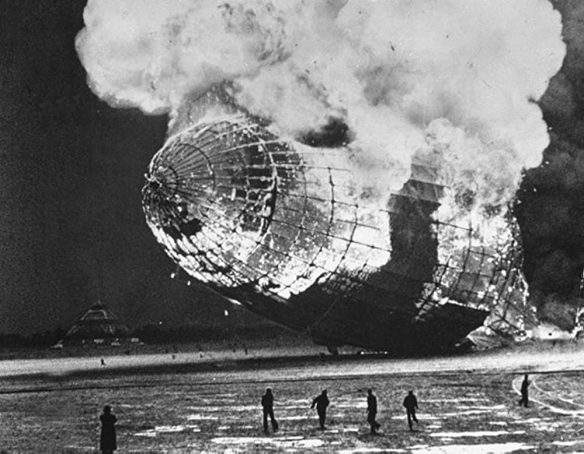
The national press has devoted considerable attention to the gerrymandering of congressional districts, but state legislative districts have received much less scrutiny, even though they are every bit as skewed, and in some states far more so. “Ohio is about the second most gerrymandered statehouse in the country,” Niven told me. “It doesn’t have a voter base to support a total abortion ban, yet that’s a likely outcome.” He concluded, “Ohio has become the Hindenburg of democracy.”

Hindenburg_disaster

David Pepper, an election-law professor, has a book, “Laboratories of Autocracy,” whose title offers a grim spin on a famous statement, attributed to the Supreme Court Justice Louis Brandeis, calling America’s state legislatures “laboratories of democracy”…. He is determined to get the Democratic political establishment to stop lavishing almost all its money and attention on U.S. House, Senate, and gubernatorial races … and to focus more energy on what he sees as a greater emergency: the collapse of representative democracy in one statehouse after another.

Unquote. The article discusses how inattention to local politics has allowed right-wing extremists to take control of state legislatures, assisted by the Supreme Court’s Citizens United decision, and how lower court decisions have been ignored: 

Swept out of power in Washington, the Republican Party’s smartest operatives decided to exploit the only opening they could find: the possibility of capturing state legislatures in the 2010 midterm elections. They knew that, in 2011, many congressional and local legislative districts would be redrawn based on data from the 2010 census—a process that occurs only once a decade. If Republicans reshaped enough districts, they could hugely advantage conservative candidates, even if many of the Party’s policies were unpopular.

In 2010, the Supreme Court issued its controversial Citizens United decision, which allowed dark money to flood American politics. Donors, many undisclosed, soon funneled thirty million dollars into the Republicans’ redistricting project, called REDMAP, and the result was an astonishing success: the Party picked up nearly seven hundred legislative seats, and won the power to redraw the maps for four times as many districts as the Democrats….

The Ohio statehouse has grown only more lopsided in the past decade. Currently, the Republican members have a 64–35 advantage in the House and a 25–8 advantage in the Senate. This veto-proof majority makes the Republican leaders of both chambers arguably the most powerful officeholders in the state….

The vast majority of Ohio residents clearly want legislative districts that are drawn more fairly. By 2015, the state’s gerrymandering problem had become so notorious that seventy-one per cent of Ohioans voted to pass an amendment to the state constitution demanding reforms. As a result, the Ohio constitution now requires that districts be shaped so that the makeup of the General Assembly is proportional to the political makeup of the state. In 2018, an even larger bipartisan majority—seventy-five per cent of Ohio voters—passed a similar resolution for the state’s congressional districts.

Though these reforms were democratically enacted, the voters’ will has thus far been ignored…. [Republicans] proposed districts [that] were nowhere near proportional to the state’s political makeup. The Democrats argued that the Republicans had flagrantly violated the reforms that had been written into the state constitution.

This past spring, an extraordinary series of legal fights were playing out. The Ohio Supreme Court struck down the map—and then struck down four more, after the Republican majority on the redistricting commission continued submitting maps that defied the spirit of the court’s orders…. The Republicans’ antics lasted so long that they basically ran out the clock. Election deadlines were looming, and the makeup of Ohio’s districts still hadn’t been settled. … A federal court [was asked] to intervene, on the ground that the delay was imperiling the fair administration of upcoming elections. The decision was made by a panel of three federal judges—two of whom had been appointed by T____. Over the strenuous objection of the third judge, the two T___ judges ruled in the group’s favor, allowing the 2022 elections to proceed with a map so rigged that Ohio’s top judicial body had rejected it as unconstitutional.

On Twitter, Bill Seitz, the majority leader of the Ohio House, jeered at his Democratic opponents: “Too bad so sad. We win again. The game is over and you lost.”

Ohio Democrats, including David Pepper, are outraged. “The most corrupt state in the country was told more than five times that it was violating the law, and then the federal court said it was O.K.,” he told me. “If you add up all the abnormalities, it’s a case study—we’re seeing the disintegration of the rule of law in Ohio. They intentionally created an illegal map, and are laughing about it.”

[A Democratic legislator] likens the Republicans’ stunning contempt for the Ohio Supreme Court to the January 6th insurrection: “People are saying, ‘Where is the accountability when you disregard the rule of law and attack democracy?’ Because that’s what’s happening in the statehouses, and Ohio is a perfect example.”

Unquote. Ohio isn’t the only state where this has happened. From The New York Times:

Since January, judges in Alabama, Georgia, Louisiana and Ohio have found that Republican legislators illegally drew those states’ congressional maps along racial or partisan lines, or that a trial very likely would conclude that they did. In years past, judges who have reached similar findings have ordered new maps, or had an expert draw them, to ensure that coming elections were fair.

But a shift in election law philosophy at the Supreme Court, combined with a new aggressiveness among Republicans who drew the maps, has upended that model for the elections in November. This time, all four states are using the rejected maps, and questions about their legality for future elections will be hashed out in court later.
MV5BZWE5MWU1OGItYzFjZC00OTRhLTljNDUtNjU1NDYxYjc5ZTg2L2ltYWdlXkEyXkFqcGdeQXVyMTIxMDUyOTI@._V1_FMjpg_UX1000_

Finally

With Vice President Kamala Harris casting the tie-breaking vote, Senate Democrats accomplished something important today, over the solid opposition of their Republican colleagues. It’s a big deal. The Democratic majority in the House of Representatives now needs to approve the bill. It’s hard to imagine that won’t happen.

First, however, it should be noted that news people can’t resist attaching a dollar amount to a bill like this. The Guardian, for example, has this headline:

Senate passes $739bn healthcare and climate bill after months of wrangling.

You have to read the article to figure out what the $739 billion refers to. Is it what the government will spend? Over what period of time? Or is it what the government will collect in new taxes? When will that happen? It’s a really dumb way to point out that it’s a big piece of legislation.

Much more helpfully, here’s how The Washington Post began its analysis of the bill:

Major changes to the Affordable Care Act. The nation’s biggest-ever climate bill. The largest tax hike on corporations in decades. And dozens of lesser-known provisions that will affect millions of Americans.

The legislation Democrats muscled through the Senate on Sunday would represent one of the most consequential pieces of economic policy in recent U.S. history.

The article includes the Congressional Budget Office’s most recent analysis of what the bill will do in coming years.

There will be new spending and tax breaks amounting to $385 billion on green energy and the climate crisis (including rebates for electric vehicles and other technology) and $100 billion for improved healthcare.

There will be increased taxes and other revenue totaling $470 billion from a new 15% minimum tax on corporations, a tax on companies buying their own stock, and a strengthened IRS, plus $320 billion in mostly drug-related healthcare savings (including allowing Medicare to negotiate drug prices).

$485 billion in spending and tax breaks and $790 billion in revenue and savings (roughly the Guardian’s number) equates to a reduction of $305 billion in the federal deficit. Lowering the federal deficit and lower prices on things like prescription drugs and green technology justified calling it the Inflation Reduction Act, although “Deficit and Inflation Reduction” would have been more accurate.

For now, a few comments. From Paul Krugman:

This was a victory for urgently needed policy. Democrats came into power with a three-part agenda: climate, infrastructure, and social programs [they delivered on infrastructure with a bit of Republican help last year].

They just delivered on the first, which was the most crucial — and no, it wasn’t far less than they sought. It accomplished most of the original objective [it’s estimated that this bill delivers about 80% of the cumulative emissions reductions over 10 years that that Biden’s original  Build Back Better plan would have].

What got lost were the extensive social programs. That’s a tragedy; we could have virtually eliminated child poverty, among other things [except Sen. Joe Manchin was opposed to doing that]. Even there, this bill expanded the enhanced subsidies that have helped bring the percentage of the uninsured to a record low.

But overall, it’s a remarkable record for a party with 50 senators and a relentlessly obstructionist opposition [and two obstructive Democrats, Manchin and Sinema].

From a Washington Post reporter:

Sen. Brian Schatz of Hawaii is visibly emotional and wiping away tears after final passage of the Inflation Reduction Act. “This is a planetary emergency, and this is the first time the federal government has taken action that is worthy of the moment,” he tells reporters. “Now I can look my kids in the eye.”

And just to keep in mind who Republican politicians represent, this is from Rolling Stone:

“Republicans have just gone on the record in favor of expensive insulin,” Sen. Ron Wyden said after Republicans voted to remove an insulin price cap from the Inflation Reduction Act. “After years of tough talk about taking on insulin makers, Republicans have once against wilted in the face of heat from Big Pharma.”

Democrats needed 60 votes, according to Senate math, in order to keep the private insurance cap in the Inflation Reduction Act. While seven Republicans voted to retain the cap, that was still three senators short of the 60 needed.

Around 37.3 million Americans, 11.3 percent of the population, have diabetes. … Insulin is a “catastrophic” expense for 14 percent of the seven million Americans who need it daily, according to a Yale University study. That means those 14 percent are spending at least 40 percent of their monthly income (after paying for food and housing) on insulin.

The goods news is that the bill — at least for the moment — maintained a $35 per month cap on insulin costs for people on Medicare.

Need I mention there’s an election in three months? Make sure you’re registered and vote for Democrats up and down the ballot!

A Tax Break That Will Never Die: Part 2 (Humorous Edition)

A few minutes ago, Senate Majority Leader Charles Schumer began the process of passing the Democrats’ Inflation Reduction Act. Among other things, it will make the tax system fairer and give more Americans access to healthcare. It also includes provisions dealing with the climate crisis that are big enough to please Al Gore:

The Inflation Reduction Act has the potential to be a historic turning point. It represents the single largest investment in climate solutions & environmental justice in US history. Decades of tireless work by climate advocates across the country led to this moment.

No deal is perfect and we need many more actions to solve the climate crisis. Yet, this bill is a long overdue and necessary step to ensure the US takes decisive action on the climate crisis that helps our economy and provides leadership for the world by example.

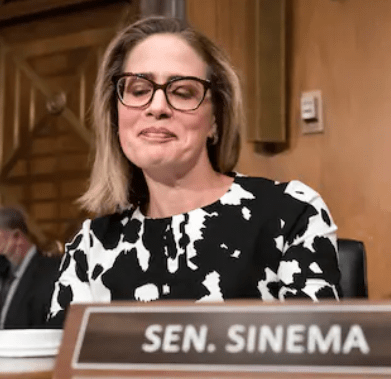
But Al Gore isn’t very funny. Alexandra Petri, who writes for The Washington Post, is. Yesterday, she channeled Krysten Sinema, the “Democratic” senator from Arizona with a unique approach to legislation:

Just to be clear: I do want to reform the carried interest tax loophole! I am so excited to work on it. Sounds bad! Seems bad! It is a no-good, rotten thing, and I don’t want it to keep existing. I look forward to legislating it away. That being said, if you remove it right now, in this Inflation Reduction Act, I will vote against it, and I will torpedo the whole bill.

Why? Whimsy! I just wanted to leave my own special Kyrsten Sinema touch on the bill!

I am a manic pixie dream senator who wants to make this bill slow down and embrace life! Everyone else is sitting there in their penguin outfits in neutral tones! Their idea of a fun, whimsical thing to do is a vote-a-rama! At most, they will go sit on a yacht for a brief time. Not me; I’m different! And I’m here to make sure this bill is different, too.

Inflation Reduction Act, why are you so staid and straightforward? Look at you, sitting there just closing tax loopholes for hedge funds! And you’ve got that across-the-board 15 percent tax on corporations. Don’t you know that corporations can sometimes be friends? Maybe not all corporations deserve an across-the-board tax. Some corporations are really chill, actually, and other corporations are donors and sometimes a private equity firm has a whole other side you might not have expected, if you just give it a chance!

Maybe, you’re so busy closing loopholes that you forgot how to be open. Maybe you need to open up, actually, those loopholes, please. That’s why I’m here: Someone’s got to be just that little bit random, conveniently in a way that consistently involves decreasing the amount of money corporations and the absurdly wealthy pay in taxes.

Sometimes you see a bill and you see how hard that bill is working to do good. That poor bill looks exhausted, doing so much! Reducing carbon emissions and decreasing the deficit and lowering ACA premiums and — and — and! And you’re like, “Bill! Relax! You don’t need to do it all! What you need to do is to stop and smell the roses. Or the rosés, like at the private equity-adjacent winery where I interned in 2020 — while serving as senator! Unrelatedly, do we really need to close the carried-interest tax loophole now? Maybe, actually, we need to live a little.”

I can be the friend this bill needs to urge it to run through a sprinkler at dusk and spin around on a beach listening to the Shins. It’ll be like Amelie, but if instead of freeing garden gnomes from people’s yards, we liberated them from pesky taxes, and if instead of gnomes, those were the account books of private equity firms! You know what they say: Is it really quirky and spontaneous if it doesn’t coincidentally also happen to benefit corporations and hedge funds? Maybe, but we can’t take that chance!

Think about who stands to gain from this bill: Lots of people! People who want to have a nice habitable planet in the future! People who want to pay lower health-care premiums! People who want lower inflation! But now think about the people whom this bill will make sad: hedge funders!

Doesn’t that make you sad? Can’t we do something nice for the hedge funders, too, just — ’cause? We’d better, though, or I won’t support it.

Come, bill! Come put your toes in the grass and run through the rain with me, and also, just for fun, let’s make certain that the new 15 percent minimum tax on corporations doesn’t affect that particular corporation! Or that one! Or that one! I’m pointing randomly, I swear! Just from whimsy, again, my driving feature! But I am finding exemptions — a lot of them!

I don’t know what life is all about, but it’s too short not to do what you can to prevent wealthy corporations and private equity firms from paying taxes. And then we’ll go dance in the moonlight and make a sound nobody has heard before.

Ready? I’ll start, by saying a sentence that has never been said: “I think this loophole that allows private equity firms to pay less than their fair share in taxes should be left open!” Hahaha, wow, I can’t believe I just said that! Maybe no one will ever say it again! Except me. Who knows? I might say it lots of times!

Untitled