People Who Live in Glass Houses

Having lived in suburbs most of my life, I know one reason people live in such places. To get away from other people.

It can be a stunningly beautiful day, all’s right with the neighborhood, but if you take a drive, you’ll rarely see another person who isn’t in a car. If you take a walk, you might hear a child’s voice here or there, or see someone walking a dog, or bump into a jogger or two, but you’ll usually be the only person around. It’s as if you’re visiting a Potemkin village set up to advertise the beauty of suburban living.

There is something strange about living so close to people you can’t see. Which has sometimes made me wonder what it would be like if the walls of our houses or apartments were made of glass. Would we still ignore our neighbors? Would we lead better lives if we were always on display? What if the lights were always on? Maybe God was invented because our ancestors didn’t live in glass houses with 24-hour lighting.

Coincidentally, I recently got around to reading Lolita. Humbert Humbert had something to hide, so it’s understandable that his thoughts ran in this direction too:

“… all along our route countless motor courts proclaimed their vacancy in neon lights, ready to accommodate salesmen, escaped convicts, impotents, family groups, as well as the most corrupt and vigorous couples. Ah, gentle drivers, driving through summer’s black nights, what frolics, what twists of lust, you might see from your impeccable highways if Kumfy Kabins were suddenly drained of their pigments and became as transparent as boxes of glass!”

And later:

“I often felt that we lived in a lighted house of glass, and that any moment some thin-lipped parchment face would peer through a carelessly unshaded window and obtain a free glimpse of things that the most jaded voyeur would have paid a small fortune to watch.”

As the fortune cookie says, people who live in glass houses should put up lots of curtains. 
Good News Is Breaking Out All Over

It often seems like the world is going to hell. But clearly there is good news too, like what might be happening with the chemical weapons in Syria.

Here’s another piece of good news: medical researchers are getting closer to understanding the mutations that result in people getting cancer. As the article below says, we already know that smoking causes mutations leading to lung cancer and ultraviolet light causes mutations that cause skin cancer. Now scientists are beginning to figure out which mutations lead to other kinds of cancer: 

Out of the 30 cancer types, 25 had signatures [or patterns] arising from age-related mutational processes. Another signature, caused by defects in repairing DNA due to mutations in the breast cancer susceptibility genes BRCA1 and 2, was found in breast, ovarian and pancreatic cancers.

One of the interesting findings mentioned in the article is that a certain family of enzymes is linked to more than half of the cancer types studied:

These enzymes, known as APOBECs, can be activated in response to viral infections. It may be that the resulting signatures [that cause cancer] are collateral damage on the human genome caused by the enzymes’ actions to protect cells from viruses.

When I was growing up, my mother wouldn’t say the word “cancer”. It was like “Voldemort”, a word that must not be spoken. As our knowledge grows, “cancer” should eventually become as rare as the world “polio” is today.

http://www.sanger.ac.uk/about/press/2013/130814.html

In completely unrelated and less important news, the Japanese are now accepting the fact that a foreigner will break the single season home record of their great national hero, Sadaharu Oh. During his career in Japanese baseball, Oh hit 863 home runs, 149 more than Babe Ruth hit in America. As the New York Times explains:

A few foreign players in Japan’s top league have threatened to surpass Oh’s hallowed mark of home runs in a single season, 55. And each time, opposing pitchers refused to throw pitches anywhere near the strike zone in a blatant effort to protect Oh’s record.

Yesterday, Wladimir Balentien, a native of Curacao, playing for the Tokyo Yakult Swallows, tied Oh’s record of 55 home runs in a season. He has 21 games left and opposing pitchers are throwing pitches he can hit.

So the people of Japan have taken another step toward welcoming the participation of foreigners in Japanese society. Good news is breaking out all over.

http://www.nytimes.com/2013/09/06/sports/baseball/deference-to-a-revered-record-by-sadaharu-oh-in-japan-is-going-going.html

Liking What Dorothy Parker Said (or Didn’t)

Amazon bought a site called Goodreads earlier this year. It’s a social network thing for readers that supposedly has 20 million members. I’m not one of them, but I noticed today that they have a selection of quotes from famous authors. And since it’s the internet, they allow you to click a button and say you like a particular quote.

Goodreads features more than 200 quotes from Dorothy Parker, the extremely witty woman who said, among other things:

“If you want to know what God thinks of money, just look at the people he gave it to.”

“By the time you swear you’re his,
Shivering and sighing.
And he vows his passion is,
Infinite, undying.
Lady make note of this —
One of you is lying.”

“If you wear a short enough skirt, the party will come to you.” 

“Women and elephants never forget.”

“I like to have a martini,
Two at the very most.
After three I’m under the table,
after four I’m under my host.”

“I hate writing, I love having written.”

“You can lead a horticulture, but you can’t make her think.” 

“Oh, life is a glorious cycle of song,
a medley of extemporanea,
And love is a thing that can never go wrong,
and I am Marie of Romania.”

Yet the most popular Dorothy Parker quote on Goodreads, by a very, very large margin, is this lame observation:

“The cure for boredom is curiosity.
There is no cure for curiosity.”

Which isn’t even true: 

1185826_624857754206173_601665606_n

Postscript:  According to a comment from Mr. T. Pedersen, the most-liked quote isn’t something Dorothy Parker actually wrote. Which, assuming he’s right, is to her credit.

http://www.goodreads.com/author/quotes/24956.Dorothy_Parker

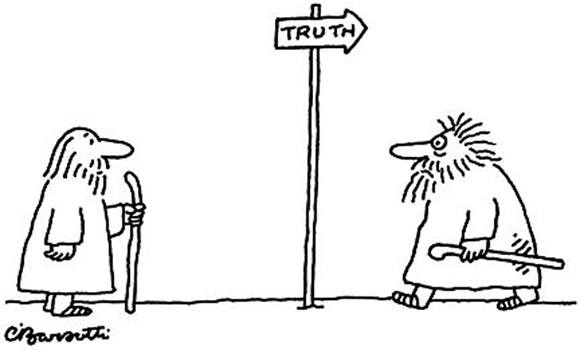
https://www.facebook.com/NewYorkerCartoons

The Weight of the World

There is a funny scene in Annie Hall in which the young Alvy and his mother visit the doctor. Alvy is depressed because he’s learned that the universe is expanding. Eventually, it will all come apart. So what’s the point of doing homework?

We rational adults understand that it’s silly to worry about what’s going to happen to the universe billions of years from now. Nevertheless, like Alvy, I’m troubled by a situation that is way too big to worry about.

The good news is that I’m nowhere near as troubled as Woody Allen’s alter ego (or Woody Allen himself). If I had homework, I’d do it all, pointless or not. But I figured I’d share my concern here, since confession can be good for the psyche.

It seems to me that the world is too big and complex to function. By “the world”, I don’t mean the natural world. Remove human beings from the world and it would chug along just fine. I mean the human world, the world that we’ve created, the world of fiber optic cables, water treatment plants, international air travel, electrical grids, server farms, Amazon fulfillment centers, health insurance for dogs and the global market in fruits and vegetables.

I walk into my local supermarket and am confronted by an array of apples, oranges, broccoli, lettuce, some of which was transported to our town from thousands of miles away. Consider the number of grocery stores in America and the rest of the world, all of them selling fruits and vegetables. Where does all this stuff come from? How can this gigantic cornucopia be produced and distributed so that it can make its way to our shopping carts in an edible condition? Can this system really work? I don’t think so.

The whole enterprise, i.e. human civilization, seems like a giant house of cards.

I mean, have you ever considered the number of pipes running under Manhattan? The amount of fresh water that’s consumed every day by a billion Chinese? The number of ingredients that go into a package of frozen Swedish meatballs?

I have – and it’s a lot.

Where the Girls and Boys Are

The Washington Post has an article called “40 Maps That Explain the World”. They don’t explain the whole world, but this one is interesting:

population-map

There are about 7 billion people in the world, and more than 3 billion of them live in 5 countries in that circle: China, India, Indonesia, Bangladesh and Japan. If you throw in the other countries in the circle, like the Philippines and Vietnam, you get another 600 million people. That means 51% of the world’s population lives in that relatively small part of the world.

The map above is number 24 in the list, which is here:

http://www.washingtonpost.com/blogs/worldviews/wp/2013/08/12/40-maps-that-explain-the-world/