A Few More Words on This Crisis

From E. J. Dionne, Jr. of The Washington Post:

At least the Confederate secessionists acknowledged that Abraham Lincoln won the 1860 election.

The 18 Republican state attorneys general and 126 Republican House members who asked the Supreme Court to throw out the results of the 2020 election may thus be more impudent than the Civil War seditionists in whose steps they followed.

Here is a translation of what they were telling a majority of the nation’s electorate and voters in states representing 62 of President-elect Joe Biden’s 306 electoral votes:

“We don’t like the president and vice president you chose so we simply won’t accept the result of a free election. We’ll deploy lies and phony statistics to justify imposing our will on the rest of the country. The heck with democracy. But we’ll continue to enjoy the Social Security checks, the farm subsidies and all the other money that states that voted for Biden send our way.”

Their lawsuit, flatly rejected by the court on Friday night, was originally brought by Texas Attorney General Ken Paxton (who happens to be under federal investigation for bribery and abuse of office and has been under indictment for felony securities fraud charges). It was joined by 17 of his Republican colleagues and backed by almost two-thirds of House Republicans. Its claims have been described as (you can look it up) clownish, comical, farcical, frivolous, ludicrous, insane and dumb. The court used none of those words, of course, but its terse dismissal said enough.

The lawsuit was all these things, but it was also profoundly dangerous, hypocritical and revealing. We should continue to take it very seriously as a sign that not only President Txxxx but also a majority of his party would rather tear our republic apart than accept electoral defeat. We went through this once before, and it led to a civil war.

Yes, that’s the moment we should be thinking about. . . .

No matter how they dress things up, the Nullification wing of the Republican Party is obsessed with the fact that Txxxx lost key states in part because a lot of Black voters in big cities rejected him. Paxton’s initial court filing mentioned Wayne County, home of Detroit, 11 times,; Milwaukee seven; and Philadelphia six. “In Wayne County, Mr. Biden’s margin (322,925 votes) significantly exceeds his statewide lead,” the brief declared, almost as if this in itself were evidence of a crime.

The lawsuit was plain about its partisan purposes, complaining of how elections were run in “areas administered by local government under Democrat control and with populations with higher ratios of Democrat voters than other areas of Defendant States.” (Paxton lacked the grace to refer to the Democratic Party by its proper name.)

Notice something else: Those who claim to believe in “states’ rights” and “local decision-making” once again showed that their rhetoric is a bunch of hooey. This was true of the Confederates, too. Not only was slavery, not states’ rights, the cause of the Civil War, but slavery’s advocates embraced the Dred Scott decision, which, as Lincoln had argued, laid out the path to nationalizing slavery. Power and results were all that mattered.

So it is with the GOP’s Minority Rule Caucus. They believe Republican jurisdictions should be free to suppress votes. But areas under “Democrat control” must be blocked from making voting a little bit easier. . . .

So, despite the Supreme Court’s ruling, we should remain alarmed that so many Republican politicians blithely walked away from democracy and sought to undermine the very institutions they took an oath to defend.

Unquote.

Even though the Republicans won’t be able to undo the election, the majority of Americans are faced with a malignant minority that only pays lip service to the Constitution. It’s impossible to believe they will soon change their ways and behave responsibly again.
One Senator Sees the Extreme Danger

You could argue that the Southern states seceding from the union was the most serious attack on American democracy. But the slave states weren’t merely trying to change the way we govern ourselves. They were attacking the United States itself, trying to break it apart. Sen. Chris Murphy of Connecticut is correct when he says: “Right now, the most serious attempt to overthrow our democracy in the history of our of country is underway. Those who are pushing to make Dxxxx Txxxx President, no matter the outcome of the election, are engaged in a treachery against their nation.”

He spoke for 14 minutes on Friday and then later to Greg Sargent of The Washington Post.

Greg Sargent asks a good question:

How many other Democrats have you heard making this case in such stark terms?:

Yes, you regularly hear Democrats claiming that it’s time that Republicans accept that Txxxx lost. Or you hear them slamming Txxxx’s lawsuits as frivolous. Or you hear them suggesting that Republicans are spineless for not standing up to Txxxx, as if they harbor deeply held principles they’d adhere to if only Txxxx’s rage-tweets weren’t so frightening.

But you don’t often hear them saying what Murphy suggested here: that the Republican Party has morphed into a malignant and profoundly dangerous threat to the country and the long-term prospects for our democratic stability.

I followed up with Murphy to ask what prompted this speech.

“I have a very clear sense of the danger this all poses to the republic,” Murphy told me. “If this becomes at all normalized more broadly than it already is, they will steal an election two years from now or four years from now.”

“And then I’m not sure how we keep our democracy together,” Murphy continued.

. . . President-elect Joe Biden’s team — which has adopted the posture that much of what Republicans are doing is just a stunt — wants to reassure the country that the transition is proceeding smoothly, and might not want too much focus on this disruption. But that risks misleading the public about the tenuousness of the moment. . . .

. . . If large swaths of the Republican Party are morphing into a much more cancerous anti-democratic force, one that in some basic sense just isn’t functioning as an actor in a democracy, how should Democrats adapt, and communicate to the public about this? How can they compete in the information wars, given the massive media machine the GOP has at its disposal?

On another front, a much more robust agenda to broaden prosperity and combat inequality and flat wages might defuse some populist anger out there. But given that the prospects for a modest economic rescue package are dim — and given the likelihood of GOP Senate control — that seems like an uphill climb.

Murphy suggested that the starting point might be to “diagnose the problem,” which would require a real reorientation in posture.

“For much of the last four years, we thought the problem was that Republicans knew what the right thing was, but they just didn’t do it because Txxxx was so scary,” Murphy told me. “I think this moment is showing us that there are a whole lot of Republicans who believe this nonsense.”

“This isn’t just a party that’s trying to stay on the good side of an enemy of democracy,” Murphy continued. “This is a party that has a whole bunch of enemies of democracy inside its top ranks. That’s bone-chilling.”

“An Empire on the Edge: How Britain Came to Fight America” by Nick Bunker

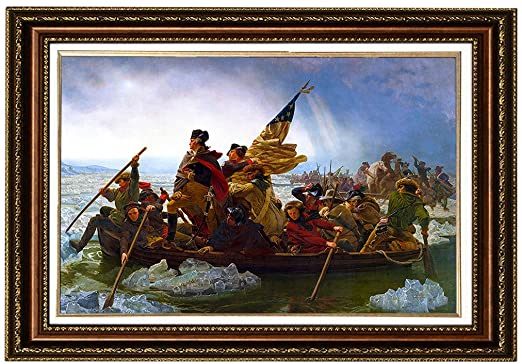
Like most Americans, my knowledge of the Revolutionary War is spotty. The Stamp Act, the Boston Tea Party, one if by land, two if by sea. The minutemen. Lexington and Concord. The “shot heard round the world”. Bunker Hill. The Declaration of Independence, Valley Forge, Washington crossing the Delaware. Later we got the Constitution.

71saQEWKtcL._AC_SX522_

I didn’t realize the Revolutionary War lasted eight years. The Civil War only lasted four, but it’s sucked up most of the historical oxygen, along with World War 2. I did know that Washington was going to New Jersey when he crossed the Delaware River and that the Continental Army had terrible winters at Jockey Hollow, south of Morristown, even a winter that was worse than Valley Forge’s.

Reading An Empire on the Edge was helpful, therefore. The book covers events leading up to the war in great detail, sometimes in more detail than I needed. The author begins with the state of the American colonies after the French and Indian War (known elsewhere as the Seven Years War) and concludes with the British government having finally decided it’s necessary to use force to put down the rebellion in Massachusetts in 1775.

What really surprised me was the highly complicated, years-long series of events in both America and Great Britain that preceded the exchange of gunfire at Lexington and Concord in 1775. If there is one event that marked the beginning of the conflict, it was the Stamp Act, parliament’s attempt to tax the colonies by requiring printed materials to be produced on embossed paper made in London. That means there were ten years of escalating tensions, with the Americans resisting parliament’s efforts to make laws for the colonies and the British government convinced that parliament had the authority to do so. There were acts of violence on both sides, but mainly there was a lot of discussion: speeches, newspaper articles, pamphlets, meetings and personal diplomacy. All that talk eventually led parliament to declare Massachusetts in open rebellion and initiate a military response.

The author emphasizes throughout that, even so, the British government paid as little attention as possible to what was happening in the colonies. The government’s representatives in the colonies did a poor job informing London, while London was usually much more interested in events far from America. He sees the basic problem, however, as the inability of British aristocrats to understand the American point of view:

The crisis that led to the revolution in America had many causes, and ranking high among them was the narrowness of vision that afflicted [British prime minister Lord North] and his colleagues. . . . They found the rebels in America unthinkable. Nothing in rural Oxfordshire could prepare Lord North for an encounter, at a distance of three thousand miles, with men like . . . Ethan Allen of Vermont. For radicals like . . . Allen, the tenant was the equal of his landlord or even his moral superior; they would never pay a tithe to please a vicar or doff their hat in the street as he walked by . . . 

Perhaps the deepest divide of all was the one that separated Lord North from John Hancock. In the eyes of the king and his ministers, a Bostonian so wealthy had a duty to defend the status quo. . . .At best the man was deeply ungrateful, while at worse he was a traitor. . . 

A man with origins like those of Frederick North could never understand an enemy of Hancock’s kind. Nor could he be creative in response to the challenge that the colonies threw down. The very qualities George III liked best about him — his devotion to his church, to his king and to the landed gentry — were precisely those that rendered North incapable of governing America. . . . [368-69].

The war had been long in the making, the product of an empire and a system deeply flawed, the work of ignorance and prejudices and of men well-meaning but the prisoners of ideas that were obsolete and empty. “You cannot force a form of government upon a people”, the Duke of Richmond had said in the House of Lords . . . but although the radical duke would be proved right, it would take long years of fighting before the nation could admit that this was so [365]. 

It was never going to be as easy for Great Britain to rule over its American colonies the way it did over a country like India. The Americans believed they should be accorded the same rights as proper Englishmen. However, I came away from An Empire on the Edge feeling some sympathy for the British. I’m an American, but the Americans of the 1770s seem to have been a cantankerous lot, too ready to see looming tyranny.

Not much has changed in 250 years. 

“The Drunken Silenus: On Gods, Goats, and the Cracks in Reality” by Morgan Meis

This is a strange little book. It begins with the author explaining that he was living in Antwerp, in Belgium, because his wife was working on a project there. He had nothing in particular to do, but after realizing that the 17th century, Flemish painter Peter Paul Rubens had once lived in Antwerp, he decided to write a book about Rubens. It’s not a biography of Rubens though. It’s a series of brief meditations on the art of painting, ancient history, Greek mythology, Greek tragedy, hundreds of years of European history, especially Europe’s wars, and Rubens’s family, in particular the affair that Rubens’s father Jan had with Anne of Saxony, who was William of Orange’s wife, and how William of Orange and Rubens’s mother Maria reacted to the affair. There’s a lot about Friedrich Nietzsche, too. And other things.

The book’s central thread goes something like this. Silenus was a minor god in Greek mythology with a gift for prophecy. He was the very wise tutor and companion of Dionysus, the much more important god of the grape-harvest, wine, fertility, vegetation, insanity, ritual madness, religious ecstasy, festivity and theater. Silenus is best-known for something he once told King Midas (who was apparently a real person, but couldn’t turn anything into gold). Midas asked Silenus what is the most desirable thing for a human being. Silenus told him the best thing is not to have been born.  But if you have been born, the best thing is to die quickly.

Peter Paul Rubens’s father Jan was the legal advisor to Anne of Saxony. They had an affair, the affair was discovered and Anne’s husband William threw Jan in jail. Jan eventually got out, was forgiven by his wife Marie, but died a broken man. Their son Peter Paul grew up to become the most influential artist of the “Flemish Baroque” tradition. 

Around 1616, Rubens painted “The Drunken Silenus”. It shows Silenus stumbling along, surrounded by some of Dionysus’s retinue, which included nymphs and satyrs.

27mythol

A couple years later, Rubens painted “Two Satyrs”, two more of Dionysus’s pals.

Peter_Paul_Rubens_-_Two_Satyrs_-_WGA20303

A lot of history went by. Millions died during the Thirty Years War. Hapsburgs and Bourbons went at it. The nations of Europe slowly assumed their current positions.

Then, in 1872, the German philosopher Friedrich Nietzsche published The Birth of Tragedy from the Spirit of Music. Wikipedia says:

Nietzsche found in classical Athenian tragedy an art form that transcended the pessimism and nihilism of a fundamentally meaningless world. The Greek spectators, by looking into the abyss of human suffering and affirming it, passionately and joyously affirmed the meaning of their own existence. . . .

. . . Nietzsche discusses the history of the tragic form and introduces an intellectual dichotomy between the Dionysian and the Apollonian (very loosely: reality as disordered  . . . versus reality as ordered). Nietzsche claims life always involves a struggle between these two elements, each battling for control over the existence of humanity.

Which brings us back to Silenus and Dionysus, the nymphs and satyrs, especially the satyrs. And goats. The author of The Drunken Silenus thinks Nietzsche valued the wild and crazy Dionysian approach to life more than the calm and collected Apollonian. I think the key chapter of The Drunken Silenus is “Is God a goat? What possibly could that possibly mean?” 

The way Nietzsche tells it, when Silenus finally reveals to Midas the greatest thing for man, that it is best for man never to have been born and second best for a man to die quickly, Silenus lets out a shrill laugh. Silenus laughs because in telling King Midas the best thing, he actually tells him the worst thing . . . 

Nietzsche thinks the ancient Greeks — the Greeks of the satyr plays and the songs in the forest, the Greeks who came before the classical period of Plato and the brilliant days of Greek rationalism — those Greeks were bold enough to make a health of their pessimism. . . .

The olden Greeks, the ancient Greeks, thinks Nietzsche, understood life under the principle of the goat, the young goat kicking and bucking in the woods. . . Even to ask the question of what is good or bad for a man is to lose touch with the primary intuition that God is a goat. That’s to say, God is not transcendent, imperturbable, untouchable, unknowable. God is none of those things. God, if God is the God of the world, has to have the characteristics of the goat, the randiness and unpredictability, even the stupidity of the goat. . . 

And so, the question of good and bad for man is canceled before it can be asked. It is preempted. The satyr would never think to ask that question. . . . Goats don’t ask questions like “what is the best thing for goats?” Goats just go out and express goatlieness [35-38].

Getting back to Rubens, I suppose Rubens’s father and Anne of Saxony (who was also imprisoned by her husband) were the Dionysians. Rubens’s forgiving mother Marie was the Apollonian. And Rubens himself, the great artist, was a proto-Nietzsche:

When Rubens took to painting Silenus he wasn’t grabbing randomly at the bits of ancient mythology floating around in the intellectual breeze. Rubens had a whole program of satyrs and Dionysus and Silenus. . . Rubens was being very Nietzschean here, if we can be anachronistic — literally anachronistic, since it was . . . Rubens who came first and Rubens who first painted Silenus as a central figure within this story of Dionysus.

So that’s The Drunken Silenus. You might find it interesting, but I should mention that, even though it’s a short book, it’s repetitious. The author likes to repeat himself, often in the same paragraph. It also gets tedious near the end, as he starts getting more abstract and paradoxical, suggesting that life is death, and reality is unreal, that kind of thing (I’m not quoting here). It’s the kind of book that’s hard to put down until it’s easy.

Bye Bye, Bozo

From The Washington Post:

The Biden campaign has said that should [you know who] refuse to leave on Jan. 20, “the United States government is perfectly capable of escorting trespassers out of the White House” . . . 

But weren’t the Founders obsessed with the encroaching nature of tyranny [e.g. presidents who won’t go away]? Didn’t they worry constantly about a president having too much power?

Most of them did, yes, though not all. During the Constitutional Convention in 1787, Alexander Hamilton floated the idea of presidents serving for life, but when put to a vote, the proposal failed 4-6.

The power that scared many founders the most was that of commander-in-chief.

Though not necessarily tied to an election loss, ”there was a lot of discussion of the possibility that a president with control of the Army might refuse to relinquish power,” said Michael McConnell, a constitutional law professor at Stanford . . .

At the Virginia ratifying convention, Patrick Henry said, “If your American chief be a man of ambition and abilities, how easy is it for him to render himself absolute! The army is in his hands, and if he be a man of address, it will be attached to him; and it will be the subject of long meditation with him to seize the first auspicious moment to accomplish his design.”

Gouverneur Morris, who wrote the preamble to the Constitution, warned that if a president was limited to one term, he might “be unwilling to quit his exaltation … he will be in possession of the sword, a civil war will ensue, and the commander of the victorious army on which ever side, will be the despot of America.”

Perhaps most ominously, one prominent Pennsylvanian identifying himself only as “An Old Whig,” wrote about this in Anti-Federalist No. 70, and is worth quoting at length:

“Let us suppose this man to be a favorite with his army, and that they are unwilling to part with their beloved commander in chief … and we have only to suppose one thing more, that this man is without the virtue, the moderation and love of liberty which possessed the mind of our late general [Washington] – and this country will be involved at once in war and tyranny.

… We may also suppose, without trespassing upon the bounds of probability, that this man may not have the means of supporting, in private life, the dignity of his former station; that like Caesar, he may be at once ambitious and poor, and deeply involved in debt. Such a man would die a thousand deaths rather than sink from the heights of splendor and power, into obscurity and wretchedness.”

Some Founders who supported the Constitution still predicted that it wouldn’t stop a president from seizing power.

“The first man put at the helm will be a good one,” Benjamin Franklin said, referring to Washington. “Nobody knows what sort may come afterwards. The executive will be always increasing here, as elsewhere, till it ends in a monarchy.”

So why didn’t the founders plan for this particular scenario, of a president simply denying that he had lost an election? Because they couldn’t even fathom it, [according to Jeffrey Engel, the director of the Center for Presidential History at Southern Methodist University].

“They couldn’t fathom two things: a person who had become president who was so utterly lacking in classical virtue that they would deign or dare to put their own interests above the unity of the country. And the second thing is, I think they couldn’t fathom how any president who would so vividly display disdain for the unity of the country, and mock and undermine the legitimacy of American democracy, why that person [wouldn’t have] already been impeached and removed from office.”

Unquote.

But the Founders never imagined the Republican Party.

Anyway, it’s much more likely our president will have vacated the White House long before January 20th. He now spends most of his time watching TV, all alone, sulking. Next stop, Xanadu.

Kane_-_2