Whereof One Can Speak 🇺🇦

Nothing special, one post at a time since 2012

Something Very Smart About the Stupid Debt Ceiling

Is it mere coincidence that one of the most sensible newspaper columnists working today, Paul Waldman of The Washington Post, almost always expresses opinions I agree with? No, I think not!

Anyway, his column today is so sensible it should be memorized by everybody in Congress and the Biden administration. It deals with the debt ceiling, the idiotic requirement that Congress has to have a new vote whenever the federal government needs to borrow more money to pay for things Congress previously decided to do.

Congress has always acted when called upon to raise the debt limit. Since 1960, Congress has acted 78 separate times to permanently raise, temporarily extend, or revise the definition of the debt limit – 49 times under Republican presidents and 29 times under Democratic presidents [US Treasury].

Congress raised the debt limit three times the last time we had a Republican president (you remember him, the orange one). Now that we have a Democratic president, Republicans are threatening to vote against raising it. That would mean the US government would be unable to make payments it’s legally required to do — for the first time in American history. Nobody knows what would happen then. Almost everybody with a brain thinks it would be a crisis, possibly a disaster, and certainly not something it would be cool to try (unless maybe you think the 2008 financial crisis was worth repeating).

Okay, back to the insightful Paul Waldman:

Even as they try to force a debt ceiling crisis, Republicans insist that they’re the reasonable ones. They just want a fair resolution to this disagreement about whether we should create a needless economic cataclysm by throwing the U.S. government into default. Why won’t the White House negotiate with them?

The White House has flatly rejected the suggestion, saying it simply will not negotiate over whether to default on America’s debts, no ifs, ands or buts. But here’s another idea: If we’re going to have negotiations, let’s make them real. Instead of countering Republicans’ anti-government agenda with a demand to maintain the status quo, Democrats ought to up the ante and insist on their own pro-government agenda.

If you knew nothing about this subject, it might sound like the president is being recalcitrant and Republicans are being sensible. “Let’s sit down together,” says House Speaker Kevin McCarthy (R-Calif.). “Nobody should be taking the position that we should not negotiate,” says Rep. Brian Fitzpatrick (R-Pa.). Even Sen. Joe Manchin III (D-W.Va.) says Democrats “have to negotiate.”

But we’re thinking about “negotiations” all wrong.

The problem begins with the current stance of the two parties. The White House’s position is essentially to maintain the status quo: Congress has appropriated the funds already, and those bills should be paid, which means borrowing the money to cover them. We can argue about how much of the cumulative debt is the responsibility of each party (they’ve both contributed) or how hypocritical Republicans are for pretending to care about debt only when there’s a Democrat in the White House (very). But the administration insists there must be a debt limit increase with no change to current policy.

Republicans, on the other hand, are fantasizing about all the savage cuts they’d like to make to domestic spending, up to and including slashing Social Security and Medicare. So if a negotiation produces a compromise, it would mean more spending cuts than Democrats want but fewer than Republicans seek. Which would still be a victory for the [bad guys].

Instead, Democrats are perfectly free to say the following: With their demand for across-the-board domestic spending reductions, Republicans are in effect proposing cuts to education, health care, economic development, clean energy, infrastructure, enforcement of environmental laws and a great deal more. So here are some of our demands:

  • A significant tax increase on the wealthy
  • An increase in the minimum wage, including indexing it to inflation
  • A national paid family leave program
  • A program to extend the Affordable Care Act’s expansion of Medicaid to the states that have refused to accept it
  • Universal pre-K
  • A permanent expansion of the child tax credit

That could be just the start. Republicans want to negotiate? Then let’s negotiate! Democrats will be willing to take half a loaf on some of these items; for instance, they might be able to accept only a modest tax increase for the wealthy, or an increase of the minimum wage to only $11 an hour rather than $15. That seems reasonable, doesn’t it?

Think about it this way and it’s clear how odd it is that we’re even calling the GOP demand a negotiation. The choices are (1) give Republicans all of what they want, or (2) give Republicans only some of what they want, with the hope that if the outcome is No. 2, then they’ll be kind enough not to shove the U.S. economy off a cliff.

To be clear, the White House is right that there shouldn’t be any negotiations at all. You don’t negotiate with extortionists, and what Republicans are threatening is economic extortion. It shouldn’t be rewarded.

In fact, the White House ought to go further: The president should announce that in the White House’s view, the debt ceiling violates the 14th Amendment, and because it would be unconstitutional for the United States not to make good on its debts, the Treasury Department will ignore it and continue to pay the government’s bills. If Republicans want to file suit and demand that the Supreme Court allow them to destroy the country’s economy, they’re free to try.

But refraining from destroying the economy shouldn’t be considered a favor Republicans do for Democrats, such that the Democrats have to respond by granting Republicans concessions in return. If they want to have a real negotiation in which both sides get some of what they want, then fine.

That’s the only thing that should be treated as an actual negotiation. Otherwise, Biden should simply take care of the problem in the most expeditious way possible.
Being on the Lookout for Reporters Screwing Up

Highly-respected journalist James Fallows has a site called Breaking the News. In the interesting installment below, he discusses journalistic screwups and how to avoid being taken in by them:

We all make mistakes. People, organizations, countries. The best we can do is admit and face them. And hope that by learning from where we erred, we’ll avoid greater damage in the future.

Relentless and systematic self-critical learning is why commercial air travel has become so safe. (As described here, and recent posts about the JFK close call here and here.) Good military organizations conduct “lessons learned” exercises after victories or defeats. Good businesses and public agencies do the same after they succeed or fail.

We in the press are notably bad at formally examining our own errors. That is why “public editor” positions have been so important, and why it was such a step backward for the New York Times to abolish that role nearly six years ago….

Here’s an [example of a journalistic mistake]: the buildup to the “Red Wave” that never happened in the 2022 midterms.

Pundits and much of the mainstream press spent most of 2022 describing Joe Biden’s unpopularity and the Democrats’ impending midterm wipeout. As it happened, Biden and the party nationwide did remarkably well….

In its news coverage, not the opinion page, the New York Times had been among the most certain-sounding in preordaining the Democrats’ loss. [On] its front page just one day before the election, one lead-story had the sub-head “Party’s Outlook Bleak,” referring to Biden and the Democrats. It mentioned forecasts of “a devastating defeat” in the midterms. The other story’s sub-head was “G.O.P Shows Optimism as Democrats Brace for Losses.” The first paragraph of that story said voters “showed clear signs of preparing to reject Democratic control.” Again, these were news, not opinion, pieces.

Seven weeks later, the Times ran a front-page story on why so many people had called the election wrong—and how the Red Wave assumption, fed by GOP pollsters, hampered Democrats’ fund-raising in many close races. The only mention of the paper’s own months-long role in fostering this impression was a three-word aside, in the 13th paragraph of a thousand-word story. According to the story, the GOP-promoted Red Wave narrative …

…spilled over into coverage by mainstream news organizations, including The Times, that amplified the alarms being sounded about potential Democratic doom.

The three words, in case you missed them, were “including The Times.”

An NYT public editor like Margaret Sullivan or Daniel Okrent might have gone back to ask the reporters and editors what they should learn.

What are signs of lessons-unlearned that readers can look for, and that we reporters and editors should avoid?

An easy one is to spend less time, space, and effort on prediction of any sort, and more on explaining what is going on and why.

Here are a few more:

1) Not everything is a “partisan fight”.

[A NY Times story about the debt ceiling] illustrates the drawbacks of reflexively casting issues as political struggles, by describing a potential debt-ceiling crisis as a “partisan fight.”

In case you have forgotten, the “debt ceiling” is a serious problem but not a serious issue. In brief:

-The debt-ceiling is a problem, because failing to take the routine step of raising it has the potential to disrupt economies all around the world, starting with the U.S.

-It is not an issue, because there are zero legitimate arguments for what the Republican fringe is threatening now. (See Thomas Geoghegan’s recent article….

It’s like threatening to blow up refineries, if you don’t like an administration’s energy policy, or threatening to put anthrax into the water supply, if you don’t like their approach to public health. These moves would give you “leverage,” just like a threat not to raise the debt ceiling. But they’re thuggery rather than policy.

If you prefer a less violent analogy: since these payments are for spending and tax cuts that have already been enacted, this is like refusing to pay the restaurant check after you’ve finished dinner.

This is not a “partisan fight” or a “standoff.” Those terms might apply to differences on immigration policy or a nomination. This is a know-nothing threat to public welfare, by an extremist faction that has put one party in its thrall.

Reporters: don’t say “standoff” or “disagreement,” or present this as just another chapter of “Washington dysfunction.”

Readers: be wary when you see reporters using those terms.

2) Not everything is a “perceptions” narrative. 

[Note: I was going to avoid this silly non-scandal but Mr. Fallows is very good on the subject.]

Here are some more phrases that should make you wary as a reader. They are phrases like “a picture emerges” or “paints a picture.” These are clichés a reporter uses to state a conclusion while pretending not to do so. Others in the same category: “sure to raise questions”; “suggest a narrative”; “will be used by opponents”; and so on.

Consider again from the NYT, this new “inside” report on Joe Biden’s handling of classified documents.

It was a classic legal strategy by Mr. Biden and his top aides — cooperate fully with investigators in the hopes of giving them no reason to suspect ill intent. But it laid bare a common challenge for people working in the West Wing: The advice offered by a president’s lawyers often does not make for the best public relations strategy.

This might be a “classic legal strategy.” It might also be following the rules. The presentation reflects a choice about how to “frame” a story.

The mainstream press makes things an “issue,” by saying they are an issue. Or saying “raises questions” “suggests a narrative,” “left open to criticism,” “eroded their capacity,” and so on. This gives them the pose of being “objective”—we’re just reporters, But it is a choice.

My long-time friend Jonathan Alter [had] an op-ed column in the NYT arguing that the narrative about Biden’s handling of the few classified documents will be hugely destructive to him and the Democrats. Even though, as he says, the realities of his classified-documents case are in no way comparable to [the former president’s]. (More on the differences here.)

As a matter of prognostication, maybe Jon Alter is right. I hope he isn’t. As he notes, Biden in office has time and again beaten pundit expectations [and now it turns out Mike Pence had documents too].

But as a matter of journalistic practice, I think our colleagues need to recognize our enormous responsibility and “agency” about what becomes an issue or controversy. “Raises questions,” “suggests a narrative,” “creates obstacles”—these aren’t like tornados or wildfires, things that occur on their own and we just report on. They are judgments reporters and editors make, “frames” they choose to present. And can choose not to.

Which leads us to…

3) Not all “scandals” are created equal.

Here are things enormously hyped at the time, that look like misplaced investigative zeal in retrospect:

— (a) The Whitewater “scandal.” For chapter and verse on why this was so crazy, see the late Eric Boehlert, with a very fine-grained analysis back in 2007; plus Eric Alterman at the same time; plus Gene Lyons, who lives in Arkansas and wrote a book called Fools for Scandal a decade earlier.

I would be amazed if more than 1% of today’s Americans could explain what this “scandal” was about. I barely can myself. But as these authors point out, it led domino-style to a zealot special prosecutor (Kenneth Starr, himself later disgraced), and to Paula Jones, and to Monica Lewinsky, and to impeachment. It tied up governance for years.

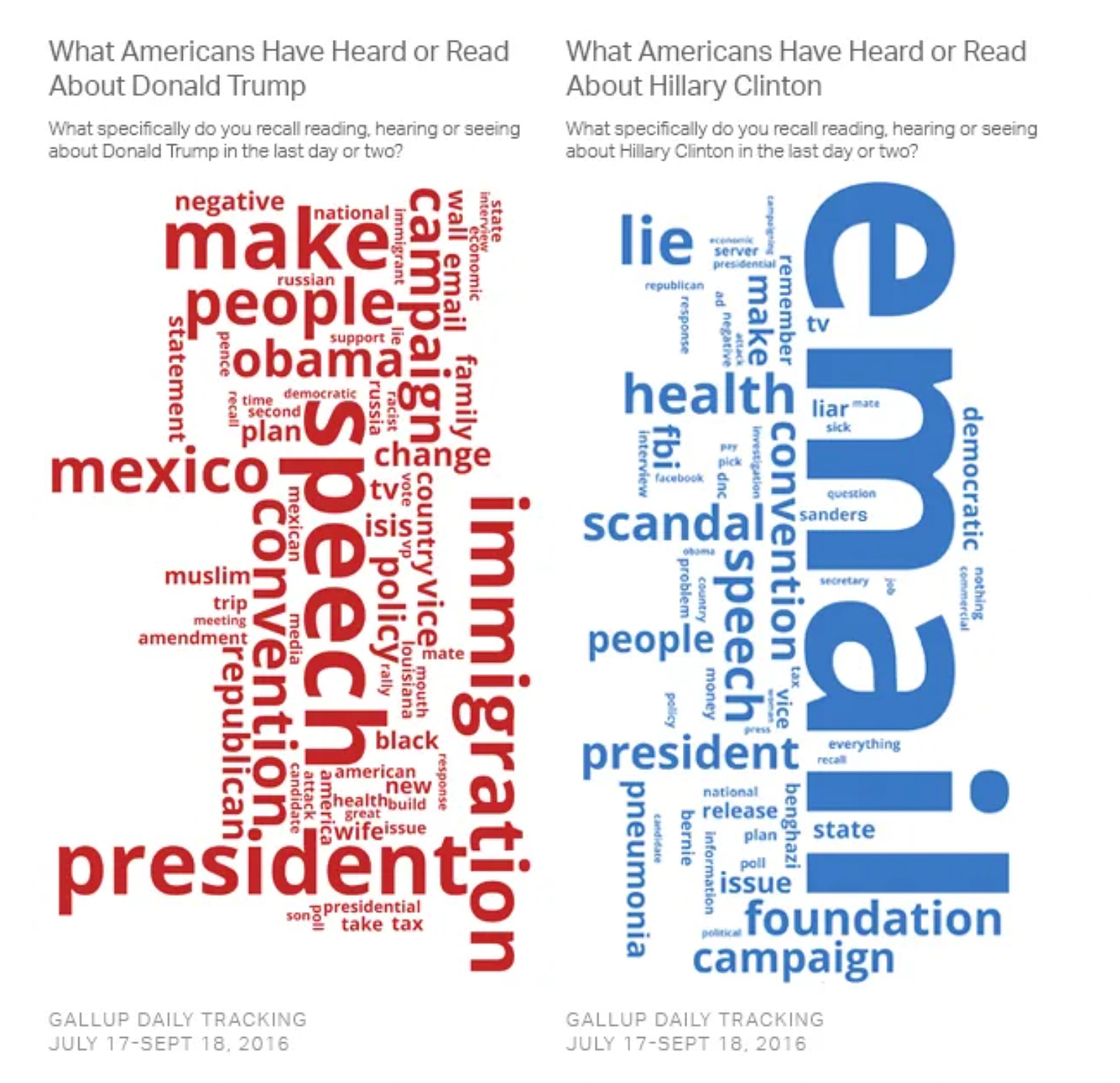
—(b) The but-her-emails “scandal” involving Hillary Clinton in 2016. A famous Gallup study showed that the voting public heard more about this than anything else.

I doubt it. Yet it was what our media leaders emphasized. I’m not aware that any of them has publicly reckoned with what they should have learned from their choices in those days.

But today’s news gives us a chance to learn, with:

—(c) The Biden classified-documents “scandal”.

What unites these three “scandals” is that there was something there. Possibly the young Bill and Hillary Clinton had something tricky in their home-state real estate deal. Probably Hillary Clinton did something with her emails that she shouldn’t have. Apparently Joe Biden should have been more careful about the thousands of documents that must be in his offices, libraries, etc.

But “something” does not mean “history-changing discovery.” In the 50 years since the original Watergate, the political press has palpably yearned for another “big one.” So every “scandal” or “contradiction” gets this could be the big one treatment. And this in turn flattens coverage of all “scandals” as equivalent. It’s a slurry of “they all do it,” “it’s always a mess,” “they’re all lying about everything” that makes it hard to tell big issues from little ones.

We see this with bracketing of the T____ and Biden “classified document” cases. They both have special prosecutors, so they can be presented as a pair.

Human intelligence involves the ability to see patterns. (Two cases involving classified documents!) But also the ability to see differences. (In one case, a president “played politics” by cooperating with the authorities. In another, by lying to and defying them.)

The similarities are superficial. The differences are profound.

From past errors of judgment, we in the media can learn which to emphasize.

They’re Trying To Make Us a Christian Nation — Part 2

Here’s the conclusion to Linda Greenhouse’s “Victimhood and Vengeance” for the NY Review of Books that I shared some of in this morning’s post. She offers a warning we should all heed.

David Sehat, in This Earthly Frame: The Making of American Secularism, points to one moment with profound implications for the place of religion in public life.

In early 1959, John F. Kennedy needed to allay Protestant suspicions about his Catholicism. He gave an interview to Look magazine. [Asked] what influence his religion would have on him if he were elected. Kennedy answered:

Whatever one’s religion in his private life may be, for the officeholder, nothing takes precedence over his oath to uphold the Constitution and all its parts—including the First Amendment and the strict separation of church and state.

[The author of the Look article] described Kennedy’s theme as “religion is personal, politics are public, and the twain need never meet and conflict”….

Religion is personal: that was not the Catholic view by any measure. Kennedy, evidently to his surprise, was widely denounced by the church hierarchy for his failure to recognize that an officeholder was “answerable to God for actions whether public or private,” as one Catholic publication put it. And it is not the view held by evangelicals today. The recourse that Kennedy sought in the privatization of religion not only no longer satisfies; it is seen as a provocation by those who insist that faith is meant to be lived out loud.

That private religion will not suffice was the argument behind the Supreme Court’s startling decision last summer in Kennedy v. Bremerton School District, which upheld the right of a football coach at a public high school to thank God from the fifty-yard line, in full view of the stands. It was also the explicit theme of Justice Samuel Alito’s speech to a conference in Rome…. Alito drew a distinction between mere “freedom of worship” and real “religious liberty.” Freedom of worship, he explained, means only

freedom to do these things that you like to do in the privacy of your home, or in your church or your synagogue or your mosque or your temple. But when you step outside into the public square, in the light of day, you had better behave yourself like a good secular citizen.

Evangelicals are no more satisfied than Alito with simply being good secular citizens. Sehat examines the Court’s valorization of “privacy” and offers a fresh analysis of the fallout from grounding the reproductive rights rulings, [in] Griswold v. Connecticut (1965) ]and Roe v. Wade (1973) on a right to privacy…. Sehat’s valuable insight is that these privacy decisions were about something deeper than birth control and abortion, or even about the ability of women to control their reproductive destiny. They amounted to “a repudiation of the social significance of religion in determining moral norms at the hands of the state.” In Roe, as evangelicals instinctively understood, “American secularism reached its apotheosis.” And so began secularism’s decline.

[These decisions helped create] a “secular order” that “decentered the dominant place of Christianity and relegated religion to the private realm along with other moral issues that an individual might confront.” Yet what it really meant to recognize and respect religion as a private realm was far from obvious. What had appeared as a settlement of a sort unraveled in a mind-bending series of changes in the meaning of privacy.

For liberals, privacy became double-edged as conservatives deployed it as a shield for discrimination. Didn’t the owner of a lunch counter have the right to refuse service to anyone he didn’t care to serve? The Civil Rights Act of 1964 was aimed in large measure at removing this supposed privacy shield from public accommodations….

And then the idea of privacy shifted yet again. Starting in the 1960s, conservatives seized on it to support private schools, as a refuge from desegregation or from secular society. For religious conservatives, the ultimate privacy claim became a claim of individual conscience, deployed to justify exemption from a legal or civic duty. Pluralism, once deemed a threat to Christian dominance, became useful when joined with privacy. “Now, pluralism could be used to demand the public recognition of private religious belief via the language of religious freedom,” Sehat smartly observes.

The constitutional scholar Reva Siegel argues that the notion of religious freedom has become … “institutionalized in such a way that a gesture to religious conscience granted nearly automatic exemption from law”…

The Christian” banners that members of the mob carried on January 6, 2021, is indelible, but also misleading.

It’s not that Christian nationalism presents no real threat to American democracy—it does. It’s not that such violence won’t recur—it might. [Focusing] on that shocking event diverts us from recognizing Christian nationalism in its less violent manifestations and calling it out when we see it: public funding of religious schools in the name of equality; social policy turned to serve Christian doctrine; nondiscrimination principles abandoned in deference to religious objectors, whether individual or institutional. These threats to long-held assumptions about how the country works are not theoretical. They are happening now, in partnership with the Supreme Court.

One example: In November 2022, celebrating his reelection, Oklahoma’s Republican governor, Kevin Stitt, offered up his state to Christianity. “Father, we just claim Oklahoma for you,” he intoned.

Every square inch, we claim it for you in the name of Jesus. Father, we can do nothing apart from you…. We just thank you, we claim Oklahoma for you, as the authority that I have as governor, and the spiritual authority and the physical authority that you give me. I claim Oklahoma for you, that we will be a light to our country and to the world right here in our state.

Why wasn’t that astonishing statement headline news from coast to coast? It was barely noticed….

In Christianity’s American Fate, David Hollinger observes:

One might suppose that we live in a world of either/or: either religious ideas are relevant to public policy and thus subject to critical discussion, or they are not relevant and thus not a topic for debate. But instead, we live in a world of both/and: religious ideas are both relevant to public policy and excluded from critical evaluation.

Each of these books offers a path to greater understanding of how a transformation occurring in full view over decades escaped the notice of many who watched in bafflement and horror as the events of January 6 unfolded. Rather than another January 6, the greater threat that Christian nationalism poses to American society may be, as these books warn us, its normalization.

They’re Trying to Make Us a Christian Nation — Part 1

In the 2020 election, 15% of white evangelical voters supported Joe Biden and 84%  supported the loser. To understand why, we need to understand white Christian nationalism.

Linda Greenhouse covered the Supreme Court for the New York Times for 30 years. She is the author of “Victimhood and Vengeance”, a long article for the New York Review of Books. You could say the first part of the article deals with victimhood. Later she deals with vengeance. I’ll share some of the vengeance part in my next post.

We tend to think of Christian nationalism, the political ideology based on the belief that the country’s authentic identity lies in its Christian roots and in the perpetuation of Christian privilege, as having burst upon the scene to accompany and facilitate the rise of [the former president]. But as Philip Gorski and Samuel Perry explain in The Flag and the Cross, Christian nationalism—white Christian nationalism, to be more accurate, since the ideology has no place for nonwhites—is “one of the oldest and most powerful currents in American politics.” They trace it back to the New England Puritans’ wars against the indigenous groups who dared to stand in the way of the claim by self-described chosen people to their new Promised Land, and follow it through the Lost Cause of a post–Civil War South destined to “rise again”—a Christological narrative of crucifixion and redemption “crucial to understanding contemporary claims of Christian victimhood and vengeance among white Christian nationalists.” The drive for western expansion, aptly known as Manifest Destiny, was widely understood as part of a divine plan handed to those who would “civilize” an entire continent.

According to a recent Pew Research poll, 60 percent of Americans believe the country was founded to be a Christian nation, and nearly half (including 81 percent of white evangelicals) think it should be one today. Whether that has changed over the course of US history is beside the point: what’s new is the contemporary political and social salience of Christian nationalism. As mainline Protestantism has faded, David Hollinger observes in Christianity’s American Fate,

Christianity has become an instrument for the most politically, culturally, and theologically reactionary Americans. White evangelical Protestants were an indispensable foundation for [the previous] presidency and have become the core of the Republican Party’s electoral strength. They are the most conspicuous advocates of “Christian nationalism.”…Most of Christianity’s symbolic capital has been seized by a segment of the population committed to ideas about the Bible, the family, and civics that most other Americans reject.

How did this happen? [The authors] agree that the answer lies in white evangelicals’ response to the profound cultural changes the country experienced during the second half of the twentieth century. That may sound obvious, but with varied approaches, these … books offer insights that are both illuminating and alarming.

The Flag and the Cross deals most directly with white Christian nationalism as a political force. The authors are sociologists…. Their conclusions are based largely on data from surveys they devised and conducted from 2019 through 2021. At the heart of their analysis is a “Christian nationalism scale” based on respondents’ level of agreement with seven statements that include “The success of the United States is part of God’s plan” and “The federal government should advocate Christian values.”

This scale is one axis on a series of charts showing how Christian nationalist beliefs correlate with attitudes about life in today’s United States. For example, Gorski and Perry asked people to estimate “how much discrimination” whites and Blacks would experience in the coming year. Black respondents, no matter where they fell on the Christian nationalism scale, offered similar predictions: low for whites and high for Blacks. For white respondents, the results were dramatically different: the higher on the Christian nationalist scale they were, the greater their expectation of antiwhite discrimination and a correspondingly lower expectation of discrimination against Blacks. “White Christian nationalists sincerely believe that whites and Christians are the most persecuted groups in America,” the authors conclude. This is a belief, they emphasize, with political consequences: “White Christian nationalism is a ‘deep story’ about America’s past and a vision of its future. It includes cherished assumptions about what America was and is, but also what it should be.”

The data also demonstrate the sometimes surprising results of the merging of religious and political identities. To take one example: nearly 80 percent of white evangelicals adhere to an “originalist” interpretation of the Constitution—the belief that the Constitution must be interpreted according to how its framers’ words would have been understood in their time, which David Cole in these pages recently called a “charade.”

Why nonlawyers should have any fixed notion of how to interpret the Constitution might seem puzzling, but the data explain it. Seventy percent of white evangelicals believe the Constitution to be divinely inspired; constitutional and biblical literalism thus go hand in hand. This finding helps illuminate why obeisance to “originalism” has been demanded of Republican judicial nominees ever since this distinctly unoriginal doctrine was invented during the Reagan era. The current Supreme Court majority used it (inconsistently) to justify its reasoning in last year’s abortion and Second Amendment decisions.

Gorski and Perry offer a portrait of the Tea Party movement—which dominated Republican politics during the early Obama years with a platform of tax cuts, “liberty,” and opposition to the Affordable Care Act—to show that when religious and political identities merge, politics takes precedence. Of those who identified with the Tea Party, which reached its peak in 2011–2012 and has now been largely subsumed into [the] MAGA movement, more than half believe that America “is currently and has always been a Christian nation.” Yet on measures of individual religious behavior such as church attendance, this group scored notably lower than other elements of the religious right. “In other words, the myth of a Christian nation was far more important to them than Christianity itself,” the authors observe. “‘Christian’ instead functions as a cultural identity marker, one that separates ‘us’ from ‘them.’”

And who are “them”? They are “outsiders who wish to take what’s rightfully ours,” whether by asserting rights to equal citizenship, arriving from a foreign country, impugning the country’s history, or just voting. “Christian nationalism is the strongest predictor that white Americans believe we already make it too easy to vote in this country,” Gorski and Perry find. It may seem simplistic to interpret Republican hysteria over voter “fraud” as a dog whistle about too many of the wrong people voting, yet it’s nearly impossible to interpret it any other way.

The Flag and the Cross deciphers other white Christian nationalist beliefs in which race is deeply embedded in a way that is thoroughly obscure to outsiders. With echoes of the Tea Party movement, half the members of which identified as evangelical, these include a fervent belief in free market capitalism and a deep suspicion of anything that might lead to “collectivism.” As Gorski and Perry explain it, this economic view “presumes that one’s lot in life is a result of one’s personal choices—and only those choices. Historical and social contexts are irrelevant,” meaning among other things that the legacy of slavery has no claim on the privileges of whites, and that anyone who thinks otherwise is a danger to the country’s authentic identity. In a 2021 survey, the authors asked people to identify the groups or ideas they found most threatening. The response given by those who scored highest on the white Christian nationalism scale was unexpected: they saw the greatest threat as coming not from atheists or Muslims but from “socialists.”

[The previous president] understands the dog-whistle power of “socialism.” At [a rally for evangelicals] in January 2020, he warned that “the extreme left in America is trying to replace religion with government and replace God with socialism.” He promised the crowd that “America will never be a socialist country, ever,” because “America was not built by religion-hating socialists.” The union of politics and religion was complete. Almost exactly a year later, insurrectionists festooned with Christian nationalist symbols stormed the Capitol.

Conspiracy Thinking and Racial Resentment In. Blatant Chaos and Disruption Out.

The New York Times has a columnist, Thomas Edsall, who tends to write long, rather bland articles that cite a lot of academic studies. So I was struck by the first paragraph of his most recent column, parts of which are below:

Over the past eight years, the Republican Party has been transformed from a generally staid institution representing the allure of low taxes, conservative social cultural policies and laissez-faire capitalism into a party of blatant chaos and disruption….

What drives the members of the Freedom Caucus, who have wielded the threat of dysfunction to gain a level of control within the House far in excess of their numbers? How has this group moved from the margins to the center of power in less than a decade?

Since its founding in 2015, this cadre has acquired a well-earned reputation for using high-risk tactics to bring down two House speakers, John Boehner and Paul Ryan. During the five-day struggle over [Kevin] McCarthy’s potential speakership, similar pressure tactics wrested crucial agenda-setting authority from the Republican leadership in the House.

“You don’t negotiate with these kinds of people,” Representative Mike Rogers, Republican of Alabama and chairman of the Armed Services Committee, declared as the saga unfolded. “These are legislative terrorists.”

“We have grifters in our midst,” Representative Dan Crenshaw, Republican of Texas, told the Texas Liberty Alliance PAC….

In his paper “Public Opinion Roots of Election Denialism,” published on the second anniversary of the storming of the Capitol, Charles Stewart III, a political scientist at M.I.T., argues that … the two most powerful factors driving Republicans who continue to believe that [the con man] actually won the 2020 election are receptivity to conspiracy thinking and racial resentment.

“The most confirmed Republican denialists,” Stewart writes, “believe that large malevolent forces are at work in world events, racial minorities are given too much deference in society and America’s destiny is a Christian one.”

Along parallel lines, Neil Siegel, a law professor at Duke, argues in his 2021 article “The T____ Presidency, Racial Realignment and the Future of Constitutional Norms,” that D____ T____ “is more of an effect than a cause of larger racial and cultural changes in American society that are causing Republican voters and politicians to perceive an existential threat to their continued political and cultural power — and, relatedly, to deny the legitimacy of their political opponents.”

In this climate, Siegel continues, “It is very unlikely that Republican politicians will respect constitutional norms when they deem so much to be at stake in each election and significant governmental decision.”

These developments draw attention to some of the psychological factors driving politics and partisan competition.

Unquote.

Mr. Edsall then discusses a series of studies that attempt to figure out what’s going on in these people’s brains, in addition to the conspiracy thinking and racial resentment. I’ll share some of it soon.