Smiles from 1967, 2004, 2011 and even 2002

After releasing Pet Sounds and “Good Vibrations” in 1966, Brian Wilson tried to keep it all going with Smile in 1967. Things didn’t work out, so Smile became rock music’s most famous, most well-regarded, unfinished, semi-existing album. Brian and the other Beach Boys went on to lesser things (as did Brian’s lyricist for the project, Van Dyke Parks), while the legend of Smile grew.
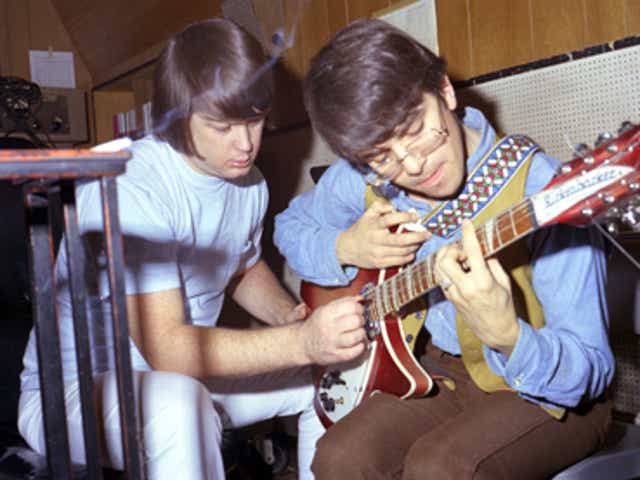
d93426a7-f061-49ab-8580-b35a48ebb43f-Van_Dyke_Parks_and_Brian_Wilson

I use the word “legend” because in this case it’s appropriate. The story was told again and again. Unreleased recordings were quietly shared. Speculation abounded among certain Beach Boys fans. Would the group ever finish Smile? What would it be like when we finally got to hear it? What would people have thought in 1967 if Smile had come out before Sergeant Pepper? The Beach Boys and Beatles were having a friendly competition in the mid-60s. We know how that came out.

Brian Wilson, having begun a solo career in the 80s, changed the Smile story in a big way in 2004. Overcoming considerable obstacles, he and his band debuted Smile at a February concert in London. From The Guardian:

So how good, finally, is Smile, the great lost song cycle that Brian Wilson kept the world waiting 37 years to hear? The only possible answer, after Friday night’s world premiere in London, is that it is better than anyone dared hope. Multiple spontaneous ovations were the reward for the former Beach Boy and his musicians, whose pristine performance breathed life into a 45-minute work previously known only through various shattered and dispersed fragments.

Seven months later, Brian Wilson presented us with Brian Wilson Presents Smile. Metacritic, a site that tries to synthesize critical opinion, has it down as the third-best reviewed album of the 21st century:

Well, better 37 years late than never. Originally intended to be the Beach Boys’ 1967 follow-up to their legendary ‘Pet Sounds,’ ‘Smile’ was finally recorded as originally intended in April 2004 by Wilson and his current band, including co-songwriter Van Dyke Parks.

“Originally intended” is a stretch, since nobody, including Mr. Wilson, really knows how he intended to put Smile‘s pieces together in 1967. (Not being able to put the pieces together was a very big part of the problem.)

In 2011, Capitol Records released a big set of Beach Boys recordings from the 60s, The Smile Sessions, also to great acclaim. And that was that.
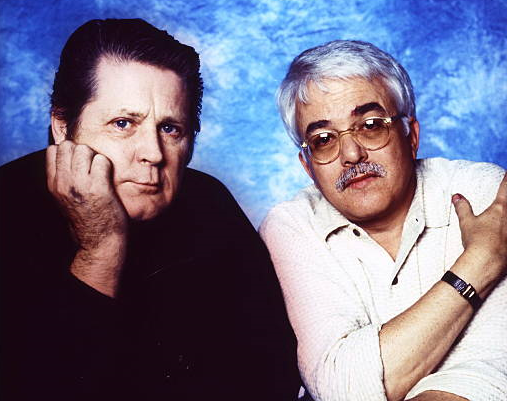
gettyimages-86110974-612x612

Except that while we were waiting those 37 years, a number of us (hundreds of us? thousands?) created our own versions of Smile, using whatever pieces were available (legally and otherwise). I did one in 2002, two years before Brian did. If only he’d asked me for help in 1967!

Mine differs from the typical unofficial arrangement, mainly in two ways. I started with something someone put together from mostly instrumental tracks and called “The Elements”. I think it’s an excellent prelude to what comes later. I also used a version of the song “Wonderful” from the Smiley Smile album (what the Beach Boys released in lieu of Smile), not the original “Wonderful” with a harpsichord that most fans seem to prefer. I like the later one a lot more.

Anyway, here’s my Smile from 2002 in two formats up in the Microsoft cloud (YouTube objected due to copyright):

Audio only (MP3, 55 mb)

Audio plus unsophisticated video that identifies the tracks (MP4, 52 mb)

unnamed

(By the way, whether or not you watched any of that ridiculous “debate”, please vote and send the maniac back to private life and almost certain criminal prosecution.)

Distraction for a Saturday Afternoon (or Sunday)

Rolling Stone, still in business after 52 years, took a poll of 300 people in the music business to create a new “500 Greatest Albums” list. They polled 271 people in 2003 to do the same.

I’ll offer no opinion, except to note that hundreds of people supposedly submitted lists of their Top 50 albums, from which the magazine generated the Top 500. How did Rolling Stone find 300 people willing to make that kind of effort? Did they let their kids or dogs weigh in?

Anyway, it’s interesting that albums by Marvin Gaye and the Beach Boys were the only ones to stay in the Top 10 between 2003 to 2020. The Beach Boys stayed at #2 and Marvin Gaye rose from #6 to #1.

Everything else in 2003’s Top 10 went down, although none of them fell out of the Top 40. 

In the 2020 list, Abbey Road jumped ahead of four Beatles albums from the 2003 list. Three albums on the 2020 list didn’t even make the Top 50 in 2003. Lauryn Hill’s 1998 album went from #312 to #10. That’s quite a jump. (And Rumours, Fleetwood Mac’s 1977 mega-seller, is more popular now than it was in 2003? That’s just weird.)

2003 2020 2020 2003
1 The Beatles, Sgt. Pepper 24 1 Marvin Gaye, Whatโ€™s Going On 6
2 The Beach Boys, Pet Sounds 2 2 The Beach Boys, Pet Sounds 2
3 The Beatles, Revolver 11 3 Joni Mitchell, Blue 30
4 Bob Dylan, Highway 61 Revisited 18 4 Stevie Wonder, Songs in the Key of Life 57
5 The Beatles, Rubber Soul 35 5 The Beatles, Abbey Road 14
6 Marvin Gaye, What’s Going On 1 6 Nirvana, Nevermind 17
7 The Rolling Stones, Exile on Main St. 14 7 Fleetwood Mac, Rumours 26
8 The Clash, London Calling 16 8 Prince and the Revolution, Purple Rain 72
9 Bob Dylan, Blonde on Blonde 38 9 Bob Dylan, Blood on the Tracks 16
10 The Beatles, The White Album 29 10 Lauryn Hill, The Miseducation of Lauryn Hill 312

Someone kindly made a YouTube playlist for Marvin Gaye’s 1971 album What’s Going On. The title track sure fits 2020:

Making Pet Sounds playlists is a cottage industry. I’d forgotten that I made one comprising stereo versions of the original 13 tracks three years ago. It’s been viewed 400,000 times.

On the other hand, the one I did called “If Pet Sounds Was, God Forbid, an EP”, which only includes four tracks, has been viewed 7 times. That sounds right. 

https://www.youtube.com/watch?v=y2I8INYxOmQ

PS: If enough of us vote for our favorite candidates this year, not our favorite albums, we can damage the Republican Party for decades. Wouldn’t that be wonderful, not just nice?

I’m Not Joe Biden But I Approve This Message

One-Fifth of “The Peripheral” by William Gibson

Although I was disappointed by William Gibson’s 2004 novel, Pattern Recognition, I began reading The Peripheral, his 2014 science fiction mystery novel, anyway. It was interesting but challenging.

I quote from a blogger, Patrick D. Joyce, who wrote about The Peripheral in 2015:

My own pleasure as a reader of that type of fiction is being left in the dark, confused, gradually putting it together — William Gibson

That’s exactly the kind of reader youย have to be to enjoy William Gibson’s new novel.

Peripheralย drops you into two separate futures, one near, one distant, without so much as a guide in either, much less some kind of portable universal translator. Nope, you’re on your own. And it gets bewildering at times.

Some way into The Peripheral, I looked at the book’s Wikipedia page to see if I understood the plot so far. I kind of did, but that’s when I discovered I was reading about two separate futures. A few chapters later, I wanted to remind myself who a particular character was. A search for “The Peripheral characters” turned up Mr. Joyce’s post, which includes helpful lists of “Characters in the Near Future” and “Characters in the Distant Future”, as well as a list of words Gibson made up.

That helped me get through the first 100 pages or so, which one reviewer called “uncharacteristically dense”. At that point, a police detective shows up in the distant timeline and asks a few of the characters to explain who they are and what’s been happening (which made Detective Inspector Ainsley Lowbeer — possessed of court-certified perfect recall — my favorite character after just one chapter).

The same reviewer said that after the “uncharacteristically dense first one hundred pages”, the book is “a super enjoyable read”. I’ll never know. I was intending to keep reading, but 400 more pages suddenly felt like a bridge — to the future — too far.

When it comes to fiction, I’m fine with mystery. Intriguing, in general, is better than obvious. (The same applies to non-documentary movies.) When it comes to life, however, clarity is, in general, better than obscurity. A work of fiction, therefore, is subject to a rough aesthetic calculation (actually, so is a work of non-fiction). How do the interesting intrigue, the boring obviousness, the helpful clarity and the confusing obscurity add up?ย 

In the case of The Peripheral, there is quite a bit of interesting intrigue and just about zero boring obviousness. There is some helpful clarity — for instance, a view of what the future might be like — but way, way too much confusing obscurity. For me, in the first 100 pages, the pleasurable intrigue and clarity outweighed the painful obscurity. But I decided that, having now had some pleasurable exposure to Gibson’s version of the future, another 400 pages wasn’t going to add much more to the experience. The painful obscurity (all these hard-to-follow conversations and descriptions) would outweigh any more pleasurable intrigue and clarity.

I should add that, to my mind, fiction always starts with a problem. Does whatever pleasure I get out of reading this outweigh the fact that the events described didn’t happen? Just as with a work of non-fiction, I always ask myself why I’m spending time on this. Fairy tales can be fun, but I’m prejudiced in favor of reliable information. So, for example, a description of the weather in a novel might be very well-written, but it will make me wonder if I really care about a breeze that never blew or rain that never fell.

There was one thing about The Peripheral that I especially liked though. The Chinese, who are apparently far ahead of what’s left of the human race, have invented a kind of time travel. It’s not the kind that allows people to travel back and forth in time. Nor is it the paradoxical kind in which you can bump into yourself or kill your own grandfather. This kind of time travel is a two-way information connection (so it’s sounds and images that are traveling).ย 

Gibson’s idea is that it’s possible to establish a communication channel with the past. There’s a computer server in the future that allows this. It wasn’t clear (from the first 100 pages) how the people in the past were able to communicate with the future, considering that they didn’t have the Chinese technology back then, but maybe the 2115 Chinese were clever enough to somehow identify past technology they could connect to, like somebody’s old 2015 computer.ย 

Anyway, the best part is that when you open a link to the past, it creates what’s called a “stub”. This is a new timeline that branches off. The communication you have with the past is with this new, separate timeline, not your own timeline. That means you can’t interfere with what happened in your past. Your own past stays the way it was, meaning your present stays the same too (your future will be different, of course, because you just did something really cool with the Chinese server.

Except that now you’ve created a different world that will eventually lead to god knows what future for the people over there. Basically, you’re playing at being God, inventing a new universe every time you connect with the past. It’s a nice way to get around the weirdness of time travel, if you don’t mind creating a world in which there might be untold suffering. But who knows? Maybe that new world will be one in which William Gibson’s counterpart chooses clarity over obscurity.

The Shocks That Flesh Is Heir To

26JOAN3-jumboThe Kronos Quartet was founded in 1973. They released the first of their 43 studio albums in 1979. I went looking for a copy of the rather obscure Music of Dane Rudhyar after I’d bought several of their more accessible albums, including Monk Suite: Kronos Quartet Plays Music of Thelonious Monk; Terry Riley: Cadenza on the Night Plain; and White Man Sleeps. I’m sure I saw them perform in person at least once. I was a fan.

They were known for playing a range of music not usually associated with string quartets (“Purple Haze”, most famously) and also for wearing cool clothes on stage. They were very modern.

My interest wasn’t totally musical though. One of their members was a blonde woman, a cellist with a mellifluous name: Joan Jeanrenaud. I wondered what she was like when she wasn’t playing cello.

1498075787017

As these things happen, the Quartet and I eventually went our separate ways. 

Then, what should pop up yesterday on YouTube but a video of the Kronos Quartet? They were playing a piece of medieval English music: Thomas Tallis’s Spem In Alium

There was something different, however. Where there used to be a blonde woman, there was now a dark-haired man. Where was Joan Jeanrenaud?

From The New York Times in 2012:

It’s still hard to picture the ubiquitous Kronos Quartet without Joan Jeanrenaud. For 20 years there they were: three hip-nerdy guys and one willowy, glamorous woman.

Then, in what seemed eerie emulation of an early role model, the British cellist Jacqueline du Prรฉ, Ms. Jeanrenaud was diagnosed with multiple sclerosis. She took a long-term leave, starting in 1999, that morphed into retirement from the quartet and its arduous six months of annual touring. . . .

. . . the impact of the illness has, in her case, been relatively benign. Ms. Jeanrenaudโ€™s condition affects her legs. Du Prรฉโ€™s began with a loss of sensitivity in her fingers, disastrous for any instrumentalist.

Jeanrenaud has had a solo career that’s included teaching, performing, recording and composition. When the Times article was written, her multiple sclerosis was under control. More recently, however, she was filmed entering a room in a wheelchair and slowly repositioning herself before beginning to play. 

Suddenly seeing her again 20 or 30 years later, dealing with partial paralysis, well, what is there to say?

JoanJ-raw

Growing old sneaks up on us. But I suppose gradual is better than sudden when it comes to aging.

YouTube has Jeanrenaud’s 2008 album Strange Toys. This track is called “Waiting”.

PS: The all-American Ms. Jeanrenaud was born Joan Dutcher in Memphis, Tennessee. She attended Indiana University before studying in Europe.